Sam's Reviews, Sam's Articles Sam Reader Sam's Reviews, Sam's Articles Sam Reader

Edgar Allan Poe's Interactive Horror: 1995 Edition

So this puts us in an interesting position— the game is excellent, a bona fide classic where art and atmosphere ooze from every pore and you can feel the care in every frame of the game— but the retail release of said game is so lazy and unnecessary that charging fifteen bucks for something that exists in a form it already exists in that I can’t give this classic game anywhere near the score it deserves. It feels like this was rushed out to capture the market and gain the copyright info, but without doing much to earn it.

Edgar Allan Poe’s Interactive Horror: 1995 Edition
Developer: InScape
Publisher: GMedia
Platform: PC
Release Date: February 14, 2026
MSRP: 9.99

This is something of a unique experience for me.

The Dark Eye is a classic horror adventure and is considered one of the gems of the abandonware scene, that is community-supported updates to games whose copyrights have long since lapsed. This allows the games to be preserved and maintained for free, for the historical and educational merit of those interested in days of gaming past. It’s of similar questionable legality to the emulator scene, although there’s less chance of Nintendo forcing you to lawyer up, as many of the people who worked on these games have long since moved on.

Indeed, The Dark Eye is thirty years old at this point, a game released in 1995 and kept up through the vigorous application of ScummVM and the work of hundreds of hobbyists to preserve the work of InScape and their alternative artists. I played it for myself in 2004 on a Gateway laptop I bought with lawnmowing money, and the mix of stop-motion claymation, gothic horror, and William S. Burroughs of all people narrating blew my tiny little teenage mind.

Yes, The Dark Eye is a classic that needs no introduction, and that’s why Edgar Allan Poe’s Interactive Horror: 1995 Edition, a title that shows about as much effort and thought went into titling the game as went into getting it ready for its debut on modern retail platforms, is such a massive disappointment.

Not only were there not many changes made— something that resulted in a similar product to the free available version of Edgar Allan Poe’s Interactive Horror: 1995 Edition— the entire release just feels so…slapdash. The name of the game wasn’t even fully secured, leading to a disclaimer in the launcher claiming that “Edgar Allan Poe’s Interactive Horror: 1995 Edition: The restored edition is titled as above. Originally released in 1995 as The Dark Eye. The original title may still appear on the intro screen and credits for preservation purposes.” It seems like there was a lack of care in the “preservation effort” from the company, one further illuminated by the fact that the game is prominently a ScummVM emulation of a Windows 95 game, a thing that’s already existed.

So this puts us in an interesting position— the game is excellent, a bona fide classic where art and atmosphere ooze from every pore and you can feel the care in every frame of the game— but the retail release of said game is so lazy and unnecessary that charging fifteen bucks for something that exists in a form it already exists in that I can’t give this classic game anywhere near the score it deserves. It feels like this was rushed out to capture the market and gain the copyright info, but without doing much to earn it.

That feels like an odd thing to say, that someone should earn the right to a game, but the community did by keeping the game alive all this time so GMedia could profit from it. GMedia, on the other hand, added a name and Steam integration. Not much has noticeably changed to my eye from the current preserved copy (either ScummVM or basic) and not much has noticeably changed from the last time I played it. The creaks and cracks are still intact, it still takes a second to load the FMV, and overall, it’s just not worth paying the money for something the community already did, but with a new title and a new publisher. Certainly not for this much money.

So in conclusion, go ahead and find a copy of The Dark Eye. Play that. But for God’s sake, Montressor, don’t spend your time and money on Edgar Allan Poe’s Interactive Horror 1995 Edition, a game whose release is as slapdash as its title is long.

The Good:
- A classic adventure game available to a wider audience


The Bad:
- A shoddy release that feels like a rushed cash grab
- Why pay ten bucks for something someone already did for free

FINAL SCORE:

The 1.5 is entirely the work of the community and the fact that this is a classic game. Why someone would do this to it is entirely beyond me.

Read More
Sam's Reviews Sam Reader Sam's Reviews Sam Reader

Book of Hours Review

If you let this game in, you will lose whole weeks to its engrossing depth and complex interactions. It’s a beautiful expanse of a game that stretches outward from the vertical slice seen during NextFest, and it demands you invite it in.

Book of Hours
Developer and Publisher: Weather Factory
Platform: PC
Release Date: August 17, 2023
MSRP: 24.99

There’s mindbending games, and then there’s Weather Factory. The small indie studio headed by surrealists Lottie Bevans and Alexis Kennedy have put out a variety of games, everything from a bizarre digital card game about losing your mind while forming a cult (Cultist Simulator) to immersive experiences, to their own tabletop game (The Lady Afterwards). Building on their previous work, they’ve unleashed another unusual but nonetheless engrossing offering, Book of Hours. It’s a strange mix of virtual furniture rearranging, gameplay based around gaining forbidden knowledge and hidden skills, and navigating your visitors and neighbors as you explore a massive house and attempt to craft a great work. It’s also vast, deep, and the kind of game you can lose weeks to. All in all, it’s an exciting new entry into their canon, and a worthy successor to their first sleeper hit.

Because of an unspecified incident, you are appointed the Librarian of Hush House, a sprawling Gothic library on the cliffs of Brancrug Isle. After a storm washes you up on the beach, you get yourself acquainted with Brancrug and your new environs, restoring the rooms of Hush House with the assistance of the locals and cataloguing any books you find. You have bigger ambitions for the forbidden knowledge hidden in these halls, however, and it will take all the skills and unusual gifts you gain from your books to achieve the transcendence you secretly seek.

Credit: The Gamer’s Lounge/Screenshot

Book of Hours is played out on a huge and expansive map of Brancrug and Hush House. Using a variety of skills, powers, items, and other help represented by cards, you perform various actions across the map— unlocking new rooms of the house that might do different things with your abilities, cataloguing (and studying) the vast library of randomly-generated books, dealing with visitors and locals alike, and upgrading your skills to further access forbidden knowledge on the “Tree of Knowledge” map. More skills and more abilities allow you access to a larger range of powers and knowledge, propelling you further up the tree and gaining more stats. The game works on a day-night cycle, where everything refreshes (and all temporary cards vanish) at daytime, and different actions are available at morning, and evening.

Credit: The Gamer’s Lounge/Screenshot

It sounds vast and complex, and it sort of is, but the presentation helps keep it simple. The game begins with your arrival on the beach with only a waterlogged journal and a memory of the storm, and teaches you the concepts of the game from there, with your first challenge being to choose your stats and then get off the beach. From there, you move into the town, and then set about opening up the town and the labyrinthine environs of Hush House itself. New mechanics have a barrier of entry (move to the next area, learn the right skill, generate enough resources) to get over, but once you get over that barrier, you find yourself integrating what you learned into the next set of mechanics. It’s vast and complex, but it’s understandable in a very specific way.

Credit: The Gamer’s Lounge/Screenshot

It also expands into a dizzying amount of depth. Apart from unlocking the rooms of Hush House, you can craft occult items, pump the townspeople for any recent omens they saw, enlist the help of townsfolk and visitors, and use the rooms for a variety of savory (and unsavory) purposes. Each new room you unlock comes with its own new set of abilities, uses and decorations. There are secrets (what do those busts on the grand staircase mean), a ton of flavor text and narration to get into, and a number of ways to craft. You can even start exploring the Moors, the Beach, and the Tree, the last of which is a map that, in classic Weather Factory fashion, exposes itself beneath the main game screen as a bizarre network of lines and pathways all leading to…something. The further you go down the rabbit hole, the more you understand, and the further you can get, leading to a sense of accomplishment as you learn the game’s ins and outs. Book of Hours makes you work hard for its secrets, but it does want you to find them, and you don’t usually find yourself waiting for the next thing to do.

That said, the game moves at its own pace, and it’s a slow and relaxing one. While there are clocks to keep track of, they’re long enough that you can figure things out slowly, and the day-night cycle lets the player know you’re going at your own pace, as long as you keep that pace slow. It’s a game about figuring things out and getting to know your area— there’s no obvious lose condition, Book of Hours is generous on time, and while the requirements for some tasks and progress seem daunting, you have more than enough time to work things out. After all, a library is a place for quiet, methodical contemplation and research, not a desperate race against the clock.

Helping all of this, the map and the corresponding Tree are gorgeous. Building on the stained glass/art deco style of Cultist Simulator and Lady Afterwards, Book of Hours features a lavish but abstract view of Brancrug Isle, Cucurbit Bridge, and the all-important Hush House. The rooms are also excessively detailed, with a variety of different furniture and components you can move around to your heart’s content, all of which also have properties you can further use in your work. As you get into the interlocking systems, half the fun is seeing what card will come up next, or what new room will open up, or what new item you can place in the library. Everything also changes with the seasons and weather, shifting to snow-covered skeletal trees and hilltops for Winter, autumn leaves, or…well, that would be a spoiler. It’s just another way the game integrates the environment as part of what it does.

Credit: Weather Factory

While the game is an absolute delight for the senses and mind, it does have a few caveats here and there. You have to constantly zoom in and out around the map, as it’s huge and you’re quickly able to lose track of what you’re doing. There’s also not really a way to keep track of all the processes you initiate, so occasionally something will go off, sending you scrolling back and forth around the map to find the exact point. Sometimes you’ll even misclick on the background or something else, closing the window you opened and opening a different one, or bringing up another tutorial message. It’s a problem quickly solved by zooming in, but it can be exhausting to navigate, especially later in the game when you have multiple processes running.

Credit: The Gamer’s Lounge/Screenshot

The game can also be somewhat daunting in scope. Something might happen before you’re completely ready, leaving you wondering how you’re supposed to come up with 5 Forge to fix something that might be a problem down the road. Finding specific categories means sorting through a tremendous amount of clutter— and while sorting the clutter and organizing the rooms and redecorating is the point of the game to some degree, the somewhat inaccurate placement mechanics and sheer vast amount of space you can open up can be somewhat mind-boggling.

But Book of Hours is in an early state. There’s plenty of time to fix these minor bugs, and gazing into the infinite while rearranging your sprawling library is kind of the point of the game. While it might be a little sprawling, that’s very much the point, and it’s a welcome new addition to Weather Factory’s bizarre universe. If you let this game in, you will lose whole weeks to its engrossing depth and complex interactions. It’s a beautiful expanse of a game that stretches outward from the vertical slice seen during NextFest, and it demands you invite it in.

The Good:
- Beautiful artwork and top-notch integration between theme and gameplay
- Vast, sprawling game of interlocking systems to explore
- Tons of flavor and setting
- Simple but deep card-based gameplay

The Bad:
- Sprawling and vast game means scrolling across the map multiple times to find that one card you placed
- Becomes difficult to keep track of things in the mid-game with too many pieces moving around

Final Score:

It’s got its rough spots and a very specific audience, but you’ll never play another game like it.

Read More
Sam's Reviews Sam Reader Sam's Reviews Sam Reader

Harmony: The Fall of Reverie Review

Unfortunately, while Harmony: The Fall of Reverie is a gorgeous, finely tuned visual novel with an affecting story and clear care put into every inch of the game, dissonant mechanics and sometimes confusing narrative choices are that more glaring. The result is, frustratingly, an excellent game dragged down by some of the same things that make it so excellent.

Harmony: The Fall of Reverie
Developed by: DON’T NOD
Published by: DON’T NOD
Platforms: PC and Switch (June 8), PS5 and XBOX Series X|S (June 22nd)
MSRP: unavailable at time of review

A well-made game like Harmony: The Fall of Reverie walks a dangerous tightrope. On one side, the time and care put into a game can make players instantly fall in love with its plot, characters, visuals, and narrative design. On the other, the unfortunate cracks (as we’ve seen with other titles this year) become glaringly obvious in a well-made game where they might be forgiven in jankier ones. The level of quality is high, but so are the standards. Unfortunately, while Harmony: The Fall of Reverie is a gorgeous, finely tuned visual novel with an affecting story and clear care put into every inch of the game, dissonant mechanics and sometimes confusing narrative choices are that more glaring. The result is, frustratingly, an excellent game dragged down by some of the same things that make it so excellent.

Polly returns to her childhood home after a few years abroad to look for her mother Ursula, who’s vanished without a trace. Finding only a strange necklace, Polly puts it on only to be transported to Reverie, a place where representations of humanity’s drives and underlying desires called Aspirations live and influence the human world of Brittle. Upon her arrival in Reverie, Polly takes up the role of Harmony, an oracle who can flip between worlds at will and see a little ways into the future. Harmony is meant to stabilize Reverie, leading it forward through a new cycle and aiding both worlds. As both the search for Ursula and Polly’s duties as Harmony continue, Polly finds her family drawn into an interlocking web of conspiracies surrounding old friends, enemies, and a sinister corporation called Mono Konzern. The time to choose the next cycle is at hand, but Polly must navigate both worlds to ensure that neither falls to chaos.

Harmony: The Fall of Reverie takes the form of a visual novel with a decision tree. In the story segments, you play Polly/Harmony as she learns about Reverie and bands together with family and friends to take the island and Reverie back from the evil corporation of Mono Konzern. In between story segments, you choose different paths through the Augural, a decision map that shows you potential consequences for your choices in a limited view. Navigating the Augural unlocks more choices, showing you the results of immediate decisions while offering hints for future ones. Decisions on the Augural also give out egregore crystals, a kind of currency that strengthens your connections with the various Aspirations, allowing you to choose the direction Harmony (and by extension Brittle) eventually take. It’s sort of like a narrative board game— you make decisions, move along the map, collect your crystals, and manage your relationship meter with the Aspirations. This leads to larger act-defining choices based on which of the Aspirations you support, and eventually the final choice of how to remake Reverie and save Brittle.

Harmony is gorgeous. The visual novel scenes are fully animated, with characters actually speaking their (fully voiced) lines. Reverie is a suitably bizarre landscape of mazes, floating houses, and in one case a motel that looks like a neon collage, while the island the characters call home is equally as vibrant, if a little more mundane. The cast is on point, with each voice actor bringing their A game, and absolutely no one sounds generic or phoned-in. Each character is unique, the various demesenes of Reverie are distinct and match the personalities of the Aspirations, and you get a greater sense of the world just by playing. There’s also an in-game codex that fills in the more information you get, informing you of history and backstory without info-dumping on you.

Your first-ever node. I didn’t want to spoil too much

The main interface of the game is similarly gorgeous. The Augural is set against a background the color of the night sky, with blue-violet nodes and any pathways and highlights laid out in gold. When you mouse over them, the choices light up, connecting past nodes to future nodes, and even giving you information on what choices are available. It’s an absolute joy to navigate, and it’s useful to see what consequences your choices will have. Want to plan out a path through the act for your desired outcome? You can scroll up and down the Augural and figure out what you want. Similarly, the relationships with the Aspirations are tied to how many crystals you collect, and how many of their decisions you enact. It’s an easy visual reference, even if the nature of the decisions does take some left turns now and then.

The problem with this approach is that you’re fighting the mechanics even as they’re supposed to help you make more informed decisions. Choices aren’t always telegraphed, and it’s unclear which direction you’re headed at times. It’s also sometimes not immediately clear which choices are blocked off, with some choices becoming “inevitable” nodes that you’re forced to play when you get to them, and some pathways looking like they’re multiple choices leading to multiple outcomes, only to lock you into specific outcomes instead. While there are some novel uses of the choice-based approach (one act sees you navigate an Augural map specifically mirroring Polly’s mental state at the time), it’s difficult to figure out somtimes which choices lead where. One map in particular had me following what I thought was a pathway to go with Truth and Chaos’s option for an act, only to end the act with Power instead and no idea how I got there. Similarly, the field of vision leads to issues figuring out where a choice will lead— A choice can arc off into the distance, but once you move your mouse, the links between choices will disappear, leaving you to figure out where it led on its own.

This also leads to an odd way of playing, where you spend more time planning out your choices, managing your crystals, and checking your route through the map than actually paying attention to the story. After all, the individual choices have no weight, just the outcome. It almost makes more sense for there to be a little more ambiguity in the augural, a little more uncertainty about the choices being made. Otherwise, the loop becomes just clicking nodes and collecting crystals, sacrificing investment in the plot for route planning.

Tied to this, (and unusual for a visual novel) there’s also no particular emphasis on playing the game multiple times. Your save file ends at the last choices you make unless you want to start over again, opening phases and all. It’d be a lot better if, like many others in the genre, you were able to fast-forward through the parts you’d already seen, or go through a chapter select after playing the game through once. In a game about seeing potential futures, it seems like an oversight to not go through multiple times and find out more about the plot without going through the process of a new game.

Which is a shame, because this is a great visual novel, one with a lovely story, engaging characters, excellent art direction, and one especially spoilery use of mechanics that’s absolutely brilliant. It’s imaginative, the node map is novel and well designed, and I would love nothing more than to recommend this game without caveats.

The longer I spent with Harmony, though, the more fragile it all seemed.

The Good
-
Beautiful graphics
- Fully-voiced and animated visuals
- Distinct visual style
- Novel and intriguing choice mechanic

The Bad
-
Route-based choice system means you spend more time plotting routes than caring about story
- No real encouragement to play the game more than once
- Occasional confusing pathways mean choices aren’t telegraphed even when they should be.

Final Score:

An excellent game with one glaring flaw, but an excellent game nonetheless


Read More
Sam's Reviews Sam Reader Sam's Reviews Sam Reader

Shadows of Doubt Early Access Review

Shadows of Doubt has had a six-month early access period shows it growing by leaps and bound and its unorthodox focus and procedural story-generation engine make it stand out even among the high number of narrative-generation games coming out these days. An instant indie classic for fans of immersive sims, film noir, and weird dystopian adventures.


Shadows of Doubt
Developer:
Cole-Powered Games
Publisher: Fireshine Games
Platforms: PC
Release Date: April 24, 2023 (Early access, information on the Steam page claims “about six months”)
MSRP: 19.99 USD


By now, Shadows of Doubt is a well-established title in what looks to be a fabulous summer of immersive sims and shooters. Its six-month early access period shows it growing by leaps and bounds (part of the reason for this review being a little late is that I wanted to give it a bit of time to cook, so to speak), and its unorthodox focus and procedural story-generation engine make it stand out even among the high number of narrative-generation games coming out these days. Unfortunately, as wonderful as Shadows of Doubt is, it’s worth waiting for a full release rather than snapping it up in early access. The high number of moving parts and that same unorthodox approach to things means it should take all the time it can to shine.

You are a former police detective in a dystopian island city, laid off by the Starch Kola Enforcers Program, a corporate-run police force installed by the corporate-owned government. In the middle of a night of troubled sleep, you awake to the ring of your phone. Upon answering, you’re greeted by silence on the other end of the line and a note shoved under your door urging you to investigate someone’s apartment. You arrive on the scene, finding a corpse. There’s been a murder. The Enforcers are on their way and react to trespassers with lethal force. A conspiracy is brewing. The same strange video tapes and cryptic notes show up at crime scenes and in suspects’ apartments. You’re down on your luck, recently evicted, and have to dodge both enforcers and the criminals who are on to you as you attempt to solve crimes and take odd jobs. Good luck. You’ll need it.

Shadows of Doubt is best described as a “detective/crime immersive sim.” You take cases from various notice boards around the city, gaining money and social credit for everything from petty theft to corporate hatchet-jobs. In the process, you get embroiled in conspiracies, murders, and a shadowy “paradise” people retire to when they have enough social credit. As you grow in both reputation and skillset, you unlock upgrades called “sync-discs,” have an easier time getting information, and get ever closer to finally leaving the rain-soaked concrete pilings you call a home. From a first-person perspective, you chase down leads, manage your time and needs, and try to figure out your cases in a procedurally generated city. You also get to customize your own character, apart from their backstory.

The password to a secret gun store Credit: The Gamer’s Lounge/Screenshot

It’s remarkable how much detail and how many moving parts go into Shadows of Doubt. The game procedurally generates the entire city from the “new game” screen, complete with citizens, schedules, buildings, and a whole ton of relationships. Over the course of one case, I practically traversed the city (and if you don’t play on the largest city size, well, you’re missing out) and met a ton of potential suspects and leads, all chasing the same single thread. You can break into places, bribe informants, sneak into the Enforcer offices to steal files and weapons, crawl through vents, and even confront a suspect, arrest them, rob their safe, and then sell it all for a tidy profit. It’s wildly open in a very guided way, supporting a number of chaotic and careful play styles. The first time I turned off the lights in a room and the cameras stopped paying attention to me, I was hooked. You don’t normally see that level of detail in a game, where even minimal changes to the environment yield greater results, and knowing more about the city means you solve cases easier. Helping everything, a lot of your legwork is player generated, meaning you have to follow the leads and draw conclusions, even if you make the wrong ones.

Foggy day in post-global warming Tokyo Credit: The Gamer’s Lounge/Screenshot

It also looks great. The style, blocky voxels making up a neon and rain-soaked hellscape of a city, works perfectly with the retro-futuristic cyberpunk tone the game tries to strike. While the streets look a little similar at times (par for the course with a procedurally generated game), you get awesome neon signs standing out of the fog, and characters have an impressive level of distinction, with everything from styles of dress and cybernetic limbs on display. You can even learn a lot from what any given person has in their apartment or workplace— everything from medical issues to coworker relations are represented by items, emails, and a number of subtle details. There’s a lot going on, and the style never once gets in the way. It’s a fantastic presentation.

Fog billows up through a room Credit: The Gamer’s Lounge/Screenshot

The issues with Shadows of Doubt come down to polish. There are points where the game just doesn’t click right, whether it’s accidentally soft-locking yourself out of a murder case because you went to City Hall and grabbed yourself a case sheet before following the vague instructions to investigate a murder on a random street, or getting turned around because following an address waypoint leads to the wrong building. It’s frustrating, in a way, but that’s the reason the game’s in early access. It still needs a little more time to cook, to work out that polish and smooth out some of the rough edges. This isn’t a nitpick so much as a statement of fact. Even the most polished of games sometimes just needs a little time to cook. A little chaos is fine, in fact, it’s built into the game, but I’d wait until this one hits 1.0. It’s a great game, but when a great game has a crack, that crack’s all the more visible.

If you’re enticed enough and can weather the lack of polish, Shadows of Doubt is a fantastic game, an instant indie classic for fans of immersive sims, film noir, and weird dystopian adventures. While that’s the case, the game’s improved almost weekly in leaps and bounds, so it’s definitely worth the (relatively short at this point) early access cycle and hopping on with 1.0. Either way, check this out, especially as the unpolished version is a beautiful, impressive, and chaotic affair well worth your time.

The Good
- Brilliant dystopian-noir setting
- Unique voxel-graphic style
- Huge level of detail and freedom in the open world
- Large number of player options and open-ended gameplay

The Bad
- Literally the only bad thing about this is that it’s still in early access and could still use a little more polish

Final Score:


Read More
Sam's Reviews Sam Reader Sam's Reviews Sam Reader

Wartales Review

It’s intricate, just technical enough to grasp, and genuinely fun in a way few strategy RPGs reach for but fail to grasp. While it does have the odd technical glitch, if this sounds at all like your kind of game, saddle up your homicidal pony and head for the nearest Emissary.


Wartales
Platforms:
PC (Windows)
Developer:
Shiro Games
Publisher:
Shiro Unlimited
Release Date:
4/12/2023 (1.0)
MSRP:
34.99


Wartales is a tactical strategy RPG in a subgenre known as “medieval warband simulators.” In these games, you control a band of mercenaries off on a journey for coin and glory. As you adventure through Wartales’ low-fantasy realms, you delve into tombs, get involved in local trade and politics, hunt bounties, and even change the course of nations all to keep purses full of coin and bellies full of food. Beyond that, there’s not one definitive story, but rather a bunch of different starts and possible locations. It all begins with you and your band of rough-and-ready types embarking on a journey to the nearest town, fighting bandits along the way. From there, you solve refugee conflicts, explore ancient tombs, assault bandit hideouts, and generally carve your own path through the world. There might be events, but it’s your story, and you tell it however you like.

What sets Wartales apart is its accessibility. The fights are sometimes difficult and tense, but the information is transparent and it’s rare you’ll fall to random chance or circumstance. You also have a wide range of options at the start, everything from locking difficulty to a specific region to picking a start that works best for you. The open-endedness common to the genre even helps with this— you’re telling your story your own way, and whatever play style works best for you, it’s easy enough to learn. Most systems are taught gradually, with your upgrades and jobs usually tied to quests or interactions in the environment. You even get pop-ups about concepts you haven’t seen before. Unlike many other games in the medieval warband sim genre, in that it’s brutal but unlike many of those games, it’s fair. It’s still brutal, but at least it feels like you made a bad decision as opposed to the game tripping you up.

Yes, even this is a result of my very impulsive actions

Which is fantastic, because the game is vast and open-ended. There’s tons to do in every overworld map of Wartales and tons of ways to do it, whether that’s trying to become a merchant and build up your fortune that way, or living the lives of ruthless bandits and employing all your cunning and skullduggery. Just about anything you do grants you experience points, and some problems have multiple solutions. The game doesn’t even push you in one direction or the other morally— while some decisions can be honorable or dishonorable, it’s more about who you side with and why than any greater system of morals. It’s entirely about what story you want to create. Wartales is as much a story generation system as it is a strategy game, and it offers you all the tools you’d need to create that story.

This even extends to the research system. While there are the usual upgrades one can get, there’s a specific upgrade tree for each available craftsperson and even trees related to the achievements screen. If you delve into the mysteries of the surrounding ruins, let your defeated enemies run away after battle, or even turn prisoners in to be jailed. There’s a ridiculous amount of things to do and see even in the starting area (where I spent roughly four days of play time), and that’s before you start crossing borders and opening up everything else. It’s incredibly satisfying to unlock upgrades and then put things like a crafting station in your camp where you can watch your companions hang out and go about their business.

All of this makes Wartales an excellent narrative experience. You can watch your warband become a terrifying force complete with its own pack of wolves or a group of tomb raiders and artisans slowly growing in legend. Every encounter, every death, every battle grows the story you’ve decided to tell and the way you decide to tell it. It’s intricate, just technical enough to grasp, and genuinely fun in a way few strategy RPGs reach for but fail to grasp. While it does have the odd technical glitch, if this sounds at all like your kind of game, saddle up your homicidal pony and head for the nearest Emissary.

The Good:
- Intricate strategy with transparent mechanics
- Open-ended narrative structure that allows you to tell the story you want
- An overwhelming number of options for crafting, narrative direction, and questing

The Bad:
- Lack of a definitive goal might be off-putting
- Occasional technical glitches

Final Score:


Read More
Sam's Reviews Sam Reader Sam's Reviews Sam Reader

Terrascape - Early Access Review

Terrascape doesn’t need to be some grandiose and weighty thing. It’s a beautiful little game meant to be played as a break, or as a wind-down, or otherwise in those moments when you need to take a breather. It’s a relaxing city-builder. As a relaxing city-builder, it’s a gorgeous, lovely little game.

Terrascape
Platforms:
PC
Developed by:
Bitfall Studios
Published by:
Toplitz Productions
Released on:
April 5, 2023 (Early Access)
MSRP:
12.99

Terrascape is currently in early access. The final product may change after the publication of this review

Terrascape is blissfully simple. You draw from a deck of cards, each one representing a different kind of building. You place them in an area that will give you the most points, chaining together clumps of corresponding buildings as a satisfying chime plays and your score climbs ever upwards. Placing buildings together gives you the chance to merge the buildings to create larger buildings, a process that unlocks new cards and further combinations. The more points you score and the more buildings you place, the more you’re allowed to draw decks of buildings you can then place. When you’re all out of buildings and card draws, the game ends. You “win” (the point isn’t really to win, but there is a win condition) by either completing objectives (in puzzle mode) or scoring high enough to get a medal (in free play).

Completing objectives and scoring high unlocks new landscapes, leading to different challenges on the map. It also unlocks new decks and allows you to upgrade your central location, increasing your score. It all fits together in a lovely array of interlocking systems, all conveyed through you placing buildings in the place where they have the greatest impact— will you create a cluster of villages near that nearby forest, or would you rather place a group of lumberjacks around the area but risk losing the chance for real estate near the keep? Do you merge the cottages you’ve painstakingly placed to create larger buildings and score a bit more on further placements, or do you sweep up a bunch of points by placing a town square in the midst of your array of cottages?

It becomes a space-management game as well as a high-score game, seeing you carefully manage getting the most points with how a space can be built, clearing away the negative modifiers or trying to figure out what would work better on the space. There’s also an added dimension in that merging tiles actually gives you the ability to demolish tiles, opening up newer spaces so you can replace buildings and shift spaces around. There’s also “dead” tiles on the board, places you can’t build no matter what, meaning you have to build around things in the space you do have.

Terrascape never feels particularly heavy or intricate. The interface is simple to understand, the graphics are beautiful, and the interlocking systems are all safely under the hood. It’s incredibly satisfying to watch this town grow out of the wilderness, spreading around the keep like a garden made out of buildings. It’s honestly the perfect late-night play— light enough that you can pick it up and put it down, but enough strategy you have to think about how you place everything on the map. Under the right circumstances, it can even be kind of soothing.

The problem is that this lightweight feel extends to the replay value. While you can unlock new stages and newer decks the further you go, eventually you hit a wall, either because you just can’t seem to unlock things, or because you’ve unlocked everything you can at that level. There will definitely be more with early access, but for right now, it feels sort of like a brick wall at points.

But Terrascape doesn’t need to be some grandiose and weighty thing. It’s a beautiful little game meant to be played as a break, or as a wind-down, or otherwise in those moments when you need to take a breather. It’s a relaxing city-builder. As a relaxing city-builder, it’s a gorgeous, lovely little game. Maybe wait a little until there’s some more to uncover, but this one’s well worth the price of admission.

The Good:
- Relaxing, pretty citybuilder
- Intricate without feeling overcomplicated
- Deep, but still easy enough to understand.

The Bad:
- Content can occasionally get repetitive

Final Score:

Read More
Sam's Reviews Sam Reader Sam's Reviews Sam Reader

Contraband Police Review

The tension and long stretches of running a checkpoint and the paranoid terror of the criminals who run the area work beautifully, making Contraband Police a game that, while rough-edged, is well worth the time and energy.
Contraband Police
Release Date
: March 8, 2023
Publisher:
PlayWay
Developer:
Crazy Rocks
Platforms:
PC
MSRP:
19.99

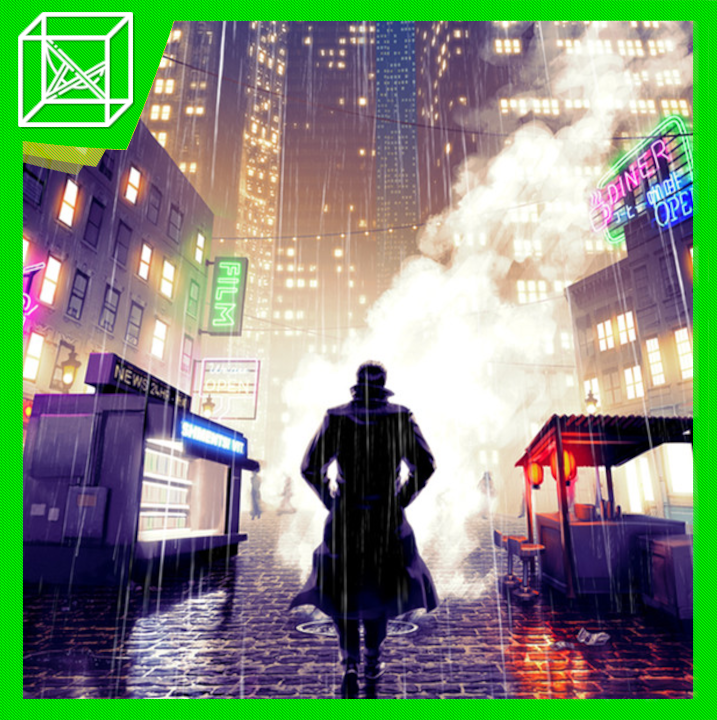
“Immersion” is something games (and gamers) put at a premium. It’s the idea that a game should draw you in, make you a part of its world, force you to meet it on its terms. It’s something given lip-service in larger games and (in some cases) forced to the point of breaking utterly in much smaller games. Contraband Police on the other hand nails it perfectly. Tasking you with the relatively low-stakes and high-danger job of running a border post in the country of Acaristan, the game expertly stretches each moment, letting you feel the beautiful but empty days of running the checkpoint intercut with sudden, explosive violence and regular police work. The tension and long stretches of running a checkpoint and the paranoid terror of the criminals who run the area work beautifully, making Contraband Police a game that, while rough-edged, is well worth the time and energy.

Contraband Police tasks you with running the border checkpoint at Acaristan, a fictional country based on USSR-era Europe. You check if everyone’s papers are in order, make sure no one’s smuggling contraband through the checkpoint, and deal with the occasional border raid from the local bandits. In between, you fight off bandits who raid your checkpoint and take on jobs for the Acaristan Police.

This sets up a routine loop: You check papers, accept or deny entry, and hope for smugglers, raiders, or an ambush to break up the monotony. Things get more complicated once you need to check cargo and issue damage reports on cars, ands each chapter introduces new guidelines to follow and new rules to check for. It’s fairly standard for games of this type, similar to a less tense Papers, Please. In between catching smugglers, you advance the story by shutting down a criminal conspiracy or choosing to side with them against the government. There are tense chases down back roads, occasional bandit ambushes, and all-out gunfights where you move from room to room clearing out bad guys in balaclavas. There’s even a logic puzzle/murder mystery thrown in for good measure.

It’s the stretches between these missions that make the game what it is. When you’re on your fifth check of some truck’s cargo and you hope this time there’s a reason for you to look around the car and unpack all some guy’s luggage. When you notice your subordinates wandering around the post and smoking. The game stretches out the moments of doing nothing until the player wonders if they’re going to do something drastic just to break up the monotony.

That isn’t to say the process of checking cars and drivers isn’t interesting, but the lack of tension and the routine nature of the work become routine. It informs everything else in the game. Contraband Police immerses you in its world through that routine. You start hoping that there’ll be a bandit ambush to break up your umpteenth prisoner transport or contraband drop-off. You start dashing when the post’s phone rings with a new mission that’ll take you to one of the eerily remote locales in the area by the border post.

You start to wonder what would happen if you weren’t quite so good at your job, or at least willing to skim a little off the top.

This is the push and pull of Contraband Police, and what makes the morality system so interesting— it’s not the usual binary choice of “kill puppies/give candy to children” that so many games use, but a much simpler question of how loyal do you wish to be to a government that genuinely doesn’t seem to care? The Bloodfist Rebels might be a brutal gang one step up from the mob and their smugglers, but are they really any worse than the government that sent you to the boondocks to make sure truck drivers weren’t using forged passports? Even the guards at the contraband station and the prison tend to wander around and look like they’re kind of resigned to their jobs rather than happy to do them.

It makes a lot more sense than the average bureaucracy simulator’s mechanics. If you read the flavor text, all your checkpoint officers were banished for minor offenses, essentially kicked to desk jobs because they were either too good or too incompetent for Acaristan to deal with. You start the game living in a tin shack with propaganda posters and decaying fly-strips inside. Why wouldn’t you take a bribe? Who are you protecting?

All of this is backed up by the side-missions and more action-focused mechanics. Fighting it out with the bandits and raiders is dynamic and feels like a desperate stand or an ‘80s action movie, with you trying to clear rooms and fight an ever-advancing number of bandits running through the mountains and forests while you try to fend them off with a limited number of bullets. They even use cover mechanics and flanking maneuvers, just to show you how outnumbered and outgunned you are. When you manage to win a gunfight, it feels earned.

Though this is where the problems start to show. In the gunfights, you’re frequently dogged by dodgy hit detection that feels less like you’re using a cheap government-issue gun and more like a bug in the code. The rebels you encounter feel more like murderous gangsters, making the complex moral choices the game mostly succeeds at fail miserably the moment you have to choose whose side you’re on. In one particularly egregious mission, you’re asked whether or not you want to rescue a man who’s showing visible signs of torture, or leave him for his torturers to find. It’s almost too blunt the way it goes about it, eschewing the push and pull and immersion in the daytime segments for a choice that’s almost always “wanna be complicit in a murder, or no?”

It’s frustrating, where you get into a rhythm of checking cars and a more subtle, complex kind of morality only to be thrown out of it the moment you get into the mission segments and are given the choice to help or harm the people you spend the majority of the game mowing down by the barrelful.

Then there’s the driving. A part of the game you get to (thankfully) bypass in its more routine segments, Contraband Police’s driving is similar to controlling a 3D-rendered soapbox derby racer with greased wheels. You bounce and fishtail over the ground, sometimes missing turns or failing to come to a complete stop. More often than not, your front end will find a tree like there’s a magnet attached to it. Pursuit missions quickly turn into a downhill race where the object is to crash into each other as fast as possible. Fishtailing isn’t so much an inconvenience as a fact of life. Repairing becomes compulsory, as does the fifty dollar maintenance fee you get charged every time you come back to the border post.

It makes for a good but incredibly jarring experience. On one hand, an immersive experience of working at a border checkpoint and wishing for anything to break up the monotony. On the other, a janky FPS about being a cop caught up in a fight against mobsters and terrorists who control the territory around your small border outpost. For everything it does right, a thing it does kind of wrong. For every moment of immersion, a moment where it breaks, either technically or in terms of gameplay.

As a whole, it’s fantastic, a game you can appreciate in spite of its flaws and rough spots. While it certainly takes some getting used to, it’s an experience like no other, and one worth playing to its conclusion. Not quite Papers, Please, not quite Police Simulator, but something weirdly in the worlds of both.

The Good
-
Immersive border patrol simulator
- Excellent pacing
- Lethal enemy AI

The Bad
-
Awful vehicle handling
-
Uneven division of story and immersive gameplay
-
Buggy shooting and driving

Final Score:

Read More
Sam's Articles Sam Reader Sam's Articles Sam Reader

Shadows of Doubt Preview/Demo Impressions: Delightful Detective Dystopia

While the game suffers a little from lack of polish, Shadows of Doubt is a beautiful thing even when something goes wrong. It’s satisfying to solve cases, easy to pick up, and feels deep enough that you can sink your teeth into it regardless of whether it’s a quick jaunt or you’re in for the long haul. Here’s hoping that when ColePowered Games finishes with it, it delivers on the promise this demo represents, because then this will be one for the ages.
Credit: Shadows of Doubt press kit

Shadows of Doubt
Platform: PC
Developer: ColePowered Games
Publisher: FireShine Games
Release Date: “Coming Soon”

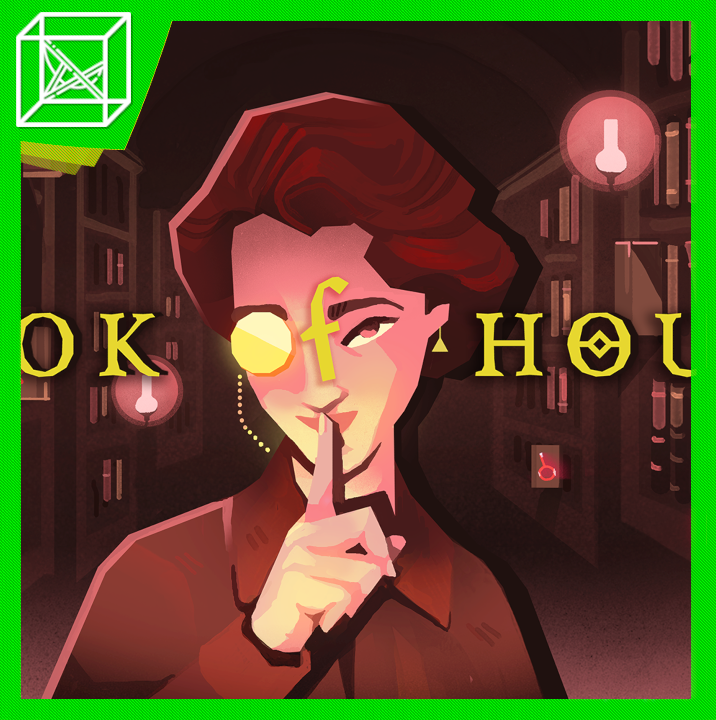
Shadows of Doubt is a game that’s wild in the best possible way. It casts you as a private detective in a massive voxel-generated city (even on Small settings, the city still feels pretty large), awash in neon and atmosphere, and then turns you loose, following procedurally generated leads and storylines as you pursue larger conspiracies and evade the law. With its stylized graphics, nonlinear plotline, and focus on immersive stealth gameplay, it feels like a more emergent-narrative Deus Ex, driven by player choice and the procedural generator’s almost gleeful penchant for chaos. While there’s more than enough here to explore in the 90 minutes of the demo, Shadows of Doubt is shaping up to be an ambitious and intriguing new game from ColePowered, and possibly one of the better immersive/stealth games of the 2020s.

Shadows of Doubt casts you as a private detective, recently retired from the police force and broken up from your significant other. In the dead of night, you get a strange phone call and a note pushed under your door that urges you to investigate a seemingly random person. Upon arrival at their apartment, you find them dead and the local megacorporation’s enforcers on the way, plunging you into the middle of a murder case that seems simple on the surface, but gets murkier the more you look into it, delving into serial murder and a mysterious religious cult.

Credit: The Gamer’s Lounge/Screenshot

In practice, this plays out as a first-person stealth adventure, with you investigating a variety of leads, everything from hacking telephone records to ransacking apartments and doing business with the criminal underground, all rendered in lovingly blocky voxels that give things a retro-futuristic feel. The cities are always overcast, the apartments are always cramped and located in tight corridors, and the emphasis on mechanical and paper-based communications make it feel like an alternate version of the present, one where things like microprocessors and digitization barely exist. In the current demo build, you have 90 minutes where this city is your playground, running you through the introductory case and then flinging you into the city to make connections, find leads, pay rent, and make your way in the mean streets. It’s a robust series of systems, too, with you needing fingerprints, addresses, phone numbers, and having to evade security systems while you hustle for cash and sneak through vents.

Credit: The Gamer’s Lounge/Screenshot

You can investigate crime scenes with a fingerprint reader, hack phone records and safes with a variety of code-readers and other gizmos, or even let your fists do the talking if a witness isn’t cooperating. It’s a vast variety of choices, so large the intro case even comes with a list of leads you can tackle in any order you choose. It’s really satisfying when you get a break in the case, or when you manage to sneak through that apartment you found locked, or when you finally close the case for yourself. The large range of options also means you can tackle things in a way that’s interesting to you, rather than one specific thing.

What makes the game shine, though, is the chaos of it. Noir is a genre all about things going wrong very quickly, and Shadows of Doubt foregrounds this by forcing you to run from the cops in the tutorial. Because of the living city, you can sometimes show up to interrogate a witness while they’re out or sleeping, and they’ll be less susceptible. With the demo’s time limit, this could mean you need to break and enter a little faster, but then if they come home, they’re not going to be amenable to you rifling through their kitchen. Even with permission to be in buildings, sometimes someone will just not like what you decide to do in their space, triggering a conflict. The more things that go wrong (either due to bugs— the game is in early access and a little roughness is to be expected— or mistakes you make), the more interesting choices you have to make and things you have to work around in the case.

While the game suffers a little from lack of polish, Shadows of Doubt is a beautiful thing even when something goes wrong. It’s satisfying to solve cases, easy to pick up, and feels deep enough that you can sink your teeth into it regardless of whether it’s a quick jaunt or you’re in for the long haul. Here’s hoping that when ColePowered Games finishes with it, it delivers on the promise this demo represents, because then this will be one for the ages.


Read More
Sam's Articles Sam Reader Sam's Articles Sam Reader

Book of Hours Preview/Demo Impressions: The Thinnest, Tastiest Vertical Slice

Book of Hours arrives in full resplendence this June for PC. If this is the (admittedly thin) vertical slice we’re getting so far, I for one can’t wait to dive in.
Credit: Title Art from Book of Hours

Book of Hours
Platform: PC
Developer: Weather Factory
Publisher: Weather Factory
Release Date: June 2023

Book of Hours, the latest upcoming game from bizarre art collective/writing duo/indie game studio Weather Factory, has tantalized fans with brief glimpses over the past few years, finally dropping a small playable demo during Steam NextFest. The game, which promises to be something like an “occult librarian simulator” with a similar interface and art style to previous indie smash Cultist Simulator, casts you as the Librarian of a mysterious clifftop library called Hush House, a punishment for some nebulous crime. In your capacity as Librarian, you catalog books, read forbidden knowledge, make nice with the townsfolk, and uncover secret Wisdoms that might lead you down dangerous pathways or cost you your sanity while giving you new skills.

The demo begins with you washing up on the shores of Brancrug Isle, home to the clifftop library of Hush House and the town of Brancrug Village. The Village is a town of suspicious people, requiring you to gain an introduction from an old friend before you continue your journey towards the Library. From there, you unlock a few locations— the local post office where you can send and receive letters, the local pub where you can hire laborers, and one of three places in town where you can gain favors and help: the local blacksmith, the rectory where the Vicar lives, and the curious duplex where the local Midwife and the Undertaker live together. Your goal (as much as there is one in the demo) is to rescue yourself from the beaches of Brancrug, find your way up through the Village, and eventually make your way into Hush House itself, where the demo ends.

The Wisdom Map from Book of Hours. Credit: The Gamer’s Lounge/Screenshot

There’s a lot to love here. The expressionistic visual style, rendering everything out of blocks of color in a way that feels one part painting and one part collage. The return of Weather Factory’s unique adventure-game system, one that sees you collecting cards and slotting them into various actions around the map. Even the newer elements of the work, which include a scrollable map and the ability to arrange objects inside the individual rooms of your library. It’s very impressive, and the way the game handles larger map elements with progress bars beneath each location is a novel way to deal with the constantly advancing clock, letting the player see what’s going on as they zoom in and out of the map.

Credit: The Gamer’s Lounge/Screenshot

The problem is that the demo is very short, comprising barely the beginning of the game (in fact, the demo ends when you get to Hush House, where the meat of the game supposedly takes place). It makes it difficult to get too many impressions from it. Book of Hours hints a lot at interlocking systems, from the simple (telling fortunes at the local pub for money) to the complicated (the upgrade tree is a dizzying web that dwarfs Cultist Simulator’s Mansus screen, with cryptic hints as to what you need to upgrade). Even getting off the opening beach requires careful and slow consideration of your options. What you get is fantastic and finely tuned, though, in spite of being abrupt.

Maybe that was the idea? Hint at something grand, show what you have for now in a sort of playable alpha format, and get people on board for the rest? If so, it’s certainly intriguing. Given the degree of control in the demo, one can only hope that the full game is as promising and broad as the demo suggests, the systems as deep as Weather Factory promises.

Regardless, we won’t have long to wait, as Book of Hours arrives in full resplendence this June for PC. If this is the thin vertical slice we’re getting so far, I for one can’t wait to dive in.

Read More
Sam's Articles Sam Reader Sam's Articles Sam Reader

Steamworld Build Preview/Demo Impressions

The Steamworld series is one that’s been around for a while now, mixing a focus on traditional video game concepts (miner, platformer, tactical strategy game) with a wildly imaginative setting, some outside-the-box mechanics, and a level of accessibility that means players can jump right into the action. From the demo, it feels like Steamworld Build, the upcoming city-builder addition to the Steamworld universe, carries on that tradition beautifully.


Steamworld Build
Developer:
Thunderful Development
Publisher: Thunderful Publishing
Platforms: PC
Release Date: Coming Soon


The Steamworld series is one that’s been around for a while now, mixing a focus on traditional video game concepts (miner, platformer, tactical strategy game) with a wildly imaginative setting, some outside-the-box mechanics, and a level of accessibility that means players can jump right into the action. From the demo, it feels like Steamworld Build, the upcoming city-builder addition to the Steamworld universe, carries on that tradition beautifully. It’s a top-tier city-building experience, with easy to understand supply chains and a learning curve that makes it all seem easy rather than frustrating, the graphics and setting are (as always) fantastic, and it’s got an intriguing built-in narrative that never feels bolted-on, making it feel of a piece with games like IXION and Against the Storm in terms of gameplay and story integration. If the final version is anything like the demo, Steamworld Build will be a welcome edition to the narrative city-builder genre.

Steamworld Build tasks you with, well, building a city. Guided by a mysterious computer core and myths of a rocket buried somewhere underground, you and your settlers start off at a dilapidated train station and set about building yourselves a town. This starts slowly, as you build up your workforce and supply chains, but soon has you fulfilling needs, building networks of roads, and even trading with other towns along the railroad once you fix up the station. Then the game pulls out its twist, and suddenly everything gets a little more complicated.

The initial city-building is relatively simple: Build residences for workers, reach population milestones, unlock buildings, and use those buildings to make your people happier and advance further along supply chains. It’s a pleasing enough interface, with buildings and structures bouncing lightly as you put them down, and all the interactions between buildings clearly signposted the way more city builders should. While there’s not a lot of activity to watch, placing the buildings, watching them bounce, and watching as the city grows with each new interaction is satisfying enough. But once you start repairing the few buildings in the area, suddenly the game opens up in an incredibly beautiful way.

First, you get access to the train station, a place where you can start deliveries and set up trade routes to other towns, selling your surplus items off to balance your economy. Trade between towns isn’t terribly new, but the item-card system, which allows you to purchase upgrades for your buildings and workers based on your resources makes things a little more special. Second, the game opens up the mines.

The mines are practically their own separate game as you mine for resources underground, with its own upgrade tree, buildings, and challenges. Gameplay plays out a little like a combat-free (well, for now, anyway) version of Dungeon Keeper, with you plotting out rooms on the ground, carving out the surrounding area, and setting up reinforcements to keep things from caving in. It adds a new level of challenge and complexity, with you having to manage two sets of resources, but also getting a major boost from your excursions underground, shoring up your existing resource production with underground caches and technology.

Weaving this all together is a fantastic story, as you attempt to excavate rocket parts so you can once again claim your place among the stars, just like the steambots of old. It offers a definite drive as you start to build up the town, giving you a reason to be there other than “build that city.” A lot of this is conveyed by character interactions in between milestones, which never manage to stop the game dead even as they pause the action.

Overall, it’s a fantastic game, and if the demo is any indication of the final product, citybuilder fans can look forward to a bright, beautiful, narratively interesting addition to the canon when it releases.

Read More
Sam's Reviews Sam Reader Sam's Reviews Sam Reader

Moonshine Inc Review

It’s not often a game is a strong argument in favor of early access. Since I first played Moonshine, Inc. in what could be considered a “rough draft” phase, it’s made leaps and bounds in getting closer to a released state. But the operative word there is closer. While playable and a lot more accessible in its current state, it is still very rough, with bugs and quality of life issues that are still somewhat frustrating. It’s a game with good ideas, but one that needed a little more time to cook than it got, resulting in some solid concepts and a sloppy enough execution that perhaps they should spend some time working out the kinks that make it less than worth the time and money.


Moonshine, Inc.
Developer:
Klabater
Publisher: Klabater
Platforms: PlayStation 5, Nintendo Switch, PlayStation 4, Xbox One, Microsoft Windows, Xbox Series X and Series S
MSRP: 19.99


It’s not often a game is a strong argument in favor of early access.

Since I first played Moonshine, Inc. in what could be considered a “rough draft” phase, it’s made leaps and bounds in getting closer to a released state. But the operative word there is closer. While playable and a lot more accessible in its current state, it is still very rough, with bugs and quality of life issues that are still somewhat frustrating. It’s a game with good ideas, but one that needed a little more time to cook than it got, resulting in some solid concepts and a sloppy enough execution that perhaps they should spend some time working out the kinks that make it less than worth the time and money.

Moonshine, Inc casts you as the unnamed grand-nephew of a moonshiner. After getting heavily in debt to the mob in “the big city,” you go back to Appalachia and take over the family still, ready to run illegal liquor to every secluded hideout in the forested mountains and learn to make a variety of recipes to get the local hillfolk utterly blasted. As you research methods, recipes, and equipment, you grow your moonshine empire and expand through multiple levels, reconnecting with your great uncle and sister as all three of you try to strike it rich.

Moonshine, Inc. is a brewing sim, similar in some ways to games like Terroir or Hundred Days with its fine-tuning and management over each step. You figure out recipes through trial and error, balance that against your missions and the demands of your eccentric clients, and use the money you get for upgraded equipment and facilities to make better liquor, all while dodging the police. It’s a premise with a lot of potential, one that has you trying to supply based on demand while your ingredients are watched by the cops, and encouraging you to experiment with various flavors and recipes to unlock further varieties on the “recipe map,” a large web of recipes where each recipe completed successfully opens up more hints, allowing you to plan out what you want to experiment with and balance based on the progress you already have.

The ideas behind the brewing process are at least intuitive. If you want to experiment with a wide variety of processes, you can. If you want to keep things as simple as possible and mess around with the flavor profile and then dump as much ethanol as possible into the end result, well, you can do that too. It’s accessible in a way you don’t usually get, with sims falling to either one side or the other— either easy enough you don’t have to think about it, or complex enough that you get lost in the weeds and never manage to create something high quality. After some upgrades and experimentation with the format, the player’s able to knock it out of the park, and fine-tune things as they go based on the problems they themselves find. It’s a great feeling once you finally unlock that understanding, and the best part of the game.

Unfortunately, the parts around it are nowhere near as balanced. The store, for example, has you buy bulk ingredients and avoid ingredients that might be watched for “police pressure,” but the police pressure bar went up regardless of whether I bought anything. Similarly, the selling mechanics are a little lacking in options— there are random events, but they occur rather infrequently and only on specific routes. You also don’t get to set a route when you make a delivery, the driver will just take a preset route to a place, no shortcuts or cop avoidance available (at least from what I saw). For a game about moonshining, the thing that birthed a major driving subculture and gave birth to things like auto racing, it felt frustratingly simple where it should be more complex.

Similarly, the plot tends to be more of an excuse than anything else, with only a vague suggestion of a story. For a game that gates its content from chapter to chapter, the narrative should actually be more than a vague skeleton. A proper narrative in a simulation game can work wonders— just look at recent hard-SF citybuilder Ixion, for example— for a plot that has you constantly solving problems and gaining better tech as the story requires it, but in Moonshine, Inc you’re hard-pressed to discover the story or why it’s happening. At most, you get a bunch of text boxes with your great-uncle and sister talking, and then eventually you move on to the next “area” with absolutely no real variety at all. It might as well be a sandbox mode.

This weird gating even extends to the tutorial. There’s a very “stop and go” kind of feel to it, where you’re only allowed to do what it asks of you, but the game stops you from even doing that properly, with sliders always stopping just shy of the number you’re instructed to use, and it all combines to feel more like it’s holding you back as opposed to guiding you, making sure that you stay on the path and follow it exactly.

Which all begs the question: When do you get to play the game?

Sure, you can make an astonishing number of recipes, but every time you try to break out on your own or discover something for yourself, the game complains that you haven’t used one of the existing recipes. If you try to figure out your own flavor profile, the game starts pushing you towards one of the existing recipes it has. You can research and unlock a robust number of techniques and equipment to use, but do only a limited amount with them, as the game keeps you from researching tech or unlocking recipes too fast by gating more advanced techniques behind later chapters. The “chapter” structure itself doesn’t do much more than keep you locked off from further content, teasing future discoveries but only after you finish a to-do list, lose all your equipment, and set up a new still in a different location. It leads to you running out of things to do or goals to achieve save for that arbitrary to-do list very quickly, with you unlocking all the resources and recipes you need very early in a chapter and then essentially killing time by completing your story tasks.

This ties into a larger issue: The gameplay feels incredibly arbitrary. Sure, you get a great opening sequence with voice acting and a setup of the premise, but once you get into the game, it’s just watching the same three guys run around your backwoods hideaway moving crates from one place to another, and occasionally setting up a delivery to one of three locations. When you run low on ingredients, you go to the store and rack up a bill. Most of what you do is wait: Wait for the distillation to move on to the next phase so you can fine-tune your batch from one of the robust menus, wait for the police to catch wise to you (which they don’t, usually), wait for the deliveries to complete, wait until the game acknowledges you completed its objectives, or wait for something to advance. It’s just not that interesting to wait. There aren’t a lot of issues that will come up, the game is almost insultingly easy, and even watching your little criminal enterprise work isn’t worth it. Things eventually just turn into you watching progress bars and occasionally checking something else going on. I found myself running it in another window and checking back when my tasks were completed. When I did that, nothing about the experience fundamentally changed.

All of this makes the rougher elements feel a lot worse than they actually are. If all your time is spent in menus, then UI elements being broken (like on the fermentation screen, where sometimes the graphs end up halfway up your screen) or completely vanishing (like on the distillation and bottling screens) make no sense. If the story objectives feel arbitrary, then it makes it look all the worse when the story is barely unconnected text box conversations. If your content is gated behind specific chapters, then the chapters meaning nothing is frustrating, something made even more so by the lack of any indication of progress in the story tasks. No progress bars, not even a simple counter to show how close you are to the goal. If you’re spending most of your time micromanaging distillation and occasionally placing equipment, then getting soft-locked in menus makes you want to engage with the main part of the game that much less enjoyable. If you have to spend time micromanaging at all, then the game not pausing when you’re on the map or looking through menus just seems frustrating. When it feels like there’s very little point to playing the game, then you begin to wonder why the developers even bothered.

Which brings us back to the top of the review.

If Moonshine, Inc was in early access, all of this could be forgiven. It would acknowledge the game wasn’t finished, but that there was a dedication to polishing it up. It would show more of an effort being made. At the time of this review, the game’s been patched to 1.02 and still feels like it’s a playable beta.

It’s a game centered around one excellent idea. It would be lovely if there were more than that one.

The Good:
- Robust distilling modes and a variety of interesting recipes to unlock and tinker with
- Nice soundtrack
- Decent art

The Bad:
- Uninteresting gameplay loop
- Severe balance issues (Wildly easy in some places, mildly obtuse in others, arbitrary gating across the game)
- Unfinished-feeling gameplay and visuals

Final Score:

Maybe I’ll play the finished version and revise my score someday. But until then, if this is all I get, then this is all they get.

Read More
Sam's Reviews Sam Reader Sam's Reviews Sam Reader

Black Skylands - Early Access Review

It’s really dangerous to like any game a lot in early access, as a game will change a great deal before it gets to that fabled 1.0. Things will shift, parts of the game someone thought would be a big part turn out to be less consequential, or that thing that felt really inconsequential ends up becoming a big part of how players engage with the game. But Black Skylands is good, very good, and has the potential to be properly huge as it builds. It’s a gorgeous balancing act, managing a sense of adventure with a dark storyline involving war, a high-flying airship combat-and-exploration game with a top-down action-adventure, and the sheer amount of freedom and stuff to do is mindblowing.


Developer: Hungry Couch
Publisher: TinyBuild
Platforms: PC, Nintendo Switch
Release Date: Early Access as of July 9, 2021
MSRP: 19.99


The following product is currently in early access and the final experience may change from what is depicted in this review

It’s dangerous to like a game this much when it’s in early access.

It’s really dangerous to like any game a lot in early access, as a game will change a great deal before it gets to that fabled 1.0. Things will shift, parts of the game someone thought would be a big part turn out to be less consequential, or that thing that felt really inconsequential ends up becoming a big part of how players engage with the game. But Black Skylands is good, very good, and has the potential to be properly huge as it builds. It’s a gorgeous balancing act, managing a sense of adventure with a dark storyline involving war, a high-flying airship combat-and-exploration game with a top-down action-adventure, and the sheer amount of freedom and stuff to do is mindblowing. You can build a town, liberate islands and fight a regime of militaristic air bandits, explore mysteries, aid with research, and do even more, all of it well supported both mechanically and by the story. It’s dizzying, and hopefully will only grow more so.

Black Skylands puts you in the role of Eva, a young and headstrong woman living in a world of floating islands, strange creatures, and airship travel. On Eva’s 11th birthday, her father Richard brings a creature from the eternal storm known as the Swarm to their floating home of Fathership. But tragedy strikes and Eldon, the settlement’s Commander, fires at the creature when it looks like it’s attacking, accidentally wounding Kain, the Chief Hunter and man in charge of security, and wounding his prize falcon. The tragedy causes ripples throughout the community, leading to a massive fracture between the formerly close leaders of Fathership— Richard tries to continue his research into the Swarm with Eva’s brother, Kain forms a group of bloodthirsty bandits called The Falcons and subjugates the island settlements throughout the sky, and Eldon declares war on the Swarm, fighting a desperate fight as the creatures encroach more and more. When Kain’s mortars devastate Eva’s home, she loads up her airship and sets out to find the truth about the swarm and save her people from the Falcons, waging a one-woman war as she explores, rebuilds, and attempts to fight for freedom.

So all of that? That’s the opening and tutorial. The moment you get control of The Behemoth, your first airship, you’ve seen tragedy, an act of war, a ton of dense worldbuilding, and a mass funeral all done up in pixel graphics. What follows is a top-down action adventure game where you, as Eva, fly and hookshot your way around islands, fighting off Kane’s forces and rescuing the islands. In between, you clear the rubble and rebuild from the attack on the Fathership, help a variety of drifters and eccentric characters scattered throughout the islands, solve mysterious puzzles in the form of ancient mechanisms, and upgrade your ship, equipment, weapons, and giant luna moth partner, Luma.

Oh. Yeah. This game has pet giant luna moths. It almost feels like an afterthought. That’s how dense this game is.

But as dense as it seems, it’s economical in its storytelling. Your crafting tutorial is building things back up after Kane’s reckless mortar attack. Controls are incredibly simple: You move with WSAD, use right-click for your grappling hook to traverse long distances, and fly your ship just about anywhere. Story comes not just in the form of numerous sidequests and events, but also in the form of treasure hunts and hidden messages throughout the islands. There’s even some environmental storytelling, with giant bird’s nests and your brother Aaron’s habit of climbing into boxes. It’s easy to learn but has a decent difficulty curve, a lot of the measures like Luma’s ability to carry cargo to and from your ship keeps you from having to backtrack, and when there are only three or four Falcons occupying an island, they helpfully show up on your minimap. It maximizes comfort without completely dropping difficulty.

That balance actually makes things a lot more fun. Combat is a variety of options, everything from dodge-rolling away from an opponent to hookshot away and fire at them while they’re out of range, to stealth-killing an entire island’s worth of bandits, to opening up with your ship’s guns and picking off the bandits before you land. It gives things a remarkable sense of freedom, that you can go do a quest, or harvest materials, or liberate islands as you please. You can just start the game up, zoom wherever you want, and have adventures and find things you might not have discovered. There’s a remarkable sense of go-anywhere do-anything energy that makes you part of this vast world and its inhabitants, rather than simply visiting. Even the way you craft upgrades means you can watch the liberated islands grow and rebuild, creating a sense of familiarity in the wild skies.

All of this is great, because the game is vast and gorgeous. Now, as many games are described as vast and huge, allow me to provide a screenshot:


That creature? It moves beneath your ship. Its fins move. It goes in and out of the clouds. You can’t interact with it, but that’s a part of the scenery that makes the game feel alive. It’s a step further than even Sunless Skies with its dynamic High Wilderness went. The islands are similarly alive, seeing you hookshot and fly between them as wildlife flies to and fro, all of it rendered in utterly gorgeous graphics. There’s a day-night cycle, lighting actually creates trails and reveals things in the scenery, and all of it is beautiful. There’s even biomes as you go along, with frigid mountains and pleasant farming villages among the scenery. When you finally get to fight one of the gigantic creatures inhabiting the Skylands, it confers a threat of danger as the thing you saw darting in and out of the clouds suddenly lands right in front of you, shrieking and swiping at you with its claws. Between this and things like the massive flagships you can liberate for the Fathership, it makes the world feel properly big and dense, even as the tight controls make it simple to navigate, craft, and explore.

But while the game is deep and vast, it shows some of the signs of early access. The further you get in the game, the more the cracks start to show. It’s still good, it’s not like the bugs or anything begin zeroing in, it’s just there’s less to do. While this is to be expected— it’s a huge honking game, not everything can work on every island, it’s annoying to spend time just to feel like things are an afterthought. Similarly, the economy is a little lacking at this phase, meaning you have to go from one end of the Skylands to the other just to get a piece of scrap metal or a gear to get the next upgrade the game comes right out and tells you that you need. That’s another thing, the game loves to tell you “you’re gonna need to upgrade this, this, and this,” but sometimes there’s really no way to get the things it needs. Sure, some of the materials are craftable, but scrap and coal for example must be found in the wild.

The result that Black Skylands is a game that consistently grows with each new update, and I’m excited to see what it does next. But there’s a limit to how much you can see at the moment, as they’re still filling in the blanks as they go. In any case, Black Skylands is an interesting take on the action-adventure and exploration genres, and one that will hopefully continue in the same vein it has.

The Good:
-
Vast, massive world to explore
- Tight controls
- Gorgeous pixel graphics
- Dense story with multiple factions
- Deep crafting/tech trees
- Wonderful side quests

The Bad:
- Can run out of content faster than you think
- Bugs and the usual early access issues

Final Score:


Read More
Sam's Reviews Sam Reader Sam's Reviews Sam Reader

The Oregon Trail Review

A marked improvement over past Oregon Trail games? Certainly. It’s gorgeous, addictive to play, has a ton of content (and more on the way) and it’s worth it for those initial vibrant bursts. But once those bursts wear off and the honeymoon period is over, you’re left with a game that while interesting, fun, addictive, and great to look at, is also shallow and needlessly cruel. It’s a game that matches its legacy— fond memories of the good times you have while playing it, but a hesitation to start things up again once you finally make it down the Trail.

The Oregon Trail
Developer: Gameloft
Publisher: Gameloft
Platforms:
PC, Switch, IOS
Release Date: November 14, 2022
MSRP: 29.99

It can be hard to talk about The Oregon Trail

The little franchise that could from the Minnesota Educational Computing Consortium began in 1971 as little more than text, before being rereleased for the Apple II with an updated graphical interface, becoming a fond and memorable (if frustrating) experience for grade-schoolers and middle-schoolers alike. Discussing the modern update of The Oregon Trail means engaging with that legacy, which is both inevitable and kind of unfair. Gameloft’s 2021 update of The Oregon Trail, ported here to PC from its mobile incarnation on Apple Arcade, is decidedly not the Oregon Trail we know and love. It’s different. But as much as it should be evaluated on its own merits and discussed as its own thing, it’s still difficult to completely separate. Which is a shame, because despite some wrinkles, the new and updated Oregon Trail is a really solid game that improves upon some weaknesses of the series.

There are some who might be unfamiliar with The Oregon Trail, so here goes: You are a settler on a cross-country journey from Independence, Missouri to the promised land of Oregon with a wagon train. You choose your traveling companions, wagon type, any provisions, and then set off across the vast countryside on a mission to reach the Pacific Northwest or die trying. Along the way, you encounter a staggering array of hazards, everything from wagon breakdowns to getting shot because you try to take bullets through the high desert. But with enough luck, skill, and careful planning, you can brave the trip across America and find your place in a new land.

The Oregon Trail is fairly basic gameplay-wise. You choose things from a variety of menus, set your pace and ration consumption, and hit the “travel” button. Along the way, you choose which direction to take from a node map similar to FTL and games of that stripe, leading to a number of encounters on your way between destinations. This also adds a layer of strategy to the game— do you go for the sidequest and possible rewards down the line, or do you make sure your settlers have the bath they sorely need at the campsite and miss out on further encounters? It adds a layer of strategy missing from the basic gameplay of “travel, hunt, rest, random event,” and does actually pull the game into a little more of a narrative than “this guy I named after my friend died of cholera because I didn’t rest long enough.” It improves the gameplay just enough while keeping the classic feel, adding narrative to a game that always had the bones for emergent narrative but perhaps a little less story. Thankfully, that story has been vastly expanded.

That expansion comes in the form of multiple side-stories, each with their own unlocks for the main game. There are boasts between hunters around the campfire, a trilogy of stories about a family reuniting over the course of the trail, a group of gold rushers heading to California, and in one of the nastiest stories ever put in a comparatively lighthearted adventure game, the journey of a group of arms merchants to a fort over an inhospitable desert. Each one has its own set of mechanics, narrative, and characters, using the general framework of The Oregon Trail to tell a wide variety of stories within its compact confines. Sidestepping some of the previous iterations’ more culturally insensitive moments, it also portrays indigenous Americans as fully realized characters in their own right, their stories standing out every bit as much as their counterparts. It’s a way to introduce variety into what’s a very straightforward game, and one that, while not really needing the expansion of its story, benefits from it.

The graphics overhaul also adds something to the game, nicely balancing the retro feel with the overworld map, pixelated art style, and travel nodes, but making the most of PC graphical displays with its expansive vistas and long treks— there are beautiful sunsets, wide open skies, roaring rivers, and some beautiful forests to explore on your trek northwest. It’s a gorgeous game, with characters trudging across the screen as a variety of pixelated wildlife flies to and fro across your field of view, day and night cycling as you stop. The music also adds to this, while there are few tracks, it creates a sense of forward momentum, always ambling towards the next destination, enjoying the scenery on the way. There’s even a wildlife and sightseeing mode for those who’d rather just sit and enjoy things for a while. It’s an excellent use of modern resources to update something older, and it makes the whole work feel of a piece.

But while the updates and expansions to The Oregon Trail are welcome, Gameloft’s update is unable to escape some of the game’s flaws. Once you’ve played the stories to completion, you’re basically done with them. When you play the main game there are a few side quests and random events, but you’ll quickly see them all within your first two plays of the main game mode. It makes things feel wide, but ultimately shallow, like a huge puddle. Once you take enough journeys along the Trail, there’s just not much there to explore, and all the gorgeous scenery along the way can’t hide that. Even the side stories get a little repetitive on repeat plays. The game is wonderful that first or second time through— I personally lost hours to it when I started it up— but the lack of longevity made me wonder if I should keep playing or set it aside after I managed to beat it.

Compounding this, the random events have somehow gotten more random. It made sense that you could get things like cholera and dysentery along the trail. They seemed like sicknesses and ailments that would genuinely happen, along with things like wagon breakdowns, injuries, drowning, and attacks by bandits and wild animals. But explain to me how someone can go from perfectly fine and in full health to suddenly dying because she broke her arm when the wagon rolled over her, followed by dying seconds later from a broken arm I had no chance to treat? I understand bringing ammo into the high desert resulted in one of my settlers being shot, but the randomness of it, the sudden lethality, and the necessity of the ammo (hunting and fishing are the only ways to get a decent amount of food between settlements and without trading) with no way to mitigate things made it seem needlessly cruel. There were times when I’d have a 95% chance of crossing a river, and then lose my entire expedition while the game chided me for not caulking my wagon, a thing I’d actually successfully done. There were other times where suddenly my wagon would just decide to fall apart. It elevated the normal brutality to a vicious streak of nihilistic fatalism, and one that made it difficult to want to continue playing the game.

So in the end, what’s left is…complicated. A marked improvement over past Oregon Trail games? Certainly. It’s gorgeous, addictive to play, has a ton of content (and more on the way) and it’s worth it for those initial vibrant bursts. But once those bursts wear off and the honeymoon period is over, you’re left with a game that while interesting, fun, addictive, and great to look at, is also shallow and needlessly cruel. It’s a game that matches its legacy— fond memories of the good times you have while playing it, but a hesitation to start things up again once you finally make it down the Trail.


The Good:
-
Gorgeous graphics and music
- Addictive core gameplay loop
- Interesting and fleshed-out characters
- Unlock system that rewards playing through the different modes and side stories

The Bad:
-
Replay value wanes quickly
- Needlessly cruel RNG

Final Score:

A lovely update that unfortunately can’t completely escape the original


Read More
Sam's Reviews Sam Reader Sam's Reviews Sam Reader

Railgrade review

It’s a logistics simulator, to be sure— you’re building a futuristic train network on an alien planet— but there’s a low enough difficulty curve and enough wit and guidance that you don’t feel like you need an advanced degree in programming or three hours with graph paper to plan things out. It’s one of the most relaxing dystopias you’ll ever have the pleasure of experiencing, and manages to make programming and logistics a lot of fun without sacrificing those beautifully complex networks of supply lines and ever-expanding production. If you’ve ever wanted to get into a game with just the right amount of crunch, you can’t do better than Railgrade.

Railgrade
Developer: Minkata Dynamics
Publisher: Epic Games Publishing
Release Date: 9/22/2022
Platform: Nintendo Switch, PC
MSRP: 19.99

Finally, a logistics simulator that doesn’t make me feel out of my depth.

I have a confession to make: I’m terrible at logistics sims and programming games. That hasn’t stopped me from repeatedly doing them and taking them on, as the concept, that of building an ever-expanding network of supply chains and transit networks that get larger and larger and more complex, sounds really cool and kind of satisfying. Then I get into actually building the darn things, and suddenly the wheels fall off.

Railgrade is not that kind of game. It’s a logistics simulator, to be sure— you’re building a futuristic train network on an alien planet— but there’s a low enough difficulty curve and enough wit and guidance that you don’t feel like you need an advanced degree in programming or three hours with graph paper to plan things out. It’s one of the most relaxing dystopias you’ll ever have the pleasure of experiencing, and manages to make programming and logistics a lot of fun without sacrificing those beautifully complex networks of supply lines and ever-expanding production. If you’ve ever wanted to get into a game with just the right amount of crunch, you can’t do better than Railgrade.

Railgrade places you in charge of the transportation network for Nakatani Chemicals’ space colony. The previous administrator left things in a shambles, forcing you to step in and straighten out their logistics network before further expanding their material and energy production all over the planet. Do well enough, and they’ll give you vouchers and increased responsibilities. Do incredibly well, and they might even let you go back to Earth.

A lot of what makes the game fun is the remarkable amount of care put into the setting. The ‘80s inspired synth soundtrack is purchased in-game through company vouchers for cassette tapes, and then played in-game through what sounds like a minor distortion filter. Your story mode map looks like a diorama, complete with little motorized zeppelins and LED lights for each stop and route across the planet. The story is even conveyed through terminal messages, with your predecessor both snarking at the company that dropped you both into this mess and also hedging on how much of the work you have to do is actually their fault. You can almost taste the burned coffee from the boxy vending machine in the corner and feel the malfunctioning climate control in the Nakatani offices. Even the idea of using automated trains and zeppelins to get around kind of makes the game feel different, a bizarre science fiction dystopia like a darker version of Peter F. Hamilton’s Commonwealth with more obvious jokes.

There’s also a remarkable sense of humor to the game. The terminals, story mode map, and messages of corporate encouragement from Nakatani all highlight the kind of forced cheer that a capitalist dystopia ruled by a megacorporation plundering the environment for resources would push on its employees. It feels of a piece with games like Inifnifactory and Spacechem, a kind of weird and dystopian tone that’s more deadpan and incisive than the broader, wackier humor of something like Journey to the Savage Planet. Everything from your predecessor telling you how he messed up on the tutorial missions and leaving you to fix things on the map. It helps relax the atmosphere a little, allowing you to loosen up and not take the numerous logistics challenges as seriously.

Which ultimately benefits the game. Railgrade excels at making you feel like you can manage the challenges, using a ranking system rather than a pass/fail system, and pushing you to unlock better rewards the more experienced you get, but not punishing you for not figuring things out. It’s not simple, but it is remarkably generous, allowing you to build tracks without having to worry about collisions, and not punishing you for your improper logic gates the way some logistics simulators do. It’s a reminder that games should be enjoyable to play (yes, even those art games that claim playing them shouldn’t be enjoyable, if no one wants to play your game, you’ve failed to make a game), and that most of us do this sort of thing to unwind. Pathfinding is easy to do with very few snarls, supply chains are easy to figure out, and despite a few elements that seem like they could be easily phased out in the early game (looking at you, catalysts), it’s a pretty solid and fun experience.

Which is what the game is. If you’re not into logistics simulations or rail builders, Railgrade won’t get you to change your mind too much. But if you’re looking for a solid, fun experience with some interesting mechanics and a fun theme, Railgrade is definitely one to pick up. It’s a game that encourages you to run faster routes, unlock more of the game, and just in general play around without as much fear that you’ll definitely mess something up. It’s excellent for a mid-level rail simulator, and if this interests you at all, it’s a good game to pick up.

The Good:
- Excellent story and atmosphere
- Fun soundtrack
- Relaxing progression and unlockable rewards
- A solid experience without heavy crunch or weird pathfinding

The Bad
- Maybe you don’t like train simulators, and in that case it would be a bad idea to play this one
- Lack of time controls can get annoying

Read More
Sam's Reviews Sam Reader Sam's Reviews Sam Reader

Deadlink - Early Access Review

There’s a key to difficulty in games, and it’s often hard to work out. It’s a fine line to walk between frustration and satisfaction, between the relief of pulling off a difficult fight (and the knowledge of actual consequence), and making that difficult fight still easy enough that the player wants to keep fighting, rather than logging off to play something more relaxing. It’s a balance not every game can strike, as seen from the number of people who give up on Fromsoft titles. Deadlink, on the other hand, manages it pretty easily. The fights are difficult and the arena setting can turn into an absolute meatgrinder, but every time you squeak out a win, every time you pull that luck and skill together, you feel like a cybernetic neon god. It’s the best feeling in the world, and I can’t wait to see how they expand upon it from here.
The following review is based on an early-access build of the game. The final experience may change from the time this review goes out.

Deadlink
Release Date:
Oct. 18, 2022 (Early Access release)
Developer:
Gruby Entertainment
Publisher:
SuperGG
Platform: PC
MSRP:
19.99

There’s a key to difficulty in games, and it’s often hard to work out. It’s a fine line to walk between frustration and satisfaction, between the relief of pulling off a difficult fight (and the knowledge of actual consequence), and making that difficult fight still easy enough that the player wants to keep fighting, rather than logging off to play something more relaxing. It’s a balance not every game can strike, as seen from the number of people who give up on Fromsoft titles. Deadlink, on the other hand, manages it pretty easily. The fights are difficult and the arena setting can turn into an absolute meatgrinder, but every time you squeak out a win, every time you pull that luck and skill together, you feel like a cybernetic neon god. It’s the best feeling in the world, and I can’t wait to see how they expand upon it from here.

Deadlink’s plot is revealed mostly through its in-game encyclopedia, but here are the broad strokes: You are an agent of the Corporate Security Agency sometime in the far future, tasked with policing various megacorporations. In your capacity as an agent, you are uploaded into a cyborg body via an interface known as a “Deadlink,” ready to dole out justice. But before the Deadlink can be put into wide use, it needs to go through exhaustive simulation. That’s where you come in. Over the course of three campaigns, one for each megacorporation the CSA is supposed to take down, you will shoot, explode, and generally reduce to rubble everything in your path. And maybe, if you’re good enough at the simulation, you can do it for real.

The core loop Deadlink sets up throws you into a first-person arena shooter with roguelite elements. Every run, you upload into the simulation and throw yourself against the armies of the three megacorps, all with their own unique units and theme. In between missions, you talk with the two scientists who serve as your handlers, one of whom offers advice and the other offering insulting but helpful tips about how to take down your enemies on the next run. Each run, you earn experience points and unlock rewards, everything from stat upgrades to new loadouts for your existing shells, descending again and again into the underbelly of the city to do battle once more.

The roguelite elements do a great job of maintaining this loop, too. You’re never too far from a restart point, you can very easily get back into the action once you’ve ended a run, and the upgrades can be genuinely helpful, especially the shield, health, and ammo capacity upgrades. The game also pushes you to use abilities other than just basic shooting, as each (temporary) upgrade you get in the combat sections is tied to a specific action— weapon-switching, one of the two “skill” powers, or breaking the “c-balls” full of ammo around the arena. Using these abilities and your grenades also mark enemies, which causes them to explode into showers of shield recharge energy when killed. You can get into a good rhythm of moving around the arena, taking out opponents with a variety of tools at your disposal, and all of it feels deeply satisfying, like you’re the video-game equivalent of John Wick. Few shooters manage their gunplay/skill interactions this well (looking at you, Doom Eternal), but Deadlink allows you to pick up the basics and settle into a rhythm that works.

The game’s setting is similarly brilliant and allows you to sink into it. Even without the codex, the game has a mood and feel that infiltrates every corner of its world, from the Blade Runner-inspired alleys and sleaze, to the bright colors of your weaponry, to even the threatening-looking robotic skeleton that serves as your player character. As you level up your exoskeleton and weapons, the mods even appear as cosmetics, further driving home the idea that you’re upgrading yourself. It even strikes a nice balance with the graphics, hearkening back to cyberpunk shooters like System Shock (dig the red and blue color palette and the way the game even starts you off in a backalley doctor’s office), Cyberpunk (the thumping, undulating dynamic bass soundtrack that kicks in and grows more intense as the battles do), and an intense feel to the gunplay that fits right alongside the modern “boomer shooter” revival currently taking the FPS-playing world by storm.

But it goes without saying that the game could use a bunch of polish. There’s some definite balance issues between the two loadouts, with the “Soldier” shell favoring up close and personal interactions but being outfitted with an AOE that tends to hit maybe one enemy at best and a clunky shotgun among others, and the “Hunter” allowing for a lot more range of movement, a higher rate of fire, and not really much of a downside. The game presents itself as fast-paced and movement based, so having the beginner loadout be a slower, clunkier one doesn’t make as much sense. Especially because it feels like the Soldier loadout is basically just something to push through so you can get to the Hunter loadout.

The game is also pretty stingy on health, something that’s a definite issue in the later levels when you get swarmed by enemies, leading to a situation where, if you get the wrong set of rooms, you can pretty much die just from being trapped and getting shredded without a clear exit in sight. It could also use a little more indication of progress, as there’s no way to tell how close or far away you are from the boss room, which kind of makes the game feel a bit grindy at times. There were also moments where I clipped into the scenery, clipped into enemies, and clipped through the stage, leaving me looking up at where I was supposed to go through a skybox.

These are all kinks to be expected, however, in an early access title. These shouldn’t by any means deter you from playing one of the most exciting cyberpunk shooters of the 2020s (okay, not a huge category, but this and 2077 do kind of stand out above much blander titles like The Ascent), and one with style, mood, and kinetic action in spades. It’s definitely going to be interesting seeing where Deadlink goes as it continues its early-access journey, and well worth getting in on the ground floor.

The Good:
-
Fast, kinetic action with easy skill use and a good rhythm
- Excellent mood, atmosphere, and world design
- Gorgeous graphics
- An adrenaline rush of roguelite FPS action

The Bad:
-
In the very early stages of its early access journey, so be prepared for some bugs
- Balance issues in the loadouts

Final Score:

A game with a few flaws, but I haven’t been able to stop playing it for four days straight.

Read More
Sam's Articles Sam Reader Sam's Articles Sam Reader

Marauders - Early Access Look

When you’re in the moment, when you’re trying to figure out the next tense, tactical firefight or hoping the other bastard gives you an opening you can fill with a hail of bullets, it’s brilliant, an immersive, white-knuckle ride through an alternate history with a vibe rivaling the best used-future sci-fi. It’s one part skin-of-your-teeth looter, one part “how underhanded can I be” shooter, one part space-dogfight adventure, all of it tenser than the best psychological horror game.

When you don’t, you end up spending twenty minutes catching up on your reading, attempting to join the two or three crews in your region left unprotected by passwords, or otherwise passing the time in a different window while the queue time ticks ever upward.

THIS GAME IS CURRENTLY IN EARLY ACCESS. ALL IMPRESSIONS OF THE GAME ARE BASED ON THAT BUILD AND MAY BE IMPROVED OR ALTERED BY THE TIME OF WIDER RELEASE.

Marauders
Platform: PC (Steam)
Developer:
Small Impact Games
Publisher: Team17
Release Date: Oct. 3


When it works, Marauders is a rush.

There’s a gritty tenseness to the game, a sense that death could be around any corner, that you have to balance scavenging and looting with quick firefights between players. That if you engage, that if you decide not to leave someone alone as they run through the halls, it could cost you everything. It’s an excellent atmosphere, a kind of Elite by way of the Verdun games, only compounded by the worn-down used-future aesthetic of things (you’re basically wearing World War II bunny suits and gasmasks and carrying submachine guns) and fact that death can be incredibly punishing not just one time, but each successive time down the line.

But there’s that qualifier. When it works. And therein lies the problem with Marauders

Couldn’t get an image of the opening sequence, so the contract screen will have to suffice

In an alternate 1990s, the Great War only continued, extending into space as humanity rapidly industrialized the solar system and then more or less abandoned the people left out there to their own devices. Into this landscape of rusting hulks, malfunctioning spaceships, and abandoned asteroid mining operations steps a new class of criminal. Outlaws in barely functional ships prowl the outer reaches of space, looking to loot as much as they can, either from the existing resources or from rival crews also looking to make a quick buck scavenging the stars. They are supplied and hindered by four factions, everyone from pirates to the Allies planning on making a quick buck off of the brutal scavenging runs. It’s a cruel world out there, and it’s going to take every last inch of luck, cunning, and ruthlessness to survive.

Marauders is almost brutally simple in its execution. You drop into each match with a time limit of 24 minutes onboard your rusted-out hulk of a spaceship, enroute to one of several locations full of loot. Your job is to loot everything you can find, kill anyone that tries to gun you down, and escape on your spaceship (or one of the escape pods) to the closest exit gate. Survive, and you make your way back to base with your loot in time to do it again. Die, and you lose all your equipment and inventory, instead needing to buy more weapons and armor so you can go on another raid. You can even crew with up to three friends and raid as a team, though it’s always good to be careful, since friendly fire is definitely a thing (to the three people I crewed up with, I am supremely sorry, but good work on taking me out).

This results in a lovely tension in gameplay— there’s not a moment to rest, you have to keep moving and keep a constant eye on your surroundings and nearby footsteps, wondering if you have time to loot that body or if the homicidal maniac in the German infantry helmet is lurking right around the corner waiting for you to make a mistake. It’s a game of tense, paranoid, and very short shootouts, coupled with its rather slim resource management and the massive penalties on death. It resulted in some awesome moments, like a stealthy gunfight in the middle of a naval base, exchanging gunfire from the top of an observation deck with rival marauders on the ground floor, each brief glimpse peppered with the exchange of submachine gun bursts in the dark. It also resulted in some moments of dark comedy as one player repeatedly chased me around a level with a knife, swinging wildly, while another decided to just straight-up murder the two of us despite it being clear I had nothing to loot, hellbent on keeping me from playing any more of the game, period.

This tension also extends to the space segments, as you have to get to the place you’re going to loot. This can result in an equally anxiety-inducing time as you try to maneuver your craft through fields of anti-aircraft defenses and potentially other player ships, flak bursting all around you as you try to make it to the target, hoping to get out in one piece. Adding another degree of complexity, you can even use your escaping pod to ram into ships and breach them, hijacking them for your own private collection and then taking them out on raids. The whole thing is an immensely satisfying risk-and-reward system, balancing you pressing your luck against greater rewards and the chance of winning back some of what you lose if a run goes sour. The spaceflight is also gorgeous, putting you high above a planet with a day-night scheme and various objects in levels of disrepair all for your viewing pleasure, giving you an area to hide in as well as potential locations where others can ambush you.

Furthermore, the enemy AI is great, behaving like players and using the map to the fullest. There were numerous times where I was sure I’d racked up player kills on a run, only to find out that I’d only killed a bunch of NPCs. They’re good at defending corners, peeking out, and setting up ambushes, as good as any player would be.

But there’s an unspoken qualifier to all of that, and we’re unfortunately going to have to get into it. “When it works.”

When you actually get into the game, when you’re in the moment, when you’re trying to figure out the next tense, tactical firefight or hoping the other bastard gives you an opening you can fill with a hail of bullets, it’s brilliant, an immersive, white-knuckle ride through an alternate history with a vibe rivaling the best used-future sci-fi. It’s one part skin-of-your-teeth looter, one part “how underhanded can I be” shooter, one part space-dogfight adventure, all of it tenser than the best psychological horror game.

When you don’t, you end up spending twenty minutes catching up on your reading, attempting to join the two or three crews in your region left unprotected by passwords, or otherwise passing the time in a different window while the queue time ticks ever upward (my record was half an hour). It’s odd that a game that’s barely been played for a day or two would have a community this insular and a latency this high, but congratulations, Marauders, I think you set the land speed record, partly due to how teeth-clenchingly tense the game can get. Within moments of play, I was introduced to the lobby screen, where I spent way too much of my playtime, either hanging out in the “crew” section waiting to be kicked or for the host to dissolve the room because too few people showed up; or alternately spending my time waiting for the game to get through the agonizing matchmaking screen so I could enter the agonizing loading screen for quick play.

This continued for another eight or nine minutes before it timed out

There’s also a definite balance issue. If you find yourself losing, and believe me, that happens just as often as a win, you can quickly find yourself on the wrong side of the meta, unable to buy the weapons and equipment to stay competitive. At the beginning of each raid you start unequipped, you are given the most basic of loadouts, but usually against a player with even starting equipment, you might as well be firing a squirt gun against ordinance. I understand this is fundamental to the nature of the game and the risk management therein, but in a multiplayer setting where someone’s inclined to die a lot, death has to be cheaper. I’m reminded of Verdun, an astonishingly lethal shooter where a well-placed rifle shot could end someone, but where death was just cheap enough— you lost your character, sure, but it took maybe a few clicks to put you back on the game map and ending someone else with a rifle shot. The odds never felt astronomical, but at the same time, you never felt like the game was beating the everloving tar out of you for losing.

If they work out the kinks— which I think this early-access period is definitely doing as we go— then this could be the next really cool cult shooter, a game that pretty much guarantees a devoted fanbase and with some definite challenge for those at any skill level. When it’s brilliant, Marauders is freaking brilliant. I cannot stress that enough, I love driving my rustbucket through the skies and trying to ambush someone’s bigger, more expensive ship in 3D space, or sneaking around a commando base hoping I can get a lucky shot or two off before someone’s paying attention and eventually get a submachine gun that means I can actually win a firefight.

But right now, unfortunately, they have a couple of hurdles and some pretty big ifs they need to take care of.

The Good:
- Tight, tense, white-knuckle combat
- Equally tense and tactical 3D space dogfighting
- Excellent scavenging mechanics
- Focused, pinpoint gunplay
- Beautiful visuals
- Almost humanlike AI

The Bad:
- Queue latency long enough you can read books in between finding matches
- Community is already incredibly insular, making it hard to find groups if you don’t already have friends playing the game
- Die too often, and you fall off the game’s difficulty cliff

Final Score:

A game that could be a classic, but only if it manages to work out its kinks and deliver on its potential. For now, it’s a rough-cut diamond, but a diamond nonetheless.


Read More
Sam's Reviews Sam Reader Sam's Reviews Sam Reader

Destiny's Sword - Early Access Look

Having received a free copy of the game, I feel like I was overcharged for the privilege. While there are some moments where the ambition of the premise shines through, it’s a severely broken game, so broken that I couldn’t even get an hour into it without the game soft-locking me within its opaque, typo-ridden purgatory. I’m sorry that I have to write this— I hate writing bad reviews, especially for games that seem relatively ambitious— but I need to remain true to my experiences.

Destiny’s Sword
Release Date:
Early Access as of 9/28/2022
Developer:
2Dogs Games
Publisher:
Bonus Stage
Platforms:
PC
MSRP:
TBD

THE FOLLOWING REVIEW IS FOR AN EARLY ACCESS GAME. IT DOES NOT REFLECT THE FINISHED PRODUCT, BUT REFLECTS THE PRODUCT AS IT WAS GIVEN TO US TO REVIEW.

I shouldn’t have to do this. In a perfect world, I wouldn’t have to. But we don’t live in a perfect world, and sometimes things like this happen:

Do not under any circumstances pick up Destiny’s Sword. Having received a free copy of the game, I feel like I was overcharged for the privilege. While there are some moments where the ambition of the premise shines through, it’s a severely broken game, so broken that I couldn’t even get an hour into it without the game soft-locking me within its opaque, typo-ridden purgatory. I’m sorry that I have to write this— I hate writing bad reviews, especially for games that seem relatively ambitious— but I need to remain true to my experiences.

Destiny’s Sword puts you in the commander’s chair of the Stellara, a vessel full of cadets thrust into the center of a three-way conflict on the planet Cypris. On one side, the Protectorate, a galactic government tasked with keeping the populace safe and mining the mineral known as Lucidium. On the other, the Consortium, a group of megacorporations who want Cypris and the Lucidium mining for their own purposes, brutally putting down any opposition from the local populace. In the midst of all this, a group of rebels tries to take back their planet from the Consortium and the Protectorate by any means necessary. You and your team will have to bring peace to Cypris and discover a solution to the complex political situation, whether that means violent “pacification,” or more gentle means. But the situation is more complicated than it seems, and good and evil are rarely as clear-cut as they first look.

Destiny’s Sword itself plays out as kind of a traditional visual novel. You navigate through the Stellara, click on text where appropriate, and make decisions when it comes to a branching choice. In between the main “episodes,” you can talk to your crew, tend to wounded in the medbay, check equipment, and do a variety of other tasks. The game claims an advanced personality and background system, where different facets of your squad members’ personalities offer them different kinds of interactions during combat and different ways you have to manage their emotional state, as well as a multilayered branching narrative.

Not much of this is true.

For one thing, the choices the game gives you are somewhat limited and opaque at that. There’s no way to tell if someone has an ability or who’s even making an ability check, so you just have to make a few random choices and hope the right thing happens. There’s not really a lot of direction or transparency, so the whole thing feels weightless, like the game is going to do whatever it wants and you just sit there and click choices to make it advance. While occasionally a skill bar will pop up, or a progress bar for specific tasks, it just seems like they’re there more to provide the idea of any risk than actual risk itself. After all, you have very little connection to what’s going on onscreen, even with the ability to occasionally make a choice to do something. At the end, a commander (and do not get me started on the fact that your character is referred to as “commander” and there’s also a guy who’s your commander and referred to as “Commander” and how confusing that is) or the ship’s AI tells you how you did, or gives you further mission objectives.

That disconnectedness also extends to the crew, those people you’re supposed to be managing the emotional states of. While the game is in early access and some bugs can be expected, there were times where they repeated conversations from the previous chapter, or just didn’t have much to say at all. I was astonished to find out five chapters into the game’s first episode that the guy I’d thought was squad leader was actually the team’s medic, that my team had medical capabilities that weren’t even listed, and that at least one of them hated me, despite no conversational indication we’d ever had anything but a neutral reaction. It also didn’t help that the game doesn’t even teach you half the dialogue system until the end of the first chapter, which means that you essentially don’t even know half the options you have. While the dialogue system does open up, it once again forces you into a series of weightless choices as various values like “TRUST +3” and “DISGUST -6” flash across the screen, seemingly meaning something while not really explaining anything.

Which connects into the larger opacity. When you have a game where choices matter, those choices have to feel like they matter to the player. They have to have weight, consideration, and be something other than a weighted coinflip between several choices you don’t even really know you’re making. When you’re supposed to care about the characters and story, it helps if those characters and that story are understandable quantities you can care about. Unfortunately, Destiny’s Sword doesn’t appear to be quite there yet. There’s too little information, the narrative tries to get you involved in the larger conflict but just feels disjointed, and while you can learn a little about your squad, there’s not a lot of information easily accessible to make you feel like you’re learning anything at all.

Speaking of things that aren’t easily accessible, for a game that’s supposedly “feature complete,” it’s upsettingly easy to get soft-locked. The first time it happened, I was stuck on the medbay screen waiting for an event to fire while it never did. The second time was a little more obvious, with the next chapter’s cinematic being played twice and then the story refusing to progress whatsoever despite having completed all the chapter tasks. This wouldn’t be so bad if the game didn’t autosave constantly, meaning that any soft-locked game has to be started over from the beginning. This also means (much like with the dialogue sections) that you see a lot of repeated content over and over again, hoping that this time, things will actually allow you to progress the story. This is only compounded by a large number of typos throughout the text, things that should be fixed by the time your steam page is boasting that it’s “feature complete” and has text by a New York Times bestselling author. “It’s Early Access” is an excuse that only gets one so far, and when you are claiming a game is “mostly done” on your Early Access page, that confers a certain responsibility. Destiny’s Sword shirks that responsibility.

It’s a shame, because the game’s fairly flashy and the art is excellent, using painted backgrounds and portraits that do tend to change as you talk to people. It’s kind of cool the first time you see the skill bars or progress bars, even if they tend to mean less and less the further you get into the game. Even if a game is sparse, that doesn’t mean it has to be shallow, and I wish a game with this much flash had much more substance and transparency and much less bugs and typos.

But I have to play the game I get, not the game I wanted. Maybe in the future Destiny’s Sword will be worth more of a look. But in the already impressive field of narrative games, and with early access titles that had much less of a pedigree and staff but came out much more finished, this one’s an unfortunate swing and a miss.

The Good:
- Intriguing systems where you manage the crew of your starship and take on away missions
- Fantastic artwork

The Bad
- Bugs mean you end up caught in loops of conversations
- The game can soft-lock you at random, forcing you to start from scratch due to autosaves
- Opaque systems mean choices might as well be random or a coin toss
- A lot of flash, but seemingly little substance

Final Score:

It’s so raw. It’s just so raw. Please make this game better.

Read More
Sam's Reviews Sam Reader Sam's Reviews Sam Reader

Grid Force: Mask of the Goddess review

I feel a little sorry for Grid Force: Mask of the Goddess. It’s a game that wears its influences clearly, from the anime and webcomic-inspired artwork to the bright colors and parallels to the deckbuilding/action/rhythm roguelike One Step From Eden. There was also clearly care and time taken with the premise and worldbuilding— the characters all look unique, there’s clearly some deeper mythology at play with the world and its various goddesses and champions, and that style even figures into some of the tactics and elemental mechanics at play in the game. It has a very impressive look to it, and that’s at least half the battle of any game right there.

Now if only it played as good as it looked.

Grid Force: Mask of the Goddess
Developer
: Dreamnauts Studio
Publisher:
GRAVITY GAME ARISE Co, Ltd.
Platforms:
Steam, XBOX
Release Date: 9/15/2022
MSRP:
19.99

I feel a little sorry for Grid Force: Mask of the Goddess. It’s a game that wears its influences clearly, from the anime and webcomic-inspired artwork to the bright colors and parallels to the deckbuilding/action/rhythm roguelike One Step From Eden. There was also clearly care and time taken with the premise and worldbuilding— the characters all look unique, there’s clearly some deeper mythology at play with the world and its various goddesses and champions, and that style even figures into some of the tactics and elemental mechanics at play in the game. It has a very impressive look to it, and that’s at least half the battle of any game right there.

Now if only it played as good as it looked.

Grid Force: Mask of the Goddess casts you as Donna, an amnesiac warrior tasked with fighting the goddesses known as Machinae to restore order to the world known as The Grid. In this task, you are assisted by a number of other characters, all with their own agendas and reasons to join Donna on her quest through the goddess’ realms as she fights to regain her memories, defeat the Machinae, and uncover her true purpose. But all of this has happened before, and it might just take more than resolve and Donna’s power to succeed for good this time and finally break the loop.

Grid Force’s main gameplay takes place, appropriately enough, on a grid of squares. You move around, attack dodge attacks, and try to reflect attacks back at the enemies. In this task, Donna is aided by up to three allies, all with their own attack patterns, defensive abilities, and specialties. As you progress through the game, you can choose to spare or kill the bosses you find yourself up against, adding to your roster at the end of each stage. As you progress, you also gain tokens from the various elements that can be used to level up, uncover new abilities, and make your characters into stronger, more specialized types. With the element system and ability to switch between characters with different roles, pretty soon this becomes a fast-paced tactical shooter, with you flipping between characters for defense or offense, staggering an enemy only to switch to DPS to wail on it. If a character loses all their health points, they’re benched and you’re forced to switch to another character. It’s an interesting design, certainly.

Which would be great if it worked. The problem with having great mechanics is that you have to have them very precise before you release. In the game, however, the further in I got, the more cracks started to show. The entirety of a projectile would intersect with my player character’s hitbox. I’d hit a “reflect” timing, which would register, but then get hit with the projectile anyway. Some attacks registered as a single projectile, but others registered as multiples, without much differentiation in how they looked. Furthermore, there’s next to no damage feedback on the player characters, which leads to situations where suddenly you thought you were dodging, only for the character you thought was at almost full health and doing well to be benched. It became especially egregious when one of the bosses could inflict a “charm” status, which meant I was losing characters rapidly as they popped up on her side of the grid and the screen was filling up with more visual information, something that led to a defeat seconds later.

The amount of visual information is another major issue. The screen can get incredibly busy with attacks, and as a number of attacks are unavoidable since the game relies on you to reflect, this can seriously mess up your timing and when and where to dodge. Especially when the attacks come as fast as they do, suddenly your side is wiped out and you have no idea what did it, just that you’re one step closer to losing. It’s an exhaustingly artificial level of difficulty that could have been handled much better by either fine-tuning the timing of projectiles onscreen, or simply not overwhelming the player by making them have to account for six different attacks, only half of which they could see (this is an exaggeration, but not by much). I once found myself stunlocked by something I thought I’d dodged from, only to then have my character charmed out from under me, leaving me completely disoriented.

If the mechanics weren’t so sloppy, there’d actually be an interesting game under all of it. The presentation is actually pretty good, with a unique art style and the kind of deep worldbuilding and stylized designs combined with narrative risk-taking that reminds me of better 2000s-era webcomics. Similarly, the music takes a while to get repetitive, with tracks as hyperkinetic as the battles taking place onscreen and perfectly matching the tone and mood. It’s a wonderful display, and the amount of creative talent onscreen kept me throwing myself against the brick wall of the gameplay time and again as I wanted to see more of this story, tell where this was all going.

But again, the actual in-game parts let the whole thing down. Characters are introduced with either too much exposition or not enough, making the story feel convoluted and exhausting. There’s the idea that you’ll come to care for these characters down the road, but the initial buy-in on the narrative is large enough that it doesn’t really inspire the interest it requires. And when the player has to fight through the mechanics of the game, it doesn’t really endear them to the plotline or finding out who these people are and why. It’s a shame, because again, the work put into the story, art, and style is actually very good, but having to fight the game just isn’t worth it.

Which is unfortunately where we leave this right now. Grid Force: Mask of the Goddess has some interesting ideas, and a plotline that, when you take enough time and care to push through the gameplay, seems fairly rewarding, with branching plotlines and alternate levels. But when the game is so fussy, frustrating, and the mechanics so undercooked, it just doesn’t feel worth the effort.

The Good:
- Excellent visual presentation and music
- Intricate worldbuilding and character/world design

The Bad:
- Shoddy mechanics
- Shallow gameplay with a lot of features but not much impact
- Too much visual information, even for a game that calls itself a “bullet hell”
- Wonky narrative pacing unbalances any investment in the story

Final Score:

Flashy visuals and a bumpin’ soundtrack unfortunately cannot distract from a game that’s simply not fun to play

Read More
Sam's Reviews Sam Reader Sam's Reviews Sam Reader

Foretales Review

While the moon-logic puzzles can get annoying and sometimes the game will get pulled into an unwinnable state, it just incentivizes you to play a little closer and a little more conservatively. Foretales is a gorgeous, fun, and unique take on card battlers that promises hours of play and replay, and a world you’ll want to revisit even after your first journey.


Foretales
Release Date: September 15, 2022
Developer
: Alkemi
Publisher: Dear Villagers
Platform: PC, Nintendo Switch
MSRP: TBD


Sometimes, the right things come together in the right way, and it can be an utter delight.

Foretales is a careful balancing act— it’s a dark fantasy story about an apocalyptic disaster, but it handles itself with humor and some genuine love of its characters and setting. It’s got an action economy, but things never feel rushed or weirdly paced (well, most of the time, we’ll get to that). It has a morality system, but one that never feels like it’s leaning too far on one side or the other, or punishing you for whatever choice you take. And, most notably for a card battler, it has a ton of diplomatic options for most situations, allowing you to preserve the cards in your hand while spending a number of resources to circumvent the fights and usually gaining a decent reward out of it all.

It’s light and fun without being shallow, deep without being dense or obtuse, and with a story and characters that add a ton of personality to the whole thing (as well as the snarky all-seeing narrator), it blends dark fantasy and lighthearted adventure, and overall, apart from some annoying quality of life issues, it’s a fantastic take on both deckbuilders and adventure games alike.

Volepain the Shoebill and Leo the Tiger are hired by a mysterious leper to steal a musical instrument from a noblewoman. The heist goes cleanly enough, but upon touching the lyre, Volepain is struck with horrifying visions of things yet to come, all leading towards some kind of apocalypse. It falls to Volepain and Leo to save the world, all while staying one step ahead of the strange calamities, dangerous cultists, and a variety of murderous ne’er do wells, pirates, and nobles all out for their blood. But maybe, with Volepain’s visions, the duo and the numerous thieves and lunatics they tend to drag along in their wake have a fighting chance at saving the day. If not, well, at least it’s an adventure, right?

Foretales plays out as a kind of narrative card game. Each chapter, you pick a team of one to three heroes to build your deck, based on the strengths and weaknesses you think you’ll need. turn, you play cards at one of the locations on the board. Based on the card and the location, a number of things happen, such as gaining temporary allies, advancing story events, gaining items, or simply just gaining one of the resources you can also spend (money, fame, grim, and food) to play further down the line. Battles are also decided by cards, as you can either spend resources and items to get rid of the enemies you encounter, or simply use your cards to buff each character before the fight. Sometimes, battles can even be stopped completely by using the right item or the right card, convincing the enemy to end the encounter. As you go further on, you choose each chapter of the story from a map, trying to stay one step ahead of each calamity in your path, growing ever closer to the impending end of existence…

Those looking for a deckbuilding card game will be somewhat disappointed. Foretales is more an RPG and adventure game with cards. That isn’t to say there isn’t an intense level of strategy involved, with cards needing to be played at the right circumstances and different decks working with different abilities. One character might have a deck better themed around navigating the oceans, and one might be better if you’re trying to get criminals on your side. The decks can even grow depending on whether or not you complete certain story events, adding to the card pool and number of options. It’s a wonderful way of underscoring each character, as well, with the decks mirroring aspects of their personality and the way they approach a problem.

While from its setup it looks simple, figuring out the interactions between your characters and the world around them, or figuring out what resources best solve a problem, opens up a wealth of depth and complexity. Bandits, for example, will respect you more if you intimidate them than if you try to push on your fame. Some cultists can’t be talked to and simply have to be attacked. All of this gives the gameplay loop real weight behind its decisions. The combat system has a “morale” mechanic built in that means (well, in most cases, since zombies don’t stop for morale) if you can end a fight the right way (take out high value opponents, bribe the right guard, toss rum at the pirates) then you get fame for leaving your enemies alive. Some cards can end story events immediately, others can gain you a lot of goods when played in the right area, and overall, it’s a careful balancing act.

Balancing is the name of the game, too. For a game that has a lot of dark moments— there’s an apocalypse, slavery, a cult, massacres, and a rampaging pestilent horde— it balances this with a lot of humor. Volepain and his companions fire lines back and forth in a way that never feels quippy, the narrator begs and pleads with the player to pick the nonviolent options in combat, and saving one of your friends from certain execution involves a rather hilarious series of punchlines. It does a lot to make things feel like Foretales is an adventure with friends, one with humor and horror in equal measure. Most encounters can be won, the lightheartedness doesn’t overwhelm the grim portions and vice versa, and it is genuinely (and I know people hate me using this word, but they’re all jerks anyway) fun to spend time in this world. Even when I found myself getting frustrated at a specific point, I would always go back and try a new way, or play a little more conservatively so I wasn’t getting rid of resources, or maybe burn less cards. Foretales made me think, and I love it when a game takes a more thoughtful approach, rather than just flinging cards and numbers at a wall.

Atmosphere is also a big part of that. The lighting, music, and even the background in Foretales change based on where you are, from the hushed chants and darkened lighting of the library, to the almost Monkey Island-esque riff and sunlight reflecting on water of the nautical portions, everything is a delight for the senses. The art’s well-drawn, the music gets stuck in your head after a while, and the narrator’s occasional asides only help underscore it all. The hand-drawn sketches in between each major act similarly help with the theme, making you feel like you’re taking part in some grand animated movie or premium series. It’s a deeply impressive game overall.

Queen Elizabeth II making out with Oda Nobunaga in Hell

But there is one thing that brings it down a little. Foretales is an adventure game, and inherited one of its sins: Logic. Puzzles can be hard to figure out, and sometimes what the story wants to advance can be a little obtuse. While there’s extensive help in the form of hints and being able to talk your way through problems, it doesn’t help that if you don’t have the right card at the right time, you can spend an entire scene wandering around and playing cards until you either run out of cards, resources, or chances to rest, which means a game over in short order. It can get exhausting, as beautiful as the game is, when there’s just that one thing you can’t seem to do.

This shouldn’t dissuade you, though. While the moon-logic puzzles can get annoying and sometimes the game will get pulled into an unwinnable state, it just incentivizes you to play a little closer and a little more conservatively. It’s a gorgeous, fun, and unique take on card battlers that promises hours of play and replay, and a world you’ll want to revisit even after your first journey.

The Good:
-
Beautiful art
- An interesting take on card-based gameplay and adventure games
- Excellent economy and game balance
- A wonderful sense of humor
- Top-notch writing

The Bad:
- Sometimes random chance and resource management means getting stuck
- Moon-logic puzzles are out in force in this one

Final Score:

Annoying puzzles and some randomness might be a cloud, but the game is otherwise sunny

Read More
Sam's Reviews Sam Reader Sam's Reviews Sam Reader

Sunday Gold Review

I really, really, really want to like Sunday Gold.

I should. It’s a retro-futuristic adventure/heist game taking place in a dystopian city based on ‘70s London Gangster tropes. The art style is an odd and impressionistic one similar to Disco Elysium, one of my favorite games of all time. And the idea of planning heists and putting together evidence to take down a megacorporation is brilliant, especially with the setting details placing the monolithic Hogan Industries at the center of everything from shady pursuits to violent sports. Even some of the mechanics are interesting, with various minigames used to represent the main characters’ abilities. But looking at those mechanics reveals the underpinnings of Sunday Gold, a game fighting itself and the player every step of the way. And unfortunately, that brings the whole package down, somewhat. So in the interest of honesty, I apologize, but I have to be true to my impressions.

L-R: Sally, Frank, and Gavin


Sunday Gold
Release Date: September 13, 2022
Developer: BKOM Studios
Publisher: Team 17
Platforms: PC
MSRP: To Be Determined


I really, really, really want to like Sunday Gold.

I should. It’s a retro-futuristic adventure/heist game taking place in a dystopian city based on ‘70s London Gangster tropes. The art style is an odd and impressionistic one similar to Disco Elysium, one of my favorite games of all time. And the idea of planning heists and putting together evidence to take down a megacorporation is brilliant, especially with the setting details placing the monolithic Hogan Industries at the center of everything from shady pursuits to violent sports. Even some of the mechanics are interesting, with various minigames used to represent the main characters’ abilities. But looking at those mechanics reveals the underpinnings of Sunday Gold, a game fighting itself and the player every step of the way. And unfortunately, that brings the whole package down, somewhat. So in the interest of honesty, I apologize, but I have to be true to my impressions.

Two people, each alike in dignity in fair Verona eating a pile of noodles and RAM chips messily

It was supposed to be a simple job. That’s what Gavin said when he came to Frank and Sally, all they had to do was go to Hogan Industries, use his backdoor into the system to download some incriminating data, then blackmail Kenny Hogan (who’s a malevolent jerk anyway) for hundreds of thousands of pounds. Given that Frank owed a bunch of loansharks and Sally was floundering as a veterinarian and medic given her hemophobia, it sounded like a sweetheart deal. But things got complicated real quick. Gavin’s security clearance was outdated, the security teams are on alert, and there’s the matter of the dead chief of security and the bloodstained office that the trio found upon reaching the 19th floor. Soon the three are plunged into a murderous conspiracy surrounding Hogan Industries and its founder Kenny Hogan, desperate to solve things and stay out of the red the only way they can— by heisting and piecing bits of the puzzle together so they have a chance to survive.

Sunday Gold has something of interesting mechanics. The meat of the game is a point-and-click adventure where each of the characters has unique skills— Frank, the criminal lowlife sporting a Teddy Boy-style pompadour, can find objects easily and pick locks; Gavin, the twitchy tech expert, can hack computers and upgrade items; and Sally, the team’s muscle and medic, can basically bend bars, lift grates, and heal people. All of these actions, as well as searching the environment for supplies and key items, cost AP, which you have to refresh at the end of every “turn.” Each turn taken raises the alert, encouraging you to be quick and meaningful with your choices rather than to do the adventure game thing of sifting through the environment. When you do run into enemies, the game shifts into a JRPG-style combat sequence, where your AP is used for your attacks and skills against a variety of toughs and security personnel. The object is to balance things and figure out which risks you can take to complete the story as your AP goes down, tension ratcheting up as the alert level gets higher and you have to get things just right to progress, each step bringing you closer to high alert.

The problem with this is that the words “action economy” and “point and click adventure game” should not ever be on the same continent as each other. Point and click adventure games require the player to go through the environment carefully, find multiple solutions, and work things out as they go. It’s a genre that requires a lot of trial and error and solving puzzles in a sometimes obtuse sequence so that the player can eventually reach the specific answers through lateral and unconventional thinking. An action economy is all about finding the best and most workable solutions in any given situation with limited time and resources, requiring you to sometimes find the best way out of a bad situation. The result of combining these two things is that you spend a lot of time burning AP to find the very specific path through the story that the game wants you to take, while the alert level balloons to massive proportions. Even things like Frank’s ability to scan an environment, something that could undercut the normal pixel-hunting mechanics of adventure games, costs AP each time to use, with the ability’s highlighting feature vanishing almost immediately after.

This is compounded by the game’s use of a “composure” meter, essentially a sanity meter for the characters, which can go down as they encounter horrible things. This is great for getting a sense of the individual characteristics, because each character has their own triggers to manage and things they can process. It even goes as far as having them hallucinate or making certain challenges harder unless you carefully manage their composure, which can be brilliant under the right circumstances. Unfortunately, this also means they lose composure for examining certain things, which, again, runs counter to the point and click adventure segments most of the game is built around. If you can’t examine everything and investigate, it makes it difficult to do what you’re supposed to.

While you can, of course, use items to boost AP and restore composure, and restore AP in combat using the “guard” function, it still just feels like you’re fighting the game every time you perform an action. Which, when combined with the “find the specific actions” approach of adventure game logic, feels more like you’re being punished for, well, playing the game. Altogether, it becomes a frustrating morass where you have to push and push and push, then reload an earlier save and use what you know to keep from getting stuck in a tight spot. The game should definitely be tense, but it shouldn’t feel like you’re fighting it as it rams you over and over again against the mechanics. Eventually, one finds themselves save-scumming like mad so that you waste less time and experience more of the story.

All of this is a shame, because the game itself, that is, the story and art and even the feel of things, is really cool. There’s an excellent sense of discovery when you get something right, or discover the right item interaction, or unlock the way forward. The story and visuals set up a nice dark sense of humor, with the character portraits even changing based on the amount of damage or composure lost, and a lot of in-setting materials that add to the world— posters, birthday announcements, and even random comments do a lot to set up the characters and the unique look of 2070s London in a very satisfying way. Hogan and Hogan Industries come off as impossibly huge jerks even before the story starts kicking in, with things like employee motivation posters with bland slogans, a murderous cyberdog used for professional racing (the titular Sunday Gold) and a bulletin board offering a sick day raffle. There’s even a codex that fills in the blanks on setting information.

The art is similarly fantastic, blending surrealist portraits, motion-comic movement, and vibrant colors together in its own unique style, something familiar but entirely its own. The whole world looks like an indie comic book, and the spy-thriller soundtrack and horn stings underscore that beautifully. Even the character animations are fun, with characters stooping over when hurt, or victory poses that keep consistent with character dynamics and personality. The presentation is awesome, and I love every second I spend in that world.

Similarly, the RPG parts of the game do actually involve a bit of tactical thinking, with skill trees, interactions, and actions like guard refreshing your action economy making it worth thinking about your choices in any given situation, balancing defense and item use with the characters who are lower in AP, giving the usual static character roles a more rotational feel. Sure, Sally is the team medic, but if Frank’s down AP and has painkillers and adrenaline to spare, Sally can be just as good at offense. Sure, Gavin can debuff, but in a pinch, if Frank and Sally aren’t able to deal damage, his output’s similarly on the level. Skill trees also add a little complexity, lowering AP costs and allowing things like Gavin upgrading more items and Frank to get a scan ability to make pixel-hunting a little easier.

But when you’re fighting the mechanics every step of the way, it’s not worth it. In the end, Sunday Gold is a brilliantly flawed game, one that, if you have the patience to deal with its barriers of entry and contradictory mechanics, has some genuine moments of delight built in. I wish, however, the brilliance that shines through, the careful consideration to the world and wealth of interesting moments throughout, wasn’t ultimately obscured by the clouds of its own systems and gameplay.

The Good
-
Excellent world design
- Fantastic art and characters
- Brilliant writing and a dark sense of humor
- Unusual but rewarding puzzles

The Bad
-
Mechanics that fight the player every step of the way
- Impossibly tight margin of error that makes save-scumming pretty much mandatory
- Adventure game elements and turn-based elements don’t allow each other breathing room
- Very easy to get stuck without any clear idea of where to go next or what to do

Final Score:

I wish it didn’t have to be this, but I have to be honest


Read More