
Edgar Allan Poe's Interactive Horror: 1995 Edition
So this puts us in an interesting position— the game is excellent, a bona fide classic where art and atmosphere ooze from every pore and you can feel the care in every frame of the game— but the retail release of said game is so lazy and unnecessary that charging fifteen bucks for something that exists in a form it already exists in that I can’t give this classic game anywhere near the score it deserves. It feels like this was rushed out to capture the market and gain the copyright info, but without doing much to earn it.
Edgar Allan Poe’s Interactive Horror: 1995 Edition
Developer: InScape
Publisher: GMedia
Platform: PC
Release Date: February 14, 2026
MSRP: 9.99
This is something of a unique experience for me.
The Dark Eye is a classic horror adventure and is considered one of the gems of the abandonware scene, that is community-supported updates to games whose copyrights have long since lapsed. This allows the games to be preserved and maintained for free, for the historical and educational merit of those interested in days of gaming past. It’s of similar questionable legality to the emulator scene, although there’s less chance of Nintendo forcing you to lawyer up, as many of the people who worked on these games have long since moved on.
Indeed, The Dark Eye is thirty years old at this point, a game released in 1995 and kept up through the vigorous application of ScummVM and the work of hundreds of hobbyists to preserve the work of InScape and their alternative artists. I played it for myself in 2004 on a Gateway laptop I bought with lawnmowing money, and the mix of stop-motion claymation, gothic horror, and William S. Burroughs of all people narrating blew my tiny little teenage mind.
Yes, The Dark Eye is a classic that needs no introduction, and that’s why Edgar Allan Poe’s Interactive Horror: 1995 Edition, a title that shows about as much effort and thought went into titling the game as went into getting it ready for its debut on modern retail platforms, is such a massive disappointment.
Not only were there not many changes made— something that resulted in a similar product to the free available version of Edgar Allan Poe’s Interactive Horror: 1995 Edition— the entire release just feels so…slapdash. The name of the game wasn’t even fully secured, leading to a disclaimer in the launcher claiming that “Edgar Allan Poe’s Interactive Horror: 1995 Edition: The restored edition is titled as above. Originally released in 1995 as The Dark Eye. The original title may still appear on the intro screen and credits for preservation purposes.” It seems like there was a lack of care in the “preservation effort” from the company, one further illuminated by the fact that the game is prominently a ScummVM emulation of a Windows 95 game, a thing that’s already existed.
So this puts us in an interesting position— the game is excellent, a bona fide classic where art and atmosphere ooze from every pore and you can feel the care in every frame of the game— but the retail release of said game is so lazy and unnecessary that charging fifteen bucks for something that exists in a form it already exists in that I can’t give this classic game anywhere near the score it deserves. It feels like this was rushed out to capture the market and gain the copyright info, but without doing much to earn it.
That feels like an odd thing to say, that someone should earn the right to a game, but the community did by keeping the game alive all this time so GMedia could profit from it. GMedia, on the other hand, added a name and Steam integration. Not much has noticeably changed to my eye from the current preserved copy (either ScummVM or basic) and not much has noticeably changed from the last time I played it. The creaks and cracks are still intact, it still takes a second to load the FMV, and overall, it’s just not worth paying the money for something the community already did, but with a new title and a new publisher. Certainly not for this much money.
So in conclusion, go ahead and find a copy of The Dark Eye. Play that. But for God’s sake, Montressor, don’t spend your time and money on Edgar Allan Poe’s Interactive Horror 1995 Edition, a game whose release is as slapdash as its title is long.
The Good:
- A classic adventure game available to a wider audience
The Bad:
- A shoddy release that feels like a rushed cash grab
- Why pay ten bucks for something someone already did for free
FINAL SCORE:
The 1.5 is entirely the work of the community and the fact that this is a classic game. Why someone would do this to it is entirely beyond me.
Shadows of Doubt Preview/Demo Impressions: Delightful Detective Dystopia
While the game suffers a little from lack of polish, Shadows of Doubt is a beautiful thing even when something goes wrong. It’s satisfying to solve cases, easy to pick up, and feels deep enough that you can sink your teeth into it regardless of whether it’s a quick jaunt or you’re in for the long haul. Here’s hoping that when ColePowered Games finishes with it, it delivers on the promise this demo represents, because then this will be one for the ages.
Credit: Shadows of Doubt press kit
Shadows of Doubt
Platform: PC
Developer: ColePowered Games
Publisher: FireShine Games
Release Date: “Coming Soon”
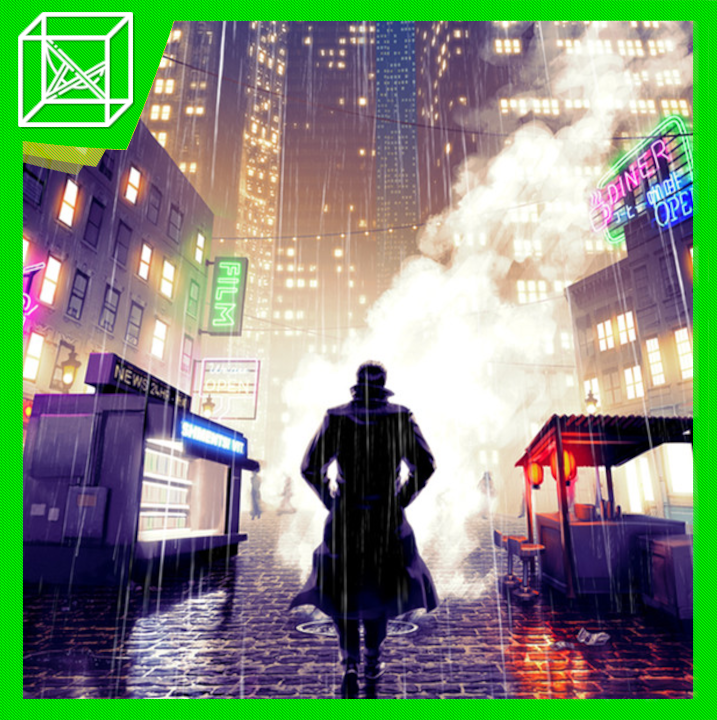
Shadows of Doubt is a game that’s wild in the best possible way. It casts you as a private detective in a massive voxel-generated city (even on Small settings, the city still feels pretty large), awash in neon and atmosphere, and then turns you loose, following procedurally generated leads and storylines as you pursue larger conspiracies and evade the law. With its stylized graphics, nonlinear plotline, and focus on immersive stealth gameplay, it feels like a more emergent-narrative Deus Ex, driven by player choice and the procedural generator’s almost gleeful penchant for chaos. While there’s more than enough here to explore in the 90 minutes of the demo, Shadows of Doubt is shaping up to be an ambitious and intriguing new game from ColePowered, and possibly one of the better immersive/stealth games of the 2020s.
Shadows of Doubt casts you as a private detective, recently retired from the police force and broken up from your significant other. In the dead of night, you get a strange phone call and a note pushed under your door that urges you to investigate a seemingly random person. Upon arrival at their apartment, you find them dead and the local megacorporation’s enforcers on the way, plunging you into the middle of a murder case that seems simple on the surface, but gets murkier the more you look into it, delving into serial murder and a mysterious religious cult.
Credit: The Gamer’s Lounge/Screenshot
In practice, this plays out as a first-person stealth adventure, with you investigating a variety of leads, everything from hacking telephone records to ransacking apartments and doing business with the criminal underground, all rendered in lovingly blocky voxels that give things a retro-futuristic feel. The cities are always overcast, the apartments are always cramped and located in tight corridors, and the emphasis on mechanical and paper-based communications make it feel like an alternate version of the present, one where things like microprocessors and digitization barely exist. In the current demo build, you have 90 minutes where this city is your playground, running you through the introductory case and then flinging you into the city to make connections, find leads, pay rent, and make your way in the mean streets. It’s a robust series of systems, too, with you needing fingerprints, addresses, phone numbers, and having to evade security systems while you hustle for cash and sneak through vents.
Credit: The Gamer’s Lounge/Screenshot
You can investigate crime scenes with a fingerprint reader, hack phone records and safes with a variety of code-readers and other gizmos, or even let your fists do the talking if a witness isn’t cooperating. It’s a vast variety of choices, so large the intro case even comes with a list of leads you can tackle in any order you choose. It’s really satisfying when you get a break in the case, or when you manage to sneak through that apartment you found locked, or when you finally close the case for yourself. The large range of options also means you can tackle things in a way that’s interesting to you, rather than one specific thing.
What makes the game shine, though, is the chaos of it. Noir is a genre all about things going wrong very quickly, and Shadows of Doubt foregrounds this by forcing you to run from the cops in the tutorial. Because of the living city, you can sometimes show up to interrogate a witness while they’re out or sleeping, and they’ll be less susceptible. With the demo’s time limit, this could mean you need to break and enter a little faster, but then if they come home, they’re not going to be amenable to you rifling through their kitchen. Even with permission to be in buildings, sometimes someone will just not like what you decide to do in their space, triggering a conflict. The more things that go wrong (either due to bugs— the game is in early access and a little roughness is to be expected— or mistakes you make), the more interesting choices you have to make and things you have to work around in the case.
While the game suffers a little from lack of polish, Shadows of Doubt is a beautiful thing even when something goes wrong. It’s satisfying to solve cases, easy to pick up, and feels deep enough that you can sink your teeth into it regardless of whether it’s a quick jaunt or you’re in for the long haul. Here’s hoping that when ColePowered Games finishes with it, it delivers on the promise this demo represents, because then this will be one for the ages.
Book of Hours Preview/Demo Impressions: The Thinnest, Tastiest Vertical Slice
Book of Hours arrives in full resplendence this June for PC. If this is the (admittedly thin) vertical slice we’re getting so far, I for one can’t wait to dive in.
Credit: Title Art from Book of Hours
Book of Hours
Platform: PC
Developer: Weather Factory
Publisher: Weather Factory
Release Date: June 2023
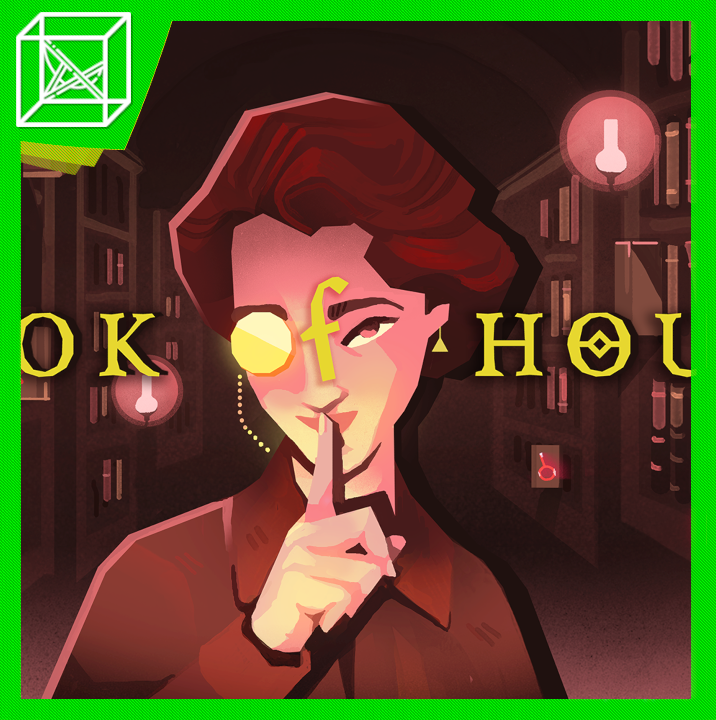
Book of Hours, the latest upcoming game from bizarre art collective/writing duo/indie game studio Weather Factory, has tantalized fans with brief glimpses over the past few years, finally dropping a small playable demo during Steam NextFest. The game, which promises to be something like an “occult librarian simulator” with a similar interface and art style to previous indie smash Cultist Simulator, casts you as the Librarian of a mysterious clifftop library called Hush House, a punishment for some nebulous crime. In your capacity as Librarian, you catalog books, read forbidden knowledge, make nice with the townsfolk, and uncover secret Wisdoms that might lead you down dangerous pathways or cost you your sanity while giving you new skills.
The demo begins with you washing up on the shores of Brancrug Isle, home to the clifftop library of Hush House and the town of Brancrug Village. The Village is a town of suspicious people, requiring you to gain an introduction from an old friend before you continue your journey towards the Library. From there, you unlock a few locations— the local post office where you can send and receive letters, the local pub where you can hire laborers, and one of three places in town where you can gain favors and help: the local blacksmith, the rectory where the Vicar lives, and the curious duplex where the local Midwife and the Undertaker live together. Your goal (as much as there is one in the demo) is to rescue yourself from the beaches of Brancrug, find your way up through the Village, and eventually make your way into Hush House itself, where the demo ends.
The Wisdom Map from Book of Hours. Credit: The Gamer’s Lounge/Screenshot
There’s a lot to love here. The expressionistic visual style, rendering everything out of blocks of color in a way that feels one part painting and one part collage. The return of Weather Factory’s unique adventure-game system, one that sees you collecting cards and slotting them into various actions around the map. Even the newer elements of the work, which include a scrollable map and the ability to arrange objects inside the individual rooms of your library. It’s very impressive, and the way the game handles larger map elements with progress bars beneath each location is a novel way to deal with the constantly advancing clock, letting the player see what’s going on as they zoom in and out of the map.
Credit: The Gamer’s Lounge/Screenshot
The problem is that the demo is very short, comprising barely the beginning of the game (in fact, the demo ends when you get to Hush House, where the meat of the game supposedly takes place). It makes it difficult to get too many impressions from it. Book of Hours hints a lot at interlocking systems, from the simple (telling fortunes at the local pub for money) to the complicated (the upgrade tree is a dizzying web that dwarfs Cultist Simulator’s Mansus screen, with cryptic hints as to what you need to upgrade). Even getting off the opening beach requires careful and slow consideration of your options. What you get is fantastic and finely tuned, though, in spite of being abrupt.
Maybe that was the idea? Hint at something grand, show what you have for now in a sort of playable alpha format, and get people on board for the rest? If so, it’s certainly intriguing. Given the degree of control in the demo, one can only hope that the full game is as promising and broad as the demo suggests, the systems as deep as Weather Factory promises.
Regardless, we won’t have long to wait, as Book of Hours arrives in full resplendence this June for PC. If this is the thin vertical slice we’re getting so far, I for one can’t wait to dive in.
Steamworld Build Preview/Demo Impressions
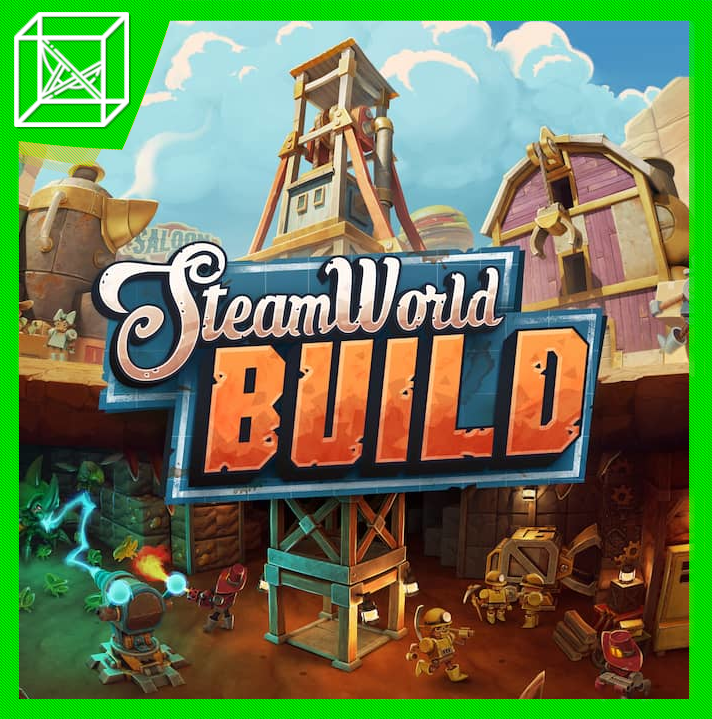
The Steamworld series is one that’s been around for a while now, mixing a focus on traditional video game concepts (miner, platformer, tactical strategy game) with a wildly imaginative setting, some outside-the-box mechanics, and a level of accessibility that means players can jump right into the action. From the demo, it feels like Steamworld Build, the upcoming city-builder addition to the Steamworld universe, carries on that tradition beautifully.
Steamworld Build
Developer: Thunderful Development
Publisher: Thunderful Publishing
Platforms: PC
Release Date: Coming Soon
The Steamworld series is one that’s been around for a while now, mixing a focus on traditional video game concepts (miner, platformer, tactical strategy game) with a wildly imaginative setting, some outside-the-box mechanics, and a level of accessibility that means players can jump right into the action. From the demo, it feels like Steamworld Build, the upcoming city-builder addition to the Steamworld universe, carries on that tradition beautifully. It’s a top-tier city-building experience, with easy to understand supply chains and a learning curve that makes it all seem easy rather than frustrating, the graphics and setting are (as always) fantastic, and it’s got an intriguing built-in narrative that never feels bolted-on, making it feel of a piece with games like IXION and Against the Storm in terms of gameplay and story integration. If the final version is anything like the demo, Steamworld Build will be a welcome edition to the narrative city-builder genre.
Steamworld Build tasks you with, well, building a city. Guided by a mysterious computer core and myths of a rocket buried somewhere underground, you and your settlers start off at a dilapidated train station and set about building yourselves a town. This starts slowly, as you build up your workforce and supply chains, but soon has you fulfilling needs, building networks of roads, and even trading with other towns along the railroad once you fix up the station. Then the game pulls out its twist, and suddenly everything gets a little more complicated.
The initial city-building is relatively simple: Build residences for workers, reach population milestones, unlock buildings, and use those buildings to make your people happier and advance further along supply chains. It’s a pleasing enough interface, with buildings and structures bouncing lightly as you put them down, and all the interactions between buildings clearly signposted the way more city builders should. While there’s not a lot of activity to watch, placing the buildings, watching them bounce, and watching as the city grows with each new interaction is satisfying enough. But once you start repairing the few buildings in the area, suddenly the game opens up in an incredibly beautiful way.
First, you get access to the train station, a place where you can start deliveries and set up trade routes to other towns, selling your surplus items off to balance your economy. Trade between towns isn’t terribly new, but the item-card system, which allows you to purchase upgrades for your buildings and workers based on your resources makes things a little more special. Second, the game opens up the mines.
The mines are practically their own separate game as you mine for resources underground, with its own upgrade tree, buildings, and challenges. Gameplay plays out a little like a combat-free (well, for now, anyway) version of Dungeon Keeper, with you plotting out rooms on the ground, carving out the surrounding area, and setting up reinforcements to keep things from caving in. It adds a new level of challenge and complexity, with you having to manage two sets of resources, but also getting a major boost from your excursions underground, shoring up your existing resource production with underground caches and technology.
Weaving this all together is a fantastic story, as you attempt to excavate rocket parts so you can once again claim your place among the stars, just like the steambots of old. It offers a definite drive as you start to build up the town, giving you a reason to be there other than “build that city.” A lot of this is conveyed by character interactions in between milestones, which never manage to stop the game dead even as they pause the action.
Overall, it’s a fantastic game, and if the demo is any indication of the final product, citybuilder fans can look forward to a bright, beautiful, narratively interesting addition to the canon when it releases.
Marauders - Early Access Look
When you’re in the moment, when you’re trying to figure out the next tense, tactical firefight or hoping the other bastard gives you an opening you can fill with a hail of bullets, it’s brilliant, an immersive, white-knuckle ride through an alternate history with a vibe rivaling the best used-future sci-fi. It’s one part skin-of-your-teeth looter, one part “how underhanded can I be” shooter, one part space-dogfight adventure, all of it tenser than the best psychological horror game.
When you don’t, you end up spending twenty minutes catching up on your reading, attempting to join the two or three crews in your region left unprotected by passwords, or otherwise passing the time in a different window while the queue time ticks ever upward.
THIS GAME IS CURRENTLY IN EARLY ACCESS. ALL IMPRESSIONS OF THE GAME ARE BASED ON THAT BUILD AND MAY BE IMPROVED OR ALTERED BY THE TIME OF WIDER RELEASE.
Marauders
Platform: PC (Steam)
Developer: Small Impact Games
Publisher: Team17
Release Date: Oct. 3
When it works, Marauders is a rush.
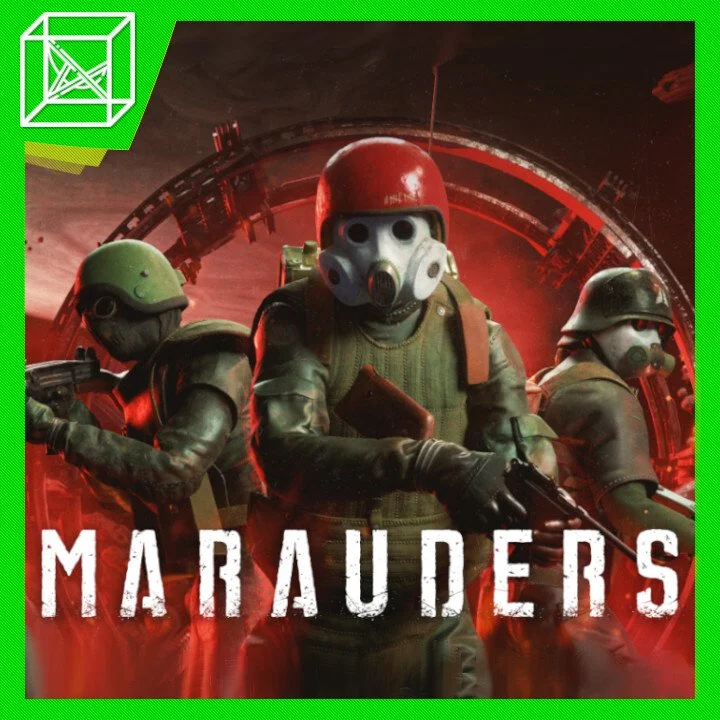
There’s a gritty tenseness to the game, a sense that death could be around any corner, that you have to balance scavenging and looting with quick firefights between players. That if you engage, that if you decide not to leave someone alone as they run through the halls, it could cost you everything. It’s an excellent atmosphere, a kind of Elite by way of the Verdun games, only compounded by the worn-down used-future aesthetic of things (you’re basically wearing World War II bunny suits and gasmasks and carrying submachine guns) and fact that death can be incredibly punishing not just one time, but each successive time down the line.
But there’s that qualifier. When it works. And therein lies the problem with Marauders
Couldn’t get an image of the opening sequence, so the contract screen will have to suffice
In an alternate 1990s, the Great War only continued, extending into space as humanity rapidly industrialized the solar system and then more or less abandoned the people left out there to their own devices. Into this landscape of rusting hulks, malfunctioning spaceships, and abandoned asteroid mining operations steps a new class of criminal. Outlaws in barely functional ships prowl the outer reaches of space, looking to loot as much as they can, either from the existing resources or from rival crews also looking to make a quick buck scavenging the stars. They are supplied and hindered by four factions, everyone from pirates to the Allies planning on making a quick buck off of the brutal scavenging runs. It’s a cruel world out there, and it’s going to take every last inch of luck, cunning, and ruthlessness to survive.
Marauders is almost brutally simple in its execution. You drop into each match with a time limit of 24 minutes onboard your rusted-out hulk of a spaceship, enroute to one of several locations full of loot. Your job is to loot everything you can find, kill anyone that tries to gun you down, and escape on your spaceship (or one of the escape pods) to the closest exit gate. Survive, and you make your way back to base with your loot in time to do it again. Die, and you lose all your equipment and inventory, instead needing to buy more weapons and armor so you can go on another raid. You can even crew with up to three friends and raid as a team, though it’s always good to be careful, since friendly fire is definitely a thing (to the three people I crewed up with, I am supremely sorry, but good work on taking me out).
This results in a lovely tension in gameplay— there’s not a moment to rest, you have to keep moving and keep a constant eye on your surroundings and nearby footsteps, wondering if you have time to loot that body or if the homicidal maniac in the German infantry helmet is lurking right around the corner waiting for you to make a mistake. It’s a game of tense, paranoid, and very short shootouts, coupled with its rather slim resource management and the massive penalties on death. It resulted in some awesome moments, like a stealthy gunfight in the middle of a naval base, exchanging gunfire from the top of an observation deck with rival marauders on the ground floor, each brief glimpse peppered with the exchange of submachine gun bursts in the dark. It also resulted in some moments of dark comedy as one player repeatedly chased me around a level with a knife, swinging wildly, while another decided to just straight-up murder the two of us despite it being clear I had nothing to loot, hellbent on keeping me from playing any more of the game, period.
This tension also extends to the space segments, as you have to get to the place you’re going to loot. This can result in an equally anxiety-inducing time as you try to maneuver your craft through fields of anti-aircraft defenses and potentially other player ships, flak bursting all around you as you try to make it to the target, hoping to get out in one piece. Adding another degree of complexity, you can even use your escaping pod to ram into ships and breach them, hijacking them for your own private collection and then taking them out on raids. The whole thing is an immensely satisfying risk-and-reward system, balancing you pressing your luck against greater rewards and the chance of winning back some of what you lose if a run goes sour. The spaceflight is also gorgeous, putting you high above a planet with a day-night scheme and various objects in levels of disrepair all for your viewing pleasure, giving you an area to hide in as well as potential locations where others can ambush you.
Furthermore, the enemy AI is great, behaving like players and using the map to the fullest. There were numerous times where I was sure I’d racked up player kills on a run, only to find out that I’d only killed a bunch of NPCs. They’re good at defending corners, peeking out, and setting up ambushes, as good as any player would be.
But there’s an unspoken qualifier to all of that, and we’re unfortunately going to have to get into it. “When it works.”
When you actually get into the game, when you’re in the moment, when you’re trying to figure out the next tense, tactical firefight or hoping the other bastard gives you an opening you can fill with a hail of bullets, it’s brilliant, an immersive, white-knuckle ride through an alternate history with a vibe rivaling the best used-future sci-fi. It’s one part skin-of-your-teeth looter, one part “how underhanded can I be” shooter, one part space-dogfight adventure, all of it tenser than the best psychological horror game.
When you don’t, you end up spending twenty minutes catching up on your reading, attempting to join the two or three crews in your region left unprotected by passwords, or otherwise passing the time in a different window while the queue time ticks ever upward (my record was half an hour). It’s odd that a game that’s barely been played for a day or two would have a community this insular and a latency this high, but congratulations, Marauders, I think you set the land speed record, partly due to how teeth-clenchingly tense the game can get. Within moments of play, I was introduced to the lobby screen, where I spent way too much of my playtime, either hanging out in the “crew” section waiting to be kicked or for the host to dissolve the room because too few people showed up; or alternately spending my time waiting for the game to get through the agonizing matchmaking screen so I could enter the agonizing loading screen for quick play.
This continued for another eight or nine minutes before it timed out
There’s also a definite balance issue. If you find yourself losing, and believe me, that happens just as often as a win, you can quickly find yourself on the wrong side of the meta, unable to buy the weapons and equipment to stay competitive. At the beginning of each raid you start unequipped, you are given the most basic of loadouts, but usually against a player with even starting equipment, you might as well be firing a squirt gun against ordinance. I understand this is fundamental to the nature of the game and the risk management therein, but in a multiplayer setting where someone’s inclined to die a lot, death has to be cheaper. I’m reminded of Verdun, an astonishingly lethal shooter where a well-placed rifle shot could end someone, but where death was just cheap enough— you lost your character, sure, but it took maybe a few clicks to put you back on the game map and ending someone else with a rifle shot. The odds never felt astronomical, but at the same time, you never felt like the game was beating the everloving tar out of you for losing.
If they work out the kinks— which I think this early-access period is definitely doing as we go— then this could be the next really cool cult shooter, a game that pretty much guarantees a devoted fanbase and with some definite challenge for those at any skill level. When it’s brilliant, Marauders is freaking brilliant. I cannot stress that enough, I love driving my rustbucket through the skies and trying to ambush someone’s bigger, more expensive ship in 3D space, or sneaking around a commando base hoping I can get a lucky shot or two off before someone’s paying attention and eventually get a submachine gun that means I can actually win a firefight.
But right now, unfortunately, they have a couple of hurdles and some pretty big ifs they need to take care of.
The Good:
- Tight, tense, white-knuckle combat
- Equally tense and tactical 3D space dogfighting
- Excellent scavenging mechanics
- Focused, pinpoint gunplay
- Beautiful visuals
- Almost humanlike AI
The Bad:
- Queue latency long enough you can read books in between finding matches
- Community is already incredibly insular, making it hard to find groups if you don’t already have friends playing the game
- Die too often, and you fall off the game’s difficulty cliff
Final Score:
A game that could be a classic, but only if it manages to work out its kinks and deliver on its potential. For now, it’s a rough-cut diamond, but a diamond nonetheless.
"Perhaps It Is Crueler To Let You Live" - Hands-On With Conan Exiles
It's been almost a week since FunCom released their fantasy sandbox survival sim, Conan Exiles. And the prognosis is...better than initial launch. The game looks great, and the loop of scavenging and survival is well worth it, sure. It's also the only game with (and this is obligatory since it's been the only news coming out about this game other than the lag info,) an endowment slider so you can choose the size of your character's breasts, or, if you are so inclined, pendulous lower extremities. But while the game has a lot of interesting systems and some absolutely gorgeous graphics, the extreme lack of balance, lag and rubberbanding issues, and just downright uncooperative AI mean that this game will have a lot of polish to deliver before its final release.
The following article may contain mature images inappropriate for those under the age of seventeen
It's been almost a week since FunCom released their fantasy sandbox survival sim, Conan Exiles. And the prognosis is...better than initial launch. The game looks great, and the loop of scavenging and survival is well worth it, sure. It's also the only game with (and this is obligatory since it's been the only news coming out about this game other than the lag info,) an endowment slider so you can choose the size of your character's breasts, or, if you are so inclined, pendulous lower extremities. But while the game has a lot of interesting systems and some absolutely gorgeous graphics, the extreme lack of balance, lag and rubberbanding issues, and just downright uncooperative AI mean that this game will have a lot of polish to deliver before its final release.
Conan Exiles casts you into the ancient and brutal world of Hyborea as an Exile, one who has committed terrible crimes (procedurally generated for each new character) and been thrown out into the forgotten wastelands, fastened to a cross to die. The player is then saved by Conan, who leaves them naked and unarmed on foot in the middle of vast ruins hewn from jet-black stone, to gather sticks, rocks, and plant matter until they have enough resources to get themselves clothing and tools. They then must build and upgrade their equipment, gain experience, and eventually rise to assert their dominance over the savage world, provided a crocodile doesn't bite them in half, forcing them to find their body all over again.
Yes, friends, it turns out that not being Conan or one of his allies in a Conan story isn't all that much fun. A lot of the early game is spent running from literally everything, because everything will kill you. Arguably the least dangerous two enemies are the giant bat you meet in a scripted event, and the "imps," nude guys who look like a hunchbacked Toxic Avenger and can't take you out unless in a pack. Even the under-equipped AI-controlled "exiles" who run around on the PVE and single-player instances of the game can take you out. The game is punishing, make no mistake.
But this highlights one of the major issues with the game. While brutality is all well and good, and is in fact a major feature of the Conan world, the sheer size of the difficulty cliff makes it annoying to play. Enemies will chase you across the map, and even after breaking line of sight. Also, none of them seem the slightest bit interested in anything but you, which means you can be standing on a rock trying to catch your breath and get around things, and suddenly be surrounded by enemies who are only interested in killing you. Moments after leaving the starting desert in any direction, you are swarmed by some fresh horror, which immediately kills you and drops you in the starting desert again.
This necessitates either finding your dead body to loot it in a very dangerous area, or starting all over again from scratch. It's frustrating, but much appreciated over the system where you would lose all your items, weapons, clothing, and any structures as well as everything else, which has since been patched out. However, with the hyper-aggressive enemy AI, this is still a dangerous proposition, and one difficult to enact. You will end up making a lot of stone pickaxes and stone axes to get through the early part of the game, and sometimes it isn't worth it.
Aiding and abetting the enemy AI is a system that doesn't register hits when you attack and some serious lag and rubberbanding issues, leading to such moments as an ibex who will stand still while you hit it, never once registering that it's hurt, only to teleport a mile away and start running like crazy. Enemies will drop you in four hits, regardless of armor or how much damage you deal to them with the same weapon they're using. Sometimes, I even saw people walk across water or through rivers. The lag gets even worse on the online servers, which, I should caution to remind everyone, are the entire point of the game. That you get your open ended Hyborian adventures in a world with real players and real player-created content. Which is nigh-impossible to play.
And all of this really ticks me off, because the game is great. It feels really satisfying when you win a combat and then butcher your kill for parts. It has bizarre moments, like harvesting human adversaries for food and hides, meaning you can be wearing human-crocodile hybrid pants. It's satisfying to gather and make things. It's even cool figuring out the past of the Wastes from the sinister glowing tablets hidden throughout the world, or trying to go to the distant spires you can see from locations. It's a fun game, cloaked in the worst nightmare of hardcore survival game nonsense. It's an awesome concept hampered by extreme performance issues.
Wait until this one comes out of early access. FunCom is working tirelessly to fix what's broken, and when it finally comes out of early access, the result should hopefully be an intriguing adventure in the brutal world of ancient Hyboria. Until that time, I suggest watching the patch notes intently until the game it is now becomes the game it could be.
Conan: Exiles is currently in early access. The reviewer received a complimentary copy for this hands-on look
Pathologic Review
Why should you get this game? Because for the first time in it's long and checkered history, the cult horror game Pathologic is finally in a playable form. The graphics are better, the English translation actually matches up with what's being said in the game, and many of the truly game-breaking bugs are nowhere to be found. For the first time, players are finally able to play a rare gem in the form the authors intended it to be played.
Why should you play Pathologic at all? Well, that's a lot more complicated. The short answer is simple:
Everyone needs their mind messed with a little sometimes.
Why should you get this game? Because for the first time in it's long and checkered history, the cult horror game Pathologic is finally in a playable form. The graphics are better, the English translation actually matches up with what's being said in the game, and many of the truly game-breaking bugs are nowhere to be found. For the first time, players are finally able to play a rare gem in the form the authors intended it to be played.
Why should you play Pathologic at all? Well, that's a lot more complicated. The short answer is simple:
Everyone needs their mind messed with a little sometimes.
But let me explain: Pathologic is the first game by cult favorite developers Ice Pick Lodge, the twisted geniuses behind such games as impenetrable and incredibly difficult afterlife FPS The Void, psychological 2D stealth adventure Knock! Knock!, and a gaming satire known as Cargo!: The Quest for Gravity. They're also nuts, and responsible for manufacturing games that usually aren't seen outside of creepypasta. But I'm getting away from my point a little. Let me try again.
In Pathologic, you choose from one of two characters (a third is unlockable, but you have to play the game at least once)-- Danil Danofsky, a bachelor of medicine investigating the murder of someone who was supposed to be immortal; or Artemii Burakh, a Haruspex and one of the few people allowed to perform autopsies in the game's world. There's also Klara, the Devotress, an unlockable character who has mysterious healing powers and a higher calling than the other two, but chances are unless you're really determined or edit your save file, you're not gonna see very much of her outside the opening cinematic. I'll get to why in a moment.
This little playlet is your character selection screen
While these three go about their business, a mysterious plague known as the "sand plague" takes over the small unnamed town they find themselves in. Furthermore, the three families who run the town with the aid of their precognitive "mistresses" are locked in a power struggle that seems to finally be coming to a head. Bizarre customs involving children and their animal companions, the massive hilltop slaughterhouse, the local asylum, two alien buildings at opposite ends of town, burning people suspected of being artificial humans at the stake in the district centers, and the odd play that goes on every night at midnight run rampant. And before the end, things will get a lot, lot worse.
The game is nominally an FPS/Survival horror/Adventure game. As whatever character you choose, you investigate the town and its inhabitants, running errands and trying to get to the bottom of the numerous mysteries. You can also dumpster-dive, barter with townsfolk, and explore the impossibly weird geography of the small town on the steppe. There's a constantly running game clock, and it's not possible to see everything, so players have to think in terms of what they do want to see. And if you think of it in terms of a game, you will die. A lot.
BALD. MUTE. LUNATIC. SKINFLINT.
Yes, the game is kind of unforgiving about that. Quest-givers will wind up lying to you more often than not, in fact, most people in the town are exercising some kind of dishonesty. Prices at most of the shops in town are controlled by a bald, mute lunatic who jacks up the price day after day while giving you corrupt pawnshop-style prices on anything you try to sell. Maintaining a good supply of food is absolutely essential, as is getting enough sleep. Most times you get in a fight, it's deadly, and even a common fistfight could take off half your health. Ammo and guns are so scarce that it's actually more useful to barter them for supplies you need, than it is to shoot people. It's a difficult, punishing game, even more so than stuff like Dark Souls. But there's a purpose.
Typical conversation in Pathologic
Pathologic is a game that gets inside your head. It forces you to think not as a player, but as the character you chose. It even reveals much of the artifice other games would normally hide, showing you that yes, this is a play, this is artificial, but if you think that's going to save you, ha ha ha, nope. Further driving this home are the Adherents, plot-critical characters that you have to keep alive and safe through each of the plot's twelve days. They can and will die unless you pay attention to their needs, leaving you high and dry. So can quest-givers and major NPCs, and not all of this is scripted. Of course, some of them have to die over the course of the plot anyway, but figuring out which is which depends on how you yourself feel the character would act. It's a game that dumps all the choices squarely in your lap, and then reminds you that not choosing is still just as much a choice.
However, once you actually learn to live in the game's world, the game becomes unsettling and engrossing in equal amounts. It's one of the very few games that casts you in the role of a detective, and then actually makes you deduce, detect, and interact with the characters. Every aspect of the mystery is left up to you to solve, every clue waiting for you to discover it, all the conclusions your own within the scope of the game. It's amazing to have that degree of agency when the controls and interface aren't that complex (NOTE: There is no tutorial, get a manual. I know, some of you aren't used to it, but seriously, GET. A. MANUAL).
These two are all the tutorial you're gonna get.
The game also kind of seeps into your head a little. It's very immersive once you get the basics down, allowing the surreality of the world to seep in. You also get some instruction and direction from the two masked "players," one wearing a raven-like plague doctor mask and cloak, and the other dressed up as a mime in a black bodysuit with a white mask. While this is incredibly vague, it does give some insight in how the world in the game works and what you're supposed to do in the world. Even if a lot of it still remains for you to find, rather than being pointed out to you.
But if you want a challenging, unique, innovative experience that breaks genre barriers and gives you something that everyone says they crave out of their gaming experience, you need look no further. There may be other games that make you feel this way, other games that challenge the way you think and act in games, other games as challenging, but in the end Pathologic stands on its own, a titanic work that neither begs for your attention nor particularly needs it, but instead waits and bides its time until you're ready. And when you are, it'll be waiting with its own peculiar welcome. On an ancient steppe. In the fog.
Children at play on the Steppe. Burying a doll. No big deal.
Score: 5 out of 5 - with the caveat that you should seriously look into this game and understand further what you're getting into. Some people hear "complex and challenging" and go charging into things headfirst, I will warn you immediately that this is not an experience for many, and you should search around.
Reviewer received a copy of the game for review
Victor Vran Preview
Victor Vran , the new game from Tropico developer Haemimont Games, is an ARPG like Diablo or The Incredible Adventures of Van Helsing. It's set in a crumbling castle somewhere in Europe, filled with all manner of creepy and crawly creatures. While many people have noted similarities to other ARPGs out there, Victor Vran adds a new element to action-RPGs that most other games have ignored: Height.
What sets Victor Vran apart from the other games mentioned above is the ability to jump over walls, wall-bounce to hard-to-reach points, and otherwise navigate the battlefield in a wholly different way. It adds an element of platforming to the game, as well as a level of tactical control-- Why get swarmed by a horde of spiders when you can get to higher ground above them, or stand on a nearby hedge to avoid their attacks? Why not leap over your enemies and get the drop on them from another angle?
Victor faces down a horde of the undead.
While the game is still in early access and so there's placeholder art and enemy variety is a little low, the game's combat system is completely functional at this point, and many of the levels are finished, so you can go tearing through castle gardens, crypts, and caves with a variety of swords, scythes, hammers, guns, and demonic powers. Adding some variety to things, there are a series of challenges for each mission, urging players to consider exploring all of an area to hunt down secrets, chests, and bonus bosses to defeat.
Two area of effect attacks clash
I'm excited to see how Victor Vran develops into a full-fledged game, and while I know there's definitely some missing pieces right now, what they have already is reason enough to keep watching this.