
Zombasite Review
A few months ago, I reviewed an ambitious early-access game known as Zombasite. I was quite impressed with it back then, a title with staggering depth and a very low learning curve, where you could participate however you liked. It had an interesting mechanic with warring clans and an impending zombie apocalypse, and it was a lot of fun. It also had a lot of problems, some serious UI issues, and a definite problem with being overwhelmingly huge. It also couldn't quite make up its mind as to what kind of game it wanted to be, instead deciding to be all of them at once.
A few months ago, I reviewed an ambitious early-access game known as Zombasite. I was quite impressed with it back then, a title with staggering depth and a very low learning curve, where you could participate however you liked. It had an interesting mechanic with warring clans and an impending zombie apocalypse, and it was a lot of fun. It also had a lot of problems, some serious UI issues, and a definite problem with being overwhelmingly huge. It also couldn't quite make up its mind as to what kind of game it wanted to be, instead deciding to be all of them at once.
I am proud to report that some of these problems have been fixed. While the game itself has changed very little from the beginning to the final project, and some parts are just ridiculous (the huge game world size, for example, even on tiny), Zombasite is pretty much the same as it was back then, but with some major fixes.
For those who didn't read the earlier review, however, allow me to explain a little about the game. Zombasite is a hybrid 4X, real-time, Action, and Roleplaying game. You lead your clan into battle against other clans on an isometric Diablo-style map, attempt diplomacy, and hope to rid the world of zombies by developing a cure or eradicating the parasite causing the dead to rise. You also have to balance relations between clan members, manage your clan's food supply, and build stronger defenses as you go.
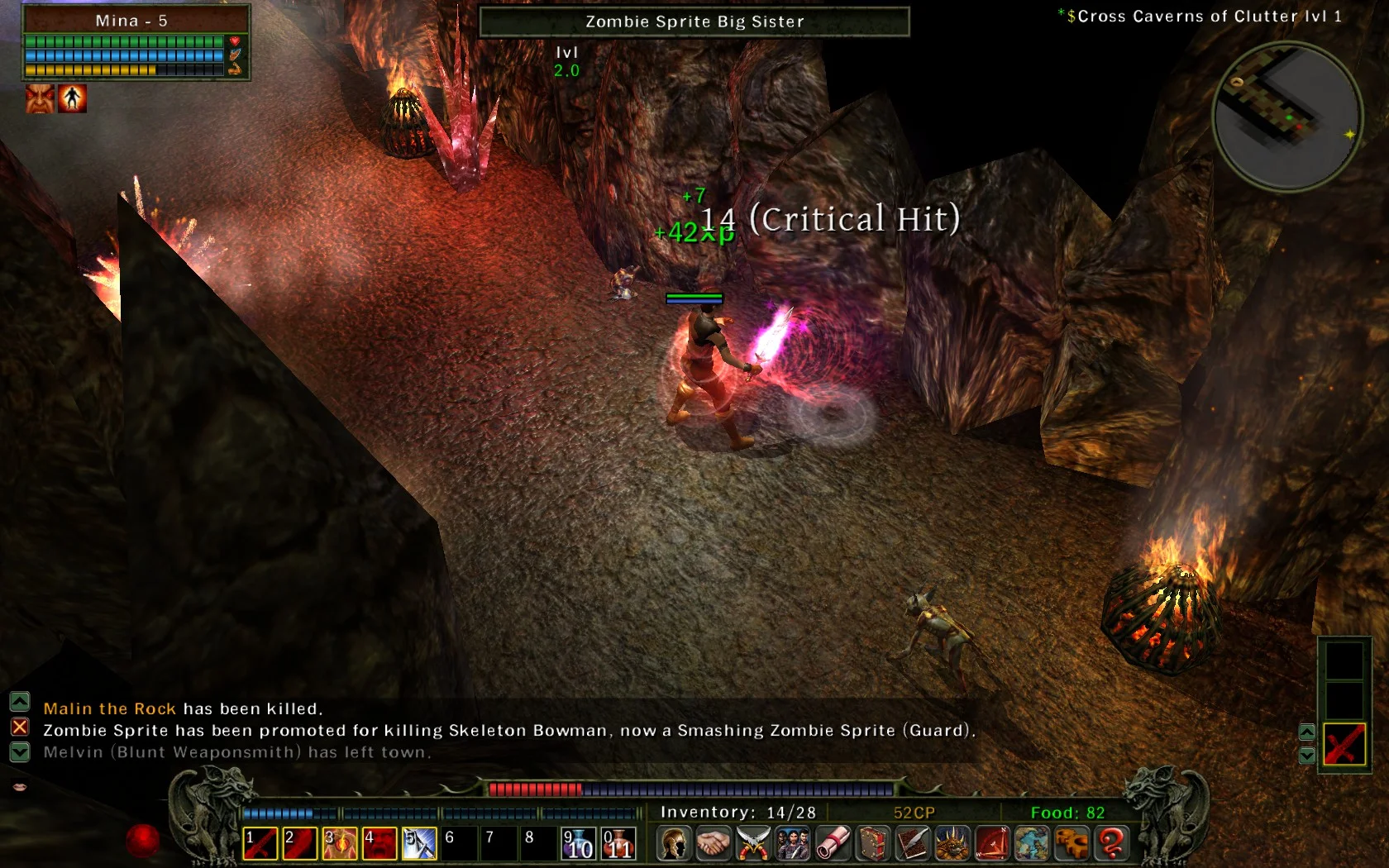
Further heightening the tension is the constantly ticking clock. There's always a chance that your archnemesis will open a portal to Hell, or that your clan members may inexplicably burn your settlement to the ground, or that the people you're trying to rescue so they join your clan will end up instead getting killed by wild animals, leaving you high and dry.
I initially said that the game was too large, but for my first release playthrough, I instead decided to set the world to "tiny." While "tiny" is apparently still massive enough to contain tens of factions and subfactions and zombies, I found the reduced map a lot more manageable now that I didn't have to make the trek from Mount Doom and back every time I wanted to complete a quest. Also helping things, quests can now be completed from your questlog, also reducing backtracking.
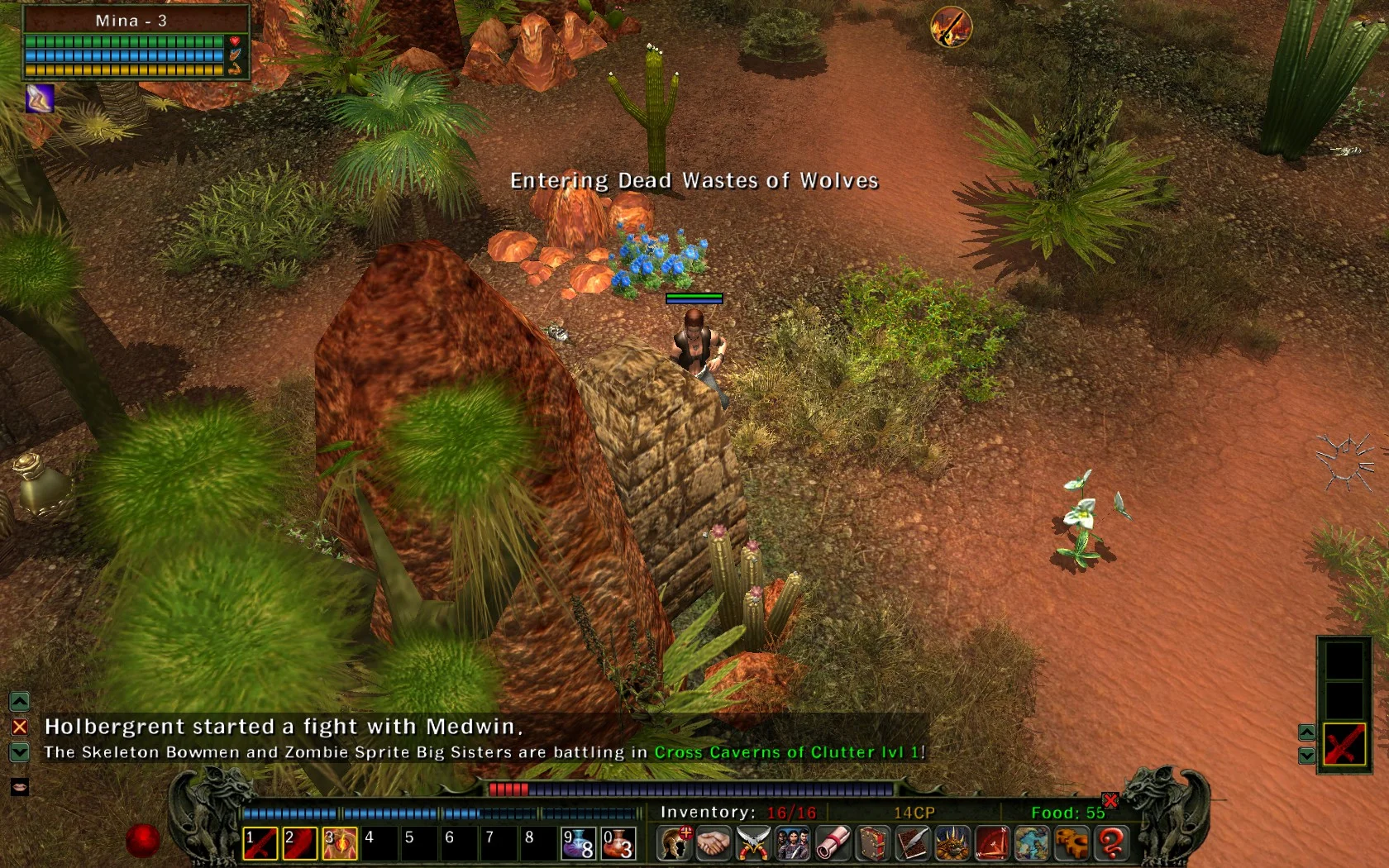
However, some things are still glaring flaws. The help system will quickly swamp you with notifications, and since there is no tutorial, you are dependent solely on them to figure out exactly what in God's name is going on. The subsystems other than that are kind of byzantine, with no real concrete way to figure out how to advance your clan, war on other clans, or any of that. Durability and repairs are similarly arcane, requiring you to travel all over the place. And further complicating matters, finding a gate back before your clanmates kill each other kind of makes things unnecessarily complicated.
But in the end, Zombasite is a good game. One that will probably lost on most, one that's most fun when you're not trying to make sense of a bunch of things and instead go off to whack a bunch of zombies on the head, figure out how to make health potions cure infections, and recruit a blacksmith or two, but a good game nonetheless. It's weird in a very charming fashion. If you are patient with it, then it's one of the most rewarding titles (and definitely among the most rewarding indie titles) you will play this year.
4/5
Reviewer received a free copy of this game in exchange for a review.

MegaTagmension Blanc + Neptune vs. Zombies Review
MegaTagmension: Blanc + Neptune vs. Zombies is another entry in Compile Heart's massive moneymaking monstrosity, the Neptune universe. As with previous versions, the characters are all anthropomorphized versions of consoles, game companies, game journalism magazines, and other game-related stuff. Depending on the game, they go to school, conquer the world, have adventures in old, broken game consoles, and a ton of other wacky adventures. Seriously, the franchise has covered almost everything now. I'm just waiting for a Mario Party game to seal the deal.

Well, at least I have to give them credit for trying something new.
MegaTagmension: Blanc + Neptune vs. Zombies is another entry in Compile Heart's massive moneymaking monstrosity, the Neptune universe. As with previous versions, the characters are all anthropomorphized versions of consoles, game companies, game journalism magazines, and other game-related stuff. Depending on the game, they go to school, conquer the world, have adventures in old, broken game consoles, and a ton of other wacky adventures. Seriously, the franchise has covered almost everything now. I'm just waiting for a Mario Party game to seal the deal.
This time around, the Gamindustri gang is at a failing academy purportedly inhabited by both human and Gamindustri inhabitants known as Gamicademi. To drum up interest in the school, Blanc and Neptune decide they're going to film a zombie movie starring them and their friends. Coincidentally, there's an actual zombie outbreak just as they start filming, causing them to band together both to film the movie, and save the school from the zombie invasion.

Anyone who's familiar with Dynasty Warriors or other spectacle brawler games is going to feel instantly at home mowing down hordes of zombies. It's hard not to. It's also good to know that no matter how many times you plow into a massive cluster of enemies, sword at the ready, knocking them hither and yon, it's still instantly satisfying. MegaTagmension also gives the player a huge cast to knock people around, running the gamut from fast sword strikers to blunt technicians to a brawler who hits people with a giant prawn. That's all very well and good overall, and I love a good spectacle game. There's nothing like it in the world.

Now if only they'd just stayed with that. The game is a mess of half-visible features, including having game modes only accessible from the main menu (instead of, you know, actually inside the game,) calling itself MegaTagmension and yet somehow actually not having tag-team capabilities, and a tips screen where all the tips helpfully refer to things like being able to talk on the shop screen, a thing that doesn't even seem to be in the game. On top of all of this, the lock-on feature, something that really should be a prominent part of a game that throws a billion enemies at you at once, is intermittent at best. Most of the time, I activated it by accident in an attempt to do a super-move. When the enemy immediately died upon contact, I then felt kind of stupid.
And it's a shame, because this is actually one of the few Neptunia games I could see myself revisiting again and again. When the controls work, they're smooth. The game balance is decent, even if it's nigh-impossible sometimes to hit a boss the proper way. Some of the between-scenes dialogue is great, and the various characters are unique enough to keep me coming back for more. But the flaws overshadow the fun of the game. Eventually, playing through just becomes and endless slog of zombies that won't quite die, powers that won't quite activate, a lack of hit recognition, a random drop system that feeds grinding, and just some odd choices mechanically.
So, in the end, it's not a bad game. I'm still not as much a fan of the franchise as I was, and it's not something I'll play by appointment, but if there's a sale, pick it up. It's fun, and the range of characters, customization, and replayability makes this at least worth a ride part of the way. But if you're looking for a spectacle battler or mass-combat slash-em-up, I think there's actually Dynasty Warriors on PC now.
3/5
Megadimension Neptunia VII Review: Maybe Someone Should Push The "Off" Switch Already
Megadimension Neptunia VII (pronounced V-2) is one of the better entries in the series. IF seems to have fine-tuned their formula to an exact science, the graphics are top-notch, and the characters have enough style and humor added to them that it makes playing the game less of a slog than it might have been normally.

At this point, nothing I say will probably sway you on games from Compile Heart and Idea Factory. Seriously, they're pretty much the same roleplaying games at this point. Anyone who's played one of their games (with the exception perhaps of maybe Agarest) knows what they're in for. If you've enjoyed them before, great. If you're new to the world, then perhaps pick up Fairy Fencer F, still a high water mark for the company and a good introduction to their odd hybrid of visual novel and roleplaying game.
But that said, as far as Neptunia games go, and considering Hyperdevotion Noire was a sack of doorknobs to the sternum as far as enjoyment went, Megadimension Neptunia VII (pronounced V-2) is one of the better entries in the series. IF seems to have fine-tuned their formula to an exact science, the graphics are top-notch, and the characters have enough style and humor added to them that it makes playing the game less of a slog than it might have been normally.

Megadimension Neptunia finds its hero, Neptune, Goddess of the Purple Heart, educating and messing about with her younger "sister" Nepgear, who will eventually take control of her region of Gamindustri. The two of them get a strange message from a broken console, drawing them into a post-apocalyptic future where the world has been torn apart by "the giants," which are clearly massive, destructive versions of the Goddesses from regular Neptunia continuity. Fighting against the goddesses is Uzume Tennoboshi, a mysterious woman who has the power to transform into the goddess Orange Heart. Together, the three set out to heal the broken world.
Neptunia's gameplay sets it up as kind of a dungeon crawler. You move from place to place on an overworld map, entering dungeons to clear them of enemies and gain levels, money, items, and equipment. In the dungeon levels, you traverse through platforming-style levels and hope to catch your enemies unawares to gain a better position in battles. Battles are carried out in a turn-based style with combo attack system. As you learn better attacks, you can swap the weaker attacks out for the stronger ones and create better synergies. You can also break down enemies into smaller parts, fight massive boss battles, and use combo attacks to lay waste to your enemies and save the broken world.

But this JRPG, in spite of all its trappings, falls into the same trap as a lot of JRPGs: Grind. It is important to grind like crazy to get up to the point where you can progress, it's important for you to constantly fling yourself at enemies to gain new powers and go up a bunch of levels, and it's important for you to check your XP and unlock all your abilities along the way. While this is true to life, that one must push themselves through a series of repetitive and boring tasks to be able to survive in the modern environment, in a game that is not similarly bound by the laws of society, it's tedious; and in this case, kind of like padding.
Repetition seems to be the name of the game. While I don't mind hearing the character's voices, hearing Neptune constantly shout "LIKE A KANGAROO!" every time she jumps is annoying. Having to trudge across the map to Mount Doom and back every time the story requires a little more time for a cutscene is annoying. Having to battle things until finally I get to the point where I can one-hit kill entire maps of creatures to fight a boss that's only slightly more of a challenge? Also annoying. Just in general, the amount of repetition and the number of things I had to grind were annoying.

Which is a shame. The game isn't bad. It just gets annoying after a while, and seems to have a fairly low replay value. Nep and friends have great senses of humor, and the voice acting is fantastic, the graphics are above par, and the controls aren't too confusing, though use of a controller is recommended. There's some depth to this, and I do like the depth that is there, between stat raises, mechanical rewards for achievement unlocking, and the combo system. It's all great. But the grind and the lack of much new from IF and CH means that, well...
There's just not a lot of meat here.
Final score: 3/5. It's average, but it could be more. And grind...well, that's a different article.
The reviewer received a copy of this game in exchange for a review.
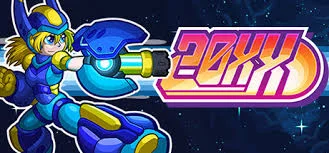
20XX Review
The new Mega Man-themed roguelike platformer from Batterystaple games combines two genres known mainly for their difficulty: old-school platform games, and roguelikes. The issue with this combination is that old-school platformers trade on repetition, muscle memory, and pattern recognition to move their players through the game, and roguelikes usually throw most of this out the window, meaning the players have to learn more to rely on skills and powerups than figuring out level layout.
In theory, it's an excellent idea, marrying the difficulty and skill-honing of roguelikes with the quick-reaction ethos that drives older platformer games. In practice, however, it's a nightmare.

There's been a trend recently for "difficult" games, and I hope we see the end of it soon. For all the reputation Dark Souls has, it's not actually difficult so much as it is a game that rewards learning and incentivizes a certain method of play. But because gamers apparently want "bragging rights," or to know that they've defeated something with a certain degree of challenge, some developers and designers tend to front-load their games with a bunch of content designed to stack the deck against the player and make the game that much more difficult to get through. The peak of this is of course Darkest Dungeon, but other games have definitely been stepping it up.
Which leads us to 20XX. The new Mega Man-themed roguelike platformer from Batterystaple games combines two genres known mainly for their difficulty: old-school platform games, and roguelikes. The issue with this combination is that old-school platformers trade on repetition, muscle memory, and pattern recognition to move their players through the game, and roguelikes usually throw most of this out the window, meaning the players have to learn more to rely on skills and powerups than figuring out level layout.
In theory, it's an excellent idea, marrying the difficulty and skill-honing of roguelikes with the quick-reaction ethos that drives older platformer games. In practice, however, it's a nightmare.
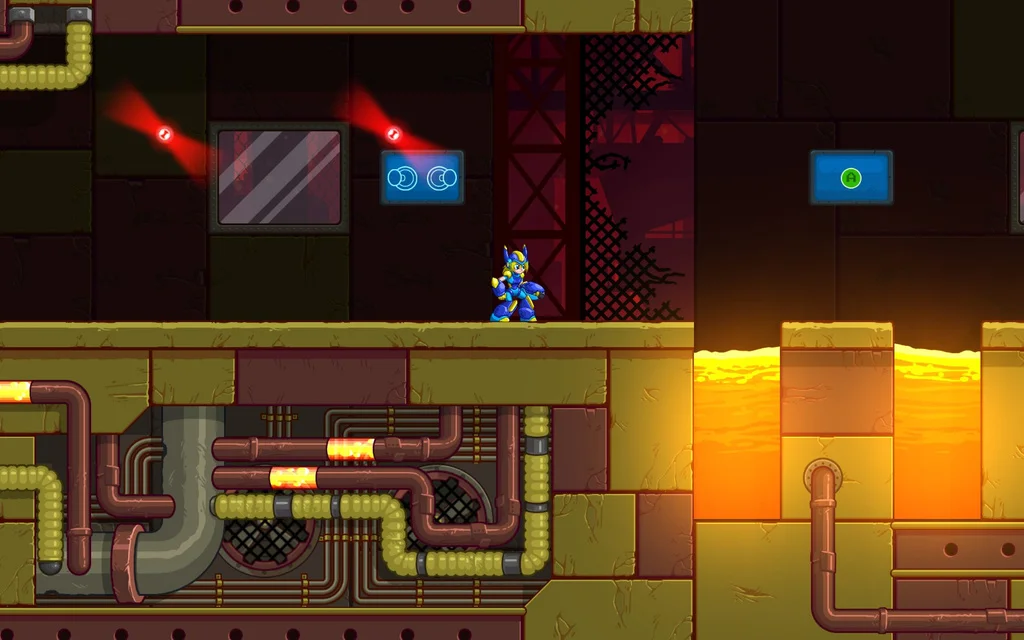
An average round of 20XX goes like this: You leave your home base to a procedurally generated level (it's either Vaculab, the jungle level, or Agnisort, the lava/factory stage.) You fight your way through the enemies and hazards to the boss, and on defeating the boss, gain their power as a weapon for later stages. You then re-up, get some upgrades, and continue on to the next stage from there. Or you die, forfeit everything except the upgrade points (known as "soul chips) that you collected up to that point, and are dropped back to the base to upgrade and try again.
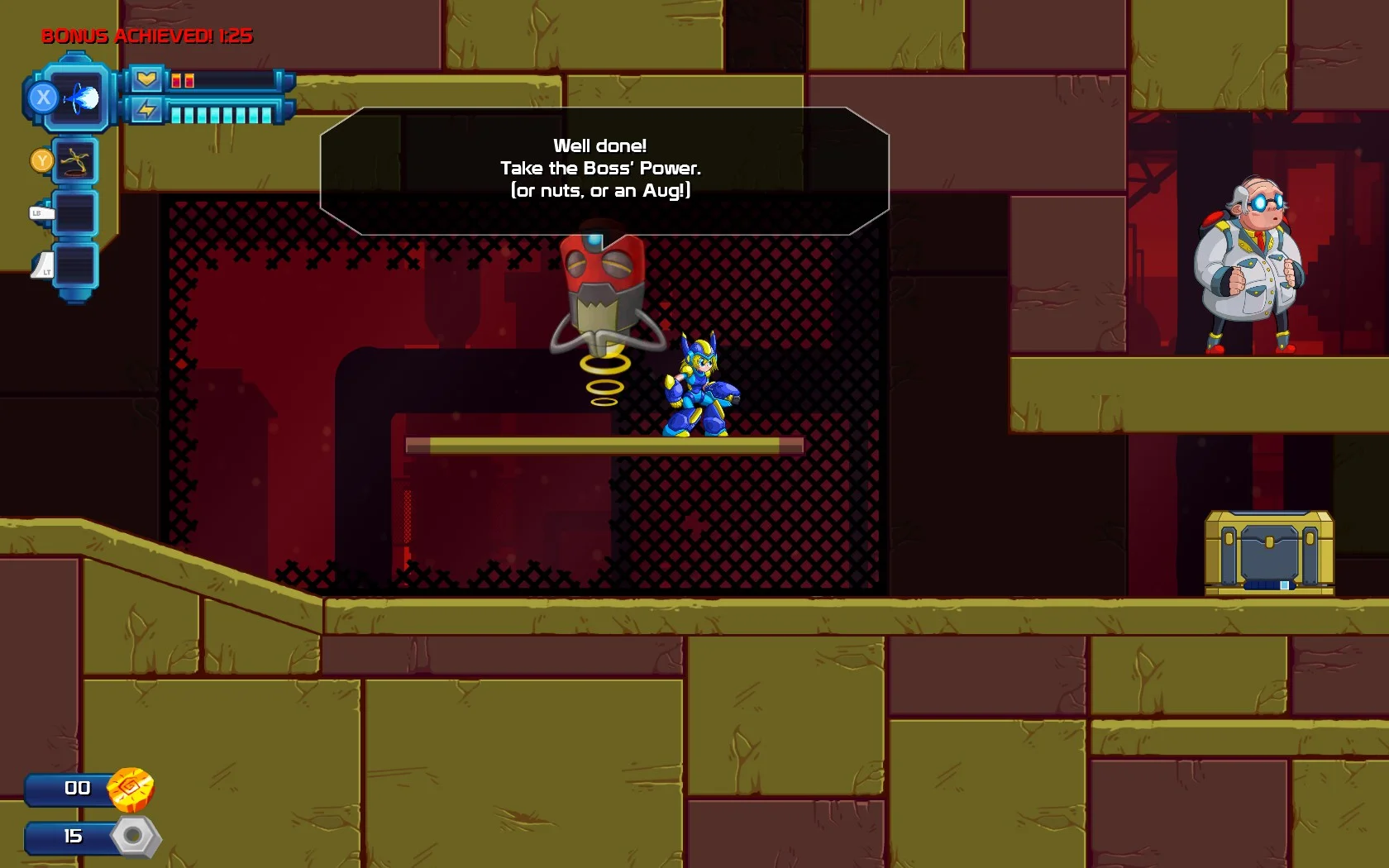
This is kind of frustrating. While the upgrades offer some grading to the overall difficulty cliff, the game can get repetitive quickly. Further compounding things, the way the level structure, or as they call it "the network" changes every time but seems to spit out the same or similar boss combinations each time also gets a little repetitive and frustrating. I'd like it to show me more, but it doesn't really show me enough. And while the variety of upgrades (both passive and active) make up for it a little, it still falls short.
Which is a shame, because, and I will say this, unless you're getting some kind of nostalgia fix via emulator, this is the best Mega Man game you will play all year. The controls are smooth, the enemy placement makes sense in spite of the procedural generation, and learning the patterns and movements is actually a fairly painless process. This is a good game. It's also a significantly more fair game than a lot of the "difficult" games that wind up making it into general prominence.
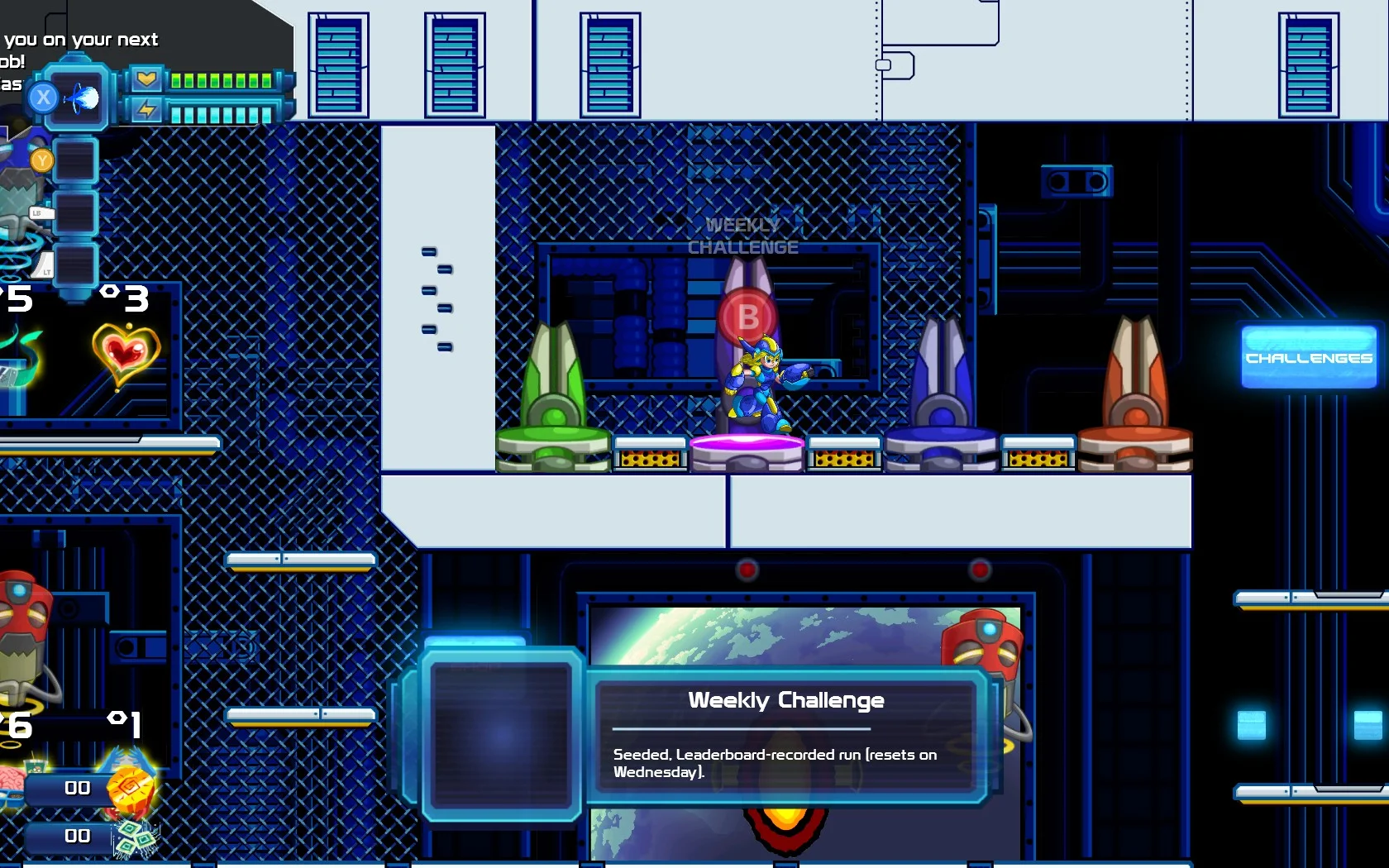
Before I go any further, however, I should say this: The game is in Early Access, so I have no idea what it'll be like when it finally makes it to shelves. Hopefully, the challenge is lowered a little, and the game is tweaked a little more so the process doesn't seem so Sisyphean as it does now. Once the game opens up a little after that first level, it really starts to shine, but before that, it can just be kind of a slog.
In the end, though, if you're craving decent Mega Man action or a new roguelike to add to the shelf, you can't really go wrong with 20XX. It's one of the rare games where what you see is exactly what you get, and there's nothing wrong with that, I just see it as something that could be a little better.
3/5
The reviewer received an early-access copy of this game in exchange for an honest review
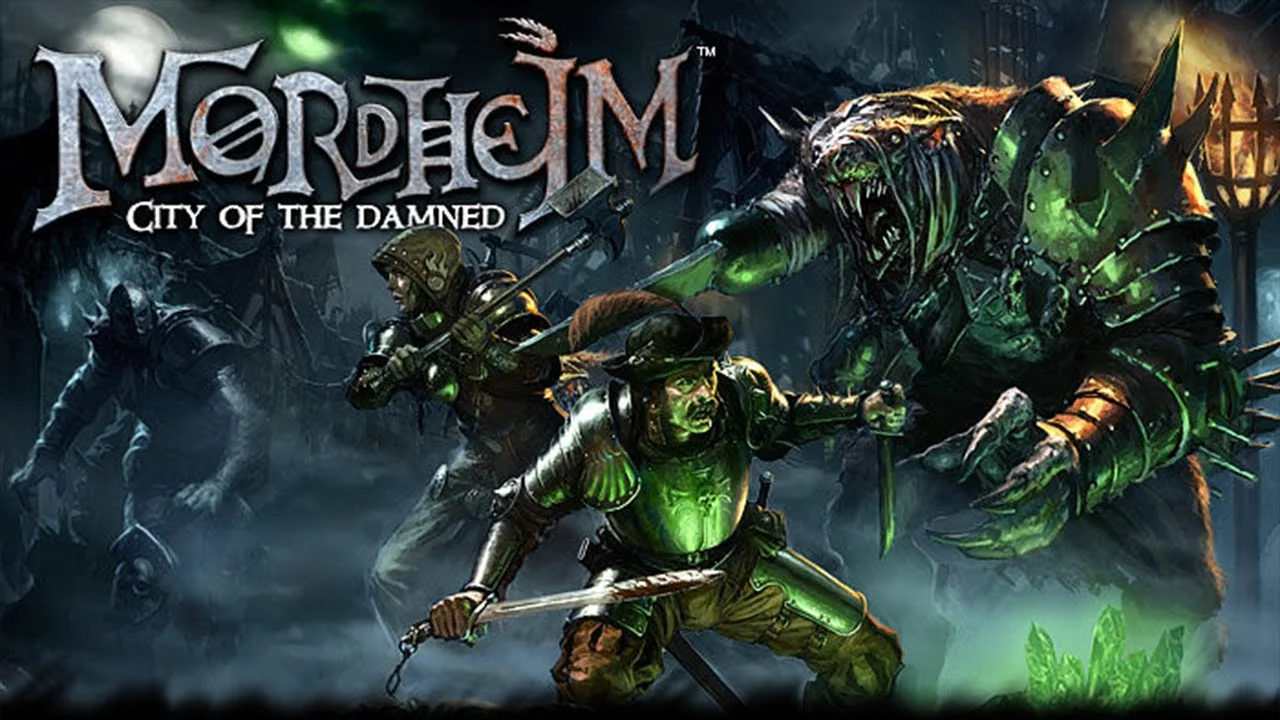
Out, Out, Damned City: A Mordheim: City of the Damned review
Unfortunately, City of the Damned isn't anywhere near as fun as the original product, and that's important to recognize. It tries so hard to get there, and maybe it even does in places-- the atmosphere, setting, and presentation are all fantastic-- but in the end, the mechanics are so byzantine and the gameplay choices are so confusing that it really doesn't make the end product particularly appetizing. Add to this an unfair learning curve that kind of shrugs and says "This is a difficult game and you're supposed to learn from your mistakes," and what you have is less a fun game, and more a byzantine slog for people who find Darkest Dungeon charming and too easy.

When I was younger, my brother and I got into the Warhammer games. We were already huge into board games (me less, since I lost frequently and would sometimes throw away a winning strategy I didn't even know I had) and Warhammer was just a bigger and more complex board game for us to waste away the hours on. But as I never had a head for large-scale tactics, I found myself drawn to the skirmish-based small-scale cousin to the Warhammer family of games, a game called Mordheim.
When the Mordheim: City of the Damned computer game was announced, I was ecstatic. Finally, a way to bring the gang warfare of the Old World's most wretched hive to a venue where I wouldn't have to keep track of all the rules. It looked excellent, too, with a variety of warbands and races, a massive city map, and a squad-based campaign feature. I couldn't wait to load up with a few of the people I played miniatures with and have at it.
Unfortunately, City of the Damned isn't anywhere near as fun as the original product, and that's important to recognize. It tries so hard to get there, and maybe it even does in places-- the atmosphere, setting, and presentation are all fantastic-- but in the end, the mechanics are so byzantine and the gameplay choices are so confusing that it really doesn't make the end product particularly appetizing. Add to this an unfair learning curve that kind of shrugs and says "This is a difficult game and you're supposed to learn from your mistakes," and what you have is less a fun game, and more a byzantine slog for people who find Darkest Dungeon charming and too easy.
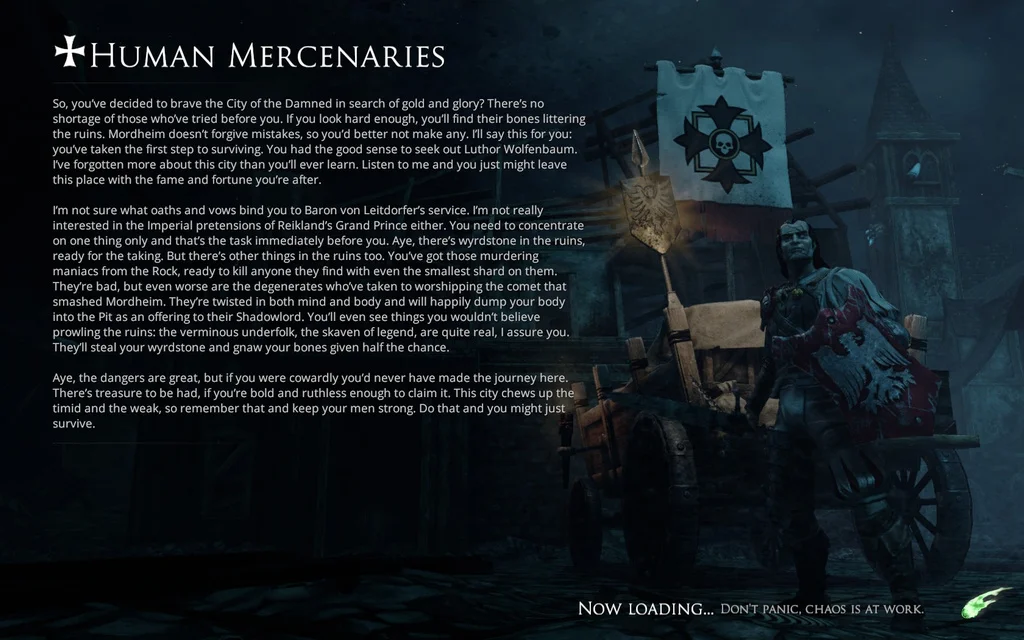
So the basics. Mordheim takes place in the city of Mordheim, a wretched pre-industrial European hive where people grew corrupt and decadent while the lands around them fell to a state of total war between the forces of Chaos, the Orks, and numerous other factions. That was, until the massive twin-tailed comet known as "Sigmar's Hammer" struck the earth in the center of the city, making it an even worse hive, a home to violent cults and sickening Chaos abominations, and a haven for treasure hunters and those seeking the valuable mineral known as Warpstone, able to release massive amounts of magical power and energy.
You play a band of these hunters from one of five factions: The Sisters of Sigmar, there to cleanse the city; the Church of the Pit, a Chaos-worshipping cult that formed around the comet's crater; human bounty hunters; the Skaven, rat-people driven above-ground by the city losing its grip on sanity; or Witch Hunters, driven to remove the supernatural influence from Mordheim and have a fun time doing so. The game is split into two sections, the "camp" screen, where you recruit and outfit your squad to take on missions, and the "mission" section, where you deploy into the city to do battle with other warbands and scavenge for goods. Each skirmish has an objective and a series of sub-objectives that you can complete if you so wish, strengthening your gang and your position in the city.
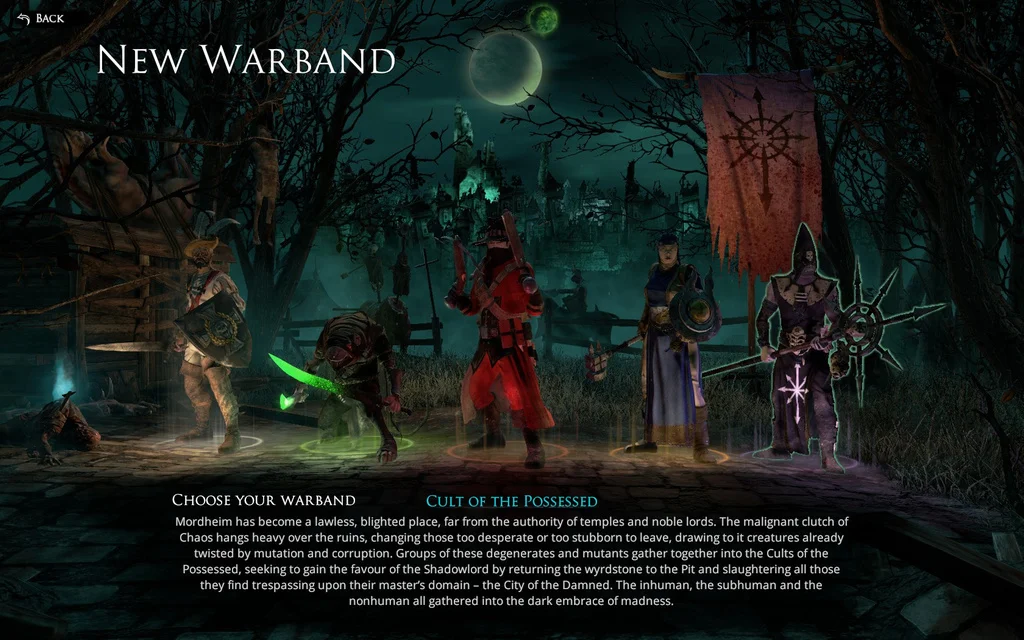
And here's where it starts to go wrong. The game is played in a style similar to Valkyria Chronicles: You move your characters around in real-time third-person viewpoint using their movement points, then place them into stances, take actions, or attack enemies if there are any in range spending action points. While there is a tutorial, a lot of it is unclear on what each action actually does, requiring you to navigate a confusing series of stats and menus to figure out how to carry out actions on your turn.
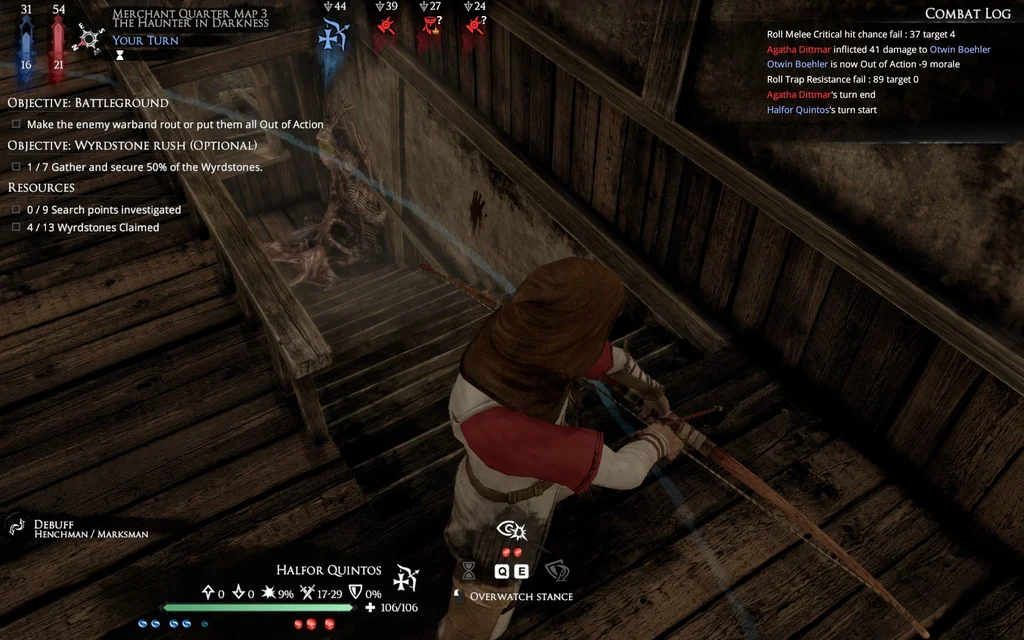
Complicating issues immensely is the lack of a minimap, forcing you to zoom out to a larger map that doesn't seem to record your place in the city whatsoever. You can see the general area of things on the map, but finding your own people and planning moves is an exercise in frustration. While this helps with the "desperate struggle" atmosphere, as a game mechanic it's just another arbitrary hindrance in the way of enjoying the game.
But in the end, it's just that there was a better way to do this. A turn-based tactical over-map way. XCOM2 showed how much fun a gang-based skirmish game where you have to scrabble and squabble and desperately fight for resources could be. With racial modifiers, multilevel terrain, and an RPG-style system of advancement, this could be the game to blow the doors off the entire tactical genre. At the very least, it'd give us one of the few interesting Warhammer Fantasy games, a thing that hasn't happened since Shadow of the Horned Rat, or maybe Blood Bowl: Chaos Edition if we wanted to get technical.
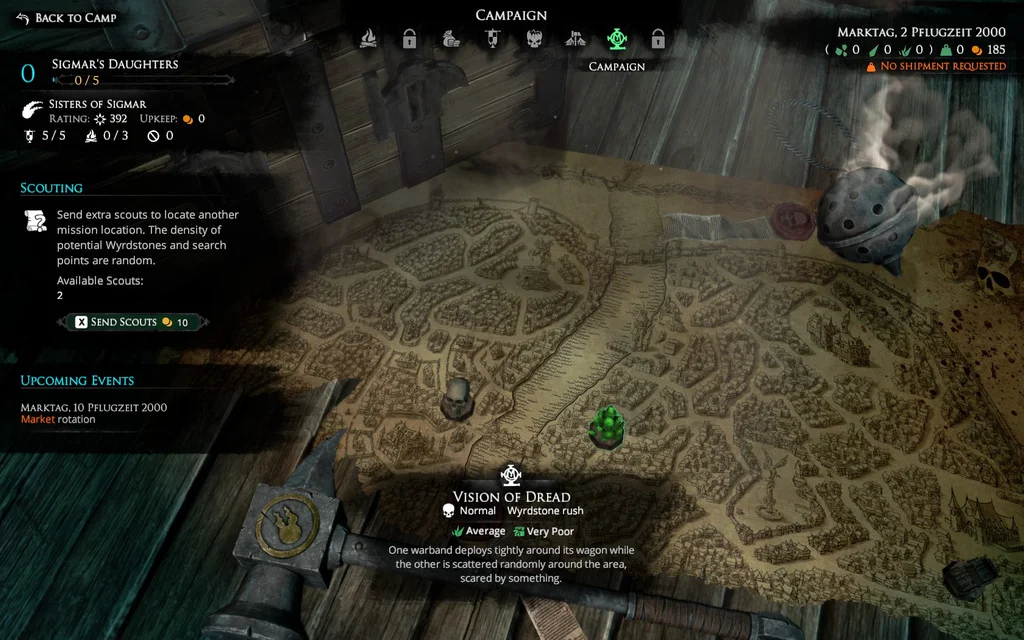
While Mordheim: City of the Damned tries very, very hard, in the end, it just falls short. It's a game with a ton of great atmosphere and ideas, but the frustrating mechanics, dense barrier of entry, and low reward for a high level of effort make this completely missable. By the end of my time in the city, I just wished I could leave these people to their squabbles, and maybe pick up Valkyria or XCOM again.
Final Score: 3/5. There is so much right about this game, and then the barrier of entry just knocks it down from perfect. It's a game I want to play, but not necessarily a game I can play.
The Reviewer received a copy of this game for review

Perfectly Fine: A Koihime Enbu Review
Roger Ebert once said "Of each thing, ask, who is it for?" He was of course talking about the medium of film, but it's a useful metric for criticism in general. For instance, critiquing a racy visual novel on the quantity of fanservice is kind of useless, since that's exactly why people are playing it. Similarly, critiquing a fighting game for average fighting game things isn't really intuitive to the people who want to know if a fighting game's any good, regardless of whether or not the reviewer is actually any good at fighting games.
So with this in mind, I decided to figure out whether or not Koihime Enbu, the 2D fighting game based on the Koihime Musou visual novel series, is a good fighting game, regardless of whether or not I like fighting games all that much.
Roger Ebert once said "Of each thing, ask, who is it for?" He was, of course, talking about the medium of film, but it's a useful metric for criticism in general. For instance, critiquing a racy visual novel on the quantity of fanservice is kind of useless, since that's exactly why people are playing it. Similarly, critiquing a fighting game for average fighting game things isn't really intuitive to the people who want to know if a fighting game's any good, regardless of whether or not the reviewer is actually any good at fighting games.
So with this in mind, I decided to figure out whether or not Koihime Enbu, the 2D fighting game based on the Koihime Musou visual novel series, is a good fighting game, regardless of whether or not I like fighting games all that much.

For those not familiar, Koihime Musou is essentially Romance of the Three Kingdoms, except every character is actually a cute girl. The visual novel involves the usual ordinary Japanese high school student who is yanked into this world and gains an unwanted harem of strategists, generals, rules, and the like. Koihime Enbu's story is that this same cast of cute strategists and generals and the like have decided to have a fighting tournament for a mystical seal of power. That's all there really is to the plot. Which is more or less okay, because unless you're Mortal Kombat or something, fighting games don't have an immense wealth of plot. It's basically an excuse to get characters to kick the crap out of each other.

As a fighting game, however, it's decidedly okay. While there isn't a lot of information or a bevy of practice modes a la Skullgirls, the game has a low difficulty curve, each character has a small and very manageable list of supermoves, and mashing buttons doesn't feel like a bad strategy, just one that needs to be curtailed. While the game barely explains the concepts to people who have never played a fighting game before, I didn't feel like I was in over my head, the same way I am every time I pick up a copy of Marvel Vs. Capcom or something similar. It's manageable, and manageable is good. There's really only one mechanic you need to master, and that's the Tactician system, where a companion you pick from one or two choices is able to give you a conditional special move to immobilize or otherwise open your opponent to attack.

Yeah. About right.
The character variety is also fairly decent, though the simplified controls mean that pretty much every character will play the same way. Sure, there are occasional minor variations in moveset or whatever, but each character will more or less work the same, with only super moves (which I myself find hard to get off, but that's a personal problem, not a mechanical one) to differentiate between them. Compared to other fighting games, where the style and tone can differ wildly from character to character, or at least more than aesthetics and one or two moves. It made me feel like my choice in character was a little meaningless. It's a shame, because the designs are really cool, if anime characters are your thing at all.
In the end, though, while it's a good game, it's also a game where you won't get very much out of it you can't get elsewhere. Skullgirls, the current high-water mark for fighting games on the PC, is much better. Mortal Kombat, even at its weakest, is much better. If you're a fan of Koihime Musou, maybe this might be for you. But otherwise, it's just too plain and bare-bones to recommend.
Final Score: 3/5
Full Disclosure: The reviewer received a free copy of this game for the purposes of review.
Massive Property Damage: A Brigador Review
It's difficult to tell, sometimes, whether a game's difficulty and controls are truly to blame, or whether it's just that I've got really stupid fingers. Brigador is one of these times.
It's difficult to tell, sometimes, whether a game's difficulty and controls are truly to blame, or whether it's just that I've got really stupid fingers. Brigador is one of these times.
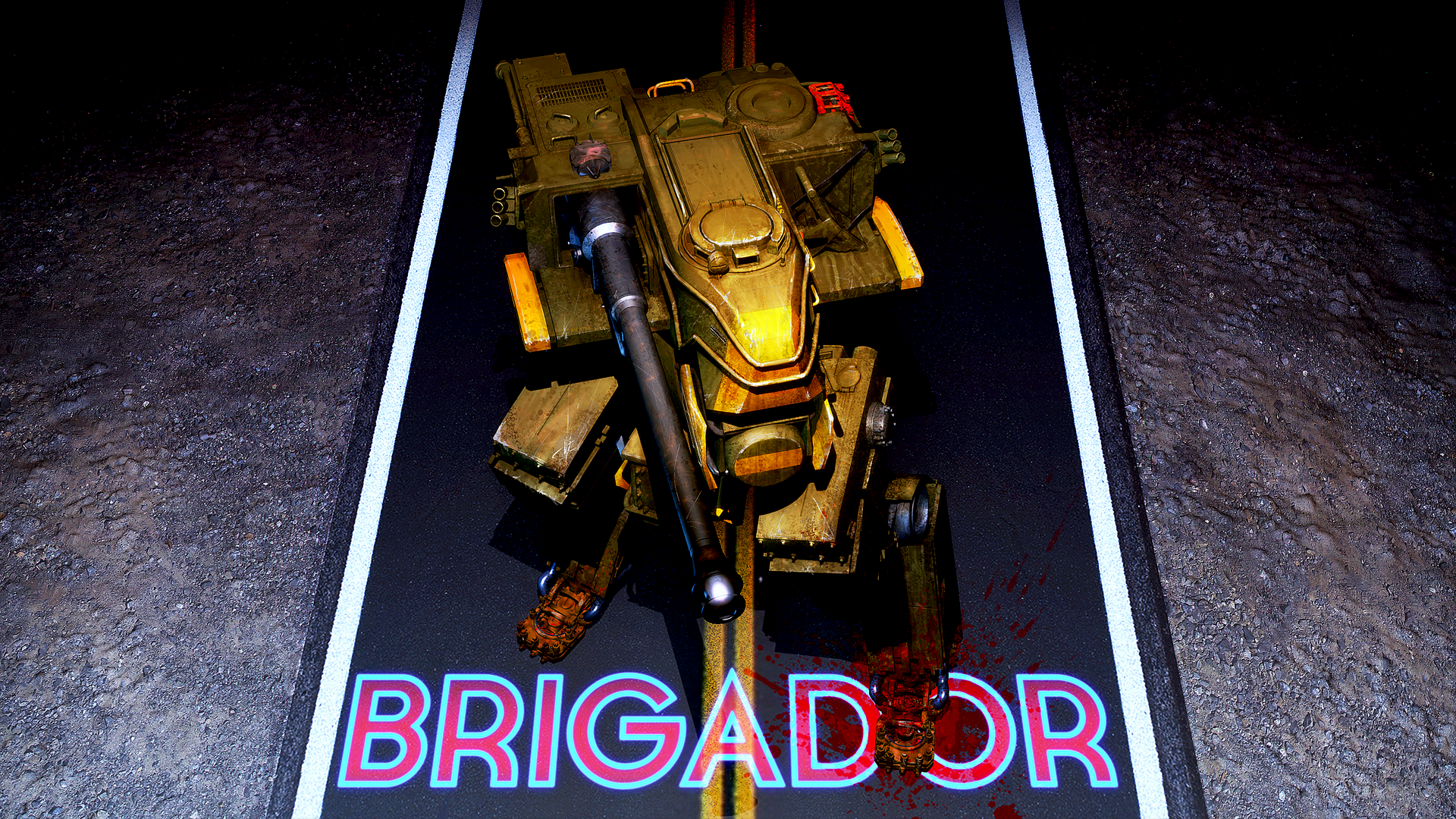
The game has an excellent look and feel, the sinister synths and isometric explosions creating just the right atmosphere for an odd early '90s-looking twin-stick shooter. It's also got tank controls that feel odd with mouse aim, so that your body is always pointed in a direction other than where you want to move. But in spite of all this, it's a challenging and ultimately kind of satisfying game in a way few are.

As the distorted opening text tells the player, Great Leader, the despotic leader of a military faction called Solo Nobre, has been assassinated. You play a mercenary pilot in an overpowered mech, contracted to destroy the remains of his Loyalists, take down all the orbital cannons on the surface of the planet, and cause as much property damage as humanly possible. Levels find you crushing everything in your way and getting to the exit, utilizing a combination of stealth, tactics, and whatever weapons of mass destruction you currently have your tank outfitted with. And while the levels are fun trying to out-think your opponents, it's more fun just to stomp them with whatever you have at your disposal.
The game plays from a three-quarters isometric perspective, with mostly blank black space apart from the terrain and the vehicles in it. As the levels go on, the graphics open up, but everything stays in a kind of lo-fi 3-D feel. There are, however, a variety of enemies that fling themselves against your mech at breakneck pace, and some of them even succeed. The levels might be missions to destroy, but the gameplay is incredibly satisfying because of this, and they offer a wide range of ways to destroy. Depending on what mech design you pick, you could be playing with stealth and working your way across the map under cover, zipping over it in an A-Grav, or just stomping your way through Loyalist troops with a gigantic metal walker.

It's here that some of the issues begin to set in. First, that the game's controls are tank controls, no pun intended. Which, when also connected to mouselook, means you are rarely moving in the right direction until you get the hang of the weird control setup and look at the arrow telling you which way to orient. The other problem with the controls is that they require you to be precise. You cannot aim in the direction of things in Brigador and hope to hit stuff; you have to be exact in what you aim at and then hope to hit. Which, when things are moving around quickly (as are you), is almost impossible to do. The Showdown Effect had a similar problem, in that it was difficult to shoot and aim and not get hit by everything as you jumped around. This is like that, but on a much less frustrating level.
My dilemma, however, is figuring out whether this is my issue with the game, or a legitimate game issue. I'm the kind of person who winds up impaled on a difficulty spike rather than clearing it, and the challenges presented in Brigador are ones to which I am not normally acclimated, having become soft and complacent after years of very slow-paced action games and the like.
Should the tank controls and bad aiming and general dark aesthetic not turn you off, however, Brigador is an excellent throwback to an age where things didn't have to be easy, humor and fluff writing enriched even the sparsest of settings, and blowing stuff up was really, really cool. Give this one a try. Though maybe not for the current price.
3/5
Disclosure: The user received a copy of this game for the purposes of writing this review
Demetrios: The Big Cynical Adventure: A Big Cynical Review
Having been an afficionado of adventure games over the years, I understand that they aren't without their difficulties. For every Monkey Island or Space Quest, there are four that take the route of Phantasmagoria* and about six different games featuring puzzles with solutions that read like poorly translated stereo instructions. While it's the easiest genre to design for (no combat algorithms or anything like that, clean narrative with a few branches) it's also one of the easiest to screw up. All it takes is one puzzle where processor speed determines difficulty, or pouring whiskey into the gas tank of a car to fuel up a spaceship, or an infuriating pixel hunt and instantly people will throw up their hands and uninstall in annoyance.
Having been an aficionado of adventure games over the years, I understand that they aren't without their difficulties. For every Monkey Island or Space Quest, there are four that take the route of Phantasmagoria* and about six different games featuring puzzles with solutions that read like poorly translated stereo instructions. While it's the easiest genre to design for (no combat algorithms or anything like that, clean narrative with a few branches) it's also one of the easiest to screw up. All it takes is one puzzle where processor speed determines difficulty, or pouring whiskey into the gas tank of a car to fuel up a spaceship, or an infuriating pixel hunt and instantly people will throw up their hands and uninstall in annoyance.

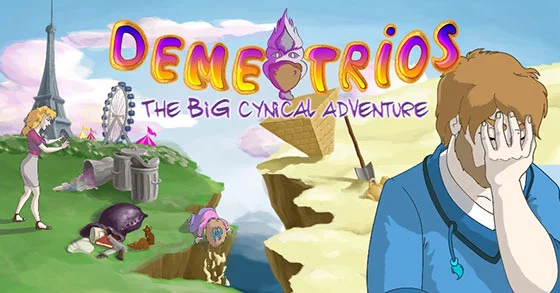
Which is what I felt like doing multiple times with Demetrios: The Big Cynical Adventure. With its slow-moving plot, absolutely loathsome main character, constant pixel hunts, impenetrable logic, and poorly designed minigames, it feels less like an adventure game and more like someone assembled a collection of exactly what not to do in an adventure game, then decided to show it off in adventure game form.
Demetrios starts with Bjorn Thonen receiving a phone call in the middle of the night, alerting him to grave danger. A few moments later, he's beaten over the head and his house is robbed, including a piece of a mysterious bird statue he has in his apartment. Bjorn immediately sets out to figure out who attacked him, and who is murdering antiques dealers over the bird statues. Of course, because Bjorn is, in adventure game tradition, an inept jackwagon, he spends his time annoying people and committing minor crimes in an effort to achieve his goals. Adding to this is a tremendous amount of gross-out "humor," everything from fart jokes to a puzzle involving vomit.

The game itself takes place on static, hand-drawn screens, where clicking on various hotspots will reveal more about the area, or allow the player to interact with various things. The puzzles are all fairly simple in construction, with a lot of it being "Take item to someone else," or "assemble a recipe" rather than the longer and more esoteric Rube Goldberg puzzles found elsewhere. This does not in any way, however, make them easy. Even with a handy menu to tell you what direction to go in, and reveal what you can interact with on the screen, some things are incredibly obscure. They assume that the player will visit every location, even ones they have no reason to go back to, just to get the next event flag to trigger. Sometimes you have to talk repeatedly to people with no indication that you haven't exhausted all the dialogue, and try every option repeatedly until they give up their information, which they don't always do.
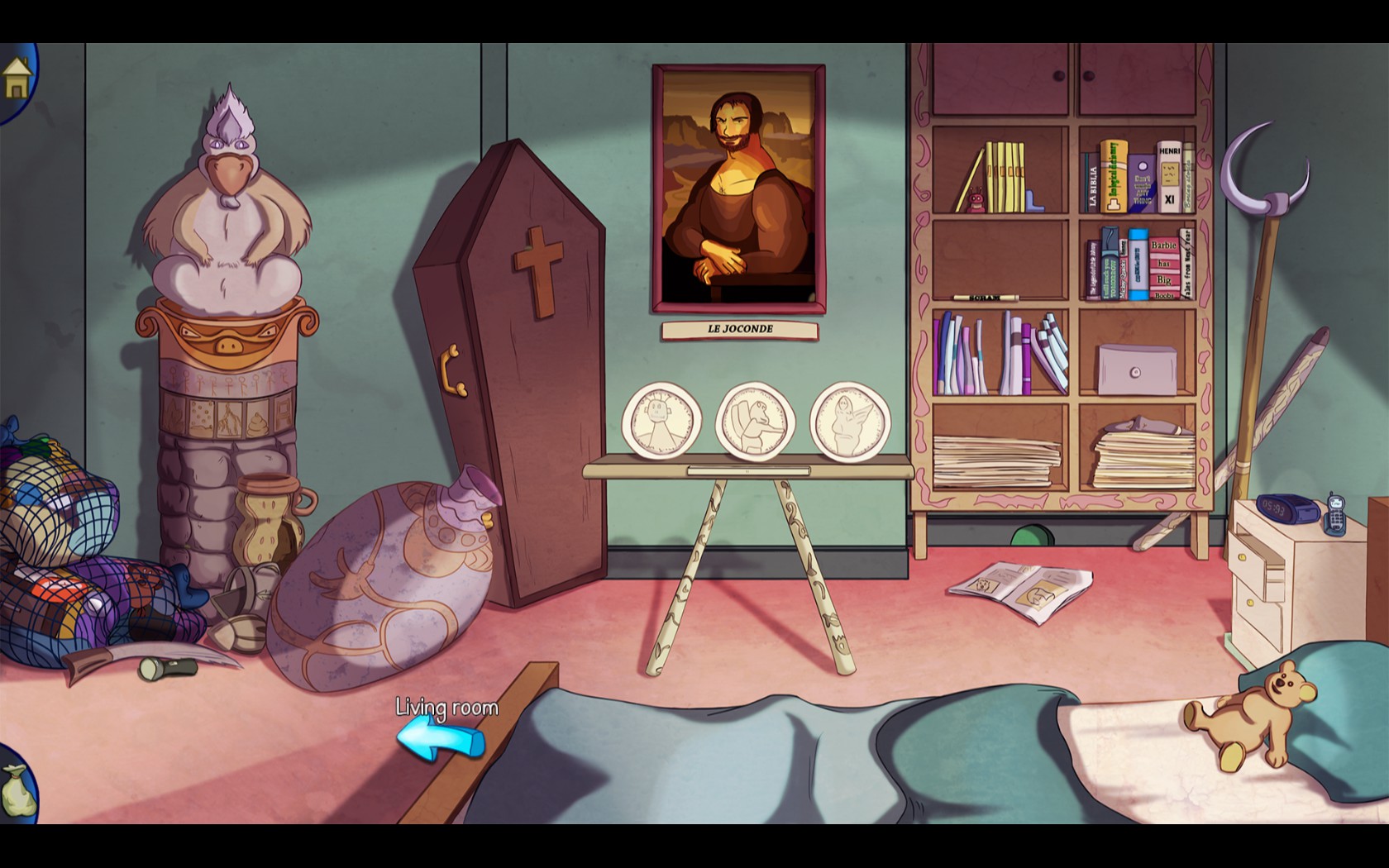
The hint system is just as obscure, relying on finding secret collectibles by dragging your cursor over every inch of the screen to find cookies, which Bjorn then eats while giving some hint about what to do next. Which means you not only have to spend your time looking for difficult to find collectibles that sometimes don't even show up on screen, and are then treated to gulping and smacking noises (you will hear a lot of gross eating noises on the soundtrack. If anyone gets an ASMR reaction from listening to people chew with their mouth open, have I got a game for you) while Bjorn complains about eating another cookie and then drops a hint that more often than not is about useful as the infamous "FIND DON. GIVE HIM WHAT HE NEEDS!" from the aforementioned Phantasmagoria.
This would be forgivable if the game was at least the slightest bit funny or clever. There are plenty of games out there that have a similar sense of humor. Deponia has a fairly loathsome protagonist who sells people into slavery and screws over his friends for his own profit, but there's some charm, and the character is actively trying to better himself, even if he's a selfish jackass. The humor is also sharper than just trying to make gross-out versions of hoary old adventure cliches. But after the fifth time I had Bjorn eat something off the ground (seriously, with a single-click interface, it gets really annoying when this happens) accompanied by stomach-churning licking noises, or making some joke about how he pops a boner when his hot neighbor is around (so he better not have any sharp objects in his pocket) it just becomes tiresome and sad. Compounding things, the pacing is glacial, spending two chapters on the beginning of the game, when the plot doesn't even begin to get started until halfway through the second.
As far as all of this goes, I feel at least the slightest bit bad about bashing a game which appears to be the first effort from French-based COWCAT Games. Judging by the art style, this is a bunch of people who just wanted to put a game together, and then went ahead and did so. But their game being a perfect storm of awful jokes, terrible puzzles, and just poor design decisions goes beyond just first-time jitters and the result is a borderline unplayable mess.
I'm going to have to say that this one's a miss. Unless you really like vomit jokes, gross noises, and obtuse, static adventure environments, in which case COWCAT has captured your exact target demographic. Hopefully COWCAT is just working out their birthing pains and will come up with something a little better. There's a good idea buried under all this refuse. I'll just be damned if I want to go looking for it.
1/5
*I like Phantasmagoria, really, I do. I love the town of Mpawomsett and its inhabitants. But I'm not gonna defend it.
Full Disclosure: The reviewer received a copy of this game for the purposes of reviewing it

Hyperdevotion Noire: Goddess Black Heart Review
Okay, so for the past few years, there's been a franchise known as Hyperdimension Neptunia. The general conceit is that the games industry is anthropomorphized as a land called Gamindustri, ruled over by warring goddesses who have "console wars" to determine supremacy and games companies are depicted as anthropomorphized anime characters.
Inexplicably, this has grown into a massive franchise of games, one of which is Hyperdevotion Noire, an alternate universe game where the anime goddess representing the Sony systems has taken over everything.
It's also not very good.
Where do I even begin with this one?

Okay, so for the past few years, there's been a franchise known as Hyperdimension Neptunia. The general concept is that the games industry is anthropomorphized as a land called Gamindustri, ruled over by warring goddesses who have "console wars" to determine supremacy and games companies are depicted as anthropomorphized anime characters.
Inexplicably, this has grown into a massive franchise of games, one of which is Hyperdevotion Noire, an alternate universe game where the anime goddess representing the Sony systems has taken over everything.
It's also not very good.
The plot of the game is fairly simple. Noire, the dark goddess, has conquered Gamarket. All she has left to do is cement her rule, which she tries to do with the help of a traveling fortune teller. Surprising no one, the evil-looking, evil-sounding fortune teller decides to take all the combined power, leave Noire powerless, and forces her to conquer Gamindustri all over again, recruiting friends and allies from her former generals along the way.,

The game takes the form of a tactical strategy game: Each turn, you move over hexes, attacking enemies and trying to complete objectives. Your weapons also do damage based on facing, element, and what abilities you use, as well as what weapons in general you're using. But, problems set in with the basic gameplay soon after, as combat gets kind of tedious when all you do is run around to the back of your opponent, hit them, and then wait for them to run around so you can take your turn again. The optional elements on the battlefield do add something, but it's miniscule at best.
That wasn't even the most egregious thing about the game. That would be the kind of fourth-wall premise to the whole thing. You, the player, are a male secretary assigned to help Noire restore herself to power. You're also kind of a perv. Now, I understand that yes, this game has a target audience, and yes, that target audience has some very specific tastes, but seriously, I felt like making the player a character and that kind of character made me want to play the game less. It just felt forced and cheap. And unnecessary.
The story also isn't that great unless you're already a huge fan. I can imagine that Noire's story might be something of a treat for the faithful, but I couldn't hit "X" fast enough to get rid of it all. It also didn't seem connected to the game for more than the occasional excuse. While it's true that both the plot and the game open up as Noire begins her conquest of the various lands all over again, it all feels static and linear. This could be excused-- even the worst writing can be okay in the right vehicle (and I'm looking at you, Dark Souls and Fallout 4), but with everything else, the boring mechanics, the arbitrary decisions, and the creepy overtones, it just gets buried under more and more of the same.

And they're also super-deformed! Thus removing all the appeal of the Console Waifu franchise!
In the end, Hyperdevotion Noire is kind of just airless and cheerless. It's an okay game, but an okay game in a franchise that has seen much better titles is just that-- okay. Spend your money on something that won't put you to sleep, and maybe wait until this goes on sale. Until then, there are probably six or seven visual novels that might scratch your itch much, much better.
2/5
Full Disclosure: The reviewer received a copy of this game for review.
Marble Mountain Review
Marble Mountain, the new game from LightningRock Studios, is relaxing. With its bouncy synth soundtrack, bright color palette, and levels with just the right amount of challenge, it isn't the frustrating grind of most other arcade style games, but offers more challenge and depth than the average casual game. It's the perfect chillout game, the kind of thing you can do when you just need a break from everything. While not without its flaws, it's just a low-key, fun game, and that's really all it needs to be.

Marble Mountain, the new game from LightningRock Studios, is relaxing. With its bouncy synth soundtrack, bright color palette, and levels with just the right amount of challenge, it isn't the frustrating grind of most other arcade style games, but offers more challenge and depth than the average casual game. It's the perfect chillout game, the kind of thing you can do when you just need a break from everything. While not without flaws, it's just a low-key, fun game, and that's really all it needs to be.
Marble Mountain is fairly simple. You guide a marble along mazes, sometimes having to push switches or navigate terrain as you go, occasionally having to solve movement puzzles or navigate around enemies. There are traps and secret passages hidden throughout, and there are optional gold coins to collect for one hundred percent completion. Other than collecting the coins and getting to the end goal, there's not a ton of other things you need to do-- there are, of course, secret marbles to unlock, but overall, it's fairly simple.

And that's all it needs to be. Everything about the game, from the simple controls to the way you're just allowed to explore everywhere, to the soundtrack, is relaxing. Rolling around levels is incredibly satisfying in a way, as it just allows you to slide into a groove for a while as the marble rolls down slopes and around giant gears. It's a game that moves at its own pace, and the dynamic environments allow for that.

But it's not without flaws, and this is where it's a bit of a letdown. The controls for the marble are beyond slippery, making it a chore to navigate some of the more narrow pathways, and even some of the wider ones. The physics are bizarre, too. Sometimes you can use the d-pad to roll up and down a see-saw, for instance, but other times, the same situation will result in you either falling off for no reason, or send you spiraling to your death. It's also unclear exactly how one is to unlock some of the marbles, other than going through the levels. And while the par time not being any particular object helps the game at a lesiurely pace, it's kind of unclear why it's even there at all.
It's also easy on some stages to get trapped with no way out. There are, of course, ways to restart the level if absolutely necessary, but it's annoying having to go back to the beginning of the level. Further confounding things, switches sometimes go back to being unswitched when you fall off the course, but that isn't a consistent thing across the board, which means that you have to go back and check if you still need to make the necessary movements to progress. It's a lot of annoying backtracking sometimes, and it makes replaying certain parts of levels beyond boring.

But...and here's where it's going to get a little difficult to explain-- the flaws don't necessarily matter. They're there, sure, but this isn't the kind of game where you play for six hours to get through the levels and acquire more, more, more. This is the kind of game where you spend your time on a level now and then when you need to unwind. It's casual at its most casual-- no breakneck pace, no white-knuckling, just a pleasant time rolling a marble around.
In the end, that's what matters. It's a game you can relax with. It's a game you can unwind with. It's a game that's comfortable. It's relaxing. Marble Mountain may not be perfect, but it serves all your needs that way, and because of that, the flaws kind of take a backseat to how much fun you can have just rolling from level to level. It's satisfying, and in the end, that matters much more than the flaws do.
Score 3 out of 5
The Reviewer Received a copy of this game for review
The Last Door Season 2 Review
So first, a disclaimer. Because of the episodic nature of the game, and because this is The Last Door: Season 2, I strongly suggest you go to either the website or Kongregate and play The Last Door: Season 1. It's not the most necessary thing in the world, but it'll fill in the blanks as to Devitt, the weird eye motif, the Four Witnesses, and the secret society known as The Playwright. While the prologue chapter can answer one or two of the questions, a lot of them will be answered by just playing season 1.
But with that out of the way, if you're looking for a surreal horror game with a ton of atmosphere and a lo-fi aesthetic that manages to play perfectly with the player's imagination and delivers old-school adventure without all the pointless death, you need look no further
So first, a disclaimer. Because of the episodic nature of the game, and because this is The Last Door: Season 2, I strongly suggest you go to either the website or Kongregate and play The Last Door: Season 1. It's not the most necessary thing in the world, but it'll fill in the blanks as to Devitt, the weird eye motif, the Four Witnesses, and the secret society known as The Playwright. While the prologue chapter can answer one or two of the questions, a lot of them will be answered by just playing season 1.
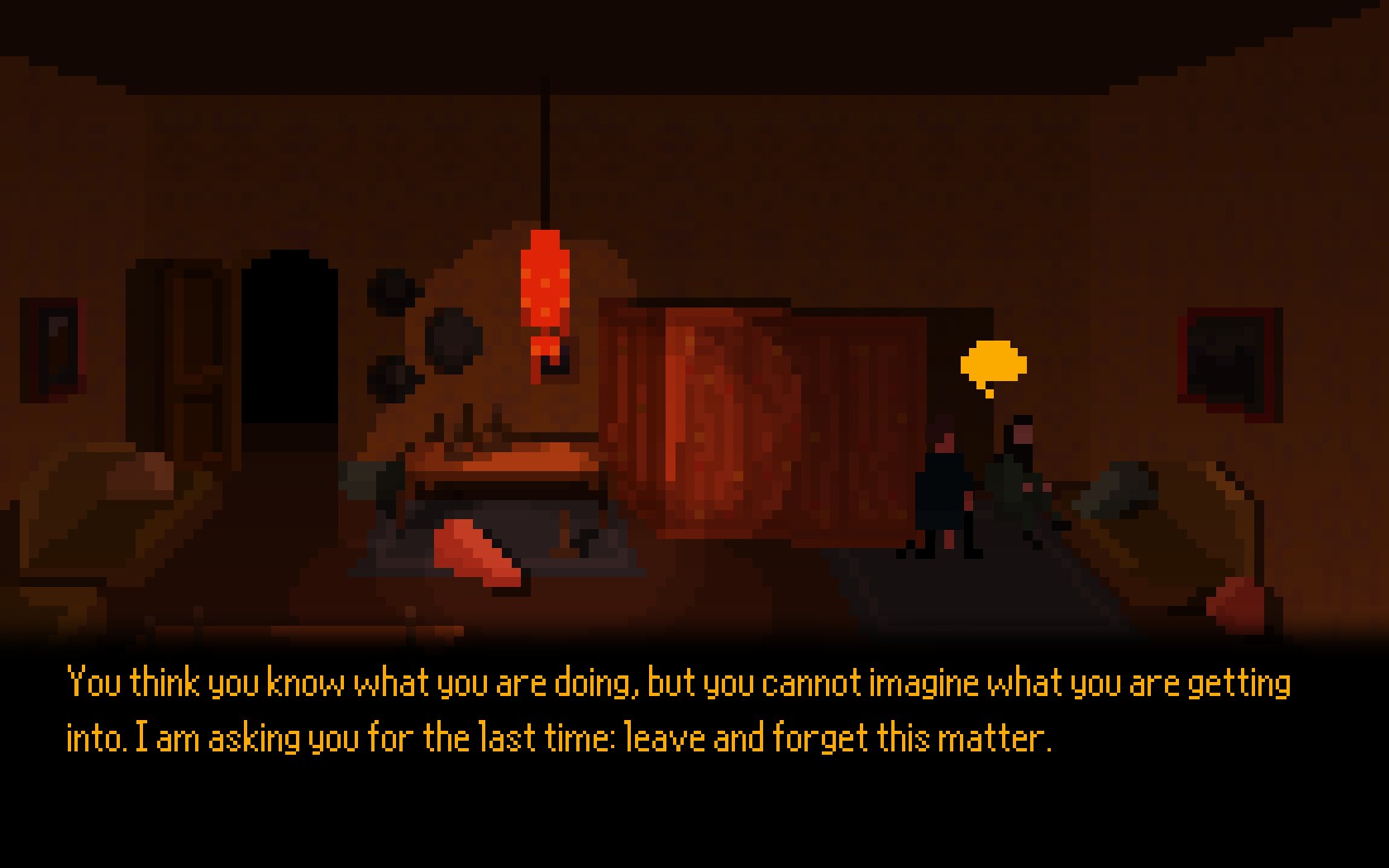
With that said, if you're looking for a surreal horror game with a ton of atmosphere and a lo-fi aesthetic that manages to play perfectly with the player's imagination and delivers old-school adventure without all the pointless death, you need look no further.
The Last Door: Season 2 follows Dr. Wakefield, whose patient, Jeremiah Devitt, vanished under mysterious circumstances. With his mentor and colleague Doctor Kaufmann, Wakefield investigates the disappearance, which leads him through an upsetting mental asylum, a strange mansion filled with puzzles, and into the heart of a deep conspiracy involving an otherworldly presence trapped behind a "curtain" between our world and the next. As Wakefield is drawn further and further into dealings with the sinister masked cabal that call themselves The Playwright, he will be called upon to make a choice, one that will change the course of his world forever.
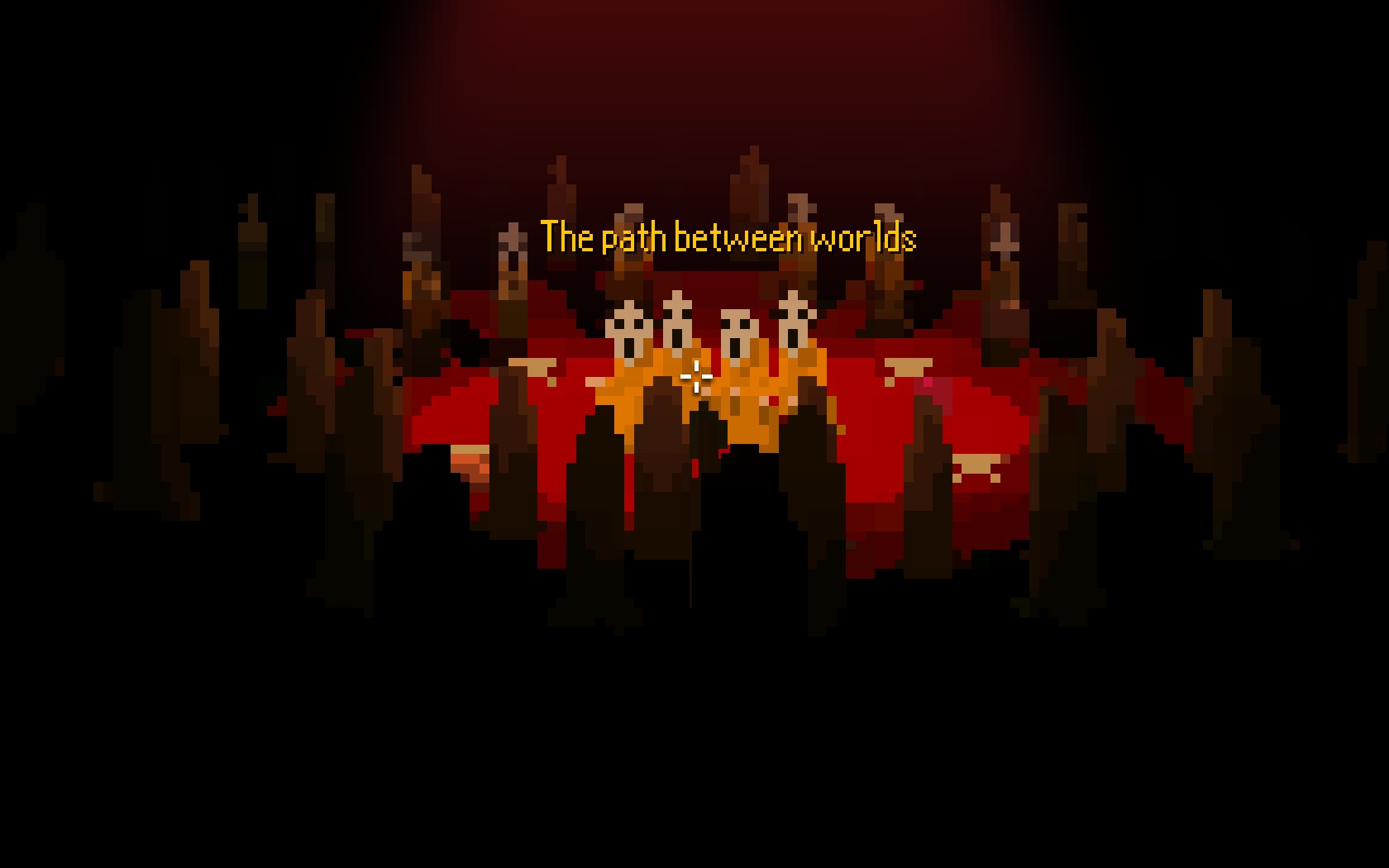
The Last Door is a game that trades mainly on an all-encompassing atmosphere brought together by the pixelated visuals, mind-screwy plot, and excellent sound design. As you explore the various levels, the ambient noise creeps in slowly, cluing you in to a variety of goings-on just out of sight, be they cats bricked up in the walls or a vaguely unsettling room full off birds. The pixel graphics are good enough you can usually discern what's going on, but obscure enough that your imagination will easily fill in the blanks. And then the plot, which includes an entire level in a space between worlds, and a surrealistic homage to The Wicker Man, keeps the player convincingly unnerved.

The episodic length also helps immensely. I took a break after each chapter and played one a day, personally, because doing so allowed for a break and the chapters stayed fresh. Had I just played straight through, I'd imagine I'd have been more fatigued, but as it was, the puzzles were less aggravating when I played the game one chapter at a time instead of taking it in as a full story.
About those puzzles: They're frustrating. It was frequently difficult to tell where I was supposed to go, and at least two puzzles relied heavily on backtracking, memory, and constant trial and error. I actually put the game down for a while after Episode 2, because the puzzles in that section were much more traditional and thus involved an incredibly frustrating bit of trial and error where you have to move from a series of switches indoors to the outdoor garden, either utilizing an attic window or having to go outside the house entire. A memory/note-taking puzzle also occurs in the last part, where you have to find your way through a forest. Neither is particularly a lot of fun.
But despite the few puzzles, the game is a masterpiece. There are some genuinely scary scenes, and despite the trial and error, the puzzles are mostly logical and aid with the atmosphere. There's an awesome moment in the last chapter that I don't dare spoil where others games have definitely stumbled, but The Last Door manages to knock it out of the park.
As one final note, I cannot suggest enough that you play this game through headphones. A huge chunk of the game is sound design, and it has to be experienced to be believed. It plays just fine anyway, but there's just something about dampening the extraneous noise and immersing yourself in The Last Door's soundscape that makes it so much better.
If you're in the mood for a deep, atmospheric, episodic adventure game, you owe it to yourself to pick this one up. The first season is free, so not being caught up isn't even a good excuse. It may take you a few nights, but the visuals will stay with you forever.

Full disclosure: The author of this review received the collector's edition of The Last Door Season 2 for this review. They had previously played season one online.
Final score: 4/5
Zombasite Preview
Zombasite, currently in beta from Soldak Entertainment, is the most fun you will have not knowing what it is you're doing.
And before that sounds too much like faint praise, allow me to explain, it is a lot of fun.

Zombasite, currently in beta from Soldak Entertainment, is the most fun you will have not knowing what it is you're doing.
And before that sounds too much like faint praise, allow me to explain, it is a lot of fun.
Zombasite is an isometric action RPG similar to Soldak's earlier game, Depths of Peril. In it, you control a clan in a small settlement. You and other clans are fighting for control of a world on the brink of total collapse, thanks to a twisted necrotic parasite known as the "Zombasite." While you attempt to keep control of your clan and stop the various members from killing each other whenever they get bored or angry enough, a bar at the bottom slowly rises, showing the growth and infection rate of the parasites.
And so, a desperate struggle emerges between you and the various forces. While clans will try to raid you and your enemies below and above ground will send gruesome monsters to attack you, you also have to protect your clan from zombies and research ways to slow down or stop the parasite. You will find yourself focusing on a billion different systems and subsystems in an attempt to keep your clan from collapsing. Even at the lower difficulty levels, I can tell you it is going to be an uphill battle to keep that from happening. I have put several hours into the game, and trying to do everything at once is going to leave you wandering the wasteland and wondering just how your illustrious clan wound up being two people in a fort with no doors.

But that isn't to say the barrier of entry is all that high. In fact, quite the opposite is true. Zombasite provides its players with many more ways to win than to lose: simply killing all the opposing clans (military victory), having an alliance with the remaining clans left on the map (diplomacy), to completing all the quests on the map. The game also tracks your knowledge and lore about the parasite, making the zombies and infection more manageable as you discover more things about the world. Most enemies are fairly easy to kill early on provided you know what you're doing, while giving you a game experience with a very slow difficulty curve, to its benefit.
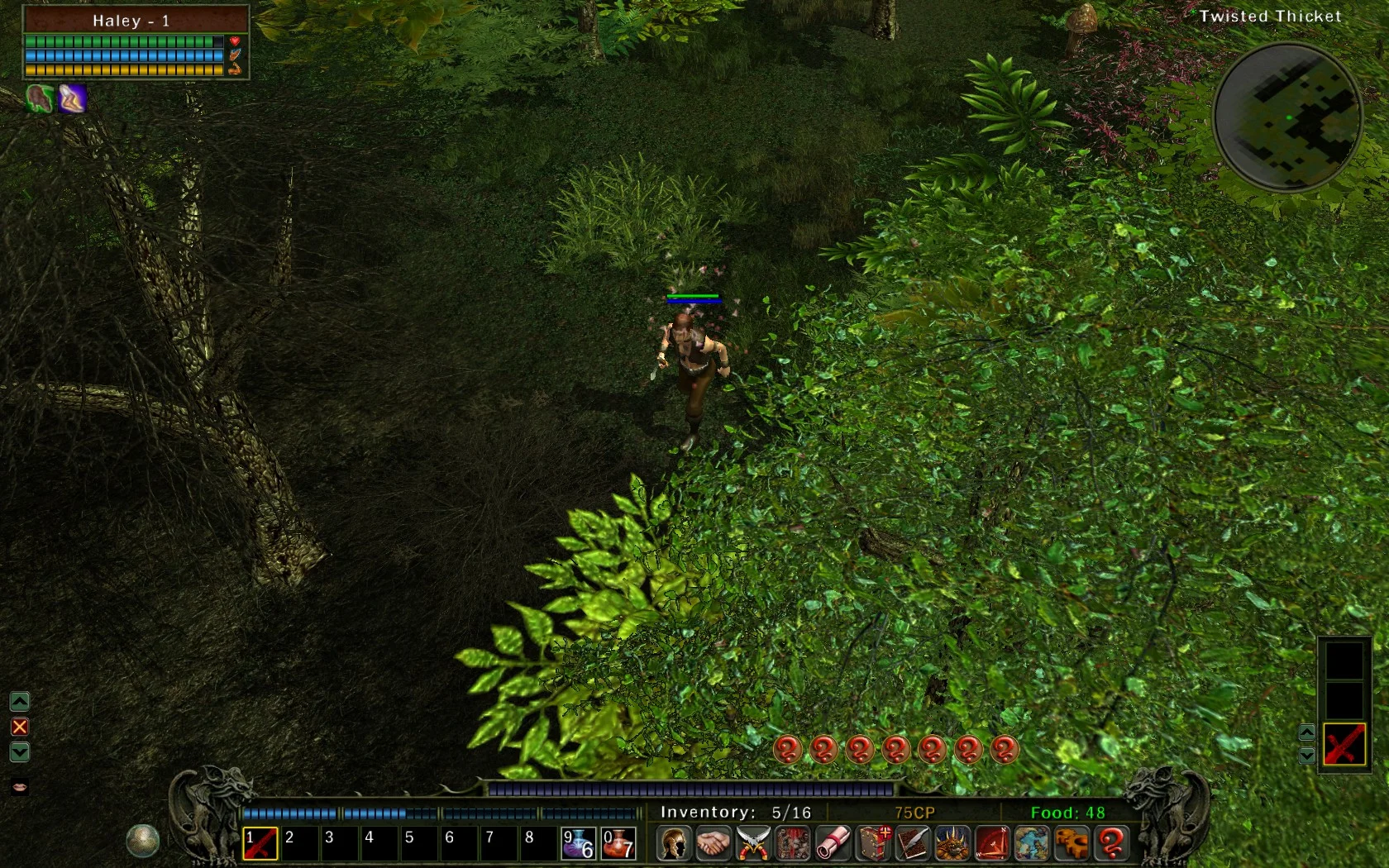
The world is also dynamic and persistent. You can start a new game in an already-generated world, with all that would entail, and as you go along, the world will change. Sometimes people will kill your targets before you can get to them. Clans are constantly shifting in alliance and loyalty between each other, and will go out on raids. Your own clanmates have specific weapon and armor preferences, all of which impact how well they'll be able to fend off invasion and join you on raids. Clans may leave you alone, or they might rush full-on towards you, or spawn demon gates, or any number of things. When you pop someone into a new instance of the world, they take up a new region, but use the same lore and other features of the older space.

But while the game is in good form currently, it still has a long way to go before it's out of early access. The systems are a little obtuse, and while the help system is helpful, it's also a row of icons along the bottom of the screen that are easy to miss and don't always contain the most useful of information. The sound design also sometimes borders on oppressive, especially in larger battles. When coupled with a skill system that's obtuse even at the best of times, this can make things incredibly frustrating as enemies skill upward.
Overall, though, I'm looking forward to seeing what Zombasite gets with a full version. It's original, unique, and very complex in spite of its basic trappings, and with a few kinks worked out, should be a new classic.
The Reviewer was given a copy of the game in exchange for this review. The game is still in early access and is subject to change.
The Culling Early Access Review
There's not much to say about The Culling, really. It's the kind of game that, if you like arena-based deathmatch shooters, you will probably like. If you don't like multiplayer arena-based deathmatch shooters, you will not like it. That's pretty much the delineation.
Granted, as far as arena-based deathmatch shooters go, I like it a lot more than most, but it's going to be pretty clear when I describe the mechanics whether or not this is your kind of thing.
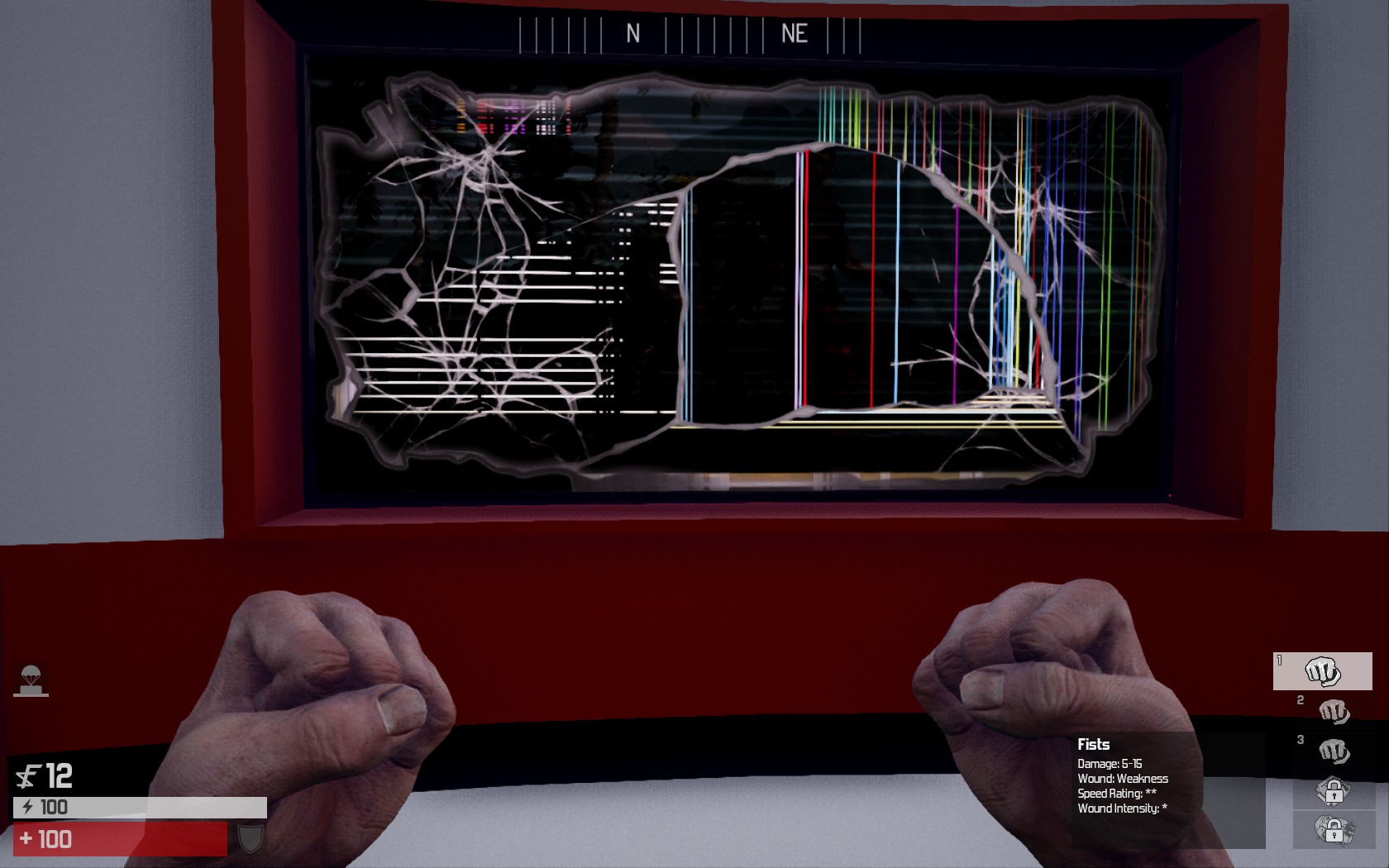
There's not much to say about The Culling, really. It's the kind of game that, if you like arena-based deathmatch shooters, you will probably like. If you don't like multiplayer arena-based deathmatch shooters, you will not like it. That's pretty much the delineation.
Granted, as far as arena-based deathmatch shooters go, I like it a lot more than most, but it's going to be pretty clear when I describe the mechanics whether or not this is your kind of thing.
The Culling is a game that functions on a simple premise: You have signed up (or maybe been coerced) into the internet's leading game show, a deathmatch where you are packed up in a crate and dropped on a tropical island to murder complete strangers with a variety of implements, most of which you will have to make yourself. When you are murdered, you are out. No respawn, no "back to start," you can spectate, or you can bounce.
So that's pretty much it. Simple. Run around, kill other people, don't get killed.
But what makes The Culling interesting is how it deals with those details. First, everything involves an in-game currency called FUNC. Want to craft something? You need FUNC. Want to heal? FUNC. Access the higher-level airdrops you can call in? More FUNC. It kind of allows for prioritizing your sources for the most part-- it might be better to save up and get the airdrop rather than opening the crate near the center of the arena, or even better still to roll your own weapons and avoid using much of the currency at all, saving it to heal. The ability to craft weapons also adds some strategy, allowing for both ranged and melee options.

And melee is actually now a huge part of the game. The Culling does away with the usual run-n-gun in exchange for tense melee fights between you and your opponents, with the optimal tactic seeming to be a "hit and run" approach where one swings wildly at their opponent, or turtles while waiting for an opening, constantly moving in and out and in and out in an attempt to gain the other hand. It's a marked change from bunny-hopping and circle strafing (though people who have tried that met the business end of my taser pretty quickly).
Also, the sound design is amazing. This may be one of the few FPS's I play with headphones on, because sound matters that much. You can hear the direction your opponents are coming from, the whirr of nearby cameras, and just about everything else. It's also direction-dependent, with sounds popping up in the proper location, allowing you to plan or run away when someone gets too close. It feels like the noise has reason and body, which adds another dimension over the usual run-n-guns.

And finally, the game actually has a good sense of humor. While the callouts might get annoying and repetitive, there are some amusing moments, and the tutorial doesn't actually make me want to rush through it immediately. Overall, it's not bad.
I'm looking forward to seeing the finished product when all is said and done. There are some good ideas here, and while the single arena offers no real variety, it's nice to have something familiar and figure out the ins and outs of where you find yourself. The game definitely could benefit from more models and better options, but in its current form, it's beyond solid.
This game was early access. The reviewer was provided with a release code.
Blood Alloy: Reborn Review
Blood Alloy: Reborn from Suppressive Fire Games is an arena-style platform shooter with a 16-bit aesthetic. It promises fast-paced gameplay, fully traversable terrain, swarms of enemies, and an awesome soundtrack. And, for what it's worth, it delivers on at least some of those things. But overall, the game is a weird, messy thing. It's an arena shooter that behaves like it's a platformer, a game that requires more precision than either the controls or the game type allows for. But even if this were all, its flaws far outweigh its strengths, and the game ultimately falters in spite of itself. But more, as always, below.
Blood Alloy: Reborn from Suppressive Fire Games is an arena-style platform shooter with a 16-bit aesthetic. It promises fast-paced gameplay, fully traversable terrain, swarms of enemies, and an awesome soundtrack. And, for what it's worth, it delivers on at least some of those things. But overall, the game is a weird, messy thing. It's an arena shooter that behaves like it's a platformer, a game that requires more precision than either the controls or the game type allows for. But even if this were all, it's flaws far outweigh it's strengths, and the game ultimately falters in spite of itself. But more, as always, below.
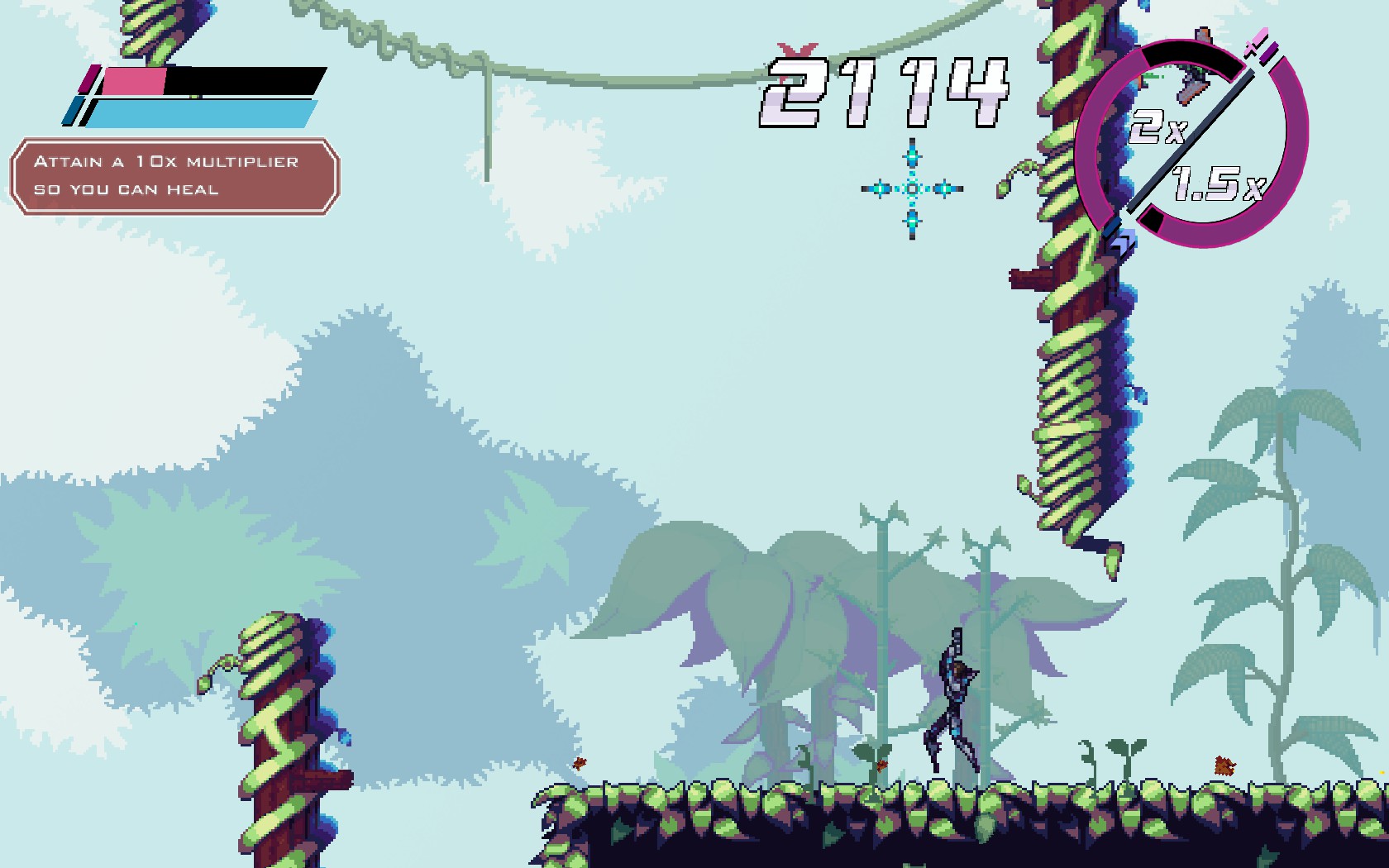
Blood Alloy Reborn casts you as Nia Rhys, a cyborg warrior who uses the BLade Assisted Traversal System (or BLAST) to slide and whirl around arenas and carve up robots. As the combos grow, Nia will regain lost health, de-cloak "kidnap drones" that allow her to rescue soldiers at a bonus, and of course, face more difficult enemies. The BLAST system allows you to slide around the arena, traveling up surfaces and bouncing from point to point as you shoot down robots in your way, even giving you alternate combat options like homing missiles and devastating wave attacks. When it works correctly, it can be really cool as you slide through arenas carving up metal enemies and bouncing from surface to surface as you slide.
When it works properly. But the problem is, even with a controller and when played as recommended, the controls are slippery and weird. In spite of the range of weapons, I found myself using the same three or four over and over again, or mashing buttons as I flailed around the arena, the metal onslaught mainly dying out of embarrassment rather than anything I had direct agency over. Maybe it's that I'm spoiled from SUPERHOT last week, but nothing I did felt particularly awesome, or even like it had much impact on the game I was playing. It just seemed like I was sliding around the arena for who knows what ends. And you will slide quite a bit, as pretty much anything puts you into a slide.

Even then, the dodgy hit detection meant that it wasn't all that much fun, either. It's difficult to tell if you've been hit, or sometimes what was even in the vicinity to hit you. More often than not, the ride comes to an end with a measly score, having no idea how or why to continue. If this weren't bad enough, the way you regenerate health is pretty much a nonstarter as well. The game tells you that once you reach a 10-combo or above, you'll start regenerating health. This...strangely did not happen too much. I actually took a moment in the action (the enemy patterns are...bizarre) to watch, and sure enough, no movement.
The graphics are also a bit of an issue. There is not clear delineation between the environments, making some jumps more guesswork than solid. There were several times I leapt at what I thought was a traversible surface, only to find that it was set dressing. Similarly, I would try to rush through what looked like background, only to find out it was all too solid. While in a regular platformer, this is something easily overcome, in an arena setting this kind of thing tends to seriously bog the game down. And while the arenas are large, that combined with enemy behavior means it's a lot of running around, and the gunning is sporadic when it does come. I also didn't notice a ton of enemy variety.
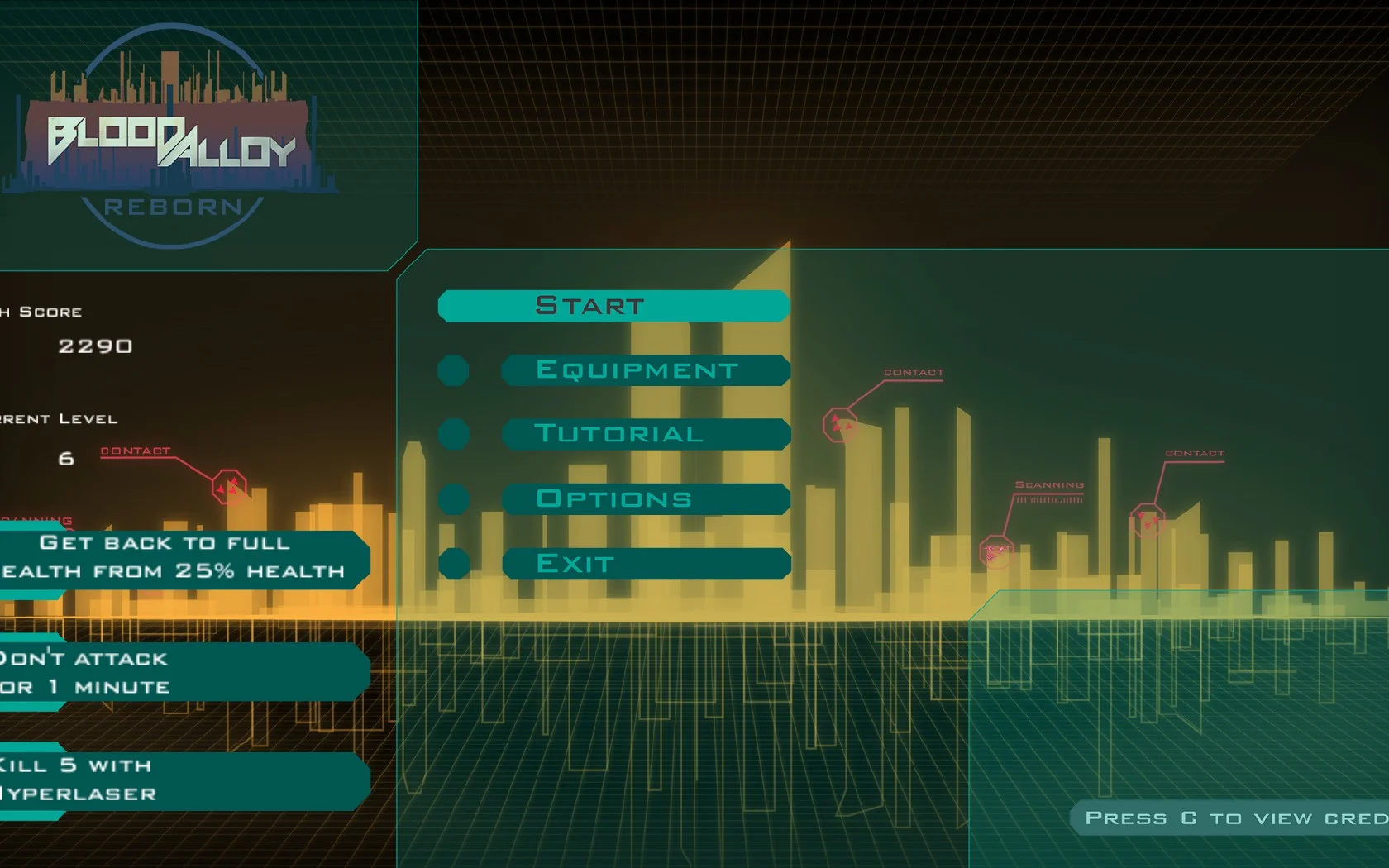
In fact, just looking at the title screen, the whole thing feels very rough. With a few updates, I'm sure it'll become polished and play great, but as of right now, it just feels off, unsatisfying.
So in the end, I have to say that this is, while a game with potential, not a game I'm interested in playing until the kinks are worked out. I hope it improves from the early issues into the game it wants to be, but right now, it's far too rough. A shame, because there really are some awesome moments when you're sliding around arenas laying waste to enemies.
2/5
The reviewer received an early access copy of this game for review.

SUPERHOT Review: Maximum Effort!
Okay, so let me lay it on the line right here: If you have recently seen an action movie and said, "I would like a game that lets me do that," then SUPERHOT is the game for you. If you have ever seen a gunfight and wondered why first-person shooters don't give you the same ability to be a badass, this is the game for you. And, well, if you have recently seen Deadpool and want to turn literally everything within range into an instrument of murder, chances are SUPERHOT is your kind of game, too.
But allow me to explain.
Okay, so let me lay it on the line right here: If you have recently seen an action movie and said, "I would like a game that lets me do that," then SUPERHOT is the game for you. If you have ever seen a gunfight and wondered why first-person shooters don't give you the same ability to be a badass, this is the game for you. And, well, if you have recently seen Deadpool and want to turn literally everything within range into an instrument of murder, chances are SUPERHOT is your kind of game, too.
But allow me to explain.
SUPERHOT is a bizarre abstract shooter that showed up first as a prototype for the 7-day FPS challenge way back in 2014. The central concept is that time only moves when you do, allowing you to plot a couple of moves in advance and actually think about how to maneuver through the scene. This, combined with its incredibly simple controls (left click shoot, right click throw things, WSAD moves, space jumps. And that is literally all you need to know. And even then, jumping can be optional) puts me in mind of a slightly less difficult Hotline Miami, another game that involved incredibly simple controls and a byzantine plot to combine for an orgy of mad violence.
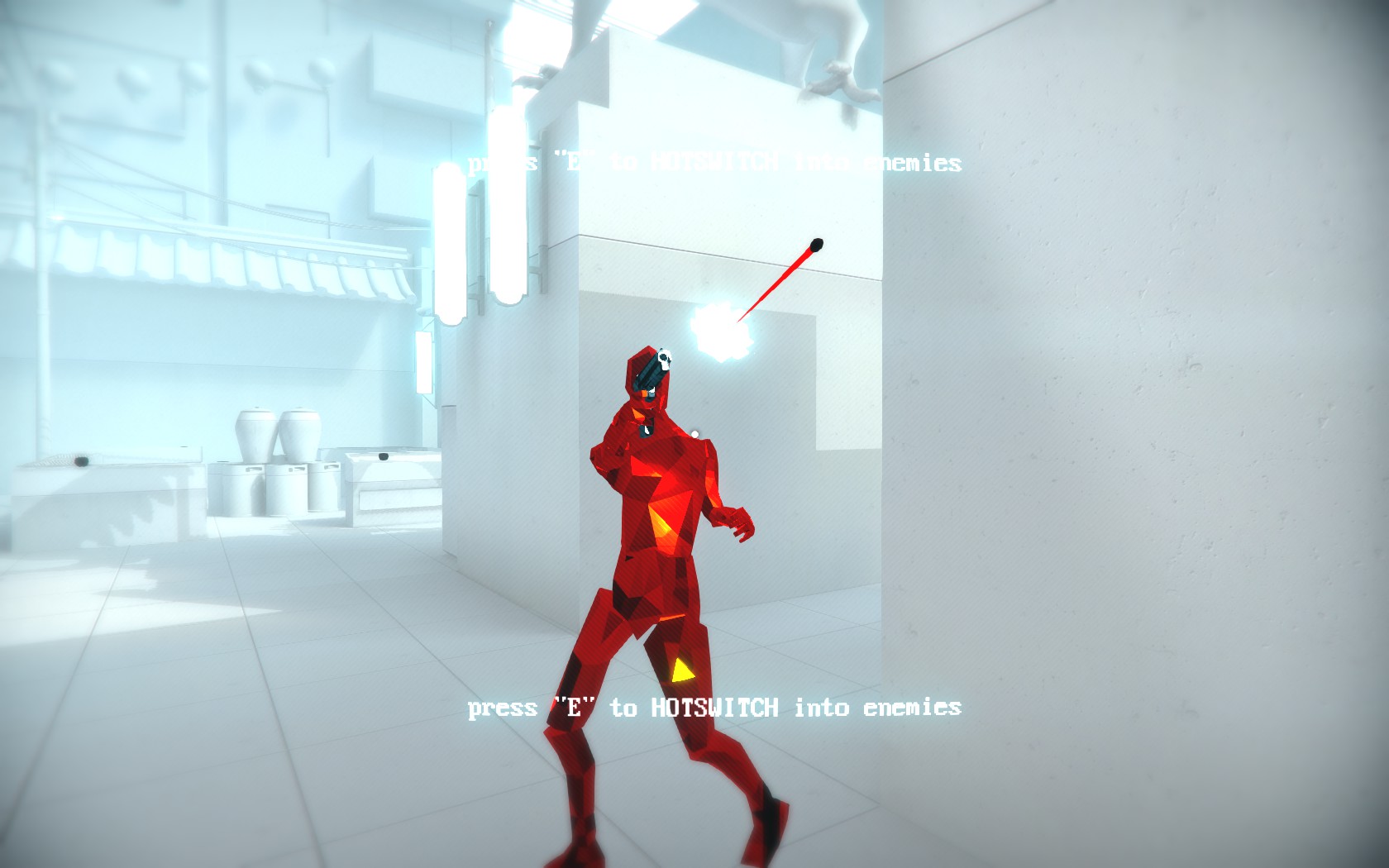
The word "byzantine" is pretty much exactly the word to describe the plot. Without giving too much away, you (as yourself) are sent a cracked .exe file for a game called SUPERHOT. The game you are currently playing. As you enter each new level and mow down red guy after red guy, messages on screen appear, telling you essentially "MORE MORE FASTER FASTER" and encouraging you to waste guys. But then, around the time you get the first message of "YOU SHOULDN'T BE HERE," things get...weird. The game takes an abrupt shift into a genre I wouldn't dare give away, and then plumbs its bizarre depths from there. Exactly what is going on or how much the game is aware of the fourth wall is in doubt, but it's clear that the creators are trying to make it so the usual sense of detachment no longer applies.

The game's commitment to immersion is really cool. The menu screen is set up like an older-model CRT with text, offering you a variety of apps and programs, including a chat program where characters discuss their experiences with SUPERHOT, an old-school arcade game or two, older applications like Sand Simulator and Water Simulator, and even Conway's Game of Life. It really helps drive home the atmosphere of the game, that you've somehow stumbled upon this odd virtual reality interface and been drawn into a cyberpunk world full of bizarre concepts that are mostly spoilers I can't give away.

The plot actually gives the game an odd contrast, a game that makes it seem bad to do this cool thing, while at the same time reinforcing how cool doing this thing is. The game is addictive, especially when it plays back an entire kill streak and you see yourself rush through a kinetic action movie-style setpiece, leaving a trail of red polygons and glass-shattering noises in your wake. SUPERHOT also contains several "challenge" modes and an "endless" mode that will basically satisfy your craving for wasting a ton of trichromatic polygons from now until doomsday.
In terms of the plot doing that, I'm actually reminded of Harvester, another game that involved a game supporting violence, while at the same time being a game that took an anti-violence stance. I'm not sure how much SUPERHOT played it tongue-in-cheek, since the plot deliberately plays against the nature of the game or frames the actions of the player as being enthralled and controlled by the game, but either way, it's just interesting enough for me to keep going.
In the end, this is the most innovative shooter I've played in a few years, and I thoroughly recommend buying it. I also recommend watching Killstagram if you have any further doubts about playing the game. It's well worth it, and is by far the most satisfying burst of violence since Hotline Miami.
5/5
Full disclosure: The reviewer received a copy of the full game in exchange for this review.
Overfall Early Access Review
Overfall is a game with a lot of good things going for it. It has a distinct art style, an excellent modular story engine, some interesting tactical combat, and a very dynamic setting. It's a game that promises a staggering amount of depth, especially when one gets into it. It's a big, expansive game with a big expansive map and big expansive ideas.
Overfall is a game with a lot of good things going for it. There is the distinct art style, an excellent modular story engine, some interesting tactical combat, and a very dynamic setting. It's a game that promises a staggering amount of depth, especially when one gets into it. It's a big, expansive game with a big expansive map and big expansive ideas.

Unfortunately, this is where things fall a little flat. For a big, expansive game world with an easy to use storyline editor and a lot of cool stuff going for it, the game doesn't exactly deliver on the bountiful promises that it set out to make. It's that failure to deliver that makes everything that much more difficult. What should be an awesome game is only an okay one.
And this is the issue with Overfall. But as always, more below.
Overfall is a tactical roleplaying game with procedurally generated elements. In it, you guide a team of adventurers around a series of islands, stopping off at each one for a different story fragment or adventure. The object is to build enough of a reputation to find the lost king who can reunite the world against a group of terrifying barbarian invaders streaming out through a portal. Your heroes solve various problems through a mixture of diplomacy and turn-based hex-based tactical combat, gaining reputation points that slowly build a rapport with various races. This in turn means the races are more likely to help you against the barbarians, and so on and so forth.
Time is also kept by way of a clock in the corner of the screen, as the invaders set up bases and begin to siege the various islands throughout the vast archipelago. The game becomes more difficult as you go, with new challenges and different ships. Overfall makes an effort to make sure the player feels like there's a world, with various factions, ships, fights, and various other factors. You can actually watch wars going on as you sail from village to village and the Vorn become a bigger threat, and that's really cool.

When you die (and your characters will die), the game plops you back at the portal with more options unlocked: different party members, new trinkets, various abilities, and other things like that. Thus, the game becomes easier and also gains depth as you go on, with new abilities unlocking and old ones shifting, as the player goes along. The player also gains new classes and characters to unlock as the game goes along, and as your ship becomes more renowned, you can hire new characters for your party to make battles a little easier. You also unlock new weapons, relics, and a ton of other things.

Unfortunately, while there is a lot of depth and the game is fun enough, it's very slow. All your unlocks are tied to in-game progress, which is based on the quests you get. As the quests are completely random, it's difficult to make much headway in the plot. You can get completely screwed over just as easily as you can run through a series of all-important reputation missions that allow you access to a faction's homeland. One run may see you getting inconsequential quest after inconsequential quest, others may see you racking up rewards faster than you can spit, and that luck kind of causes the game to bounce off it's players.
Which is a shame, because if you can set up a rhythm, the game is really good. When it's firing on all cylinders and lets you see its depth, it's something amazing. As a shallow time-killer, it can also be pretty cool. But when all you're doing is finding the quests that mean you get minimal rewards and there's no sense of progression, it's really annoying. The game becomes an exercise in gambling and tedium, neither of which really make for a good roleplaying game, as anyone who's played Chinese MMOs can tell you.
And then there's the story editor. The crown jewel of Overfall's engine, the story editor is a crown jewel in the game. A Twine-like interface, it allows you to craft your own miniature narrative and add it to the possible random generation in the game. Furthermore, it allows you to download community adventures, play them, and rate them as you see fit. It's the kind of democratized storytelling that more games should have. It's simple to use, has a lot of applications, and can be used to tell any number of awesome mini-stories.

But between the luck-based content, the tactical battle system that takes a lot to get used to (seriously, some kind of manual would be a godsend), and the just weird nature of the game, Overfall just seems like kind of a mess. In the end, I'd wait for a sale or see how much it's going to be before going out and buying it. It's a good game, but it lacks the vital spark needed to make it a truly amazing one, and I can't fully recommend it based on that.
Final score: 3/5
Full disclosure: The reviewer received a pre-release early access copy for review.
Pathologic Review
Why should you get this game? Because for the first time in it's long and checkered history, the cult horror game Pathologic is finally in a playable form. The graphics are better, the English translation actually matches up with what's being said in the game, and many of the truly game-breaking bugs are nowhere to be found. For the first time, players are finally able to play a rare gem in the form the authors intended it to be played.
Why should you play Pathologic at all? Well, that's a lot more complicated. The short answer is simple:
Everyone needs their mind messed with a little sometimes.

Why should you get this game? Because for the first time in it's long and checkered history, the cult horror game Pathologic is finally in a playable form. The graphics are better, the English translation actually matches up with what's being said in the game, and many of the truly game-breaking bugs are nowhere to be found. For the first time, players are finally able to play a rare gem in the form the authors intended it to be played.
Why should you play Pathologic at all? Well, that's a lot more complicated. The short answer is simple:
Everyone needs their mind messed with a little sometimes.

But let me explain: Pathologic is the first game by cult favorite developers Ice Pick Lodge, the twisted geniuses behind such games as impenetrable and incredibly difficult afterlife FPS The Void, psychological 2D stealth adventure Knock! Knock!, and a gaming satire known as Cargo!: The Quest for Gravity. They're also nuts, and responsible for manufacturing games that usually aren't seen outside of creepypasta. But I'm getting away from my point a little. Let me try again.
In Pathologic, you choose from one of two characters (a third is unlockable, but you have to play the game at least once)-- Danil Danofsky, a bachelor of medicine investigating the murder of someone who was supposed to be immortal; or Artemii Burakh, a Haruspex and one of the few people allowed to perform autopsies in the game's world. There's also Klara, the Devotress, an unlockable character who has mysterious healing powers and a higher calling than the other two, but chances are unless you're really determined or edit your save file, you're not gonna see very much of her outside the opening cinematic. I'll get to why in a moment.
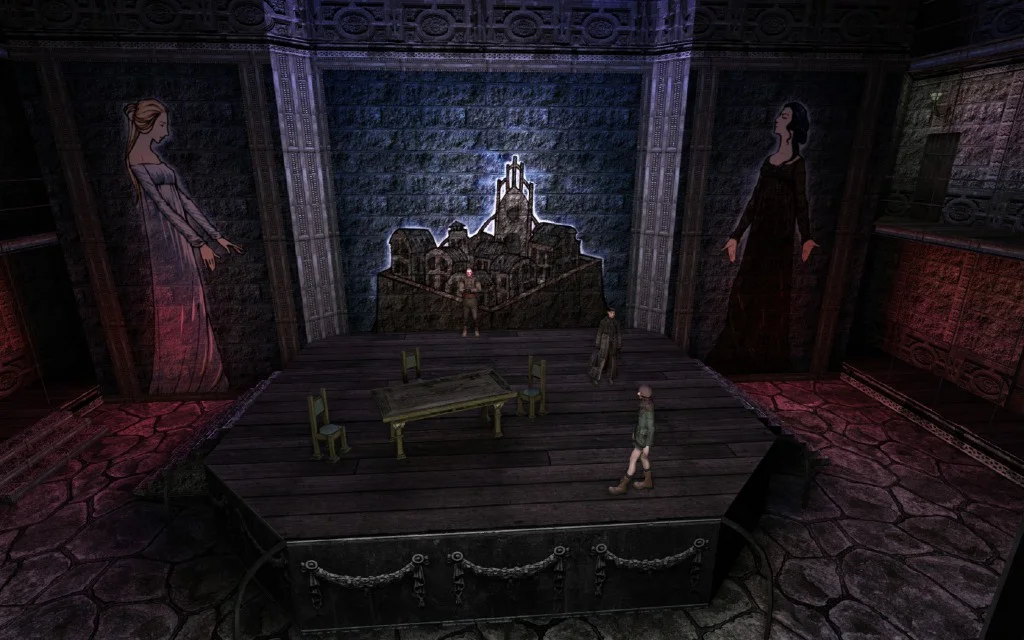
This little playlet is your character selection screen
While these three go about their business, a mysterious plague known as the "sand plague" takes over the small unnamed town they find themselves in. Furthermore, the three families who run the town with the aid of their precognitive "mistresses" are locked in a power struggle that seems to finally be coming to a head. Bizarre customs involving children and their animal companions, the massive hilltop slaughterhouse, the local asylum, two alien buildings at opposite ends of town, burning people suspected of being artificial humans at the stake in the district centers, and the odd play that goes on every night at midnight run rampant. And before the end, things will get a lot, lot worse.
The game is nominally an FPS/Survival horror/Adventure game. As whatever character you choose, you investigate the town and its inhabitants, running errands and trying to get to the bottom of the numerous mysteries. You can also dumpster-dive, barter with townsfolk, and explore the impossibly weird geography of the small town on the steppe. There's a constantly running game clock, and it's not possible to see everything, so players have to think in terms of what they do want to see. And if you think of it in terms of a game, you will die. A lot.
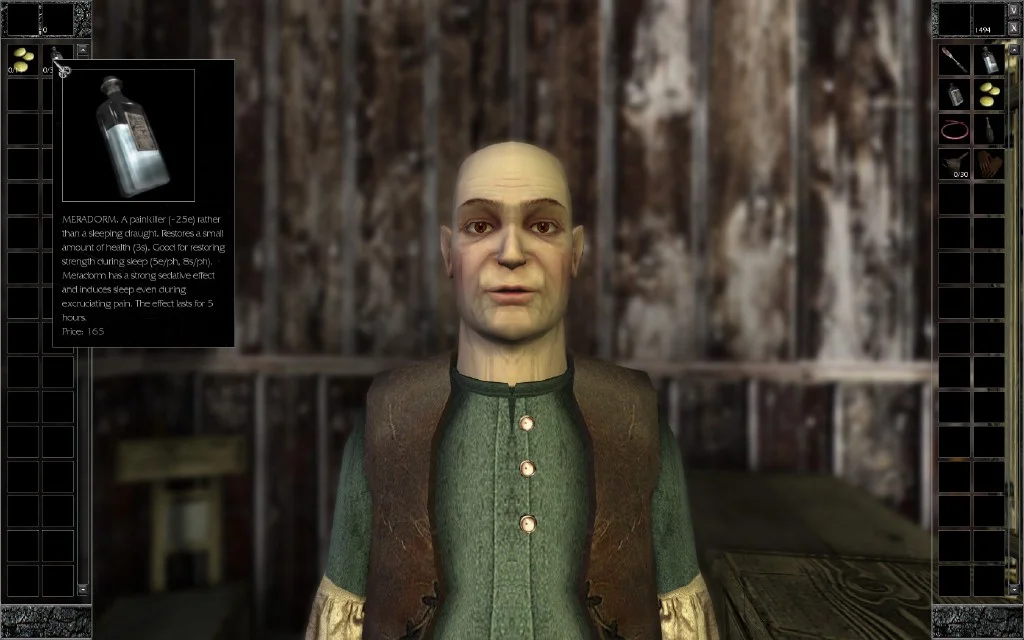
BALD. MUTE. LUNATIC. SKINFLINT.
Yes, the game is kind of unforgiving about that. Quest-givers will wind up lying to you more often than not, in fact, most people in the town are exercising some kind of dishonesty. Prices at most of the shops in town are controlled by a bald, mute lunatic who jacks up the price day after day while giving you corrupt pawnshop-style prices on anything you try to sell. Maintaining a good supply of food is absolutely essential, as is getting enough sleep. Most times you get in a fight, it's deadly, and even a common fistfight could take off half your health. Ammo and guns are so scarce that it's actually more useful to barter them for supplies you need, than it is to shoot people. It's a difficult, punishing game, even more so than stuff like Dark Souls. But there's a purpose.
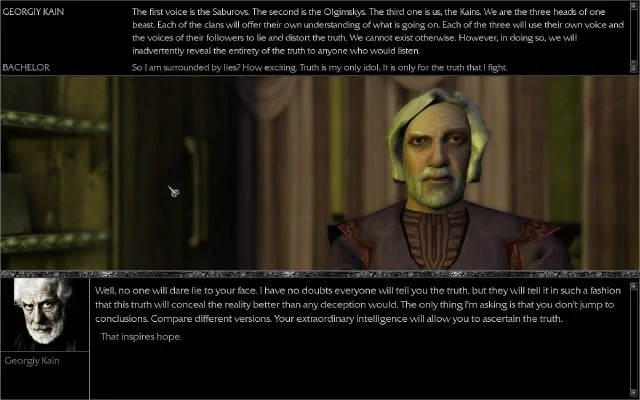
Typical conversation in Pathologic
Pathologic is a game that gets inside your head. It forces you to think not as a player, but as the character you chose. It even reveals much of the artifice other games would normally hide, showing you that yes, this is a play, this is artificial, but if you think that's going to save you, ha ha ha, nope. Further driving this home are the Adherents, plot-critical characters that you have to keep alive and safe through each of the plot's twelve days. They can and will die unless you pay attention to their needs, leaving you high and dry. So can quest-givers and major NPCs, and not all of this is scripted. Of course, some of them have to die over the course of the plot anyway, but figuring out which is which depends on how you yourself feel the character would act. It's a game that dumps all the choices squarely in your lap, and then reminds you that not choosing is still just as much a choice.
However, once you actually learn to live in the game's world, the game becomes unsettling and engrossing in equal amounts. It's one of the very few games that casts you in the role of a detective, and then actually makes you deduce, detect, and interact with the characters. Every aspect of the mystery is left up to you to solve, every clue waiting for you to discover it, all the conclusions your own within the scope of the game. It's amazing to have that degree of agency when the controls and interface aren't that complex (NOTE: There is no tutorial, get a manual. I know, some of you aren't used to it, but seriously, GET. A. MANUAL).
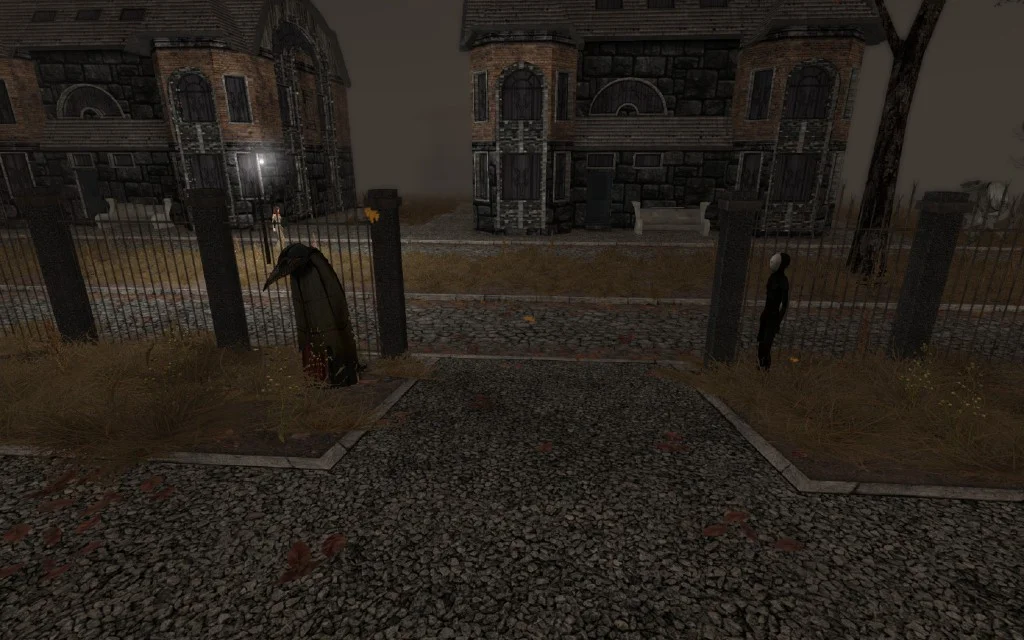
These two are all the tutorial you're gonna get.
The game also kind of seeps into your head a little. It's very immersive once you get the basics down, allowing the surreality of the world to seep in. You also get some instruction and direction from the two masked "players," one wearing a raven-like plague doctor mask and cloak, and the other dressed up as a mime in a black bodysuit with a white mask. While this is incredibly vague, it does give some insight in how the world in the game works and what you're supposed to do in the world. Even if a lot of it still remains for you to find, rather than being pointed out to you.
But if you want a challenging, unique, innovative experience that breaks genre barriers and gives you something that everyone says they crave out of their gaming experience, you need look no further. There may be other games that make you feel this way, other games that challenge the way you think and act in games, other games as challenging, but in the end Pathologic stands on its own, a titanic work that neither begs for your attention nor particularly needs it, but instead waits and bides its time until you're ready. And when you are, it'll be waiting with its own peculiar welcome. On an ancient steppe. In the fog.
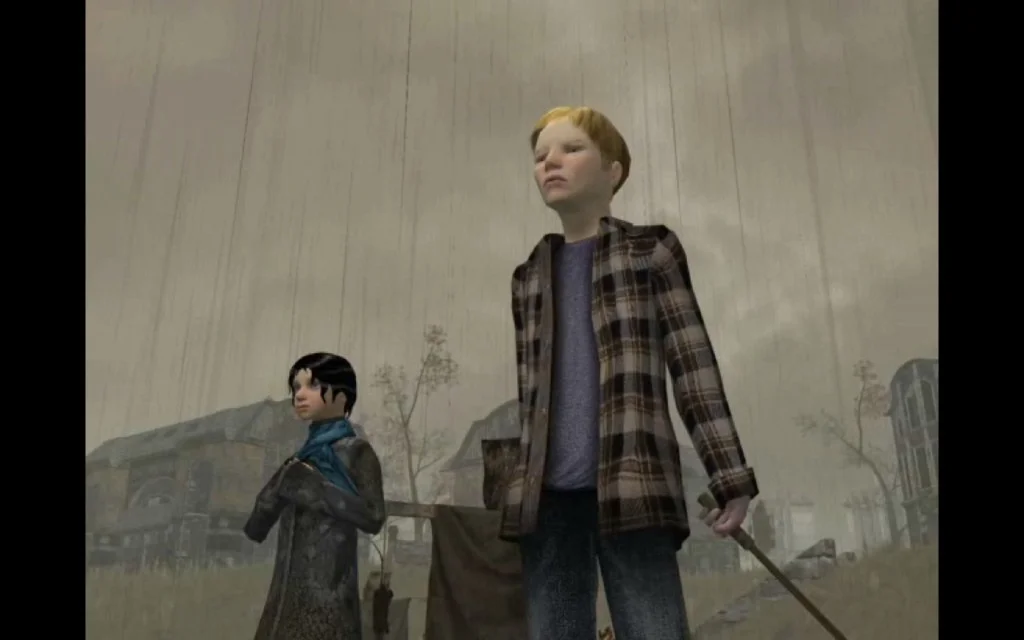
Children at play on the Steppe. Burying a doll. No big deal.
Score: 5 out of 5 - with the caveat that you should seriously look into this game and understand further what you're getting into. Some people hear "complex and challenging" and go charging into things headfirst, I will warn you immediately that this is not an experience for many, and you should search around.
Reviewer received a copy of the game for review
Sublevel Zero Review
There's a very easy test to see if you'd like Sublevel Zero, the new PC game from Sigtrap Games. I'll even link it here. Go on. I'll wait. All right, did you like what you saw there? Then congratulations, this is the game for you.
There's a very easy test to see if you'd like Sublevel Zero, the new PC game from Sigtrap Games. I'll even link it here. Go on. I'll wait. All right, did you like what you saw there? Then congratulations, this is the game for you.
Joking aside, Sublevel Zero is actually a pretty good game. It's not something I would gladly rush out and buy, but is a good solid game with a decent control scheme and enough depth to be worth the replay value. It also has an aggressive dislike of people who get motion-sick, but then again, considering it's a game with about three hundred sixty degrees of movement range and expects you to dogfight, then you kind of know what you're getting into.
The plot is pretty bare, and advanced through that time-honored plot device: Text logs left around for you to find (as a side note, remember when this was actually used as a narrative device instead of something people could do to just fling around the bare bones of exposition?). Humans have spread all over the galaxy, and have become so tribalized and separated that they have formed "clans" around "warlords" and finding ancient technology. You're a pilot from one of these clans, having found an odd station filled with automated defenses that seems to be responsible for warping the space around it. You head inside, hoping to figure out what's going on, and thus the game begins.

The rest of the game is fairly simple. Fly around neon hallways shooting enemies for parts and currency, find big thing, shoot big thing, collect macguffin, move on to next level for a more difficult course. Sublevel Zero is of course a roguelike (because procedural generation is really buzzy right now), and so each time you die, it will generate a new maze for you to explore at your leisure. It's actually kind of meditative at times, flying through tunnels and performing aerial maneuvers while a soundtrack reminiscient of Artificial Intelligence is pumped through your speakers.
And then, of course, you hit a dogfight with a bunch of hyper-aggressive turrets and suddenly the game turns into the most dissonant example of a kinetic bullet ballet I've ever seen, with the soundtrack pumping music with a definite chill-out bent while the scores of enemy robots and automated turrets do their level best to make you careen around rooms. With the game's pace, this doesn't seem as jarring as other games with similar themes, but it's still odd to have this ambient world around you and at the same time an absolute blastout with a series of malevolent bots.
But beyond that, it's surprisingly deep. Bots will explode after they've taken enough damage, so if you cluster another one nearby, they can get hit with the splash effect. In later levels, you can even shoot other surfaces (lava, for one example) to cause splash effects and damage some bots. There's also a wide variety of weapons one can pick up with varying stats, that can then be combined into even more powerful forms to further murder the hell out of the robots in your path (the house recommends anything that calls itself 'room-clearing'.) There are also other ships you can unlock, more powerful hulls, and a variety of goodies to find.

The one issue I have with the game is that it sits on this depressing trend that, for the purposes of things, I will call "Ernest Cline Syndrome." Ernest Cline Syndrome is what happens when things are retro for not much of a purpose other than being kinda quirky and retro. So. All the precursor logs you find in the game are represented by old-school game boys. There's not really any reason for this, and it kind of took me out of what was actually kind of a cool experience. It also has an issue where it'll build the levels out of pre-set parts, which can be a little annoying at times, with sudden dead ends.
But in the end, a little bit of meh flavor shouldn't scare anyone off. It's a lot of fun, and it's good to start up if you just want to swirl around the inside of the station for a little while. Definitely give this one a go sometime.
Score a 4 out of 5
Thanks to the publisher for providing a copy for review.
Age of Decadence Review
I just trashed a city's infrastructure for the mob.
I was totally justified in doing so. My character was serving the Commercium, the entirely unscrupulous merchant's guild who runs the trading quarters in every major city. They plot and conspire all over the place to topple the ruling houses in the cities where they work, and they're pretty much the closest thing this world has to the mob. So now, because of me, they control the city's military as it descends into lawlessness, and they could probably take over whenever they like. The scary part is, that's probably not even the nastiest thing I'll do this playthrough.
I just trashed a city's infrastructure for the mob.
I was totally justified in doing so. My character was serving the Commercium, the entirely unscrupulous merchant's guild who runs the trading quarters in every major city. They plot and conspire all over the place to topple the ruling houses in the cities where they work, and they're pretty much the closest thing this world has to the mob. So now, because of me, they control the city's military as it descends into lawlessness, and they could probably take over whenever they like. The scary part is, that's probably not even the nastiest thing I'll do this playthrough.
This is Age of Decadence, and it's possibly one of the best games I've played this year.
The Age of Decadence is an isometric roleplaying game from Iron Tower Studios. I came across it early in its development after hearing it talked about on a gaming site, and in particular, after an interview with the dev team. From there, I followed the open development as much as I could, downloading each new release and dying frequently with each new character I made. This game has a history with me.
The thing that makes me absolutely love the game and come back to it again and again no matter how many times I die or screw up, though, is that the game is that deep. The game begins with a message that combat is highly lethal, and it would be better to negotiate your way through each situation. You can get through the first act of the game by only killing one person, or if you really want to see how low you can get your body count, you don't have to kill anyone at all (this won't make anything any easier). The game is incredibly open-ended, and even failing a quest in one way will give you options to succeed at another.
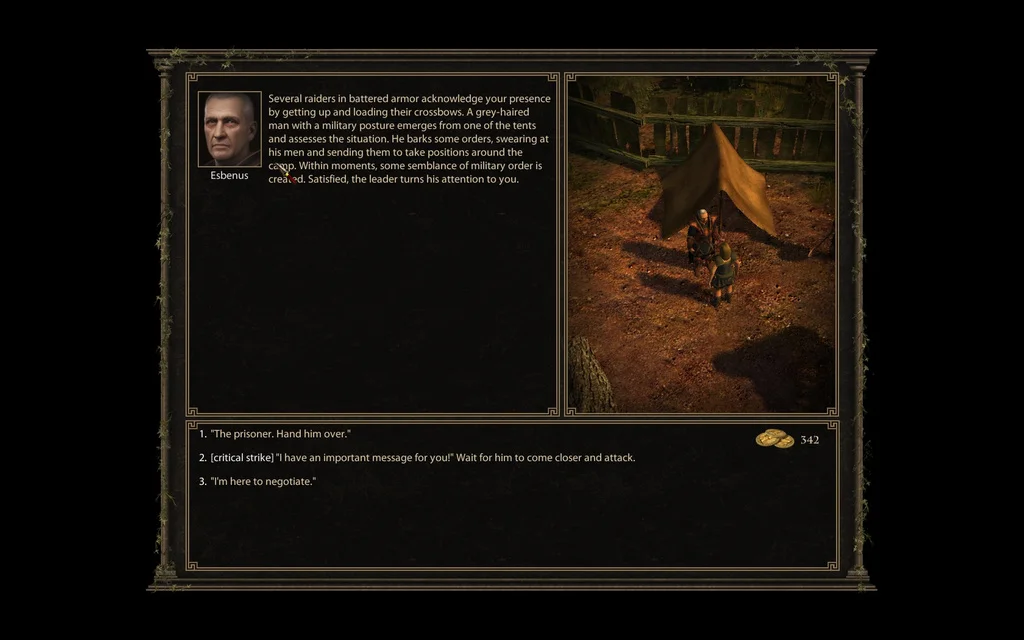
And it's beautiful. There's technically no "wrong" path, and while there are certain paths that will leave you without many good options, each choice follows on the back of other choices. Screw over a local lord? He's not going to want to put in a good word for you. Fail too many missions for someone? They're not going to trust you with the fate of their grand schemes. Fail to decipher that inscription? Then it's probably not best to operate that piece of machinery. The world is essentially yours to do with what you like.
There is just one problem, and it's sadly one worth mentioning. There is a lot of trial and error, and there's a high barrier of entry that comes with that. You'll find yourself not necessarily save-scumming, but testing out situation after situation to figure out what does what, and at which threshold. Even if you specialize enough, there's a chance the skill level thresholds are just too high, and it is that way by design, not by any cruel trick. I had to try several different combinations before I figured out the right way to approach situations. My advice: Pick up Streetwise and pump a lot of points into that. And Lore, too.
But in the end, is it all worth it? Absolutely, yes it is. You will not find a more player-driven game this year, with the possible exception of Fallout 4, which hasn't come out yet. While the barrier of entry is ridiculous, it's also rewarding. Seriously, check this one out. Also-- the demo is the first town of the game. For you to explore. For free. There is no reason not to at least give this a look.
Final score: 5/5
Full disclosure: Reviewer received a press copy of this game
Cross of the Dutchman Review
Maybe I'm just spoiled. Maybe that's it. I've been going over and over in my head exactly what it is about Cross of the Dutchman that makes it so unsatisfying to play. It's not a bad game. It's definitely not like Chariot Wars or The Weaponographist, where I was able to pinpoint (violently) what I disliked about it. I don't dislike anything about Cross of the Dutchman, it's a perfectly okay small game about a folk hero and his attempt to drive the Saxons from his homelands. Violently. With his fists. The art style is pretty terrific, the controls aren't too bad, and it's a nice little hack-and-slasher.
But the game just falls a little short. Maybe not in what it is...it's a hack-and-slash actioner and that's really all I expected from it after a few minutes' play. But definitely in what it could be. I just felt like after playing it, I hadn't experienced anything that I would really take time out of my day otherwise to do. And I suppose that's the real issue.

Maybe I'm just spoiled. Maybe that's it. I've been going over and over in my head exactly what it is about Cross of the Dutchman that makes it so unsatisfying to play. It's not a bad game. It's definitely not like Chariot Wars or The Weaponographist, where I was able to pinpoint (violently) what I disliked about it. I don't dislike anything about Cross of the Dutchman, it's a perfectly okay small game about a folk hero and his attempt to drive the Saxons from his homelands. Violently. With his fists. The art style is pretty terrific, the controls aren't too bad, and it's a nice little hack-and-slasher.
But the game just falls a little short. Maybe not in what it is...it's a hack-and-slash actioner and that's really all I expected from it after a few minutes of play. But definitely in what it could be. I just felt like after playing it, I hadn't experienced anything that I would really take time out of my day otherwise to do. And I suppose that's the real issue.
Cross of the Dutchman retells the story of Big Pier, or Pier Gerlofs Donia. A big man, fed up with what the occupying Saxons were doing to his people and his lands, Pier Donia decided to take the fight to them. First by beating the everloving crap out of every Saxon he could find, and then by rounding up a band of vigilantes and making targeted strikes on the Saxon forces, stealing supplies, and the like. The player takes the role of Pier, who starts out just trying to get through his day in the village. At first, the player only has a pair of fists and some basic moves, but as the story progresses, they gain companions, a sword, and even a plow at one point as they drive the hordes of vile Saxons from their land. The game alternates between regular hack-and-slash gameplay and stealth sections as you sneak around Saxons during night raids and hold your own against onslaught after onslaught of enemies.

But here's where it breaks down a little. There's not much to do other than that. There's also not much in the way of tactics or anything other than "Run around, avoid getting hit, power up attack, release attack, repeat." The stealth sections contain moments where, if you go too far off the rails, the game penalizes you by having you caught by people who don't even appear onscreen. In fact, the game as a whole is pretty railsy, which is normally all right (not every game has to be an open-world extravaganza), but chafes when one of the things the game has you do is explore the wide-open levels looking for treasure chests, shortcuts, and alternate routes.

Captured! By the forces of absolutely no one!
What you can do within those rules isn't really all that great, either. Pacing and progress in the game are slow. It makes sense for the narrative to have Pier not immediately get a sword and go to town on everyone, but spending that much time using his fists before getting the option of a sword just doesn't make that much sense game design-wise. The longer you keep players from progress, the more the players get frustrated with the game. In telling the story of how the legend becomes who he is, the fundamental satisfaction of being the legend is actually lost. Also, the aforementioned rails kind of left me feeling confined.
All of this is a shame, because the game has some great points, too. The cutscenes are all illustrations, as if they came out of a rather cartoony stained glass window or illuminated manuscript, what voice acting there is isn't terrible, and the two-second sequence where I got to mow down people with a plow was good.
But for every decent sequence, there are six or seven problems with it. Combat doesn't flow, even with the sword. Sometimes you'll be able to hold down the mouse button and cleave through your enemies, sometimes you'll be unable to do anything of the kind, and Pier will stand there and get beat on. Most of the basic moves in combat are irrelevant anyway, as you will find yourself relying more and more on the obscene and unbalanced one-hit kill move that, conveniently enough, also works as an AOE and recharges with relative quickness. This turns the battles into a pattern of running around the map to recharge the super, taking out a cloud of Saxons, and then running around the map to recharge again.

The tutorial sequences delving into parody doesn't exactly help either. It worked in Fairy Fencer F because it was just that kind of game. But Cross of the Dutchman is very much not that kind of game, and so when Pier's wife constantly talks about minimaps and the like, it just rings hollow.
In the end, I wouldn't recommend Cross of the Dutchman. It's not a great game, and what is there isn't enough to keep me interested. If I hadn't gotten this review copy, I wouldn't be giving it a second look, and I'm not sure anyone should.
2/5
Full disclosure: Reviewer received a free review copy of this game on Steam