Sam's Reviews Sam Reader Sam's Reviews Sam Reader

Disgaea 5 Complete Review

Disgaea is a series that’s been around for a while, an absolute tactical-strategy juggernaut that’s made its bones on unique gameplay, a vast array of characters, and an absolutely wicked sense of humor. The fifth numbered sequel (Sixth game if you count D2) in the series delivers on all of that, with two snarky morally ambiguous heroes taking on the threat of a massive army poised to take over the Netherworlds and rule the afterlife entire. But while you can certainly expect all the usual hallmarks of Disgaea— Fourth wall breaks, snarky heroes, wacky humor, talking penguins— the game introduces some interesting new systems and classes while still giving you all the power to take the fight to the Netherworlds and conquer the lands of the dead in the name of revenge.

Release Date: October 22, 2018
Publisher/Developer: NIS (Nippon Ichi Software) America
Platform: PS4, PC (Reviewed)
Price: $39.99


Disgaea is a series that’s been around for a while, an absolute tactical-strategy juggernaut that’s made its bones on unique gameplay, a vast array of characters, and an absolutely wicked sense of humor. The fifth numbered sequel (Sixth game if you count D2) in the series delivers on all of that, with two snarky morally ambiguous heroes taking on the threat of a massive army poised to take over the Netherworlds and rule the afterlife entire. But while you can certainly expect all the usual hallmarks of Disgaea— Fourth wall breaks, snarky heroes, wacky humor, talking penguins— the game introduces some interesting new systems and classes while still giving you all the power to take the fight to the Netherworlds and conquer the lands of the dead in the name of revenge.

The netherworlds are being conquered by Void Dark, a sinister force that seeks to control the lands of the dead entire. As the various regions try desperately to stop this and are summarily crushed one by one, a young man named Killia suddenly appears in the midst of a battle, stopping to eat lunch. Killia immediately wipes out the forces opposing the embattled Princess Seraphina (who is fighting Void Dark partly to stop her arranged marriage), explains his motivations for opposing the conquest of the netherworlds, and they set out to unite the Underworld’s disparate regions and free things from the grip of Void Dark. But the netherworlds are a vast and eccentric place full of weird denizens and the souls of the dead, and this is going to be far from an easy fight.

By now, Nippon Ichi knows well enough to not tinker with what works in Disgaea. The series is both deceptively simple and deceptively complex, allowing you to easily build up an army and unlock their various personality traits and special skills, the tactical system is a finely-honed beast where ending a turn even when you’re not doing so well is immensely satisfying, and the way attacks can chain together or the battlefield can alter in an instant to turn in your favor, or even the way you can turn your troops into weapons for your characters to hit people with are all excellent mechanics. DIsgaea 5 shows the series at its best, with all the mechanics of previous games tighter than ever and the charming graphics updated nicely for modern systems. It’s a fantastic entry to the series, and if you’re a fan, you know some of what you’re getting already

But while not fixing what isn’t broke is all well and good, Disgaea 5 adds more content and mechanics, further creating a satisfying experience. The new “revenge” mechanic, which fits into the overall theme of Killia and Seraphina enacting their revenge on Void Dark for a variety of crimes and indignities, functions as a kind of limit break that goes up when units are damaged, party members drop, or the heroes damage enemies, leading to a berserker mode where they rack up critical hits and can possibly unleash devastating special moves, on top of all the existing special conditions and arrays of movement. It opens up some amazing tactical options, and kind of softens the blow of having units drop in battle by allowing for massive boosts to turn the tide back in your favor. Adding to this are a ton of new classes to unlock alongside old favorites, further shaking up the traditional gameplay and making sure everything doesn’t feel too samey.

The difficulty curve is also helped by gradually introducing tutorials, something that allows the player to get their head around the more complex systems. There’s still a rather fast difficulty curve, and the game still has the usual issues of grind and the usual micromanaging, but all of these are part of the tactical RPG genre. Anyone who’s experienced tactical RPGs more than a little will know what they’re getting into, and there’s enough here that beginners can at least get their feet wet.

Disgaea5Complete_Screens (5).png

In the end, there’s a lot to recommend. Disgaea 5 and tactical RPG fans will find a lot to like. What low points there are will pretty much be the same things that turn people off tactical RPGs, in which case, well, this game wasn’t for you in the first place. It’s a game that knows what it is, does what it likes, and delivers an excellent experience for fans. There’s even some interesting bonus content where you can unlock higher-level versions of heroes from other games, adding superpowered main characters to your roster for further destruction. If you’re looking for a solid tac-RPG, look no futher.

GL_Score_4.0.png

The Good
- Trademark N1 sense of humor
- Improves upon the classic Disgaea formula
- Deep systems and subsystems that can radically alter the gameplay and turn the odds in your favor
- Lots for tactical RPG fans to enjoy

The Bad
- Occasionally can get bogged down in equipment and unit management
- Occasional difficulty spikes

Thanks to NIS America fro providing a code for review

Read More
Sam's Reviews Sam Reader Sam's Reviews Sam Reader

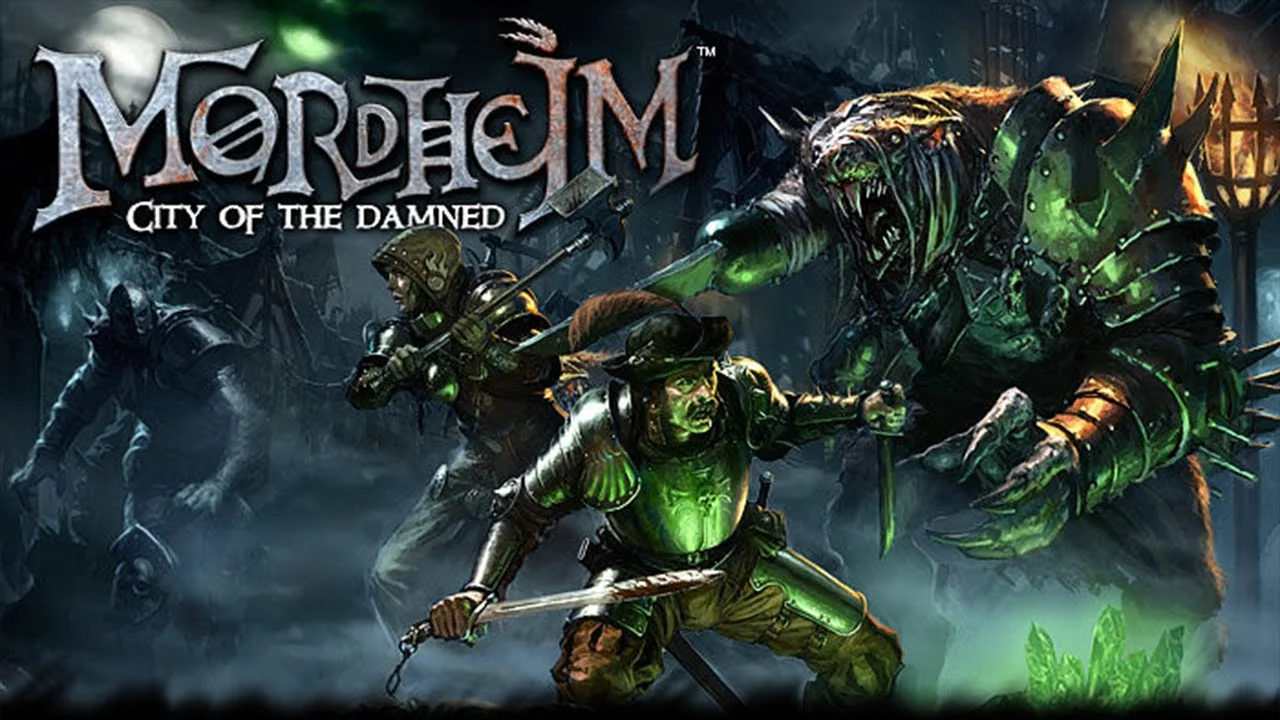
Out, Out, Damned City: A Mordheim: City of the Damned review

Unfortunately, City of the Damned isn't anywhere near as fun as the original product, and that's important to recognize. It tries so hard to get there, and maybe it even does in places-- the atmosphere, setting, and presentation are all fantastic-- but in the end, the mechanics are so byzantine and the gameplay choices are so confusing that it really doesn't make the end product particularly appetizing. Add to this an unfair learning curve that kind of shrugs and says "This is a difficult game and you're supposed to learn from your mistakes," and what you have is less a fun game, and more a byzantine slog for people who find Darkest Dungeon charming and too easy. 

When I was younger, my brother and I got into the Warhammer games. We were already huge into board games (me less, since I lost frequently and would sometimes throw away a winning strategy I didn't even know I had) and Warhammer was just a bigger and more complex board game for us to waste away the hours on. But as I never had a head for large-scale tactics, I found myself drawn to the skirmish-based small-scale cousin to the Warhammer family of games, a game called Mordheim.

When the Mordheim: City of the Damned computer game was announced, I was ecstatic. Finally, a way to bring the gang warfare of the Old World's most wretched hive to a venue where I wouldn't have to keep track of all the rules. It looked excellent, too, with a variety of warbands and races, a massive city map, and a squad-based campaign feature. I couldn't wait to load up with a few of the people I played miniatures with and have at it. 

Unfortunately, City of the Damned isn't anywhere near as fun as the original product, and that's important to recognize. It tries so hard to get there, and maybe it even does in places-- the atmosphere, setting, and presentation are all fantastic-- but in the end, the mechanics are so byzantine and the gameplay choices are so confusing that it really doesn't make the end product particularly appetizing. Add to this an unfair learning curve that kind of shrugs and says "This is a difficult game and you're supposed to learn from your mistakes," and what you have is less a fun game, and more a byzantine slog for people who find Darkest Dungeon charming and too easy. 

So the basics. Mordheim takes place in the city of Mordheim, a wretched pre-industrial European hive where people grew corrupt and decadent while the lands around them fell to a state of total war between the forces of Chaos, the Orks, and numerous other factions. That was, until the massive twin-tailed comet known as "Sigmar's Hammer" struck the earth in the center of the city, making it an even worse hive, a home to violent cults and sickening Chaos abominations, and a haven for treasure hunters and those seeking the valuable mineral known as Warpstone, able to release massive amounts of magical power and energy.

You play a band of these hunters from one of five factions: The Sisters of Sigmar, there to cleanse the city; the Church of the Pit, a Chaos-worshipping cult that formed around the comet's crater; human bounty hunters; the Skaven, rat-people driven above-ground by the city losing its grip on sanity; or Witch Hunters, driven to remove the supernatural influence from Mordheim and have a fun time doing so. The game is split into two sections, the "camp" screen, where you recruit and outfit your squad to take on missions, and the "mission" section, where you deploy into the city to do battle with other warbands and scavenge for goods. Each skirmish has an objective and a series of sub-objectives that you can complete if you so wish, strengthening your gang and your position in the city.

And here's where it starts to go wrong. The game is played in a style similar to Valkyria Chronicles: You move your characters around in real-time third-person viewpoint using their movement points, then place them into stances, take actions, or attack enemies if there are any in range spending action points. While there is a tutorial, a lot of it is unclear on what each action actually does, requiring you to navigate a confusing series of stats and menus to figure out how to carry out actions on your turn.

Complicating issues immensely is the lack of a minimap, forcing you to zoom out to a larger map that doesn't seem to record your place in the city whatsoever. You can see the general area of things on the map, but finding your own people and planning moves is an exercise in frustration. While this helps with the "desperate struggle" atmosphere, as a game mechanic it's just another arbitrary hindrance in the way of enjoying the game. 

But in the end, it's just that there was a better way to do this. A turn-based tactical over-map way. XCOM2 showed how much fun a gang-based skirmish game where you have to scrabble and squabble and desperately fight for resources could be. With racial modifiers, multilevel terrain, and an RPG-style system of advancement, this could be the game to blow the doors off the entire tactical genre. At the very least, it'd give us one of the few interesting Warhammer Fantasy games, a thing that hasn't happened since Shadow of the Horned Rat, or maybe Blood Bowl: Chaos Edition if we wanted to get technical.

While Mordheim: City of the Damned tries very, very hard, in the end, it just falls short. It's a game with a ton of great atmosphere and ideas, but the frustrating mechanics, dense barrier of entry, and low reward for a high level of effort make this completely missable. By the end of my time in the city, I just wished I could leave these people to their squabbles, and maybe pick up Valkyria or XCOM again.

Final Score: 3/5. There is so much right about this game, and then the barrier of entry just knocks it down from perfect. It's a game I want to play, but not necessarily a game I can play.

The Reviewer received a copy of this game for review

Read More
Sam's Reviews Sam Reader Sam's Reviews Sam Reader

Hyperdevotion Noire: Goddess Black Heart Review

Okay, so for the past few years, there's been a franchise known as Hyperdimension Neptunia. The general conceit is that the games industry is anthropomorphized as a land called Gamindustri, ruled over by warring goddesses who have "console wars" to determine supremacy and games companies are depicted as anthropomorphized anime characters. 

Inexplicably, this has grown into a massive franchise of games, one of which is Hyperdevotion Noire, an alternate universe game where the anime goddess representing the Sony systems has taken over everything. 

It's also not very good.

Where do I even begin with this one? 

Okay, so for the past few years, there's been a franchise known as Hyperdimension Neptunia. The general concept is that the games industry is anthropomorphized as a land called Gamindustri, ruled over by warring goddesses who have "console wars" to determine supremacy and games companies are depicted as anthropomorphized anime characters. 

Inexplicably, this has grown into a massive franchise of games, one of which is Hyperdevotion Noire, an alternate universe game where the anime goddess representing the Sony systems has taken over everything. 

It's also not very good.

The plot of the game is fairly simple. Noire, the dark goddess, has conquered Gamarket. All she has left to do is cement her rule, which she tries to do with the help of a traveling fortune teller. Surprising no one, the evil-looking, evil-sounding fortune teller decides to take all the combined power, leave Noire powerless, and forces her to conquer Gamindustri all over again, recruiting friends and allies from her former generals along the way.,

The game takes the form of a tactical strategy game: Each turn, you move over hexes, attacking enemies and trying to complete objectives. Your weapons also do damage based on facing, element, and what abilities you use, as well as what weapons in general you're using. But, problems set in with the basic gameplay soon after, as combat gets kind of tedious when all you do is run around to the back of your opponent, hit them, and then wait for them to run around so you can take your turn again. The optional elements on the battlefield do add something, but it's miniscule at best.

That wasn't even the most egregious thing about the game. That would be the kind of fourth-wall premise to the whole thing. You, the player, are a male secretary assigned to help Noire restore herself to power. You're also kind of a perv. Now, I understand that yes, this game has a target audience, and yes, that target audience has some very specific tastes, but seriously, I felt like making the player a character and that kind of character made me want to play the game less. It just felt forced and cheap. And unnecessary. 

The story also isn't that great unless you're already a huge fan. I can imagine that Noire's story might be something of a treat for the faithful, but I couldn't hit "X" fast enough to get rid of it all. It also didn't seem connected to the game for more than the occasional excuse. While it's true that both the plot and the game open up as Noire begins her conquest of the various lands all over again, it all feels static and linear. This could be excused-- even the worst writing can be okay in the right vehicle (and I'm looking at you, Dark Souls and Fallout 4), but with everything else, the boring mechanics, the arbitrary decisions, and the creepy overtones, it just gets buried under more and more of the same. 

And they're also super-deformed! Thus removing all the appeal of the Console Waifu franchise!

And they're also super-deformed! Thus removing all the appeal of the Console Waifu franchise!

In the end, Hyperdevotion Noire is kind of just airless and cheerless. It's an okay game, but an okay game in a franchise that has seen much better titles is just that-- okay. Spend your money on something that won't put you to sleep, and maybe wait until this goes on sale. Until then, there are probably six or seven visual novels that might scratch your itch much, much better. 

2/5

Full Disclosure: The reviewer received a copy of this game for review.

Read More