
Warhammer 40,000: Mechanicus II
Release Date: May 21, 2026
Developer: Bulwark Studios
Publisher: Kasedo Games
MSRP: 39.99
Warhammer 40,00: Mechanicus II is sort of a mixed bag. There’s a genuine feeling of menace to its campaigns, with the tense interplay between the machine-pharaoh Necrons and the fanatical monks of the Adeptus Mechanica. The music is suitably dark and soaring in its ambience, giving everything the feeling of huge vaults and unexplored tunnels, kind of like Arktau Eos if they got into opera. Necron have their own soundtrack, with drone and dubstep over buried horns adding to their aesthetic of technology with deep ties to the past. The damage feedback is the beefiest it’s ever been outside the first game, and the addition of the Necron campaign— where you can play the just-awakened machines on an abandoned forge world and give the Mechanicae a run for their money— is a welcome one that adds a new dimension to play. If you enjoy this kind of hard-line hardcore tactical strategy, then this will be a game tailor made for you.
For the rest of us, unfortunately, the game is a maze of cheap deaths, near-perfect play, wild imbalances, and opportunities to softlock your game going back as far as the tutorial. After arriving at one unwinnable situation after another, the verdict is unfortunately a mixed one: Fantastic for fans of grueling strategy, but the idea of thinking your way out of worsening situations doesn’t appeal, there’s not much you’re going to get out of this except sighs of annoyance when that Flayed One dashes halfway across the map and swings for full damage. It’s an interesting game, and one with some fun design choices and a lot of setting and lore, but sadly if you’re not in the market for an unfair tactical meatgrinder, it’s best to avoid.
On the jungle world of Hekation IV, the Adeptus Mechanicus, a group of robotic priests and their various servitors and allies, find evidence of ancient alien structures. As they want Hekation IV to become their forge world, the techpriests begin exploring the depths and cataloguing what they find. Unfortunately for them, what they find is an ancient tomb-world for the Necron, a group of sapient robots who have finally decided it’s time to wake up and retake the world for their own. As the two groups clash for resources and control of the planet, a conquering Necron ruler and an Adeptus looking to atone for past sins enter the fray, both hellbent on taking Hekation IV for their very own.
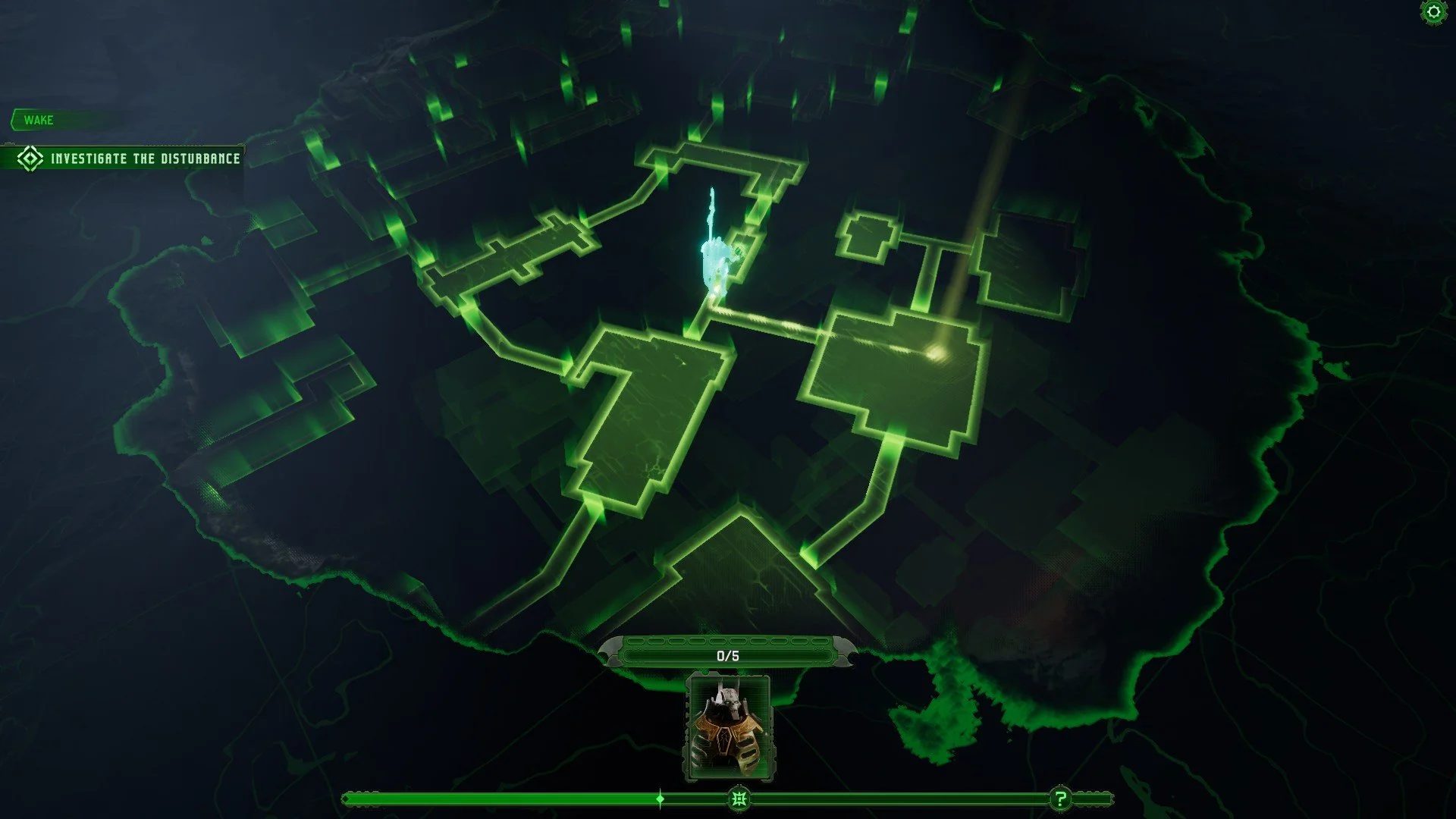
Chances are if you’re looking into Mechanicus II, you’ve either played the prequel or a number of other tactical skirmish games set in the same universe, but for those just looking at this for the first time, Mechanicus II takes place on an overworld map. You select missions and manage your bases from this map, then select a squad based on their point values and unit cap and go into the mission itself. Missions play out on a kind of overworld display, where your chosen commander moves from point A to point B, occasionally having to make decisions or fight the enemy along the route. Adding another layer to the tactics, some choices will increase a “vigilance” meter that makes things more difficult, allowing you to balance further risk and reward as you fight with either your robot zombies or zombie robots across the surface of Hektation IV.
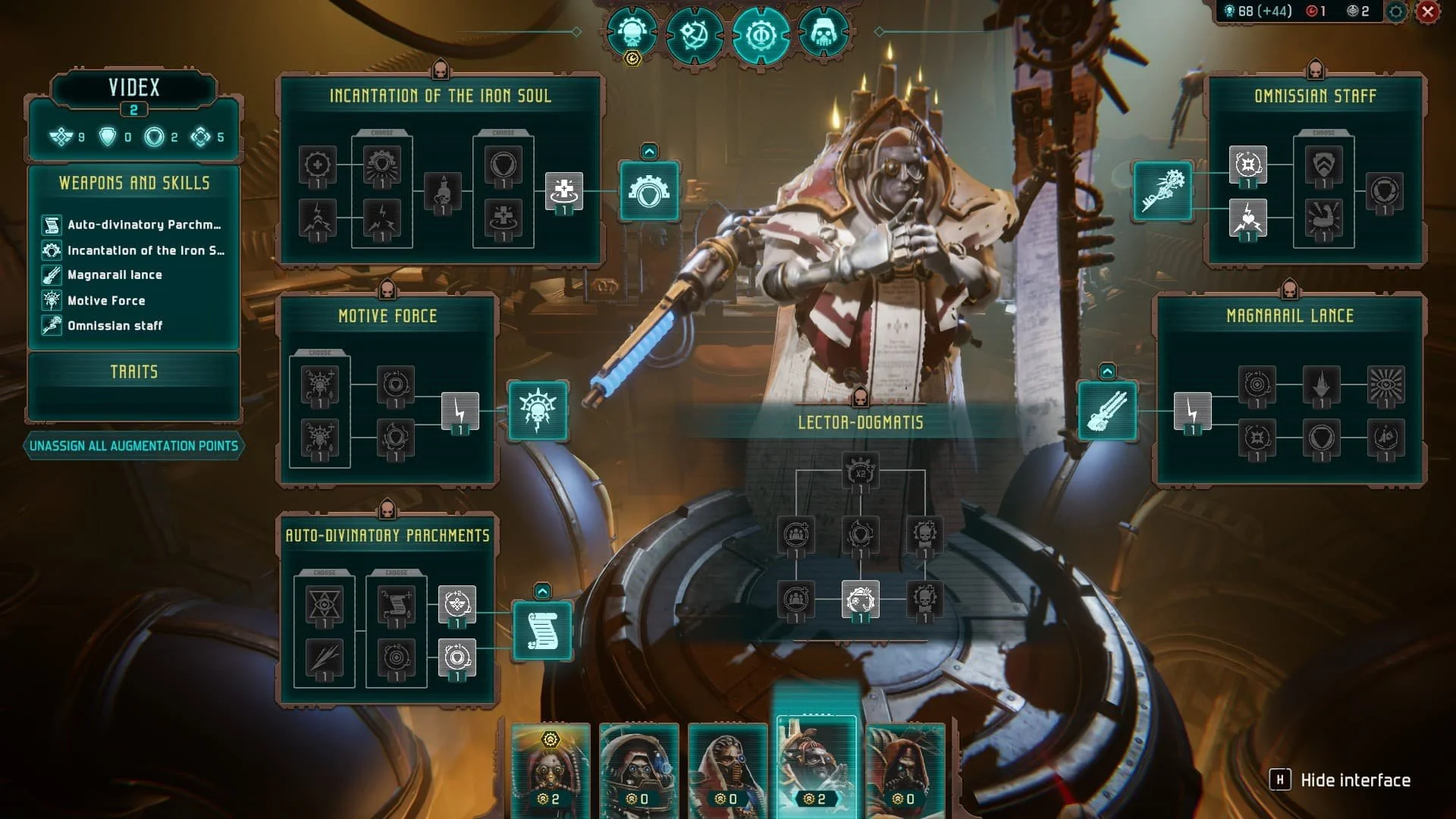
Right away, the dedication to lore and setting are stunning. Mechanicus is probably the most successful 40K game outside Rogue Trader for pure dedication to the universe while providing ease of access, and Mechanicus II ups that. You have a variety of commanders that you can send out to do their various tasks, and all of them have their own personalities, from slimy xenophile Scaevola (making a return appearance from the first game) to “someone put Doug Walker through a full machine conversion to Catholicism” zealot Videx. Mechanicus II puts a focus on these commanders, opting for a progression system related to your squad leaders while unit upgrades are put into the research tree as opposed to the more RPG and gear-focused progression system of the last game. The commanders and squad leaders bicker and get into petty ideological disputes with each other, or argue over long-held Necron grudges, and it makes the world seem alive.
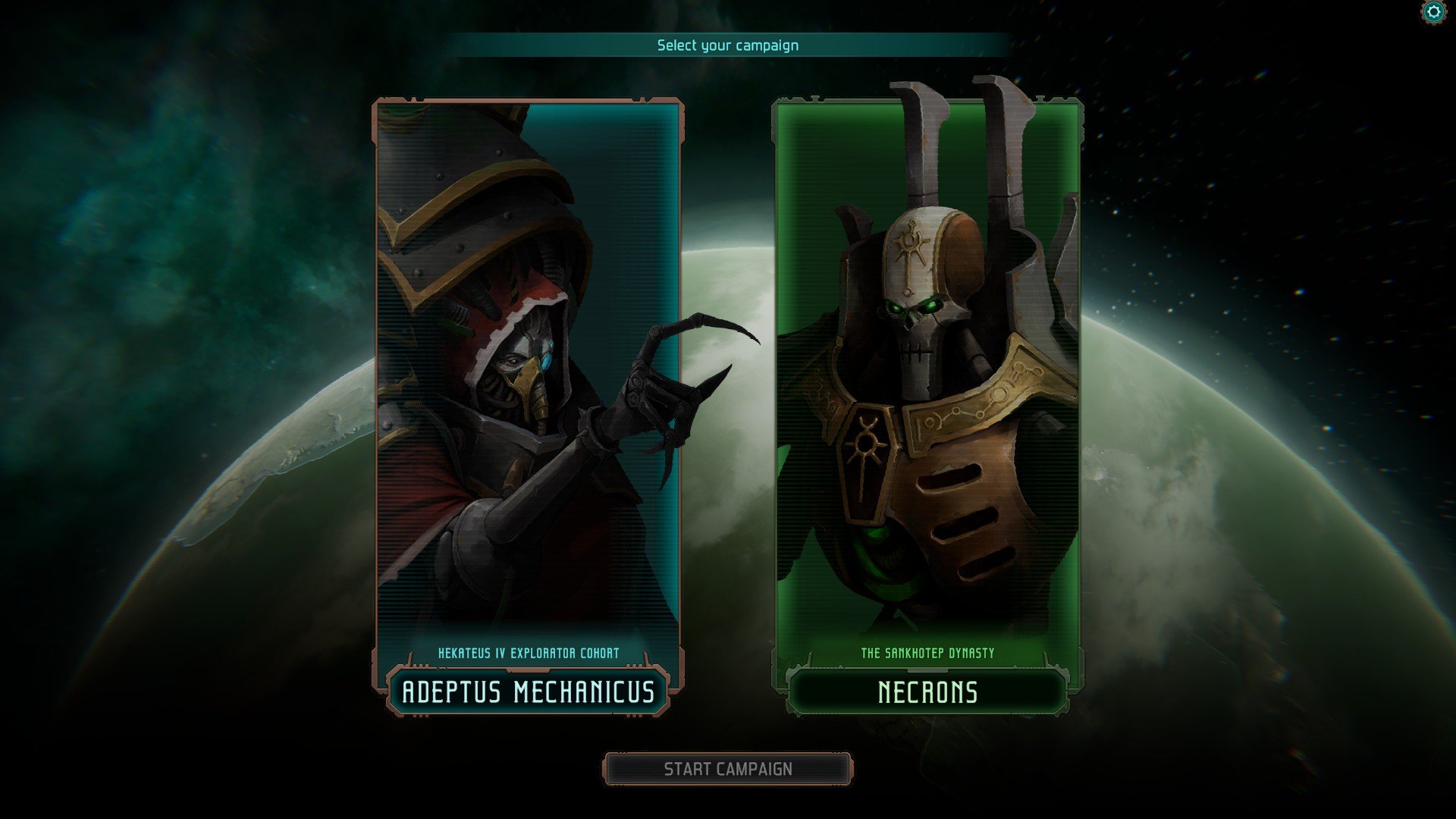
The world also feels alive with how differently the two factions play. The Necrons can take an advantage easily, and with their ability to die and revive, death becomes another positioning mechanic and risk/reward— if you can revive a close-combat unit to lock down their ranged units, do you, even if you risk them killing that unit with a single hit? The Mechanicae have more variety to their playstyle, allowing for customization, but are weaker by comparison and have to be built up into a fighting force. These are further bolstered by the choices you make in the campaign, with the “right” choice often driven by the ideologies of your faction more than what might be the most optimal strategy. In presentation, Mechanicus II is unrivaled.
In execution…somewhat messier. There’s been an exhausting trend of adding extraction objectives to tactical strategy games recently. Mechanicus II, Zero Company, and especially Quasimorph (which bills itself as a turn-based tactical extraction game) are all guilty of this sin in one way or another, missions requiring you to get out of an area tend to become the norm, with you fighting a retreat. Despite this, mission variety isn’t an issue in Mechanicus II. What is an issue is the actual nuts and bolts of the combat.
All to-hit chances are now replaced by damage ranges. While this means that the usual squad-tactics problem of “99% chance to hit, still misses anyway” isn’t possible— a godsend— it takes some of the tension and thrill and luck out of the process. You can no longer make a riskier play and hope the RNG gods are listening, because that play will invariably end with a dead unit and a loss of resources, ground, and space on the initiative track. It also makes combat a bit more boring. No longer do you have to wonder if this time things will work out, because the answer to the question “do I hit” is always “yep.” This also means, given the way the game is deeply asymmetrical, that all the enemy has to do is get in range and suddenly it doesn’t matter how well you play, you are going to get chewed up.
Further adding to this frustration, the damage and movement ranges are a bit…imbalanced. Once during a Mechanicus mission, I watched a melee unit run halfway across the map and destroy my unit in two swipes, meanwhile my piddly Servitor force was basically only useful as quasihuman shields as they battered helplessly at the Necron for one damage and plodded along like someone had just uploaded an “oops all pawns” game of chess and wiped their hard drives. Combined with the Necron habit of spawning multiple reinforcements all over a map and teleporting more in every turn, this quickly turned every mission into a slog. The Necron aren’t much better, with abject confusion reigning as you try to figure out which downed units are yours and which are theirs.
Which leads us to the unfortunate visuals. A gray-green palette is kind of a hard sell, but for that to be the sum total of the visuals just makes everything kind of exhaustingly dull. The initiative tracker doesn’t bother to have the portraits of your characters on it, allowing you to wonder which of your units is going to act before thirty enemies warp into space and proceed to dismantle any strategies you have. For a 40k game to have this much chaos without you once fighting Chaos is something of a rough go, especially when every shot counts against you and can put you in a difficult situation. Cover also does less than advertised, which means that the battlefield information you’re getting is sometimes less than useful even when you manage to push through. Sight ranges are similarly confusing, with sometimes the enemy units (especially in intra-faction battles) getting a higher effective range than your version of the same units.
Then there are the softlocks. At times, unless you play incredibly well, you will not have enough units or HP to finish the mission and will have to restart, sometimes undoing at least an hour’s worth of work and dialogue and cutscenes, forcing you to go back and play better or save like the game was made by Sierra. It’s a little annoying to have to rewind sometimes several missions’ worth of work or save constantly just to figure out where in a long chain of events was exactly where you messed up. It works out to a lot of restarting and playing the same missions over and over again until you find that right combination of luck and skill. Now if only you didn’t get swarmed by reinforcements popping out of everywhere to stick you in melee range.
But all of that just means the game is challenging. It requires paying close attention to your units, right? Well, then there are the bugs. In four attempts to launch the game, three randomly ended with a crash to desktop. Compatibility mode was no help, as the game appeared to get jealous other programs were running while I had it running and promptly crashed. While it became more substantially stable once I clicked “skip tutorial” and “skip prologue” (which, by the way, are two buttons that both do the exact same thing, the game requiring both of them to be checked), I then had to contend with attacks of opportunity just…not showing up sometimes. This and other glitches made playing Mechanicus II a definite step down from the first.
Which is unfortunate because beneath the bugs, visual confusion, dull palette, and gameplay so punishing it borders on the sadistic, there’s a good game in here. The bones of the first Mechanicus slumber beneath the surface, and the Necron mechanics have some interesting wrinkles on top of the basic campaign.
But much like the constantly spawning onslaught of reinforcements, all this stuff just frequently gets in the way.
The Good:
- Stunning presentation, music, and visual storytelling backed by an official Black Library writer
- Genuine feeling of menace and threat to the gameplay as you fight through tight corners and underground caverns
The Bad:
- Lack of clear visual information from the game on who’s doing what in what order and where
- Brutally unfair gameplay to the point it feels sometimes like the game cheats
- Must fight against crashes and info simply not appearing
- Mid-mission softlocks for added spice
Final Score:
It’s a fine game when it gets out of its way. If only it would actually do that.