Sam Reader Sam Reader

Tiny Bookshop Review

For all “cozy” is in the public eye, for all “cozy” is a genre of game, it does require some element behind the coziness. What Tiny Bookshop gives us instead is a glorified screensaver and some minimal adventure game elements, a strangely transitory experience much like customers wandering in and out of a bookshop, never really building the lasting connections with players that a cozy game should. It’s a game that’s about coziness more than a game that’s actually cozy, and in the end, that’s the thing that undoes it.

Tiny Bookshop has all the right ideas to be cozy.

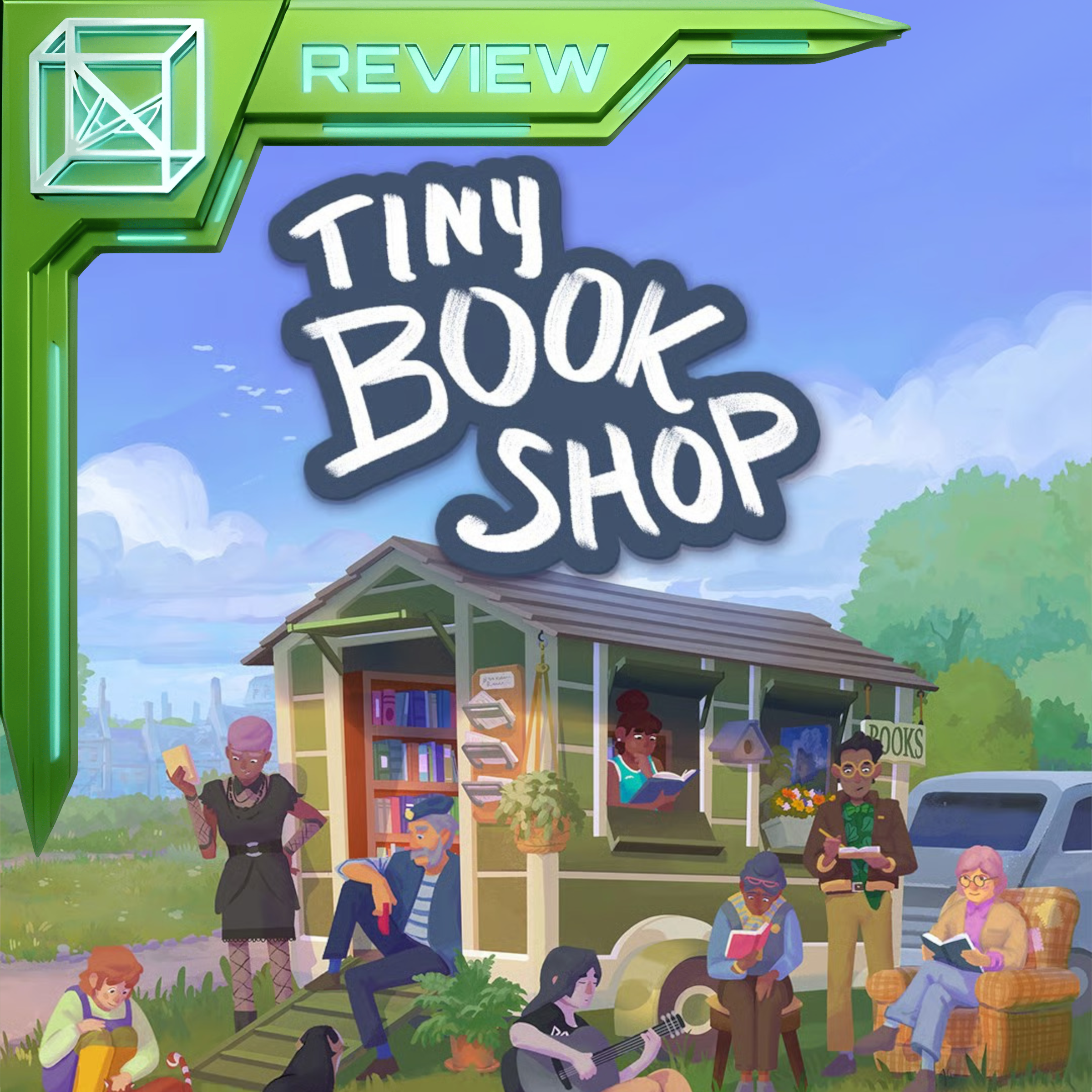
It’s a game where you play the owner of a bookmobile, selling books to the people of Bookstonbury. The colorful inhabitants of the town are rendered in something similar to pastel drawings, the locales where you sell books are all done in a style that makes them look idyllic even when they’re not always that way, and you meet a variety of quirky characters who all have their own needs as you and your bookmobile become more involved in the town. It even has a wide, inclusive selection of books you can sell people.

What it’s missing is most of the game and the substance cozy requires. For all “cozy” is in the public eye, for all “cozy” is a genre of game, it does require some element behind the coziness. What Tiny Bookshop gives us instead is a glorified screensaver and some minimal adventure game elements, a strangely transitory experience much like customers wandering in and out of a bookshop, never really building the lasting connections with players that a cozy game should. It’s a game that’s about coziness more than a game that’s actually cozy, and in the end, that’s the thing that undoes it.

You have decided to open a small bookmobile in the town of Bookstonbury, a college town on the New England coast. Every day you check the paper, decide one of several locations to bring your mobile bookstore, stock shelves, buy bulk lots of used books, and set off to sell to the populace. Along the way, you meet a number of residents including local journalists, aspiring metal musicians, precocious children, sailors, and the movers and shakers behind Bookstonbury’s cultural scene. As you get more involved with everyone, you uncover secrets, solve environmental puzzles, and help residents in unexpected ways, leading to you playing a pivotal role in Bookstonbury.

That’s pretty much all there is. The gameplay interface is incredibly simple, tasking you merely with managing money, setting up your stall, and then letting it go. There’s not much in the way of punishment, there’s not really any major reward, you just wind up your glorified screen saver, watch it go, and click on random stuff as it goes through its paces and you try to hit certain quest targets. Occasionally, people will come to you with requests, vague recommendations that gave the writer of this review trauma flashbacks to the question “I’m looking for your old books” when they worked at a used bookstore. Depending on how you decorate, you get bonuses and penalties to the type of books sold, meaning that you have to choose a loadout of weird knickknacks to put in your shop before opening every day to finesse the stats a little, similar to how you saved and equipped different clothes before important rolls in Disco Elysium, with the same level of weakness in the mechanic. Quests dole out more of the story of the town and its inhabitants, but the “chill, low-stakes” vibes of the cozy game make it seem like nothing has much weight.

Which is how the game feels in general, to be honest. The player feels less like someone with agency, and more like someone who’s a background character in someone else’s cozy game. The lack of weight and reward to the quests, the storylines happening sort of offscreen, all of it contributes to a feeling of weightlessness and depersonalization— calming when you want to play something and not think about it, or have it run mostly in the background, but as a game, and as a cozy game, why you would spend time and twenty bucks (American, anyway) on a desk toy that doesn’t do anything to foster personal connections to the world and the characters is beyond any understanding.

“Cozy,” contrary to popular beliefs and contrary to how the game treats it, is more than just a relaxing vibe and a pleasant aesthetic. For a game to be cozy, for it to feel like home, it has to build a connection with the place, and that’s hard. Bookstonbury never feels familiar or anything more than pleasant, a memory of a place more akin to that Rust Cohle monologue than any actual place. It’s strange when set up against the powerhouses of the genre; Stardew Valley requires you to put in immense work and play an active role in things, Coral Island has you caring for the environment as well as getting involved with the lives of the townsfolk, and even smaller cozy games have you actively making a place your home.

Tiny Bookshop by comparison has all the trappings— the books are chunky and pleasant, the environment allows you to click on things for funny effects, the personalities of the townspeople are at least sort of varied— but there’s no sense that you’re making Bookstonbury a part of your life. You drive up, open shop, talk to people, and drive off. The loop becomes so low-impact that frequently what day it was and who the player’s talking to and even what’s going on in-universe fades into the background.

Despite this, the game clearly has a lot of effort put into it. The environments are pleasant to the eye and interactable, there’s full journal entries for each character you come across, each individual book has a title and a description, and there are in-universe books that add to the general setting as you sell ex-library editions. There are the bones of a good game in Tiny Bookshop, and clearly a lot of thought went into Bookstonbury.

This just makes the game feel all the more frictionless. The vibe, the music, the aesthetic, the writing, all of which are fantastic just pushes the fact that the game amounts to a whole lot of nothing. The game moves without you. The town moves without you. Nothing you do seems to matter in the foreground, even when you get involved with the plot.

So why even play a game that’s perfectly okay playing itself?

The Good
- A lo-fi electronic/jazz soundtrack that fits safely into the background while you go about your day
- A pleasant, interactable world
- Fun book titles and simple mechanics

The Bad
- The few interactions you do have are incredibly vague at times, especially book recommendations
- Very little actual game to the game
- Systems are more like suggestions
- All cozy vibe, no cozy substance

Final Score: 3/5

It’s not bad, but it doesn’t add anything to the genre or the gameplay we haven’t seen before. A lot of effort, but no real substance.

Read More