
Ryan's Reviews Ryan Johnson Ryan's Reviews Ryan Johnson

I'm Hungry (PSVR) Review

I’m Hungry is an arcadey VR take on a mobile food truck game. It isn’t as deep as some VR games, but it’s nice to see an upgrade to an addictive mobile style game into VR mode. I’m Hungry may be repetitive at times but it still provides a wonderful bit of fun to a group of people who can get together for some silly virtual burger-flipping.
PS Store banner.png

Release Date: July 8, 2019
Publisher/Developer: Winking Skywalker Entertainment
Platform: PlayStation VR
Price: $16.99


Many PSVR games I play try to be snippets of bigger games, like how Batman got a VR game that’s just the investigations, or racing games that strip down a lot of the choices and nuances that might be found in it’s controller counterpart. I’m Hungry attempts to go the other way, by taking essentially a mobile game and fleshing it out to more than what it started as. While the traditional gamer in me sees room for more growth, what you end up with is a great party or family game that provides more laughs the more people you have in your room.

kitchen.jpg

My wife basically has this game on her phone under another name. You are the owner of a food truck, and you have access to a few basic meal items. You open shop, people order their food, and you have to make it. However, instead of basic clicks on a touchscreen, players are tasked with physically assembling the burgers, cutting the fries and cooking them, or placing the cups and pumping the ice cream. Each of these actions are made more frantic with the Move controllers, all the way down to my favorite; the satisfying SNAP as you pop a paper bag open, swipe up the goods, and hand it to the customer. It’s a basic mobile game premise, right down to the potential three-star grade you can get per level. There are eighteen levels each in two different venues that you work for about five minutes apiece, eventually unlocking endless mode where you just keep going and aiming for a high score. Earning cash allows you to unlock better equipment, though it feels like a contradiction to the fun as it basically eliminates some of the motions you have to do to prep a food item. One unique addition is a calorie counter on your “wristwatch” showing you how many real-world calories you are burning as you serve calories to your customers.

hipster.jpg

I’m Hungry may be a single player experience but it really comes into it’s own with several people in the room laughing and having fun. I played a round by myself and was willing to give the game a decent score, but then my kids and wife saw it and wanted to try, which turned into several nights of frantic food prep that I guarantee aren’t over yet. I wish that the game officially provided a way for competitions between players locally (there is an online leaderboard) as we basically end up working on one person’s profile. It’s no big deal to start over and unlock for the other players, but I could see fun in officially set up local “competitions.”

boombox.jpg

I understand the arcadey roots and budget experience we are getting in I’m Hungry, but there are a few things that I personally wish got a bit more polish. There seem to be a notably limited amount of customer models in the game. When a line forms of random characters and four lanky dudes in green trenchcoats line up with the exact same demeanor and mannerisms it just gets repetitive. I know the food and creation of it is the main attraction to the game, but my family got to joking that the town was full of clones. Watching them slowly show excitement to their food in the same goofy way each time then take a notable amount of time to pull out their money was annoying when you are working against a clock. Perhaps at least a clothing palette swap? Even in the trailer below you can see two or three of the same exact clone character in a line doing the same animations while they wait. Sometimes I’d have loading frustrations too, as “bagging” an item might end up with a cloud of smoke that lasts a few seconds longer as it turns into bagged food to hand over, which can make the difference between two and three stars based on an in-game issue you have no control over. A few times my wife ran into frustrations when she’d “bag” an item, but the trash can is right next to the bagging area, and her swipe threw the food away! Frustrating at first, but it did end up getting laughs as we all knew how to avoid it so a frantic swipe didn’t turn into starting over.

fair.jpg

I would prefer the game to be a hair more “sim” myself. For example, you can start a batch of fries at the start of the level and not burn them at all, even if the first order of fries comes three customers in and they sit in the grease for three times longer than normal. I want to accidentally overflow the ice cream or overtoast the bun. I want to create multiple orders at once. I also want a few more combination items. Fries, soda, and ice cream are straight sets of motions for the exact same thing. The burgers are always bun, lettuce, meat, one of two toppings and bun. I haven’t seen anyone ask for hot sauce AND cheese yet, or maybe no lettuce or two patties. Maybe take the fries to the burger counter and add cheese to them. Just a few things like that would make it a bit more intense, though it’d probably detract from the arcade experience my family loved. Maybe that could be implemented as an extra “hard mode” option.Mind you, my family hasn’t gotten through the entire game yet, so I may be pleasantly surprised as we press further.

Again, though, these are small nitpicks on what is otherwise a fun time. If you are a solo VR flyer, you’ll likely not see much worth in I’m Hungry. Get a few friends together and you can have a rollicking good time laughing and trying to beat each other’s scores.

GL_Score_3.5.png

Pros:
-A good group can have a lot of fun sharing the headset and competing
-Natural movements and easy access to all the food areas means you’re running back and forth maximizing cook time
-A cool wristwatch shows how many calories you’re burning as you play
-Feels like a natural progression of classic arcade fun

Cons:
-Everyone in my family felt you were “too close” to the counter and wanted to “back up” but any movement or adjusting wasn’t supported by default and forcing it put you too far away from grill items. More headset adjustment options would be great.
-Great party game but no real way to have a competition locally
-I want a “hard” or “sim” mode for extra challenge!
-Certain animations and delays allow the timer to tick down when you can’t do anything but wait for the customer to open their wallet

Special thanks to Winking Skywalker for providing a code for review, and hours of family fun!

Read More
Ryan's Reviews Ryan Johnson Ryan's Reviews Ryan Johnson

>observer_ (Switch) Review

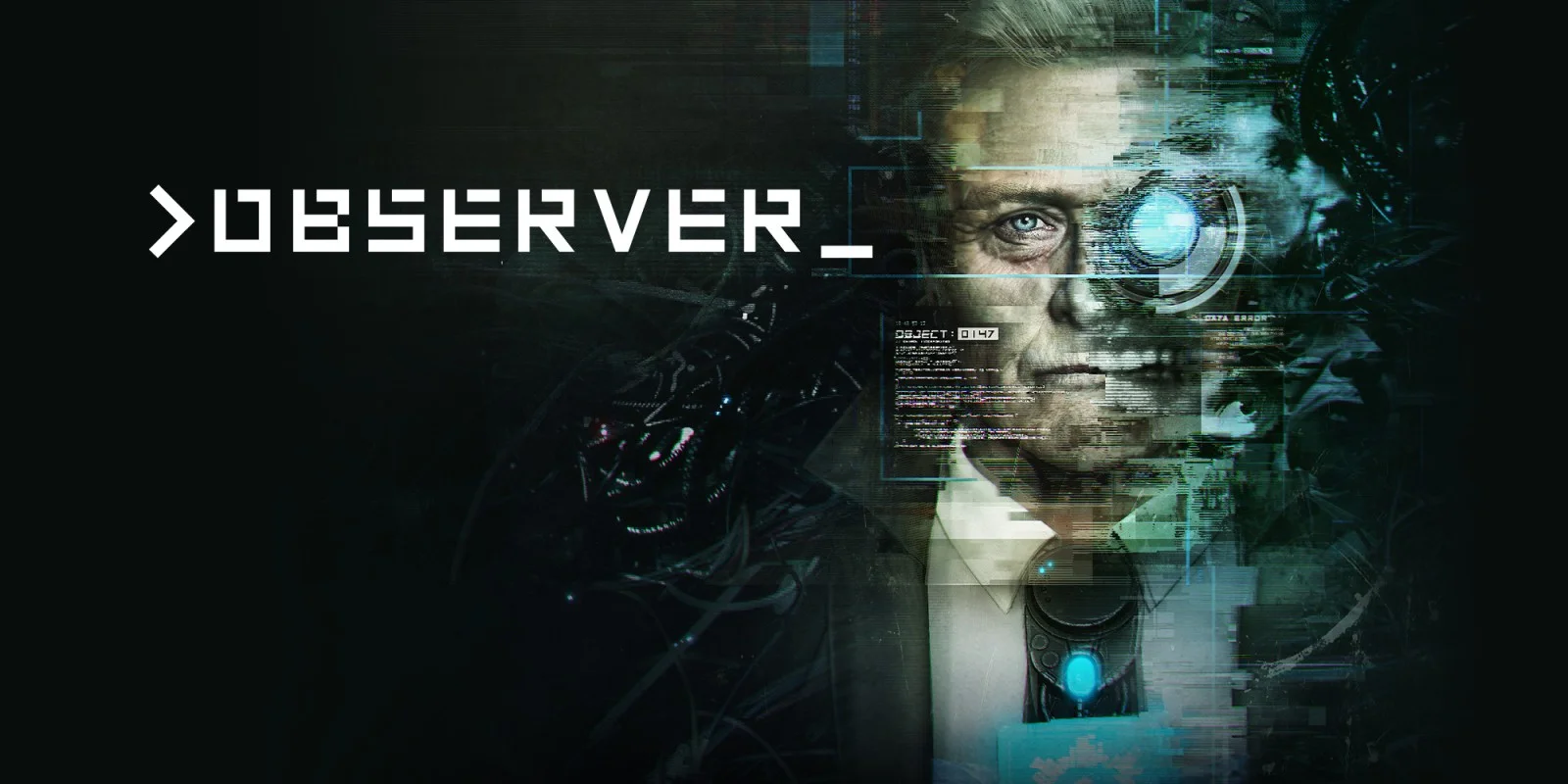
Bloober Team continues the work done in Layers of Fear by creating another compelling story with a sense of dread. Set in a cyberpunk dystopia, >observer_ holds a stronger bond on the player, and keeps this particular reviewer going despite an aversion to scary stories in the hopes of seeing what happens at the end.
H2x1_NSwitchDS_Observer_image1600w.jpg

Release Date: February 7, 2019
Publisher/Developer: Bloober Team
Platform: Switch (reviewed), previously on Xbox One, PlayStation 4, Steam
Price: $29.99


Sometimes I have a hard time finding a movie or game I really like because I love action and suspense, but despise horror/gore/mutilation/etc. I was (unfortunately) the one to review Layers of Fear a while ago from Bloober Team to find they are immensely good at freaking me out. I did my best to review the game, but it ended up getting what I called the "NOPE" award, wherein I skedaddled right out of the game and reviewed it as best I could. I could tell horror nuts would love it, but it wasn't for me. I could tell Bloober Team was good at their craft, but I wished they could tweak that full-on horror into less of a scare and more of a thrill. Whilst >observer_ might still be a little too freaky for my tastes, it creates more of a cyberpunk storyline that draws me in and makes me want to figure out what the heck is going on with a hope for a future instead of Layers of Fear's constant spiral descent into madness.

ejRG8zat3Kd9UX3sq7rZz__hRtJBA3a_.jpg

>observer_ tells the tale of Daniel Lazarski, a special "observer" who begins the tale looking for his son. He hasn't seen him for a while, and when the investigation leads into a seedy neighborhod apartment complex and an unidentifiable body, Lazarski hopes that it isn't his son he found as he investigates the murder and continues his search. Observers have special abilities and augmentations that allow them to "jack in" to suspects and witnesses to learn information they can't (or won't) divulge, resulting in some surreal and creepy scenarios.

The game relies heavily on tropes of the genre made well known in movies like The Matrix and Blade Runner. Lazarski himself is played by Rutger Hauer, famous from Blade Runner and other dark, gritty stories. Humans are mechanically augmented, and there is a critical virus going around that attacks people with augmentations. The world is coated with neon and digital design. Lazarski has the ability to alter his vision to observe physical evidence and a tech scanner that helps him figure out puzzles. Each of these add an electronic overlay to the graphics, and your field of vision gets digitally blurry when Lazarski appears to need some of the medications that keep him going. Let it go long enough, and the graphical glitches start covering up even your base menu options. The Switch edition of the game suffers from a bit of a downgrade, as screenshots of the PC or other console editions do look much prettier, but you do benefit from the portability of the title.

hBiXWC4oELkVxN1tEWKGLXGKS9y5SWyH.jpg

One of my biggest complaints, however, is in the portability. When playing a haunting thriller such as this, you really should set the mood. Most home theaters are in a place where you can curl up with a good sound system, darken the room, and live the game. >observer_'s graphical downgrade isn't much, but it still makes things overall harder to see on the small screen. Hauer's voice is raspy and gravelly which can be hard to hear when you aren't on headphones and trying to keep the game quiet. The dark tones make the screen harder to see if you're, say, playing outside in the sun or in a car. In handheld, it works great bundled up in your covers with the lights out, but is hard to recommend in any other situation. The biggest issue though is the file size. While my research shows >observer_ clocks in at 8-9 GB on Xbox One and PS4 (where they are paltry in comparison to AAA games), it eats up 3/4 of your internal memory at 18 GB (for me, that's 5 GB over my next largest game and 10 over my third).

mtqRwMcUF_qyenXHcaiZpr-zt8vzg-2n.jpg

The Switch does hold some advantages though. In handheld mode, files and selections can be made naturally with the touchscreen. The best addition is smart use of HD rumble. You feel everything, and it really shows off Nintendo's new technology. If you aren't totally worried about perfect graphics, the specialized rumble really adds to the atmosphere.

I will also add that the game (for the most part) is a slow burn. Horror tends to be a slow burn until a big scare, and cyberpunk isn't known for constant fast pace either. A particular character you meet early in the game and interact with frequently speaks very slow with several pauses. It wouldn't be as bad if it weren't for the default subtitles that you can read in the quarter of the time it takes for him to speak. I'd also question how most everyone at the beginning peeks at you through a virtual peephole rather than cracking their door or such. It makes for an atmosphere, but once I spent five minutes searching because I'd managed to activate a doorbell but had no idea who was talking to me.

JxIAJ00VLE3mvo-jp_PY4vQKF7WdmRBp.jpg

Bloober Team does an excellent job of putting the scare into a game. This completely turned me off of Layers of Fear, but mixing it with other genres has drawn me in. >observer_ is more of a constant state of wonder and tension, with some well placed jumps to keep you on edge. I admittedly haven't gotten all the way through the title, but can say that the atmosphere draws you in and makes me want to see it through to the end. Unfortunately, if I'm going to download anything else Lazarski may have to be put on hold to make room until I can get a bigger memory card. Hopefully they will eventually be able to optimize the game a bit more to trim the fat from the bloated file size compared to the game on other systems.

GL_Score_4.0.png

Pros:
-Tense and thrilling atmosphere expands on horror and creates a genuinely interesting story
-Cyberpunk world and quality voicework
-HD Rumble is done very well
-"Slow burn" story is different for games and keeps you invested in the story
-The “mindjack” segments are crazy and thrilling

Cons:
->observer_ doesn't really fit as a handheld unless you set the mood
-Bloated file size eats up memory
-slightly downgraded graphics from other consoles


Thanks a lot to Bloober Team for providing a code for >observer_ for review!

Read More
Ryan's Reviews Ryan Johnson Ryan's Reviews Ryan Johnson

Townsmen (Nintendo Switch) Review

Townsmen is a very Sim-City-esque game set in medieval times with a deep resource management vibe. As ruler of the land you must balance resource management with the overall happiness of your subjects to protect your town from natural disasters, bandits, and the like. As a traditional world-building game, it harkens back to times past and feels like a strong bit of nostalgia.


Release Date: November 9, 2018
Publisher/Developer: Handy Games
Platform: Switch (previously on Steam and mobile)
Price: $19.99


Townsmen is a little game that reminds me of a medieval Sim City. As ruler of a small kingdom, you are tasked with keeping the peace and growing the empire. You build houses to welcome new Townies who you then assign to various tasks to press forward and get more resources, which in turn allow you to get more Townies. Much like the real world, resources may vary on the season, such as hunting bringing extra food in the winter when crops are low. During your rule, you will face natural and human hazards, all while balancing resources and the general happiness of your township.

pic1.jpg

While this type of game was all the rage back in the Sim City days, you'll regularly find these kind of games on mobile now. Townsmen is no exception, as there is a freemium and paid edition of the game available for smartphones. Townsmen is also available on Steam, but this marks the first time the title is available for a home console. But why buy the title for $19.99 when Steam has it for $11.99 and there's a paid edition on mobile for $2.99?

The main updates to the system involve an improved user interface and some new audio, namely voices for some of your assistants. While I did not purchase any other versions of the title, I did download the freemium edition to find that a third of the screen is blocked by an unclosable ad, and it's not optimized for phones with "cutout" screens, as my speaker physically cuts off some of the buttons. The freemium edition also has the dreaded timer speedup option. Building things takes time, and you can click a button to multiply that by five. Eventually that depletes, and you have to use Crowns to recharge it, of course available for a premium. The Switch edition of course kills all the freemium stuff, allowing you to craft an advertisement-free village at five times speed all you want. I do appreciate the upgraded interface. Compared to the mobile edition you can actually see what you are wanting to build. In Mobile, the menus were littered with pictures of houses you had to eventually learn in order to succeed, whilst the new interface breaks it down a lot more organically. The audio upgrades are also beneficial. Characters in the tutorial and such have vocalizations. They aren't English words or verbatim reading of the dialog, but they do add a bit of character to the original's voiceless faces.

pic5.jpg

There are a few scenarios to survive, but the meat of the game is in the neverending sandbox modes, where you just build. There isn't an endgame to follow, the achievements (transferred over from mobile and simply in a sub-menu) circle around getting X number of hours in the game, gaining X number of Townies, et cetera. It's a neat variation and a little more organic than a Sim City, as you have to develop homes for your citizens who you then assign to various tasks. Maintaining a high population, monitoring their needs and happiness levels, and then ensuring the tasks are done are paramount to success. As you go on you also have to develop new research opportunities and maintain houses that degrade over time. The ruler of this kingdom has a lot of plates to spin and keep aloft.

pic2.jpg

With the Switch, the control setup is at it's optimum. I've dealt with several games lately that seem to ignore the fact that the Switch has a touchscreen, making big clunky buttons inaccessible even though it seems natural to hit them. Townsmen thankfully bucks that trend. When in handheld mode, it's wonderfully easy to bounce back and forth between touch and physical controls. While it's neat to play the game big screen with it's HD graphics, they are mobile simple, and I find myself much more enjoying Townsmen in handheld mode. To be honest it's refreshing to play a city builder that isn't out for your time or money and just lets you create. It may not have a lot of bells and whistles, but Townsmen is a very smartly made game. The time the developers have had to polish on it since it's original release as well as the twist to an up-front paid model gives a refreshing blast from the past that still feels right at home on a modern console like the Switch. While it may be pricier than buying on Steam or mobile, this is the best version of the game, with rich HD graphics and the portable/big screen combination of the Switch. It's up to you to decide if the premium price is worth it for a classic world building experience.

GL_Score_3.5.png

Pros:
-Classic town building without the freemium junk
-Excellent integration of simultaneous touch and button controls
-Oldschool endless building or scenario mode
-Many factors to balance, from supply production down to townsfolk happiness, monitoring crops and harvests in relation to seasons

Cons:
-Still holds a bit of the "mobile feel"
-No real endgame, it's a builder/time waster style game
-Gamers looking for a relaxing time may be overwhelmed by all of the factors to balance

Special thanks to Handy Games for providing a copy of Townsmen for review!

Read More
Ryan's Reviews Ryan Johnson Ryan's Reviews Ryan Johnson

Megadimension Neptunia VIIR Review

Megadimension Neptunia VIIR may sound like a sequel to a game from two years ago, and chronologically that would make sense. Instead, it’s a rehash of the previous game with some bonus VR support and a little bit of tweaking to the base battle system. It is improved, but is it enough for someone who’s mastered the original release to double dip?
logo_eng.png

ENTER TO WIN A DOWNLOAD COPY OF THIS GAME BELOW!!!!!!!


Release Date: May 8, 2018
Developer/Publisher: Compile Heart/Idea Factory International
Platform: PlayStation 4/PSVR
Price: $59.99


Two years ago, I was introduced to the Neptunia series through The Gamers Lounge, getting a chance to review Megadimension Neptunia VII (V-2, not 7). Since then, I've reviewed a couple other games in the series. The Neptunia series references the real-world video game and anime industries as a whole, with Neptune herself representing an ill-fated Sega console, and various other anime girls representing other industry giants. The stories are usually enjoyable on their own, but in a meta way can be enjoyable as you learn what they represent in the real-world industry.

This year I got the chance to review VIIR. What I have learned is something that anyone considering this title needs to know: storywise, this is the exact same game. There have been some graphical improvements, and they revamped the battle system. There is also a section of content compatible with the VR headset that unlocks as you play, though it is in it's own "VR Dimension" that is supposed to represent you, the player's, personal room. There's supposed to be a "NEXT" form, representing future consoles I would assume, as well, and talk of bonus content that unlocks after completing the game. 

download.jpg

Therefore, if you want a thorough review of what the game is at it's core, please hop on over to my two-year-old review right here. The remainder of this review will help you know the differences between the now $40 original and the upgraded brand-new $60 edition being released this year. 

COMBAT:
This is where the biggest "hidden difference" is. At first, I thought the game was identical, so I took the time to go back and play both titles back to back. The subtle differences definitely change the core way you battle. In V-II, each character had a "move" meter when their time came up, which dwindled as you moved out from your start point. Now, starting a round will make a circle around the character glow, showing max movement range off the start. This makes it a little faster to decide where you want to go, as I can see trying to walk toward an enemy and being stopped unaware of how far your feet could take you. When checking the range of your attack, the patterns have changed. In V-II, Neptune would have a hitbox that was a flat bar straight in front of her, allowing her to swing large swaths across enemies. Now, her starting attacks are more a third of a pie circling off to her right, as her natural sword swing would go, with a concentrated attack section at the start of the swing. V-IIR also changes how you select your attacks. V-II had a button combo of sorts, where you would have certain abilities active represented by face buttons, and you would "combo" until your attack ran out. Going into basic attack in V-IIR will bring up a full, screen covering menu that shows all the stats of every attack instead of just the name, allowing you to pinpoint every single possibility. You add up your chain and then execute. In general, these changes make it more tactical and less arcadey. While it adds a welcome depth and strategy, I found myself missing the arcadey combo attacks after multiple random encounters. While I appreciate all the upgrades in the game, this is one I wish you could default back for comparisons. 

opie.jpg

GRAPHICS:
A new graphics engine allows the game to run prettier and smoother without really effecting gameplay. There's not a whole lot to say on this front, because two years past on the same machine won't really make a huge difference in general. Playing back to back, I can see a lot of clean up, primarily in the user interface. I liked some of the brighter colors of the original, but the new text boxes and UI allow you to understand them better. I was confused at first but it was primarily because I was used to the original. The new UI does work perfectly fine and more naturally, although the first edition is perfectly usable. 

VR BONUS:
One of the big changes in the past two years was the creation of PSVR, and this is the primary reason this edition has come out. When the game starts, you don't go straight in, you are presented with a room known as the "VR Dimension," and it's supposed to represent the dimension between your real world and ours, where the girls pop in and interact with you, the "player." It's a simple, college dorm style room, where you have a TV, couch, computer, and bed. They come in through a dimensional gate and monologue to you, basically having a one sided conversation. I'm sure it's difficult to add a ton of choices to options like this, but you basically end up watching them klutz around your room, compliment something you may have changed (you get new decorations and such), and answering a Yes or No question with a head shake. It adds a few cute scenarios, but nothing required. As you go through the game, more scenarios unlock. Even though the storylines and general playstyles are similar, unfortunately V-II saves don't transfer to V-IIR, so you can't go in looking for a quick unlock to see the bonus content. 

pcnerd.jpg

Upon first view of the game, I was honestly disappointed. Having gone in cold with nothing but the name to go on (I tend to do that before reading the press release) I thought it was another sequel, as the Neptunia games have a habit of having odd extra parts to the name. Unfortunately, if you are a hardcore fan of Nep and the gang, that's what you are going to find. The bonus unlocks will require diehards to play the game again. Most RPGs aren't really played through multiple times, so this release is really a boon for fans who may have missed this one more than someone who wants to collect every Neptunia game out there. All that being said, though, my initial review scored a 4.25 out of 5, which is a solid game. I can't dock it too much for being a rerelease with bonus features, but some of the features feel like they could be turned into DLC for the original, allowing people with a perfect save file to still see the bonuses without retreading old paths. 

teams.jpg

If my two reviews have brought you to deciding to purchase, then V-IIR is definitely the one to buy. The original is down to $39.99 digitally, but the new content, cleaner graphics, and strategic combat is worth the $20 increase to average retail price. As a rerelease so soon after the original, my only hope is that gamers are aware of what they are getting into, something they may fail if they don't take the time to read the back of the box. Megadimension VIIR adds more to an already fun game that any fans of the series shouldn't have missed the first time, but have a chance to get in on it with even better quality.

mega.jpg

Pros: 
-Traditionally solid gameplay and translation
-Unique arcadey yet strategic battle system
-Storyline reflecting real-world video game and anime issues makes it fun to see the links

Cons:
-"BOOOIiiING! HOP! Like-a-Kan-Ga-ROO!" (see first review)
-It is the same game--True fans have to start over to see the bonus content
-Very wordy--games like this have a lot of exposition, and fully voiced it can drag on.

Thanks to Idea Factory and Compile Heart for providing a code for review!

Read More
Ryan's Reviews Ryan Johnson Ryan's Reviews Ryan Johnson

Beholder: Complete Edition (PS4) Review

Beholder is set in a horrible country where a totalitarian regime sets down rules that must be strictly followed or you risk being beaten or killed. As a simple landlord, you are secretly tasked with making sure everyone falls in line. You can choose to help your tenants, who may break a rule simply trying to survive, but is it worth the risk? 
BeholderCompleteEdition4.jpg

Release Date: January 16, 2018
Developer/Publisher: Alawar Premium/Curve Digital
Platform: PS4 (Reviewed), Xbox One, Steam, Mobile
Price: $14.99 (PS4)


Beholder is a game that released a little over a year ago on Steam, came out about half a year ago on mobile devices, and is out now on PS4, with an Xbox One edition coming early February. Within, you play as a landlord over a generic flat of tenants in a dystopian society under a totalitarian regime. Beholder is a game of choices, and determining what is "right" is not always obvious. As a state-appointed landlord, your official job is watching your tenants to determine if they are following the strict orders set forth by the government (spoiler: many are not). You do this by researching and observing by all means necessary. Interviewing tenants to determine motives, sneaking into their homes when they aren't there, installing surveillence cameras, anything that can determine whether someone is an enemy of the state. 

BeholderCompleteEdition5.jpg

Being caught as a traitor of the government can lead to your demise. However, sometimes supporting a dictatorship isn't the right thing to do. A crime may be small. The person may have reasons behind it. The stringent rules of the government may be frivolously pointless and not deserving of the harsh rules put forth. Meanwhile, the fate of your family hangs in the balance. Perhaps they need finances to survive, or they just need more attention than you are currently offering. Your wallet might also tempt you, as you focus on making money. Just like real life, there are a lot of choices to make, and it may not be obvious which one is right. 

Many choices lead to a variety of endings. They aren't all clear cut, either. Say a family man is in trouble. If he gets caught, the father is out of the picture and the family is broken. But if you help him escape, you may find word that he is captured elsewhere, or dies in a haphazard accident. Your focus on doing the "right thing" may be video game muscle memory, but it doesn't guarantee a happy ending, much like how a wrong choice in real life could impact you in a way you never see coming. As time goes on, you have to balance all of your needs with requests that come across your desk from the government that have time limits. If you simply take everything that comes, you won't be able to be everywhere you need to be at once. Then comes decisions on what to ignore, and to which end goal you wish to place your focus. Again, not a traditional "save the princess" kind of game. It's up to you to decide what to sacrifice for your beliefs.

BeholderCompleteEdition9.jpg

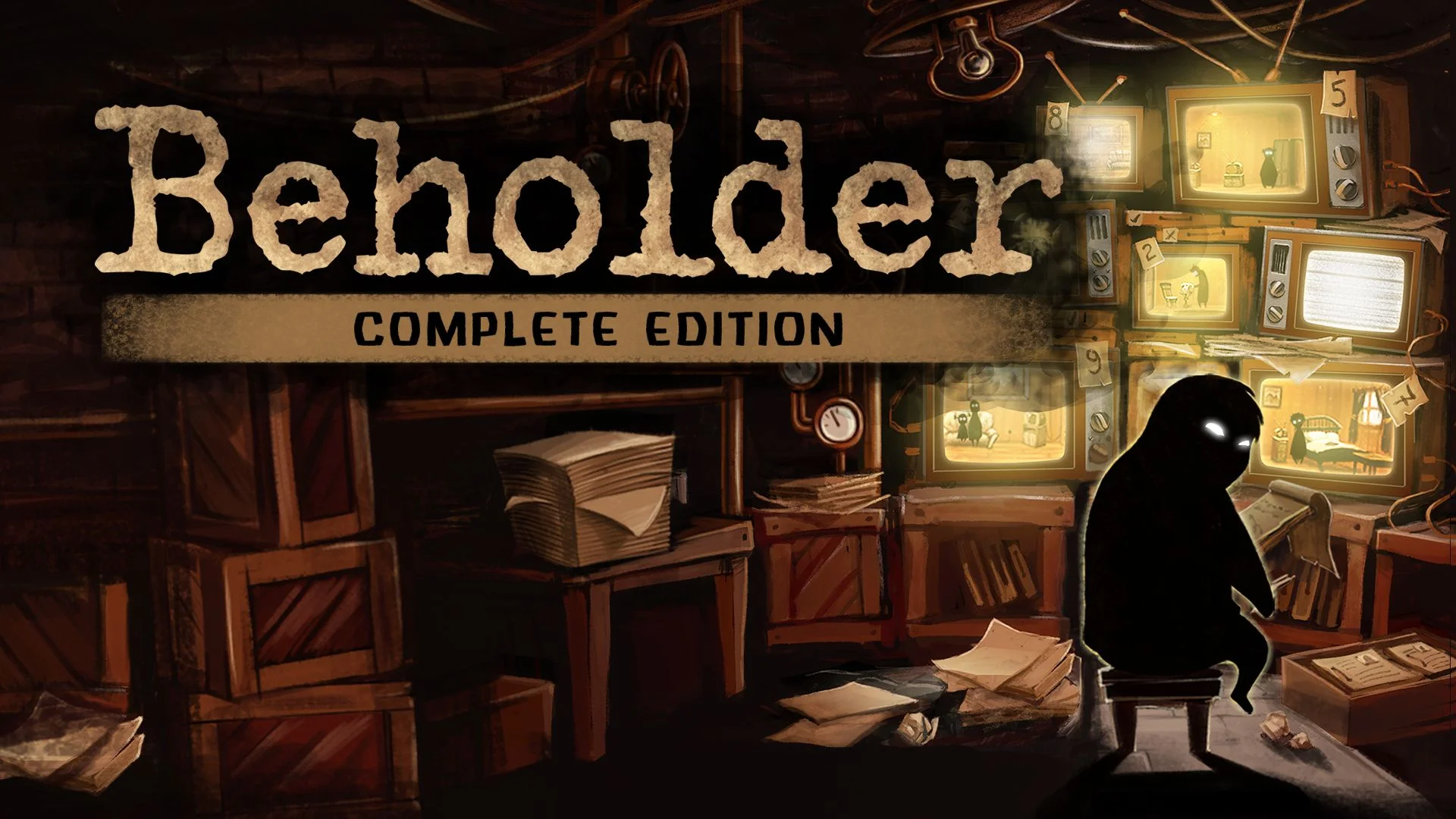
The game is laid out in a simple house, cut open like a dollhouse. You traverse the floors through the center stairwell, spying on your tenants and determining whether to turn them in to the state, help them succeed, or even blackmail or bribe them to line your pockets. It is very dark and depressing, fitting of the bleak world it is based in. Characters are mere shadows, faceless in the crowd. It's a really neat way to make it easy to create the characters whilst putting some distance between you and them, allowing you to be ruthless easier. The diorama does get busy at times, but the game takes place entirely in the apartment complex. 

While I got to review this title on PS4, I can see how it might benefit from a mouse or touchscreen. You control your character via traditional joystick combinations, but a button press and analog move zooms out and in on different areas of the building, and you do have to constantly scan. This would work well with the "pinch and drag" of a tablet. Meanwhile, going into rooms to plant cameras or search hiding spots causes items to be highlighted, and you have to press around to pick the right item. This would lend well to a mouse and keyboard setup. While the control scheme is serviceable, I can see the other editions of the game potentially having a more logical control scheme.

BeholderCompleteEdition8.jpg

Beholder is currently $14.99 for PlayStation 4, and is a "complete edition" with included DLC. Buying all of that on Steam is near the same price, while the game is only $4.99 with a $1.99 DLC set on iOS. I'd love to see if the game is severely limited on mobile, but it's up to you to see whether it's worth the extra cash to have it on the big screen. It's great to see a game with choices that feel more natural. It's not like a Telltale game where you come to a point and say "let's do it this way," it's more of a natural progression of choices that may or may not turn out as you expect. While most solutions end with at least one bad thing happen, choices feel a lot more organic and natural. The branching storyline may bring you back to see how things would happen differently, though doing some of the same beats over and over again may deter your desire to play it again. Overall, Beholder is definitely a unique game that offers you a chance to see what you would do when you have to stand up for what is "right."

Pros:
-Very organic choice system
-Multiple endings
-Simplistic graphics help the story

Cons:
-Feels like it'd work better with mouse/touchscreen
-Can get chaotic, and your choices may not turn out as you please
-Repetitive parts hinder your desire to see different paths

Special thanks to Curve Digital for providing a copy for review.

Read More
Ryan's Reviews Ryan Johnson Ryan's Reviews Ryan Johnson

Battle Chasers: Nightwar Review

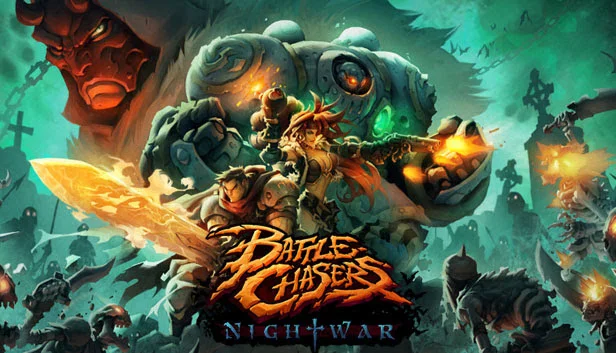
Battle Chasers: Nightwar resurrects a classic comic book from the 90's as a traditional JRPG with beautiful American comic stylings. Players take on the roles of all of the original comic's team members, with a new character developed thanks to the Kickstarter campaign. With its unique Overcharge system, Battle Chasers adds its own special flair to the classic genre. 
MainTitle.jpg

Release Date: October 3, 2017

Developer: Airship Syndicate
Publisher: THQ Nordic
Platform: PS4 (Reviewed), Xbox One, Nintendo Switch (coming soon)
Price: $29.99


As a well-renowned comic book artist, Joe Madureira made a name for himself. Regardless of criticisms toward some of his art styles, Joe did an amazing job on several X-Men titles. I was a comic book nut at the time, with my high point during X-Men's Age of Apocalypse, wherein Maduriera illustrated all four issues of Astonishing X-Men. In 1997, Maduriera went his own way to craft the Battle Chasers comic book, which bounced between producers Cliffhanger (a section of Wildstorm Comics) and eventually DC. Through the four years it was created, a whopping nine books came out. Despite the uproar over the slow release schedule, many praised the book for its unique sword and sorcery style and brighter storyline than a lot of titles of that era. Battle Chasers had memorable characters and a gripping storyline. Unfortunately, the series didn't last, and it abruptly ended on a cliffhanger as Joe moved forward with his plans to start his own game development company. Non-comic gamers will recognize his work most with 2007's Darksiders. Battle Chasers has apparently held onto its cult following despite the cliffhanger. Maduriera started a Kickstarter to create Battle Chasers: Nightwar, a JRPG with a hint of Diablo influence, with the promise of an Issue 10 in the original comic book series. It skyrocketed over its goal, nearly doubling its requested amount. Joe Madureira has returned to one of his original creations to craft a beautiful anime/JRPG inspired video game that his unique characters fit into perfectly.

battle screen.jpg

This game is one of the biggest success stories of Kickstarter, primarily due to its polish. A lot of care has gone into this game, and it's easy to forget that it really comes from an independent studio. The animated cutscenes are beautifully done, characters are solid, and the environments are meticulously detailed. Things that may look like corner cuts (such as the static images used in conversations) look more like they are there to mesh with the comic book feel instead. Characters with different sounding voices even have different speech bubbles, much like a comic artist would use to depict different noises and sounds.

The story is self-contained, though it does still fit into the universe. A quick introductory scene starts to get you caught up, and then it's right into the battle as your airship is shot down. A few of the characters find each other quickly and head out to find the others, but as usual, things are more than they seem, and our adventurers are soon swept up into a grand adventure. The maps you adventure across vary from an overworld with map lines to follow and a Diablo-esque isometric view. Within those levels, you have to traverse the maze, avoid traps and enemies, and find your way to the goal. Getting into combat turns into an oldschool traditional turn-based battle that is very well thought out. There is a battle line on the side of the screen that keeps you updated on the turn order. Attack charges may change that order, so choosing attacks that balance speed with power is essential. The key draw in this game is the Overcharge. Doing basic attacks charges your Overcharge, which is additional mana for your larger attacks. It kind of reminds me of the body armor in Goldeneye 007: just as you had a stock life that could go down but you could top it off with armor, you have a set amount of mana points that can be conserved if you recharge the meter at the right time. This is great for when you don't have the mana recharge capability any other way. Eventually you charge up a Battle Burst, a beautiful game-changing attack.

map.jpg

One of my favorite parts of the game is the overworld map. It looks like it was genuinely hand-sketched, as if the characters are walking about on parchment. They stay to strict lines, though you do have multiple routes you can take. Instead of randomized battles, you physically see an enemy on the map that gives you an idea of the kind of party you will face off against. In the dungeons, the enemies physically move as well, and you can use stealth to sneak up or avoid them completely. On the main map, killing an enemy makes them stay dead, leading to more freedom to get around. Staying overnight at the inn will cause enemies to respawn, so you can choose to go the quick route and try to stay healed, or grind away, spawning more enemies with each evening you sleep. There are actual reasons you can't go to certain parts of the map (locked doors, enemy archers, etc) that feel very natural, rather than restricting, and help guide you to your next objective.

diablo section.jpg

Inside the dungeons, you also find different ways to increase your stats with the crafting tables. You can add benefits and bonuses to your offensive and defensive items. You also find the traditional lore dump scripts, loot boxes, and the like. While there are certain rooms that need to be in each dungeon, the road to them is randomly generated, and changes even more based on the difficulty you play the level on. This is actively chosen on each entry, so you can challenge yourself to a harder version of the same area. With plenty of chances to re-run levels at higher difficulties and side quests, you will have to do a lot of grinding as you continue. There is a steep curve between dungeons, but it seems crafted for the purpose of pushing the idea of cranking difficulty or doing odd jobs. This fleshes out the experience more than feeling like a chore.

storyline.jpg

The comic book characters fit beautifully into the JRPG world. The 3D stylings and 2D inspiration work wonderfully together. Characters talk to each other in battle with speech bubbles popping up over their heads like they are in the comic book. Each character's unique design from the comics radiate through in the gameplay, from the peace loving war robot to the traditional warrior with the giant sword. The art style is bold and colorful, making you feel as if you are still reading the original comic material. Character portraits are traditional 2D art, while the battle screen is filled with 3D versions that look like they leapt off of the comic page.

fishing.jpg

Airship Syndicate is doing a great job of listening to fans. They have recently released the first patch, squashing a lot of game-save-killing bugs, and helping balance out the gameplay. In my review time pre-and post-patch, I've seen plenty of improvements, as not only have a few extras been pushed in and leveling working better, but loading times have been improved. Pre-patch I'd notice that the first battle of a gaming session would take forever to load. At times, you still see frustrating load times, particularly if you save on the world map in front of a dungeon. Load the game to the map, enter dungeon, load the dungeon. Not huge problems, they don't rear their head often, but it is an annoyance when you come across it.

Battle Chasers offers plenty of replay value, with randomized dungeons, changeable difficulty levels, secrets aplenty, and a New Game Plus mode. You can tell that the developers are fans of the traditional RPG that has lost it's sparkle in recent years. With the push toward more realistic graphics and action-based gameplay, it usually takes an independent team that ends up pushing a strategy game with more statistical tweaks possible than you could ever imagine. Airship Syndicate has done the amazing job of making an easily approachable, traditional JRPG styled game that is lengthy and looks like a AAA title on an independent budget. I hope that this title leads to a reissuing of the original comics or compendiums of the entire series, and I look forward to seeing where Gully, Calibretto, Garrison, and the rest go from here. These colorful characters are a blast to hang out with, and I look forward tomore adventures, in print or video game form.

GL_Score_4.5.png

Pros:
-Beautiful artwork brings the comic page to life
-Traditional JRPG gameplay lets you think and strategize to victory
-Unique characters play differently, and it's easy to level and equip them, watching them grow into powerhouses

Cons:
-It drops into a living world, like starting on The Two Towers and never seeing the Fellowship of the Ring
-A few bugs/loading times (that the developer is pushing to squish and actively supporting the title)
-Menus are clean, but maneuvering is a little odd, the inventory system could use a little better organization

Special thanks to Airship Syndicate and THQ Nordic for providing a code for review on PS4.

Read More
Ryan's Reviews Ryan Johnson Ryan's Reviews Ryan Johnson

Blue Rider (PS4) Review

Blue Rider is a game that harkens back to the classic quarter munching days. Who cares about plotline, you're a blue dude in a ship and there are robots to kill! This bullet-hell shooter has quite a lot going for it if you can get over a few design flaws. Ryan Johnson of The Gamer's Lounge looks into this title for you.
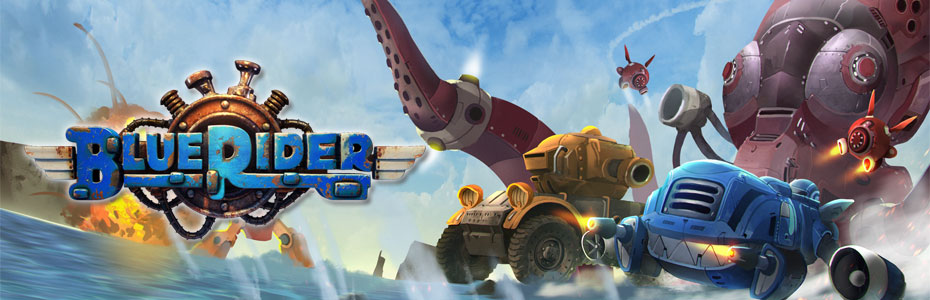
Games started out very simple. As time has progressed, they have gotten flashier and more cinematic. From Pong to Horizon: Zero Dawn, Super Mario Brothers to Zelda: Breath of the Wild, games are reaching deeper to attach to our hearts and minds. While I've enjoyed the ride, there is something that has been lost: the traditional arcade "twitch" game. Even Pac-Man has evolved, either into the Championship Edition with high-beat sound and graphics, or over to the phone on Pac Man 256, with microtransactions and timed play. Dropping a quarter into classic Galaga, walking left-to-right on Final Fight, games like this hold a certain charm. Don't worry about storyline, just play.

Blue Rider does have a bit of a storyline: basically there are bad robots and you need to kill them. It feels like an old "bullet hell" shooter, but with a twist: instead of simply staying in one spot and awaiting the oncoming horde, there are nine mazelike levels that you have to push through. Instead of simply working on a flat plane dodging bullets, you have to twist and turn your ship around obstacles and in circles, strafing the enemy for the kill. Each level ends with a unique boss with a pattern to analyze and attack.

As you make it through the levels, you will find various power ups to help you on your quest. Most often this will be in the form of newer stronger bullets and wider attack patterns. During my play time, I found very few health power ups. It could be luck of the draw on drops, but I soon found myself under the attitude that I really had to watch my health, because dying meant going all the way back to the beginning of the level. Luckily, stage unlocks stay open even after a game over, letting you have a "checkpoint" every time you defeat a boss.

As you can see in the trailer below, action gets fast and frantic. There are plenty of enemy types, but most of their shots boil down to one or two particular bullets that go set speeds. For a Bullet Hell Shooter, this is a good thing, as you can plan your maneuvers appropriately, but as a game in general, it made it feel a little bland to go through a level over and over after dying. I wanted to see a little more leniency in the checkpoint system, but the brutal design "flaw" actually made me feel extremely accomplished after beating a level.

My only beef with the game was the floatiness of the player's ship. Bullets come toward you steadily, but sometimes it feels like it takes time to get stopped or turned around. A few times I found myself running straight backwards away from bullets, like an action movie star on a train track, because I couldn't get my ship to go the opposite direction in time.. Not a huge deal once you get the general mechanics of the game down, but still pretty annoying. Even after I got used to it, I felt there were a few shots I saw coming but simply could not avoid, even with the ship's boost button. I would have loved to see some of the power ups go to extra shields or maneuverability, but I had yet to see those in my play through, and all media advertisements talk about the weapon power ups, so I'm pretty sure that you just have to "git gud" and power through the bullets.

Bosses are very unique, and fun to defeat once you reach them. The levels themselves are lush and inviting, though the repetitiveness of enemies in early stages does get monotonous. It feels like the game isn't much on your first play, but as you get into later levels and start seeing the bullet patterns present in the trailer, you have to have your skills ready to blast through to victory.

The lack of any sort of manual (physical or online) is a bit frustrating. As I said, I felt that there was no real increase to my strength, armor, or maneuverability as I worked my way through the game, short of the weapon power ups. After a death, a loading screen said "wanna get stronger? Start over at stage one!" While my weaponry carried over on one playthrough, my next death brought me right back to the basic weapon again, and I don't really see anything else better. Perhaps it would be a challenge to get from Stage 1 to 9 without dying, and you'd have plenty of ammunition to take on the final boss, but I would have liked to have a bit more explanation than some abstract loading screen to indicate I could do more with my ship. I'd also get "rampage multipliers." What they did, I couldn't tell you. As a reviewer, it's my job to find these things. Perhaps it increased my score? But the amount of gusto that "rampage multiplier" is spread across the screen for no reason as to why just made me wish the game had a bit more meat on it's bones.

The game was released on March 10th, with a retail price of $9.99. The official website states that there will be a physical release on April 10th. At just under $10, Blue Rider is an easy reccomend for anyone who is a fan of classic arcade bullet hell shooters. Your little ship might be a bit floaty, but after a few levels you compensate and are exploding robots like a pro. It's fun to power up your ship to blast the enemy to bits, but I'd have loved to see some power ups help protect you as well. The nine levels are just challenging enough that only pros will be able to blast through with no difficulty, meaning that it will take you a few gaming sessions to get through it all. After that, it's back in to find a few mysterious relics or to try to beat your high score. Extra and extended carnage translates to a higher multiplier and better score to brag about.

Special thanks to the developers for providing a code for review.

Final Review Score: 4.25/5

Read More
Ryan's Reviews Ryan Johnson Ryan's Reviews Ryan Johnson

Gurumin 3D: A Monstrous Adventure Review

Gurumin returns for another release, this time on the 3DS. Ryan Johnson at The Gamer's Lounge gets to review it and determine which way it is best for you to pick up this classic, fun little RPG.
Back again for another lap, Gurumin: A Monstrous Adventure has been ported over from when I personally reviewed it upon Steam release in May 2015, itself a rerelease of the title that came out on the PSP in 2008. Now, it makes it's way to the 3DS for another release.

Gurumin 3D: A Monstrous Adventure is a simple-structured action RPG, ideal for the young ones you are hoping to share your addiction to games with a little more meat on their bones than what most gamers start with. Within, you control Parin, who moves to a new town, discovering a secret door to a world full of friendly monsters. Soon after, though, the evil Phantoms arrive, and destroy the peace the monsters hold dear. Of course, Parin is the chosen one that is able to retrieve the mystical drill that can defeat the Phantoms and push back the Dark Mist that is plaguing the land.

Battles are real-time action oriented. Much like a Zelda game, Parin must take down the enemies, solve puzzles, and make it through the maze of levels to save friends, reacquire their favorite items, or take down a vicious boss monster. Replay value is added via multiple endings and ratings given out based upon how long it took you to clear a level and how many of the hidden coins you found. Use the coins and scrap parts collected from enemies to purchase and upgrade items back in the real-world town, slowly leveling Parin up into a major Phantom slayer.

In combat, Parin can slash away like crazy, or she can charge her attacks for more devastating blows. Your attacks level up with each successful hit, up to three stages in total. Get hit, and you may lose a stage of offense. This creates a risk/reward system: go in for another hit and get more power, or play it safe to avoid losing it. From what I can see, the developers eliminated something that was present in the PC version: a music meter that allowed additional damage if you could time your attacks to the beat of the music in the level. I honestly don't miss this that much, because I could never succeed very much with that on PC.

In terms of new features, Gurumin 3D has the obvious 3D upgrade, which is done very neatly. Visuals are crisp and clean, though you can see the game show a bit of it's age, even with the polish it has received over the years. The bottom screen is used as an easy-access inventory, although it could have been more. Hitting the inventory button on the bottom will bring up the same menu you see on the PC at the side of the top screen, changing headgear cycles through the available pieces instead of popping up another menu to let you choose, and the buttons stay on-screen even when you are in the map screen or main menu, where they are inoperable. It's just some acreage I'd have loved to see them do something with, whether it be a minimap or statistics on the enemy you are fighting. The bottom screen feels like an afterthought.

That being said, the game does hold up well for an eight year old game. Character voices are bright, clear, and fun (although a few of the jokes fall flat due to getting lost in translation). Areas and worlds are unique from each other, and the ability to choose your route by picking which level to fight further into next really gives you a sense of freedom, even though most of the levels them self tend toward linearity. There is an item shop, a weapon shop, and an upgrade center. A few other town members help you if you are into collectibles, but the nice mix of linearity and progressive modification of your tools introduces people new to the action RPG genre. It may be the same game with a different coat of paint, but it is a chance for a new group of people to play it. Mind you, it is still available for download on both PC and PSP/Vita for $9.99, while the 3DS version is currently $14.99, but the game does lend itself well to the quick pick-up-and-play stylings I find my 3DS useful for. If you are still torn, I found this neat little video comparing all the portable editions. Gurumin 3D: A Monstrous Adventure definitely whets the appetite for a classic, simple, and fun game, and is worthy of a pick up to share your love of RPG's with someone new to the genre.

Thanks to the developers for providing a copy of the game for review.
Final Score: 4/5


Read More
Ryan's Reviews Ryan Johnson Ryan's Reviews Ryan Johnson

Grand Kingdom Review

Grand Kingdom offers a new take on medieval tactical warfare. It's spin mixes board game strategy with turn-based Final Fight style action. Ryan Johnson at The Gamer's Lounge gets to take a spin with the title and reports whether it's worth your time.
As a mercenary for hire in a world defined by war, you find yourself at the center of battle. In Grand Kingdom, you are the leader of a small band of adventurers, but quickly find yourself wrapped up in a larger affair with a major guild. Once there, you can take on quests: simple deliveries and fetch quests, versus other teams, and continue along the main story quest, or flat-out join in a war between nations. As commander, you can take time when not in battle to train your staff, develop new abilities, shop for better equipment and items, and check your party's policies to obtain more rewards.

To say Grand Kingdom is deep, is like saying the Titanic was kind of a large ship. First, you must craft your party at the recruitment station. Most of the traditional medieval job classes are available, from swordsmen to wizards, rogues to archers, with some unique classes like gunners and dragon mages. Once your troop of four is crafted, you select a quest. Quests are played out upon a board game style map, wherein you strive for objectives, be they collection of resources around the map, reaching a particular objective point, or defeating all the enemies in the area. When you encounter an enemy, you transition into what can best be described as a turn-based medieval Final Fight. Each character in turn order has a set amount of distance and attack power. When attacking, the learned abilities can be combo'ed via face buttons; proper timing can result in some major damage dealt. If you were in range of ally or enemy ballistas on the board game map, they'll get their own turn, annihilating entire swaths of the battlefield. The board moves on during your turn as well. Take too long and enemies could claim victory from your hands.

You can make up to six separate parties that you choose from to go out on the battlefield. Each character can be leveled via experience, upgraded via equipment (which itself can be augmented), or learn new battlefield skills and techniques. You can edit the formation that you begin battles in, as well. Each and every option can tweak your battlefield prowess, making you a more efficient fighting machine.

On the map screen, you can choose whether to actively engage the enemy or passively route around them, though the extra steps will subtract from your time limit. You will run across fate and fortune on the map as well, and you'll have to decide whether to risk time, health, or team morale based on how you want to weather a storm or get through a field of traps. Combining your recruitment style, equipping prowess, tactical maneuvering, and battle skills into one efficient war machine will see you through to victory.

By far, my favorite part of the game is how it turns some major conventions on their heads while still feeling like a classic tactical RPG. There is a story to follow, but what I've seen so far doesn't feel like it's one you're going to lose track of with 8 billion strange sounding names and five thousand backstabs for political intrigue (looking at you, Final Fantasy Tactics). The game can be soul-crushingly hard, but you still earn experience points at the end of a failure, making it easier to take another crack at it. Storyline heroes are not on the battlefield, so every character you create (which is quite robust for a game as such, offering many different faces, hairstyles, voice modulators, and colors to make your characters truly unique) can live and die on the battlefield. The aforementioned difficulty seems to throw you into the true mindset of a medieval mercenary commander. Sure, at first you can go straight into a battle with a villainous opposing mercenary force, but maybe you ought to go out and deliver some goods to other troops, battling little scrub monsters until you are strong enough to take on the big boys. It makes even the strategy involved in picking your battles exciting.

The depth of Grand Kingdom can be overwhelming at times. I'm quite a few hours in and still don't feel I have seen all it has to offer. It takes a while to get to where you can upgrade your characters into stronger classes, you have to collect the right combination of materials to upgrade weapons, and in general really have to beef up your characters before you can even attempt to go to war. While introduced to you early on, the "War" tab of the game drops you into an online versus match where you ally with one of the four warring nations. At this time, some of the game's conventions get turned on their heads, as the board game portion becomes a real-time chaotic mess, and you have to rush to stay on top of your enemies. It's also best to have several troops of mercenaries created to go into this mode. Just trust me: hold off on "war" until you have a decent setup, or you'll quickly find yourself overwhelmed.

Another good contradiction this game makes, though, is at the end of battle. As said, people aren't dead, and you still get experience points. Any items found and not used are quickly sold off for extra gold. Starting a battle sets you with particular equipment, so you aren't bogged down with one more set of materials to prepare (or over-stockpile and make the game too easy). Our hero characters give an encouraging "better luck next time" attitude, and it's back to the grind.

If you are a tactical RPG fan, Grand Kingdom can definitely eat your time. The beautiful graphics remind me of a cross between Final Fantasy Tactics' upgraded FMVs and Dragon's Crown with their hand-painted stylings. The beautiful graphics drew in my friends who visited while I was testing, causing even non-gamers to stop and see what was going on. Crafting your war party is an accomplishment in itself, as well as keeping up with all the different ways you can tweak your team for maximum efficiency. The gameplay itself, while enjoyable, may feel repetitive at times. After all, there's only so many ways you can move a pawn on a map, and once you find an efficient combo of death dealers, you might end up doing the same set of moves over and over (a-la-Knights of the Round Mime fun on Final Fantasy). There is a wide variety of enemies with different defensive tactics, though, so that should keep you on your toes. I can also say I had frustration with the auto-save system not following through once or twice because I thought I'd tweak my team after a round, only to find it didn't save for my next play session. The depth of options with the glazing over of some of the more mundane things that often plague this type of game allow a fresh take on the genre that is truly fun.

Thanks to the developers for providing a copy of the PS4 edition of the game for review. While I am truly having a blast with the game, I could see it having a solid home on the Vita (unfortunately not a cross-play title), where you won't eat up the TV all the time and can take your addiction along with you. This game truly draws you in with it's fun free-for-all war storyline and addictive turn-based-action style of gameplay.

Final Review Score: 4.75/5

Thanks to NIS for providing a copy for review.

Read More
Ryan's Reviews Ryan Johnson Ryan's Reviews Ryan Johnson

MegaTagmension Blanc + Neptune vs. Zombies Review

Ryan Johnson | The Gamer's Lounge

MegaTagmension Blanc + Neptune vs. Zombies is a long mouthful to say. Unfortunately the quality gameplay and excellent work done in making a solid title is wasted on levels that you can beat in the time it takes to say the name of the game four times, and that's not really stretching the truth. A solid title that could have benefitted from a bit more fleshing out, Ryan Johnson gets to put it through the paces and comes out with a final review.
MegaTagmension Blanc + Neptunia vs. Zombies. Quite a mouthful, even for the series as a whole. Ditching the RPG roots, these anthropomorphized video game consoles head to high school to take on the zombie menace and film a movie that saves the school from bankruptcy simultaneously. If you made it through that opening paragraph without getting confused, then you already have an idea of what to expect. For me, however, this game may be well polished, but the core of it won't let it shine as brightly as it could have.

In this Vita title, you take a tag team of girls into a brawl to eliminate zombies that are invading the school. The zombies seem an afterthought, though. The primary concern of the girls is that the academy is soon to close due to lack of a student body, and it is in major need of increased enrollment. The girls feel that the best way to save the school is for the video club to craft an amazing movie that will make people want to attend their school. They want to make a zombie film, and by convenience, real zombies arrive. But rather than appropriately freaking out, the girls decide to incorporate them for realism, and put together a slapdash story that justifies them kicking the tar out of their undead classmates. There's a big bad villain who's foreshadowed to be doing something terrible behind the scenes, too.

Storywise, though, this is where I got confused. The plot advances with the girls meeting new teammates, but they aren't required to be used. This translates to end scenes where everyone talks about how awesome that person fights, when I didn't even use them in the level. "Zombies" in game levels translates to "just about anything" as we have blue goop with eye patches, strange giant apes, and even mecha fighting our heroines alongside the generic zombie enemy. And when we finally meet the final boss, there's no real reasoning for their plot than "for the lulz", almost literally. Ten thousand year old demon knows leetspeak.

I've reviewed Neptunia games in the past. I've even enjoyed them. When I reviewed Megadimension Neptunia VII on PS4, I was impressed by the layers put into a game, a labor of love integrating the meta storyline representing the actual game industry with some pretty solid tactical RPG styles. MegaTagmension goes another route, that of a Dynasty Warriors or Senran Kagura (whose company helped out with the design of this game). I just wish they had a bit more confidence in their own work, because this is a game where "more of the same" would have saved it. In the solo storyline, there are twelve chapters, ranging between seven and nine "cuts" in each chapter. This might seem like a long game, until you realize that the rather easy to achieve challenge times run between thirty seconds and two minutes. The game's cutscenes, which do have excellent voice work, but still consist of mostly static paper-doll images yammering back and forth with a bunch of dry jokes and humor only an anime fan would enjoy (hey, I am one, I know there's a difference) for minutes at a time for the actual gameplay to last about thirty seconds. Plus, the game is very, VERY deep in customization, but it doesn't seem like much when the actual gameplay is so short. You choose a character, a tag-team character, two backup supports, weapons with upgrade slots, and a complete outfit for each character. You also have to monitor your level-ups, as you gain AP that has to be implemented in a menu that has just a bit too much lag for it's own good and doesn't help by forcing you to try to push a point in before you realize you don't have enough AP. All this set up to push through a level that can take maybe the same amount of time as it takes to say the title of the game four times. Add to this that there are fourteen characters, all starting at level one, each with alternate forms (all with their own equipment and level-up slots) and the game gets rather daunting for something requiring at most about three minutes of your time. Plus, every level boots you back out to the main menu, so you have no fluency, and selecting through the menu may take more time than the fight itself.

There are multiple levels, but all the enemies spawn right in front of you. What good is a maze of a level if it boils down to a small arena you work in? What good are fourteen characters if the game is constantly getting harder and you have to level each one individually from square one? I ended up picking one character (Nepgear) and using her exclusively. By leveling her a few extra times before I got used to the confusing leveling mechanics, I was able to wipe the floor with most enemies my first time through without even using the tag mechanic, short of the "Lilly Ranking" attacks, after saving up enough money to buy her Level Four weapon. By this time, she was hitting even harder than her transformed "HDD" super-status. It's like a Dragonball Z Saiyan Level upgrade that makes them weaker. Soon, every level felt blended into each other: pick Nepgear, walk forward, kill things, repeat. It was odd when this real zombie threat was on the island and my goal was to kill specific types of zombies, so I'd get the "CLEAR" status while there were still about twenty zombies mingling around.

Researching the series, I've learned that this is the second in a series of Mousou-style fighters for the Neptunia games, and this one unfortunately loses out some of the features of the previous. In videos, I saw the previous title had the Senran Kagura style clothes bursts when damaged enough, which leads to increased stats as your character desperately pushes to survive, but this is deleted from this title. The ripped outfits are unlockables, but they do not exist in a gameplay fashion. Also, the loading screen makes me feel there are a few voids: it constantly tells me to level up by going on quests (of which there are none in single player), and to be sure to talk to the ladies in the menu screens, because they may get testy. Not once did the cashier at the store get irritated that I hadn't chatted her up lately.

All this being said, though, it's the brevity that made it all silly! The customization is intense and deep. All of the girls have a different fighting style, and combining them in useful teams is a strategy in it's own. Saving up, buying, and customizing the weapons to perfection is wonderful. Even the cosmetic items are unique in that you have full control of them. Want the scouter to be three times wider, two times taller, and on her thigh instead of over her eye? You can do it! I've seen handheld titles last extremely long, and this game seems like it was tailored to it. A Dynasty Warriors Vita game can go on a half hour to an hour. Fire Emblem? You can save mid-battle if you are running out of time. Heck, the Vita itself has an auto-suspend that I've left alone for DAYS before coming back and saying "oh yeah, I was in the middle of something." Somewhere, though, the decision was made to cut the levels down to mostly under a minute ordeals, with cutscenes that last three times that and an upgrade system that doesn't seem worth the half-minute you are fighting. I even took down the final, intimidating boss in three minutes with barely any damage taken (by the way, in a brawler, perhaps it's best to not have the main villain have detached arms that sweep past behind you if you are in close to get hits yourself). The gameplay is solid and amazing, the graphics are beautiful, and the framerate never dropped. The controls are a bit daunting. They can be overcome with practice, but these brief levels only give you a glimpse of what could have been. The levels are designed with care that looks like you were supposed to spend a lot of time in them, but all you do is run forward and slash zombies (or monkeys...or robots...but they're all zombies).

The big draw for this game looks like it would be the multiplayer, but I barely got to review it, not for lack of trying. The servers were bare, most likely due to the prerelease status, and I only ever found one other player on a server. There was a chat window, but I was scared at the thought of using it. Busting out the Vita keyboard mid game would just make me feel like I was wasting time. I'm sure that the traditional headset chat built into the Vita would be much more inviting. With that, it kind of boils down to there being one to three other players who, for the most part, would be quietly following you around, beating up enemies with you. More of the same. Though I do admit, newer, bigger monsters arrived in the few rounds of multiplayer I played, and I got new item drops for better equipping of my characters, but it still results in "get close, hack until you see the windup animation, draw back, and go back in, super moving when you can." Multiplayer, if anything, would be a chance for the game to shine. I just hope the North American audience gets big enough for players to find each other without resorting to scheduling availability through a Twitter hashtag.

MegaTagmension Blanc + Neptunia vs. Zombies needs longer levels. It's an amazingly fun hack and slash that suffers from premature completion in a bad way. It's a lengthy game that has a habit of getting you in the groove just before booting you back out to the menu and making you start again. For fans of the series, the silly storyline will fit right in with what you expect, though it doesn't seem to have the meta layer I've seen in other Neptunia titles. The gameplay is fun. Once you get used to "pretzeling" your fingers into the right combinations, battles are satisfying, but begrudgingly short. A bit more fleshing out, and this would have been a cute anime girl version of a Dynasty Warriors game with awesome transformation and tag-team play. As is, it can be fun, but you'll find yourself dreading the menu as you clamor for more action.

Thanks to the developers for providing a copy for review.

Final Score: 2.75/5

Read More
Review, Ryan's Reviews Ryan Johnson Review, Ryan's Reviews Ryan Johnson

Ray Gigant Review

Ray Gigant is a new downloadable dungeon crawler/visual novel title for the PlayStation Vita. Within, a traditional anime story unfolds of world destruction, with the youth being the only ones who can save us from extinction. While rough in some spots, it still provides an entertaining experience by offering new takes on inventory management and resources.
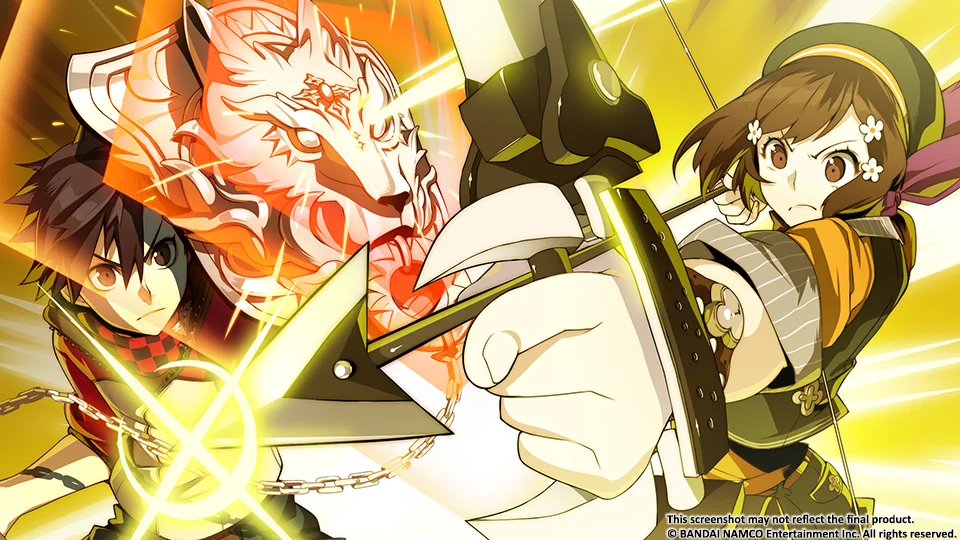
Ray Gigant is a new downloadable title from Bandi Namco Entertainment and Experience that combines a traditional dungeon crawler with the popular Japanese "visual novel" style of game. Within, the world is decimated by huge monsters known as Gigants. The world fears for the worst, thinking all is lost, when a lone boy defeats a Gigant with the power of a mysterious artifact, the Yorigami. The boy is rescued and taken to a secret base, where they try to train him and a team of others to try and stop the Gigants once and for all. As the game progresses, new protagonists are revealed, and their fates intertwine as they learn what they can do and fight to stop the Gigants.


The game cycles through modes pretty regularly: you find yourself listening to dialogue whilst watching some fairly static cutscenes, meander around the home/school/military base, then work your way through a mazelike dungeon before taking on a strong enemy. You seek a special item that calls in one of the major Gigants to take down. Each character has special abilities: in the first section, your main character is the close-up brawler, and his team has a ranged attacker and a mage. At the final battle of a chapter, the three split and spread out to be best effective, placing the mage further out in a safer distance while the brawler gets in the Gigant's face.

Where the game gets it's twist, though, is the inventory management, rather the lack thereof. Because: story, your characters don't "buy" weapons and consumables. They are "purchased" as you level up. Gaining marks on a simplified grid akin to Final Fantasy X's sphere grid, you will eventually level a character to where a new weapon is unlocked. A consumable item becomes an option for an action, it doesn't reduce a consumable number at all. At the end of battle, everybody's HP is returned to maximum.

What does deplete, however, is an AP bar, representing how many of your abilities can be used. Stronger attacks use more AP, but your AP only fills up about a quarter, and that's if you take the enemy down in one turn. That benefit drops each turn you are out. This causes you to have to pay attention to weaknesses and exploit them, or you'll find yourself going out for the next battle with only enough AP for a single strike. As the game progresses,  more complexity is added, which can result in using your own HP for attacks, furthering the risk and reward system.

The game is crafted beautifully. While it doesn't directly show battle actions, the main characters are animated in a traditional style, looking like cut-outs straight from an anime cel. Enemies look like 3D paper dolls, dancing and bobbing around on the screen. In between cutscenes, as well as the scenes that unlock when the super attacks are engaged, are beautifully animated by a professional team, and are wonderful to watch. I'm also rather impressed with the rough metal/jazz style of music that would get caught in my head between plays.

My complaints with the game are rather specific. The game can be overbearingly confusing. The leveling system consists of collecting resources, of which there are at least six different varieties, not counting the ones that reset your stats so you can try again if you feel you messed them up. Each level requires a separate resource for attacks, abilities, and general stats, and on top of that you have to eat, because walking makes you lose weight, and there lies your strength vs. agility stats. Over on the drama side, there seems to be a fluttering romance with one of the NPCs that just doesn't sit well with me, but I feel punished if I don't follow through. And with all the heavily traditional Japanese names with the added -kun, -chan, -senpai's added to them, and the different special names for each level of Gigant, Megalosite, Yorigami...all the complexity makes me pine for the days of physical releases (of which this game isn't getting in America) and a physical instruction manual I could reference during the game to keep things straight. Then, when you unlock the super attack, it adds a rhythm element, charging up your attack by hitting your offensive buttons in rhythm to the songs in the background for maximum effect. Unfortunately, as a music lover, I had a hard time following, as the "beat" transfers between instruments, feeling more like an orchestra conductor doing their little point-stroke toward whichever band member should add a bit more force. Didn't always make sense until I learned the song.

Also, the complexity is contrasted with a notable lack of hand-holding. After defeating what I thought to be the first world's boss, I was told I could go back to the level and fight more monsters to become stronger. I did as such, and defeated every enemy in the level in one fell swoop, never going back to heal or recharge. Thought I was ready, and went forward. Saved, then learned there was another, bigger boss. Couldn't go back and level more, and it took six attempts (and nearly quitting) before I got the perfect combination (after learning how to get better weapons through character leveling) and a stroke of luck (with the boss slowing down to clean it's fur and such) to push through. Simply put, if you're asked if you want to continue, you'd better keep a spare save slot until you know you're comfortable in the next area.

All said and done, though, once I figured out the leveling, item acquisition, and general rhythm of the game, I have found it quite enjoyable. The storyline bits lag from time to time, but it is engaging enough to make me generally curious as to where it's going. The risk versus reward aspect of AP management makes you have to think your way through the levels, working hard to level your characters until you are ready to take on the boss. Battles may seem generic once you've done a couple laps of the generic hallway-based dungeons, but as a portable title, it does give you enough of a combination of story, resource management, and logic/battle challenges to keep your attention. A recommended title for anyone into a traditional anime-style storyline and a robust management system.

Thanks to the developers for providing a copy of the game for review.

Final score: 3.25/5

Read More
Ryan's Reviews Ryan Johnson Ryan's Reviews Ryan Johnson

Organic Panic Review

Organic Panic starts out simple enough, maybe even too simple. But sticking through (especially with jumping into cooperative multiplayer) reveals a smart, fun downloadable at an affordable price that can provide plenty of action, laughs, and eureka moments to justify it's purchase. 
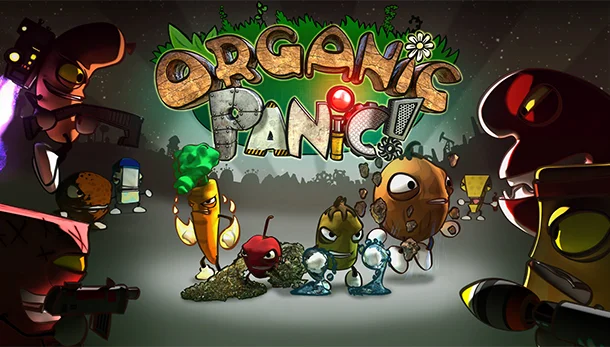
Organic Panic is a new downloadable released this past week for $14.99. It is available on PS4, Xbox One, and Steam. Definitely a unique title, the story pits the more organic fruits and vegetables facing off against meats and cheeses for world supremacy. Carrots, kiwis, cherries, and coconuts fight to take down Baby Cheese and his evil empire. 

On first play, I was none too impressed with the game, but by the time I am writing this review, I'm ready to give it glowing praise. My first sit-down with the title was some time on the solo play, wherein the first levels are very tutorial-driven. You're given a single hero to control and get through to an end point. You get bonuses for taking down every enemy in the level, as well as for finding a hidden jewel. With only one character, it seems simplistic and mundane. But then, my friend was able to sit down and we had a crack at multiplayer.

Each of your characters has special powers. The cherry can dig through the earth, the carrot has fire power and can climb certain walls, the kiwi can swim and also create more water, and the coconut has the unique ability to mess with gravity and move things in the environment. As the multiplayer cooperative missions progress, the combinations seem crazy, but it's so vindicative when you figure out how to use your powers in tandem to get through the area. Burn the enemies with the carrot, quench the ground for passing with the kiwi, then carrot climbs the wall and burns a bridge's side, allowing kiwi to climb the newly created ramp. Many times we saw the solution, but getting to it was difficult. It was super-rewarding when we succeeded though. 

We dabbled a bit with the versus mode, but with only our two controllers there wasn't much there. I see the potential in a four-player free-for-all, and am drooling at the four-player cooperative missions that unlock once you get further in. I'm sure the tricky puzzles we did in 2P only get more interesting as you progress.

After that, I went back to the single player mode, where I found I had quit just before it got past the tutorial area. Once you get the basics down, they throw multiple characters your way, allowing you to swap on the fly between power sets. This makes it interesting, as you have to find the perfect combination of moves and steps to get through.

The game sells itself on realistic physics. While it's hard to link "real-world" physics to a two-dimensional game involving athromorphic foods, they did a fairly good job. Ice melts with fire, dirt can be dug through but not rock, and other differences you come to know and appreciate as the game progresses. At times, I disagreed on the "realism" of the physics, as I popped a hole in a large tank of water near the bottom only to have the water drain about halfway, leaving two different heights of liquid that were connected. Wouldn't they balance out? While the physics aren't perfect, I can say that things react the way I expected them to. Cut through the bottom of a pillar, it'll fall the way you expect it to.

The simplistic graphics, roughshod and short story segments, and odd sound effects turned me off on Organic Panic at the start, making me feel like this was just another game for the bottom of my digital pile. But only after my friend joined the mix and my kids and wife came to watch, even joining in by offering their ideas, did I see the game start to shine. My wife flat out said "you're giving this one a good review, right? It's so much fun!", so I guess I'd better give it high marks. :)

At $14.99, Organic Panic is a great game for puzzle fanatics. It's got the Worms vibe of strategy plus humor. Each level has tons of replay value until you beat it, but it requires enough quick reflexes sometimes that they may have staying power even after completion. Multiplayer is where the game shines, whether it be four active controllers or simply a room of puzzle fanatics offering their two bits. I applaud games that encourage couch co-op, though sometimes wonder why they would do it at the expense of online connectivity. There are leaderboards, but co-op is only done locally. I do agree that it'd be much more fun on a couch setting, but I'd believe that for pretty much every game, so I wonder why that concession was made. I could also see the versus improving if the meats and cheeses had playable characters, expanding your options beyond the four main protagonists. 

Without a doubt, though, Organic Panic is a fun little game that'll take you back to the strategic days of games like Worms, where mayhem and comedy go hand in hand. Some of the puzzles can be frustrating, but they can all be figured out with time. I recommend this game wholeheartedly to fans of strategic combat and puzzles.

Thanks to the developers for providing a code for review on the PS4.

Final Score: 4.25/5

Read More
Ryan's Reviews Ryan Johnson Ryan's Reviews Ryan Johnson

Dying Light: The Following Review

Dying Light's The Following expansion recently dropped, with the new Enhanced Edition replacing the original title, boasting all of the downloadable content. Ryan Johnson at The Gamer's Lounge was able to put the new Enhanced Edition through the ropes, and gives you a rundown on what to expect in The Following.
title.jpg

Dying Light did an amazing thing to me: it took multiple genres I had no interest in and made them fun. Lots of people stated in their original reviews that Dying Light borrowed a lot from other games, but that isn't necessarily a bad thing. I was never one for zombie games, but the parkour dodging, weapon crafting, dynamic time, and general storyline kept me coming back. While it hasn't been number one on my playlist since my original review, I can say that Dying Light succeeded in many ways. It even got me over my online-multiplayer slump, out playing in a community instead of just using my PS Plus subscription to get freebie games.

fuekds.jpg

When the chance to review The Following dropped, I jumped at it. Any chance to get back into the game was welcome. I'd strayed from the game due to other attractions and some personal family issues, but knew that it'd be great to see it through and have more to play. The Following is a great expansion. If you're in it solely for the story, you might come away feeling it was short and disappointing, but those who are in it for the experience will be pleasantly surprised.

The Following starts out when a mysterious stranger shows up, hysterical, at home base in the city. He mentions a strange cult of individuals who seem to be immune to the zombie epidemic. Given the slow erosion of supplies, it seems there is no choice but to investigate to see if there can finally be an end to the madness. After a short stint in the sewer system, you break into a world far different from anything you expect in the original game. Rolling hills and flat countryside replace the compact buildings and industrial hovels found in the base game. Gamers must completely change their course of action through the game to succeed. Where originally you could escape the shambling dead to the rooftops, now you only find open fields, and the enemy can close in quickly with nowhere to hide. To make up for this shortcoming, a whole new skill tree has been added in regards to your adeptness with a buggy, which you can upgrade much like the other weapons, to become an ultimate killing machine.

In The Following, there are plenty of sidequests to keep you busy, some more entertaining than others. I particularly enjoyed the scenario that finds you with a few items of mail and deciding to deliver them, a last breath of the old world to people living in tragedy. Many were wonderfully hilarious and not to be spoiled for those heading out on the journey, but taking the time to research these sidequests will add to your enjoyment of the game expansion. Again, your mileage may vary depending on how quickly you want to plow through the main storyline, but slowing down and appreciating the sidequests really gives you value. There are times that you have to do some sidequesting to unlock the next story mode mission, so that at least presses you to take a shot at them.

The Following warned me when I started that the game was for advanced characters that had made some progress in the original game, but as I stated, it had slid off my radar, so I was inadequately prepared at first. The enemies were simply too strong. I learned that you can swap back and forth, importing your character as you see fit into either storyline. This is a great option, as now if you get stuck on either storyline you can simply port over and get some new levels or materials to further your crusade. I guess that The Following is better played after experiencing the original storyline, though, because personally having yet to see all the plot twists of the first story, I'm confused as to how the infection has gotten outside of the walls of the city meant to quarantine it off from the rest of the world, and how it seems to be no big deal. If you're new to the game, get through the original storyline first. You'll get invaluable equipment (such as the grappling hook) that will make improbable puzzles or jumps seem much more logical once you are fully equipped.

While the developers have modified the digital store to make it simpler, I can see it being a bit confusing now, especially for physical disc buyers. The original game is no longer available digitally on the PSN store or the Xbox Marketplace, while all the DLC is still there. The new "Enhanced Edition" has everything in it (Bozak Horde, Cuisine and Cargo, extra skins, and The Following), so you do not need to buy any DLC. All the DLC appears as linkable options on the storefront to the Enhanced Edition though, so someone not paying attention and wanting the full experience may end up accidentally rebuying something they technically already own. If you're hitting up Amazon, you can get the original disc for $35, with the season pass at $29.99, which will cost more than the "enhanced edition." Amazon is also selling a digital code of the original for $19.99, so that would balance out with the Season Pass as a full purchase. If you already own the digital edition and haven't purchased the Season Pass, it may be time to consider it, as the season pass truly saves money in the long run, with The Following costing $19.99 on it's own. My only gripe was really a first world problem: by getting an "Enhanced Edition" code for review, it was a new "base game." My 'net speed is slow. I downloaded the "single player" experience as is allowed on PSN first, but with Dying Light's dynamic drop-in multiplayer, it wouldn't let me play until the MP was downloaded. Then, there was an update file. I thought I could start reviewing once that happened, but then the game stated it needed to install. Not a top menu install like you're used to, but an in-game install percentage that slowly worked it's way up when I went into the game, preventing me from even playing the original game from inside The Following's menus. I got the download code for review on Friday, and it was Wednesday before the game would even boot up. Sure, this has a lot to do with Sony's odd download structure and my backwoods internet, but if your cheapest option is going for the Enhanced Edition, it may be wise to seek out a disc-based edition or be prepared to wait a bit. On the plus side, I will say that I was able to delete my original Dying Light and everything worked fine, and they managed to shrink the file size, having 100% of the DLC installed (including the massive Following acreage) at 24.37GB as opposed to the 25.07 that was reserved for the original title on my system. The team seems dedicated to the title, what with the streamlined file size showing optimization, plus the recent announcement that they will continue supporting the title over the next year with new DLC.

Dying Light is like going to the ice cream store and getting bits and pieces of your favorite flavors all mixed into one. While you may not get anything you would call original, the mixture of flavors is a new taste experience that you might enjoy more than the sum of it's parts. Dying Light's leveling tree, zombies, and weaponcrafting may seem old hat on their own, but mixed in with the parkour vibe, has offered a fun story and gameplay since Day One. The Following adds more of the same, perfect for fans of the original, but gives it a countryside twist, something you don't see much in games from this genre. I've always wanted to see something like Grand Theft Auto: Backwoods Edition, where they put emphasis on small towns, and this gives me a little flavor of what that could be like. Appreciation for open scenery and worlds that really changes up how you approach your enemies. The driving is a trip, and very well done for what some may consider a tacked-on extra. Maybe one day we can cruise that buggy back to Harran and tear through the streets? I can only hope.

Score: 4.75/5

A digital download code for Dying Light: Enhanced Edition was provided by the developers to review The Following expansion.
 

Read More
Ryan's Reviews Ryan Johnson Ryan's Reviews Ryan Johnson

The Swindle Review

The Swindle offers a unique gameplay experience, one that has equal chances of catching you with endearing charm and making you wretch violently at the mere thought of it. This is your fate if you only give it one shot. Take a little more time, and you'll learn what the game is really about.
The Swindle offers a unique gameplay experience, one that has equal chances of catching you with endearing charm and making you wretch violently at the mere thought of it. This is your fate if you only give it one shot. Take a little more time, and you'll learn what the game is really about.

Set in a steampunk London, The Swindle centers around Scotland Yard's newest anti-thievery technology, one so powerful that you are guaranteed to never be able to steal again if it is activated. This will happen in 100 days. The only way for you to save your thieving profession is to steal the device itself. But to be prepared, you must earn enough cash in other raids to develop the technology you need to break in.

When the game starts, your thief is astoundingly underpowered. Even looking above and below your current screen area is locked behind an upgrade, which can be frustrating as you slide down a wall, unknowing whether you will land on solid ground, deadly spikes, or right in front of one of the roaming patrol bot guards. Given enough time, you'll end up double jumping, dropping bombs to burst through walls, and hacking into family's computer terminals to get at their online cash. 

Once you get a few upgrades in, the game runs smoothly. It's the start that's killer. You have to steal a substantial amount of cash for the heist to be considered "successful," and the procedurally-generated homes can result in you being unable to access the big bucks. It might not seem like much, but my first play through (that I knew what to do), I spent five days going through houses where I could only access about $12 (sorry, I can't find the "pounds" key on my keyboard, forgive my conversion), and it takes $100 to get the first hack upgrade. Next, double jump to get over really tall windows, and then the bomb to dig down to the hard-to-reach basements. Once I had those, the game opened up, but the enemies quickly leveled too, and I found myself having to twist my brain a bit harder to figure out how to bypass the protectors of the homes.

Your thief is very fragile. Not only will one hit from an enemy end their time on this earth, but even a long fall without the proper upgrade will make them meet an untimely demise. The game has fun with this mechanic, procedurally generating your character as well, so when someone's dead, they're DEAD, and it's up to a new criminal to finish your legacy. So with 100 days, you could have up to 100 criminals you control, though with zero dollars earned any time you are apprehended or killed, you can guarantee you won't be successful at the final heist. The game keeps a running tally of your current criminal's streak of successful heists, though the brutal game will gladly reset it to zero if you slip up once.

Procedural generation may allow more variety once you are in gear, but you may end up resetting several times to get that good start, as you're only allowed one save file, and the game saves for you. Once you mess up, it's forever. I feel like a successful run of this game is going to take a while. After all, I have no idea how "far" I need to be on Day 50, and I may realize it's fruitless on day 97, having to reset my game and start at day 1 again. 

If you have patience, The Swindle will develop rapidly, making you feel like you grew from a nobody who barely runs out of a home with twelve bucks into the master criminal extrordinaire, eventually pulling off the master heist and saving your profession. Much like a true criminal, there's a chance you're doomed from the start to a piddly life of crime, but if the dice roll in your favor, you're in for quite a ride. Getting that perfect die roll results in an amazingly fun action strategy adventure. 

The Swindle is currently available as a cross-buy on all Sony systems for $14.99. A review copy was provided by the developers, and tested on PS4 and Vita. Controls were fine, but more comfortable on the larger analog sticks of the console edition. The game is also downloadable on Xbox One for the same price.

Final Review Score: 4 out of 5

Read More
Ryan's Reviews Ryan Johnson Ryan's Reviews Ryan Johnson

Schrödinger's Cat and the Raiders of the Lost Quark Review

Schrödinger's Cat and the Raiders of the Lost Quark is a newly downloadable game from Italic Pig and Team17, where the eponymous cat is tasked with saving the Particle Zoo from the madness of all the loosed inhabitants. A 80's-90's platformer at it's core with a lot of quirky touches and highbrow humor round out the package. 

While we deal with physics in many video games, that higher level of education has rarely, if ever, actually been central to the plot. These days, jump distances and bullet arc are parts of games we take for granted. With Schrödinger's Cat, we get to mess with the particle zoo directly.

Schrödinger's Cat is our hero (who is luckily alive today) and on a mission to single-handedly restore order to the literal particle zoo, within a single piece of existence within a cell. Now, there are two puns in this past paragraph, which lead to both the best and worst parts of this game: the humor. If you find nothing snicker-worthy in that sentence, many jokes will go over your head. Not to say you won't get any entertainment from the game. The general slapstick will still amuse you, but there are some "high level" jokes that stand out more if you have a little bit of education under your belt. 

Schrödinger's Cat adds some unique elements to the traditional platforming experience: while you have a plethora of actions available to you, you must have a combination of three pickups in order to facilitate them. This consists of up, down, top, or bottom quarks. Three ups make a helicopter, while a top-bottom-top make a trampoline, and an up-down-up shoot a missle. You don't need to have them memorized, as the entire map is on the pause menu, but it is handy if you get the patterns down. The pickups add a puzzle element to the game, because you need to have the right combinations in certain parts, and if you waste all your up quarks before you get to a big cliff you must climb, you'll be stuck. Luckily, the quarks regenerate, but they keep a set pattern so you have to know what you're doing. You may have to find a different way past a certain obstacle if it is between the difficult jump and your collection point. In later levels, the regeneration is a little more sparse, requiring more clever thinking on your part. 

Levels are procedurally generated, meaning you can play it multiple times and get different levels to play through. This is a help and a hinderance at times, as you get the variety, but sometimes they are easy and others very difficult. I got to one point where a character told me to go to the right, and we were on the right edge of the level. Took me a while to figure out where he was guiding me. I do see the Team 17 styling in the random levels, with terrain (and a few weapon stylings) making me think they'd make good Worms levels.

Schrödinger's Cat feels like it fell out of the classic 80's/90's platformers world, which for fans of the genre is a very good thing. The humor and characters you meet give me the Earthworm Jim vibe, while the running tally board of how many animals are still out in the zoo lands between Oddworld and the oldschool collect-a-thon you'd find in just about every platformer imaginable. There's a bit of a Metroidvania feel, as you have most every move from the start, but figuring out how to use them can result in you going back and taking another crack at finding that last Gluon. It does have issues with repetitive voice work on deaths and such, but at least the humor in the game is appealing enough for it not to be an annoyance. One problem I had with the voicework was the touchy skip option. A few lines of dialogue were missed because I couldn't get it to advance, and then it'd advance twice, stinky when someone was giving me particular information.

Schrödinger's Cat and the Raiders of the Lost Quark offers a unique platforming experience, giving you limited resources, while other titles give you free reign of your powers. Finding unique ways to use your combination of resources makes you feel intelligent, as do the high-end jokes when you get them. The solid gameplay will satisfy any classic platform gamer, and the comedy will keep you engaged with the story. It's currently available for $9.99 on Xbox One, PS4, and Steam

Final Review Score: 3.5/5

A copy of the game was provided for review by the developers.

Read More
Ryan's Reviews Ryan Johnson Ryan's Reviews Ryan Johnson

Shiftlings Review (PS4)

Shiftlings is a new digital game that places you in charge of a couple of aliens tasked with fixing things. Little do they know that they are the stars of a highly popular TV show, and a happy accident with a bottle of cola results in a strangely comedic play mechanic that has you (with a friend, if you desire) to think your way from Point A to Point B.
A strange, game show style puzzler game, Shiftlings places you (or you and a friend, either couch or online) in charge of two little aliens (Purple Plop and Green Goop), with the intent of moving from point to point, while dealing with their mildly cumbersome ability to swap size and mass. At any one given time, you can change their status with a push of a button: one character is large, round, and heavy, but unable to jump for anything, while the other is small, nimble, and quite a jumper, but cannot be used as a ballast or weight. The two characters are tied together via a tube, so finding your way through little cracks, up tall towers, or past difficult hazards requires quite a bit of brain work. 

Somewhere in here, there's a story. We have a snide host (whom my wife insists is Kelsey Grammar, but I personally think that's not what they were going for) who places our intrepid heroes in unfortunate situations for the amusement of the TV audience, playing out their little trip across a world as if he were an announcer for a professional sport. There's also a side bit involving a fizzy drink that causes one of the aliens to inflate into a giant bouncy ball, very heavy, but unable to jump himself, that creates the primary mechanic of the game. And again, because alien biology or something, this extra weight has the ability to shift back and forth between the two characters via a single press of a button. As the game gets more complex, you'll find yourself shifting mid-bounce or cannon fire in order to get across the levels. I had my significant other join me for this review, as it was touted as "better with two players." While I was amused at the story, I do agree that the intro does drag out a bit long for a two-player puzzler, and perhaps the story could have been told in snippets through the first few levels instead of dropping it all at the start. Taking a page from Portal, games like this can tell a story through a few voice overs that don't need cutscenes.

Shiftlings does shine brightest as a two-player game. When you have a partner who is into it, the two characters can move fluidly. Without good cooperation, though, it can turn into a frustrating affair. If there is a ten-step process to get up to a ledge, only to have one fall take you back to the beginning, grumbling will commence after the second flub-up. There is humor in both people having a button to shift the weight, as poor communication results in crazy back and forth shifts (complete with mini fart noises) as both people try to shift, then compensate for their teammate, etc. etc. One mechanic in particular makes it difficult to play with two people: the "fat alien" is springy, allowing the "small alien" to bounce on him like a trampoline. This means you have to move alien A as far right as you can, have alien B move, shuffling across a platform to get a bounce right. That, or both players move simultaneously, and pray you make it. This can prove tiresome for a team, but a lock button allows you to move them simultaneously in solo.

On a side note, I feel like the cola-caused shifting effect is a bit lost on me. The small, nimble alien is such a good jumper that the fat alien is a hinderance. He's there to pull the other up by falling off cliffs or to push big buttons, but that's about it. It's like if it weren't for the soda accident in the story, the characters could have made it through all the puzzles with little to no effort. Personally, I'd have made it an inherent ability between the two rather than a forced piece of humor. With the story being pushed at the beginning, for some reason it makes me care about this. I'd also have liked to see a way to slowly go between shifts, maybe put half the size in both aliens, so you could test out where you were going. A couple times, an inappropriate shift would put us in a position that we had to backtrack. 

So, while the game could use a bit of polish, and also not have worried about why we are in the position we are in so much, I still have to say it's quite enjoyable. The intro story bits and sass from the announcer are good fun, but the in-level lines that get repeated quite a few times may grate on you, particularly if you fail repeatedly. It's best played via couch co-op with a fellow puzzle nut. That way, you can get the hilarity of glancing over at convoluted faces, and point at the screen to show which way to go. Another puzzler will also have more patience with the levels if you find yourself back on the ground floor after one mess up. Playing solo is okay, but the two swap buttons (one for the size change, the other for the control of the opposite alien) can get confusing at first. The learning curve is set right, though: if you fail, you can tell where and why. The game doesn't leave you stumped, and it feels really good when you finally get to that exit portal. Extra challenges mid-level to pick up extra collectibles will add replay value and have you heading back to levels to try to catch 'em all. While quirky, it's definitely worth a look if you miss the days of couch co-op.

Final Rating: 3.5/5

A review copy of Shiftlings was provided by the developer.


Read More
Ryan's Reviews Ryan Johnson Ryan's Reviews Ryan Johnson

Captain Toad: Treasure Tracker Review

Captain Toad: Treasure Tracker originally didn't seem like a worthy purchase. It seemed like a "been there, done that" feeling with it merely being an expansion of bonus levels from Mario 3D World, but a little digging and you'll find yet another gem for the Nintendo crown.

Captain Toad delivers a nice surprise for puzzle enthusiasts. 

I love Nintendo. They have put out some quality games and systems through history. As new generations have come, they have relied more on quality gameplay experiences over fancy graphics, and I feel they've been all the better for it. Many a hardcore gamer will disagree, but I feel that by taking the focus off of having to have the most amazing graphics, Nintendo has allowed new experiences to emerge that we wouldn't see if all the Big Three only cared about realism.

Even through all of that, though, I couldn't see myself jumping for joy over Captain Toad: Treasure Tracker. Having begun as a series of mini games throughout Mario 3D World, I figured I'd seen everything there was to see. It was sold as a budget title as well, so I didn't see myself wanting to pick this one up. 

One thing changed this all, though: my three year old son. Yes, he's a bit young for games, but he and his eight year old brother are really loving being a part of their father's hobby. They were looking through catalogs thinking about what they wanted for Christmas, and his eyes lit up as he saw Captain Toad. We figured "why not" and his eyes lit up just as much opening it on Christmas Day.

We plugged it in, and to be honest, it felt right up his alley. The levels were simple enough that I could beat them in one shot, and didn't even know that there was a "small" version of Captain Toad until fifteen levels in. But the game's main menu is set up like a book, and after two sessions with the game, I saw we were coming to the end. 

Mind you, the "final levels" require a bit more than a three-year-old's strategy, so I helped him some more there, and I was disheartened as the final boss was defeated and the credits rolled. He was happy and went on his merry way. Meanwhile, I was thinking "Nintendo thought this was even worth a budget title? It's not even 20 levels!" Then, another book dropped. And while the story was similar, new levels opened up where the challenge was upped.

Captain Toad's simple puzzle mechanics allowed my son to have fun, and the credit roll smartly wraps up the story for someone who might have difficulty with harder levels, then the game opens up for people who want more of a challenge. This changed the game from a "kinda fun for kids" experience into a true Nintendo gem for me.

Each bite-sized level can fit on one screen. While enemies look familiar to those accustomed to Mario games, Captain Toad's lack of jumping ability forces you to find different ways to defeat them. Super Mario 2 turnips return to help him thwart the enemies, and timing falls from higher platforms right can result in defeated enemies. It won't take more than a couple minutes to beat each level, making the game short even after the extension, but the addition of a secret goal and three hidden gems in each level give the game a hint of replayability. Once you beat a level and learn the hidden goal, though, it won't take many attempts to get it. A few levels deviate from this pattern, such as a first person minecart ride, and they provide a little deviation from the formula. For those who own Mario 3D World, some extra levels from that game will unlock, and you get to experience them from Captain Toad's viewpoint. While a fun bonus, you can tell that game was made for people who can jump. Basic platforms that can easily be hopped on require an extra ladder or walk around to succeed. But, this is an added bonus, not necessarily an intended feature, and it's nice that it exists rather than not.

For a parent, Captain Toad is an easy pick up. The first third of the game allows a younger child to enjoy it, while the rest fleshes out for the older kids and adults. Without youth in the picture, getting past that first third opens up more of what you would expect from a Nintendo puzzler. And at a budget price, it's hard not to give Captain Toad a try.

I give it a 4.25/5

Read More
Ryan's Reviews Ryan Johnson Ryan's Reviews Ryan Johnson

Sneaky Sneaky Slips onto iOS Platforms

Sneaky Sneaky is currently available for $2.99 on the iOS App Store. A neat mix of Final Fantasy RPGness, Metal Gear Soliton Radar scoping, and Zelda-esque graphics, it looks to steal your heart as it fills it's wallet. With the new release on mobile devices, does it make it more approachable, or do the mobile adaptations shove all the ugly bits out into the limelight? Ryan Johnson puts his two cents in (so long as they don't get stolen before you read them).

Sneaky Sneaky mixes a Zelda-esque top down view of a medieval world with the stealth "Soliton Radar System" from Metal Gear and a turn-based RPG, while your main character goes about trying to steal back the treasure he stole from those who stole it from him. Selling for $5 on computers, the price drops to $2.99 for the iOS release. 

I feel that Sneaky Sneaky has found a safe haven on iOS. In checking reviews of the original PC release, it was called short, unpredictable, and overall not necessarily worth the $5. I read these reviews after making my primary run through of the game, and disagree with them, but I feel it's the medium that lends to that. Your average mobile game wouldn't feel at home on a PC. Heck, there are people addicted to Candy Crush, but I played it on Facebook once and was bored out of my mind, although I found fun killing time with it on my phone. Sneaky Sneaky has this same feeling.

During exploration mode, the little thief is able to move freely, sliding in and out of shadows, bushes, haystacks, etc. attempting to nab his jewels and get out of the level alive. If he is spotted or an attempt to assassinate an enemy goes awry, the game swaps to a turn based system. You have a set number of moves and attacks that level up as the game progresses, and you have to make quick decisions: run and hide, use your hard-earned items, or rush headlong into battle. 

While the game is rather short (you will most likely finish it over the course of a couple days worth of play), the leveling system and progression of items unlocked add enough variety to the game to keep you interested. Some of the enemies follow set patterns, while others seem to roam randomly, and every time you meet a new enemy it is a bit of trial and error to find the best way to defeat them. There's also the mild frustration that while the game is titled Sneaky (twice, even) that you end up scoring higher when you off the enemies. Perhaps if there was an extra award for making it through the game unscathed and unnoticed it would be better, but again the mobility of the title lets you kick out if it gets frustrating, much easier than if you were sitting at your PC where you'd be more apt to try to push through. 

Sneaky Sneaky isn't going to win any "Game of the Year" badges, but it puts a fresh spin on a genre that isn't saturating the iOS market right now, so it's definitely worth a look. At $2.99, it is cheap enough to fall into the "impulse buy" section. It's a steal at that price, and it won't feel as if the titular anti-hero is heading for your wallet. 

3.5/5
A review copy of Sneaky Sneaky was provided by Naiad Entertainment.

Read More
Ryan's Reviews Ryan Johnson Ryan's Reviews Ryan Johnson

Down Among the Dead Men Review

Lately, inkle has been putting out some quality "games" for mobile platforms, playing a digital edition of the oldschool Choose Your Own Adventure books. With the highly acclaimed Sorcery series and 80 Days under their belt, they take a shot at the swashbuckling high seas with Down Among the Dead Men. Is this matey worth the doubloons to have 'er be a crew hand on your ship, or should they be walking the plank? Click in for a review. 
Recently, I came across an old box of books that I brought out for my eight year old son. Included in there were some of the classic "Choose Your Own Adventure" books, which took me back to a simpler day. Addictive for a gamer, this style of book gave you more control, while your imagination could run wild analyzing the text you read, instead of simply ingesting the data coming out of your television. Lately, there's been a resurgence in these kinds of stories on smartphones, primarily thorugh a company known as inkle. I've reviewed their take on the classic Sorcery! Series, and another tale comes along now with Down Among the Dead Men. 

Departing from the traditional medieval tropes found in Sorcery!, you instead find yourself as an unwilling deckhand on a pirate ship. Where it goes from there is anybody's guess. Down Among the Dead Men takes a more direct approach to the "CyoA" bookstyle. While Sorcery! has a map based control making you feel more in control, DatDM gives you story based choices and options, and that's about it. It feels more direct in it's approach to the storytelling, which can be a good thing or a bad thing, depending on what kind of book you feel like reading. You also get a bevy of options near the beginning to flesh out your character, and the options are so diverse, you can play through with quite a few characters of differing gender, origin, intent, profession, and attitude. It makes the book different every time. 

The fonts and options feel identical to Sorcery!, and the minute noises here and there draw you in as if you are reading a good book and your imagination is running wild. While mobile games are usually...well...mobile, this kind of gameplay lends itself to sitting in your home, a fire flickering in the background. The story lends itself to being completed in one solid reading session, as opposed to Sorcery which usually took me several nights to get through a plot, but the branching nature of this story lends to several playthroughs. 

There's a point I've come across in Sorcery 2. I've made it to the final gate, one super-item short of saving the town, and only one chance back through the time travel portal. Turns out, had I looked at some tree closer, I'd have obtained it. But when I go back via the in-game-plot rewind, it turns out that I used some item up that I can't re-obtain. I now know every step I need to make and have realized the only way to get the final item is to go back through every step again, resetting the entire storyline and continuing from point one, hoping I don't miss some different item this time around. Down Among the Dead Men may be simpler, but in a case like this it's actually a good thing. The shorter story lends to an easier play through, meaning if I make a mistake, I'm willing to see how the game pans out rather than get frustrated and want to stop. With several difficulty levels going from "one wrong move and you're dead" to "Might as well change the name to Deux Ex Machina: The Game," the difficulty will actually change what you end up seeing in more ways than you'd imagine.

If you head into this newfound genre expecting "game play," you're bound to be disappointed. But a thrilling adventure on the high seas is waiting for  you, at a bargain price.

3.75/5

A review code for Down Among the Dead Men was provided by inkle. It is available on iTunes (both iPhone and iPad) for $0.99.

Read More
Ryan's Reviews Ryan Johnson Ryan's Reviews Ryan Johnson

Stealth Inc 2: A Game of Clones Sneaks onto Wii U

Stealth Inc sneaks away from the consoles that the original game was on for the Wii U exclusive sequel. Stealth Inc 2 steals a few classic gameplay styles from oldschool NES games, landing in the Metroidvania template. Is it worth it for a fan of the original to slip their way into the Wii U camp? Ryan Johnson of The Gamer's Lounge weighs in.

Curve Studios is one of my favorite providers of entertainment at the moment. Offering delicious bites of gaming bliss seems second nature for them. After Stealth, Inc (so there was a bit of a name change in there somewhere) found popularity on PC, home consoles, smartphones, etc. its sequel lands squarely on the Wii U. Some may feel disheartened: after all, the console wars are strong, and many have already written off the Wii U as a kiddy device unable to deliver a hardcore gaming experience. Nintendo is pushing against that image, offering hardcore gamers new experiences in games such as Bayonetta 2 and branching out with their niche market by letting another team tackle an adventure in Hyrule Warriors. Stealth Inc. 2 shows a meeting in the middle; Nintendo reaching out to a more mature market, while the developers themselves are embracing the spirit that is Nintendo. 

Stealth Inc. originally was a brutal puzzle game. The add-on content, The Lost Clones, took it even higher on the challenge scale. It was a modern retro game reminiscent of Super Meat Boy, taking "classic hardcore" to the next level. And while this is a valid design choice, I found myself fading away from it as time went on and the difficulty ramped up. This is in no way saying it was a bad game, it simply pushed the limits further than I appreciated. I remember having controller-throwing tantrums at classic games, but as my life has evolved and children have entered the picture, my time to invest in "do it again" gameplay is nil. This frustration is spread out more with the MetroidVania attitude: offering the simple addition of someTHING in between all the chaotic puzzle rooms gives that breathing room to not feel stuck when the menu offers "room X" and everything else is beaten: I feel like I can go explore and find more to do.

The sequel allows there to be more storyline from the get-go as well. The mysterious "Tester" who taunted our hero through the first game now has cutscenes to his name, and a more pronounced motive from the get-go than the previous game. His personality shows more as you head off into places he has less control over, suddenly turning soft and friendly, inviting and welcoming you back to his little fun house. 

Overall, Stealth Inc. 2 succeeds much like the Arkham series of games: take what works, DON'T MESS IT UP, and add more to the experience, fleshing out the idea and giving the player more to come back to. If you enjoyed the first, this is obviously a no-brainer. Wii U owners wondering if they are jumping in at an odd time with the sequel need not fear, you get the gist of what's going on rather quickly. Allowing you to explore, rather than just chase down the rooms in a menu, adds more life to the world. Sure, the puzzles get more demanding as the game goes on, but I wouldn't have it any other way. Stealth Inc's series also succeeds a la Arkham in the fact that the universe has a ruleset, and you have to figure out how to work it to your advantage. Enemies have limited sight, you can be seen in certain levels of light. Lasers move at a certain speed. If anything ever causes your death, it's you, not the fault of some unfair AI. 

4/5

A copy of Stealth Inc 2: A Game of Clones was provided by Curve Studios for review. You can purchase it on the Nintendo eShop for $14.99

Read More