Sam's Reviews Sam Reader Sam's Reviews Sam Reader

Monster Monpiece: Maybe They're Learning - A Review

Monster Monpiece, the latest game from Compile Heart, is something of a departure for them. There's no obvious grind, no weirdly implemented combo system, and it feels significantly different from most of their other games. All in all, it's new territory, and at first, it felt like they'd learned something from the process. Maybe, I thought to myself, maybe I've just suffered burnout from too many samey anime-style JRPGs. Maybe this time I'm wrong

Monster Monpiece, the latest game from Compile Heart, is something of a departure for them. There's no obvious grind, no weirdly implemented combo system, and it feels significantly different from most of their other games. All in all, it's new territory, and at first, it felt like they'd learned something from the process. Maybe, I thought to myself, maybe I've just suffered burnout from too many samey anime-style JRPGs. Maybe this time I'm wrong

And then the story started, conveyed through text boxes, voice overs, and static images whose mouths move. And then the onscreen manual popped up. And I remembered what kind of game I was playing here. But thankfully, there's an intuitive enough system, and the stripped-down (pun intended) approach that Compile Heart takes with their games works wonders here. The result is a fascinating card battler trapped within a game that doesn't quite do it justice. 

To Monster Monpiece's credit, there's a lot of good here. The basic gameplay is a simple card-battler system where you play your cute-looking monstergirls against your opponent's cute-looking monstergirls on opposite sides of the field. Your objective is for your cute-looking monstergirls to make it all the way down the board and attack the opponent's castle. Once there, they attack the castle, shave off its HP, and are teleported off the field to go do it again. The battle system has four types of creatures: Melee, Ranged, Healers, and Support, with each having a role to play. The roles are clearly outlined, there's no confusing card text, and there's a very gentle learning curve to it all. 

Even some of Compile Heart's usual tendencies are toned down. There's no real grinding, the usual hub level/world map is nonlinear and allows for a lot more movement, and even gives event spaces here and there where no battles occur. It's a much more satisfying experience than jumping a hundred times with each character to level up their stats in obtuse ways, too, putting it ahead of their more conventional JRPGs. 

But there are still a host of problems. In spite of the relatively easy tactical battle system, it can be a grind to get your monstergirls down the field. Every battle turns into a war of attrition, with your advance halted every time your opponent decides to drop another monster to keep things just out of reach. Granted, you can do the same thing, so turnabout is fair play, but having to flood the field with monsters to win a battle of attrition is about as annoying as it is in those innumerable flash games where you summon units to march across a field. Exacerbating things is the busy design of the cards, which can make it difficult at first to figure out which cards do what and where. 

It's also not really all that great a port. A lot of the guides for touch-input are still on the screen, as is the "First Crush Rub" system, where you rub the monstergirls' clothes off to get them better artwork and level them up. Which...is just creepy and a little tawdry, honestly. It also doesn't really have a place in a bright, cheery, cute card battler about three friends and their monster assistant trying to become the best battlers. It just seems out of place and overall wrong

If you think I'm posting actual screenshots of this gameplay, you are freaking high.

If you think I'm posting actual screenshots of this gameplay, you are freaking high.

In the end, the trappings of the game aren't up to snuff. The creepy rub system, heavily padded story, and some of the grindier aspects of the system just drag a game that mostly has itself together down to the level of something that just isn't as good. as it should be. It's a game with a lot of potential, but not much substance in that. If you're going to give this one a go, at least find a way to try it first, or wait for a sale so that you're not spending full price on it. At the very least. 

3/5

The Reviewer received an early access copy of this game for the purposes of review.

Read More
Sam's Reviews Sam Reader Sam's Reviews Sam Reader

Trillion: All Sizzle, No Steak - A Review

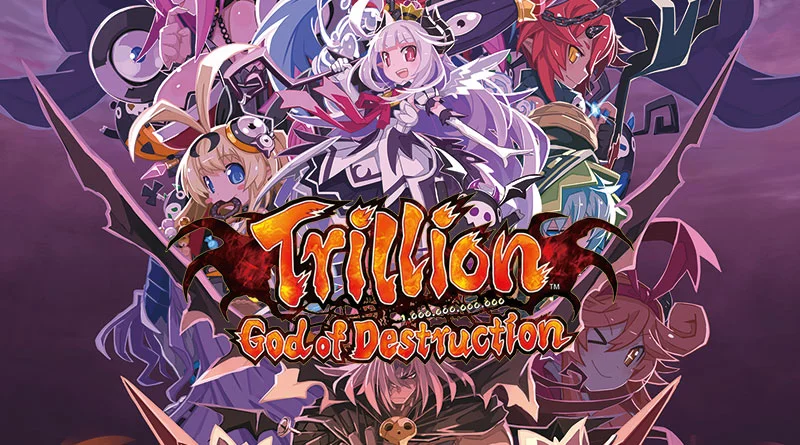
There can be such a thing as too much of a good thing with games. Trillion: God of Destruction is a good example of that.

The game is packed with systems, subsystems, and various synergies, all of which Compile Heart does fairly well when they can. It's also packed with grinding, obtuse onscreen tutorials, and wonky controls. It's like someone took all the best parts of Compile Heart games and mashed them all together, and then also somehow the worst parts got in there, too. It's a phenomenal mess, and unpacking just how much of one will probably take the rest of this review. 
There can be too much of a good thing with some games. Trillion: God of Destruction is a good example of that.

The game is packed with systems, subsystems, and various synergies, all of which Compile Heart does fairly well when they can. It's also packed with grinding, obtuse onscreen tutorials, and wonky controls. It's like someone took all the best parts of Compile Heart games and mashed them together, but then also somehow the worst parts got in there, too. It's a phenomenal mess, and unpacking just how much of one will probably take the rest of this review. 

Trillion: God of Destruction casts you as a god who must manage seven goddesses, each based on one of the seven deadly sins. To keep your corner of Hell from being wrecked by the titular god of destruction with a trillion hit points, you must raise your chosen goddess, fight the eldritch abomination on your doorstep, and send him back to the void. But a trillion hit points and numerous defenses are going to take a lot of time, effort, and training to get there, and you will have to manage interpersonal relationships and discover various secrets to gain the true ending and unlock everything. 

In anyone else's hands, this would be a really cool concept. In Compile Heart's hands, it's a fairly cool concept on paper. The world needs another intricate combination dating sim/raising sim/real-time JRPG. But, in practice, the issue is that Compile Heart's usual impulses work against them. The tutorials are maddeningly vague as to how you control your character, explaining the targeting system in a way that greatly benefits your enemies. In a game this intricate, it helps to know what you're doing, but the on-screen tutorials and in-game manual just obfuscate this. Especially when those tutorials are just re-stating the options menu in different writing. 

Adding to the frustration, the controls are often obtuse and difficult to figure out, making a fight that should already be difficult, border on impossible. Sometimes, obtuse controls can be a godsend, but even Dark Souls, the most unfair and unforgiving game not made by Ice Pick Lodge, gave you an intuitive tutorial. Even as a proponent of "play to find out," it helps if one can manage to play the game, rather than spending one's time confused, frustrated, and wondering why one is playing the game at all. I lost a fight because I couldn't hit the enemy in front of me. Right in front of me. This shouldn't be happening in 2017. It shouldn't even happen in 2016, when the game was released.

But what burns me up about it is, the game is actually fairly innovative. It's about maintaining relationships and drilling through intricate systems, and has a lot of depth. The characters are interesting, your fighters need to be trained for particular strengths and weaknesses, and sometimes losses mean unlocking interesting new story paths. This should be a classic, but it's not, and that has to do more with execution than anything else.

In the end, that's what it comes down to. A game should be more or less playable, regardless of what current indie thinking would have us believe. Trillion, while showing a great deal of promise, does not feel like a game that should have made it this far. It feels unpolished, obtuse, and ultimately kinda boring. Combined with some off pacing issues, the result is a game that isn't really worth recommending, no matter how good it seems on paper.

2/5


Read More
Sam's Reviews Sam Reader Sam's Reviews Sam Reader

MegaTagmension Blanc + Neptune vs. Zombies Review

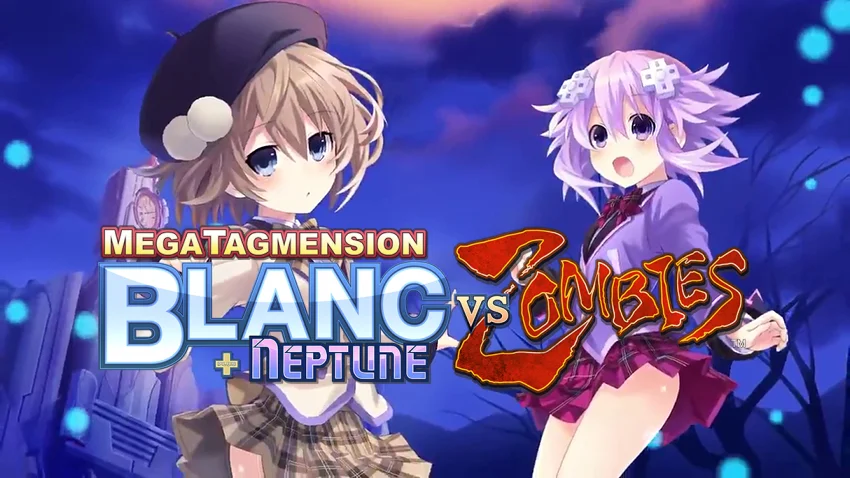
MegaTagmension: Blanc + Neptune vs. Zombies is another entry in Compile Heart's massive moneymaking monstrosity, the Neptune universe. As with previous versions, the characters are all anthropomorphized versions of consoles, game companies, game journalism magazines, and other game-related stuff. Depending on the game, they go to school, conquer the world, have adventures in old, broken game consoles, and a ton of other wacky adventures. Seriously, the franchise has covered almost everything now. I'm just waiting for a Mario Party game to seal the deal. 
Well, at least I have to give them credit for trying something new. 

MegaTagmension: Blanc + Neptune vs. Zombies is another entry in Compile Heart's massive moneymaking monstrosity, the Neptune universe. As with previous versions, the characters are all anthropomorphized versions of consoles, game companies, game journalism magazines, and other game-related stuff. Depending on the game, they go to school, conquer the world, have adventures in old, broken game consoles, and a ton of other wacky adventures. Seriously, the franchise has covered almost everything now. I'm just waiting for a Mario Party game to seal the deal. 

This time around, the Gamindustri gang is at a failing academy purportedly inhabited by both human and Gamindustri inhabitants known as Gamicademi. To drum up interest in the school, Blanc and Neptune decide they're going to film a zombie movie starring them and their friends. Coincidentally, there's an actual zombie outbreak just as they start filming, causing them to band together both to film the movie, and save the school from the zombie invasion. 

Anyone who's familiar with Dynasty Warriors or other spectacle brawler games is going to feel instantly at home mowing down hordes of zombies. It's hard not to. It's also good to know that no matter how many times you plow into a massive cluster of enemies, sword at the ready, knocking them hither and yon, it's still instantly satisfying. MegaTagmension also gives the player a huge cast to knock people around, running the gamut from fast sword strikers to blunt technicians to a brawler who hits people with a giant prawn. That's all very well and good overall, and I love a good spectacle game. There's nothing like it in the world. 

Now if only they'd just stayed with that. The game is a mess of half-visible features, including having game modes only accessible from the main menu (instead of, you know, actually inside the game,) calling itself MegaTagmension and yet somehow actually not having tag-team capabilities, and a tips screen where all the tips helpfully refer to things like being able to talk on the shop screen, a thing that doesn't even seem to be in the game. On top of all of this, the lock-on feature, something that really should be a prominent part of a game that throws a billion enemies at you at once, is intermittent at best. Most of the time, I activated it by accident in an attempt to do a super-move. When the enemy immediately died upon contact, I then felt kind of stupid. 

And it's a shame, because this is actually one of the few Neptunia games I could see myself revisiting again and again. When the controls work, they're smooth. The game balance is decent, even if it's nigh-impossible sometimes to hit a boss the proper way. Some of the between-scenes dialogue is great, and the various characters are unique enough to keep me coming back for more. But the flaws overshadow the fun of the game. Eventually, playing through just becomes and endless slog of zombies that won't quite die, powers that won't quite activate, a lack of hit recognition, a random drop system that feeds grinding, and just some odd choices mechanically. 

So, in the end, it's not a bad game. I'm still not as much a fan of the franchise as I was, and it's not something I'll play by appointment, but if there's a sale, pick it up. It's fun, and the range of characters, customization, and replayability makes this at least worth a ride part of the way. But if you're looking for a spectacle battler or mass-combat slash-em-up, I think there's actually Dynasty Warriors on PC now. 

3/5


Read More
Sam's Reviews Sam Reader Sam's Reviews Sam Reader

Megadimension Neptunia VII Review: Maybe Someone Should Push The "Off" Switch Already

Megadimension Neptunia VII (pronounced V-2) is one of the better entries in the series. IF seems to have fine-tuned their formula to an exact science, the graphics are top-notch, and the characters have enough style and humor added to them that it makes playing the game less of a slog than it might have been normally. 

At this point, nothing I say will probably sway you on games from Compile Heart and Idea Factory. Seriously, they're pretty much the same roleplaying games at this point. Anyone who's played one of their games (with the exception perhaps of maybe Agarest) knows what they're in for. If you've enjoyed them before, great. If you're new to the world, then perhaps pick up Fairy Fencer F, still a high water mark for the company and a good introduction to their odd hybrid of visual novel and roleplaying game. 

But that said, as far as Neptunia games go, and considering Hyperdevotion Noire was a sack of doorknobs to the sternum as far as enjoyment went, Megadimension Neptunia VII (pronounced V-2) is one of the better entries in the series. IF seems to have fine-tuned their formula to an exact science, the graphics are top-notch, and the characters have enough style and humor added to them that it makes playing the game less of a slog than it might have been normally. 

Megadimension Neptunia finds its hero, Neptune, Goddess of the Purple Heart, educating and messing about with her younger "sister" Nepgear, who will eventually take control of her region of Gamindustri. The two of them get a strange message from a broken console, drawing them into a post-apocalyptic future where the world has been torn apart by "the giants," which are clearly massive, destructive versions of the Goddesses from regular Neptunia continuity. Fighting against the goddesses is Uzume Tennoboshi, a mysterious woman who has the power to transform into the goddess Orange Heart. Together, the three set out to heal the broken world.

Neptunia's gameplay sets it up as kind of a dungeon crawler. You move from place to place on an overworld map, entering dungeons to clear them of enemies and gain levels, money, items, and equipment. In the dungeon levels, you traverse through platforming-style levels and hope to catch your enemies unawares to gain a better position in battles. Battles are carried out in a turn-based style with combo attack system. As you learn better attacks, you can swap the weaker attacks out for the stronger ones and create better synergies. You can also break down enemies into smaller parts, fight massive boss battles, and use combo attacks to lay waste to your enemies and save the broken world. 

But this JRPG, in spite of all its trappings, falls into the same trap as a lot of JRPGs: Grind. It is important to grind like crazy to get up to the point where you can progress, it's important for you to constantly fling yourself at enemies to gain new powers and go up a bunch of levels, and it's important for you to check your XP and unlock all your abilities along the way. While this is true to life, that one must push themselves through a series of repetitive and boring tasks to be able to survive in the modern environment, in a game that is not similarly bound by the laws of society, it's tedious; and in this case, kind of like padding. 

Repetition seems to be the name of the game. While I don't mind hearing the character's voices, hearing Neptune constantly shout "LIKE A KANGAROO!" every time she jumps is annoying. Having to trudge across the map to Mount Doom and back every time the story requires a little more time for a cutscene is annoying. Having to battle things until finally I get to the point where I can one-hit kill entire maps of creatures to fight a boss that's only slightly more of a challenge? Also annoying. Just in general, the amount of repetition and the number of things I had to grind were annoying. 

Which is a shame. The game isn't bad. It just gets annoying after a while, and seems to have a fairly low replay value. Nep and friends have great senses of humor, and the voice acting is fantastic, the graphics are above par, and the controls aren't too confusing, though use of a controller is recommended. There's some depth to this, and I do like the depth that is there, between stat raises, mechanical rewards for achievement unlocking, and the combo system. It's all great. But the grind and the lack of much new from IF and CH means that, well...

There's just not a lot of meat here.

Final score: 3/5. It's average, but it could be more. And grind...well, that's a different article.

The reviewer received a copy of this game in exchange for a review.

Read More