

The Assembly Review
Can a VR experience of a scientist who has gone rogue and a woman accused of killing her own mother keep you engaged enough to find out what's going to happen next? Find out in this review of The Assembly!
Whether or not you are a believer in the staying power of virtual reality, it is here now and we must embrace it. The early games that we're going to experience may not always be the most mind blowing experiences, but what we are seeing is paving the way to the future. The Assembly by nDreams is a game that introduces a deep narrative that follows two characters through the end of one journey and the beginning of another.
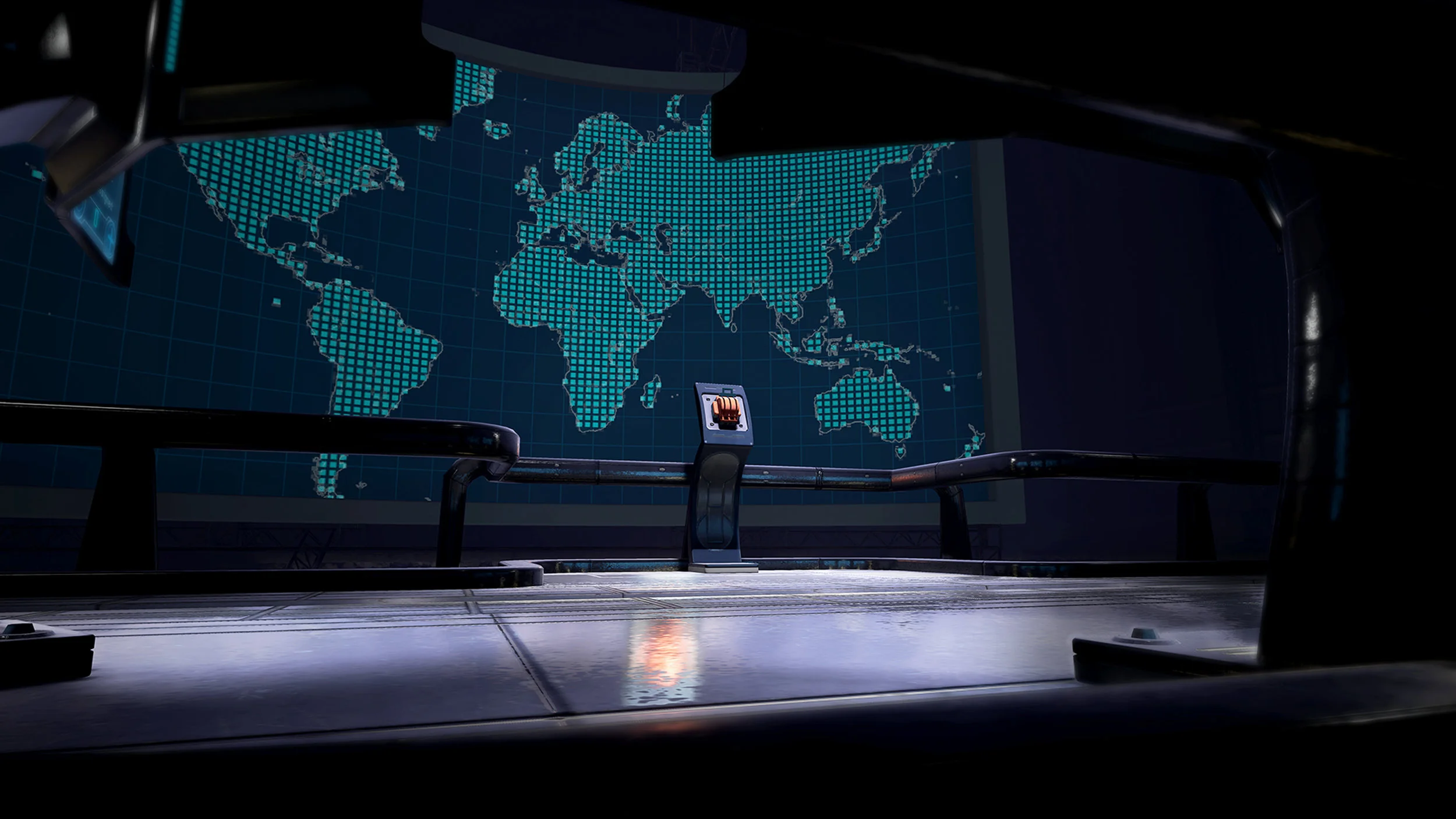
When we are first introduced to the characters we find out that they are both scientists. Caleb Pearson and Madeline Stone are both at a critical time in their lives when they must make a serious decision that will not only affect them, but possibly change the world. Caleb is working on trying to escape The Assembly, while Madeline is attempting to become their newest scientist.
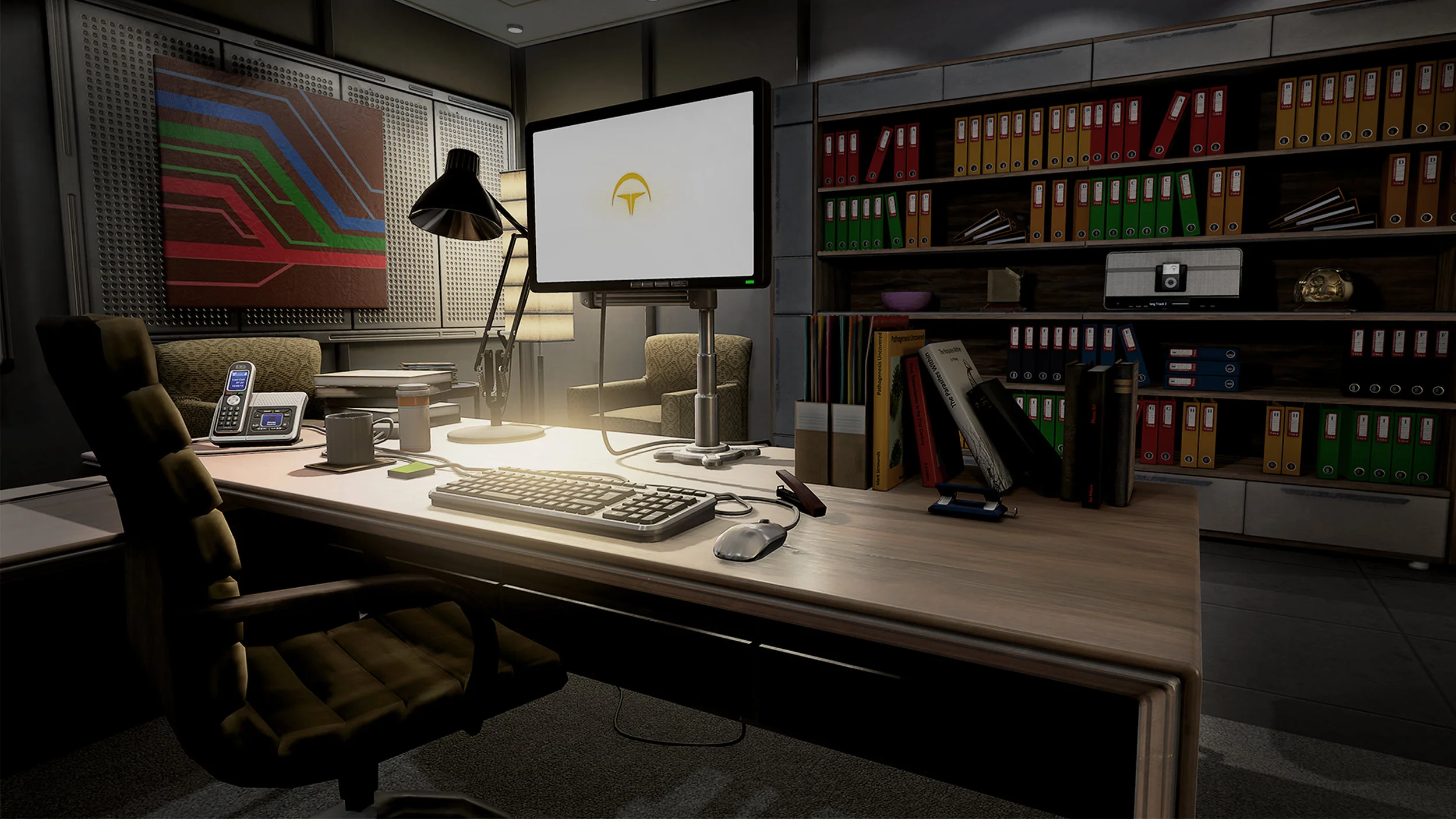
Both Caleb and Madeline have very different styles of gameplay. As Caleb, you are attempting to smuggle out classified material. This takes a lot of thinking and discovering all while making sure that no one finds out. Luckily, there are no real stealth elements to the game and it's pretty much narrative driven. This keeps the player going forward in a story that you really want to find out more about. Madeline's story is a little darker and is more like a puzzle game. You must pass trials and make moral decisions that will greatly impact your character's future.
The Assembly uses the Dualshock 4 and doesn't have an option for the PlayStation Move. I was a little disappointed at first because you really want to try out all of the cool new options of the PlayStation VR, but after awhile I didn't think that the Move would add anything beneficial to the experience. One awesome feature of The Assembly is that you can change your movement style. You can walk fast, slow or snap to locations. I originally put the game on walking fast (which is actually called normal) and found myself getting motion sickness. After playing with the control options for awhile, I found the perfect fit for me. I can't really knock the game for motion sickness because not everyone is going be as sensitive as me, however, I do recommend that you play with the options to find the optimal settings to prevent this from happening to you.

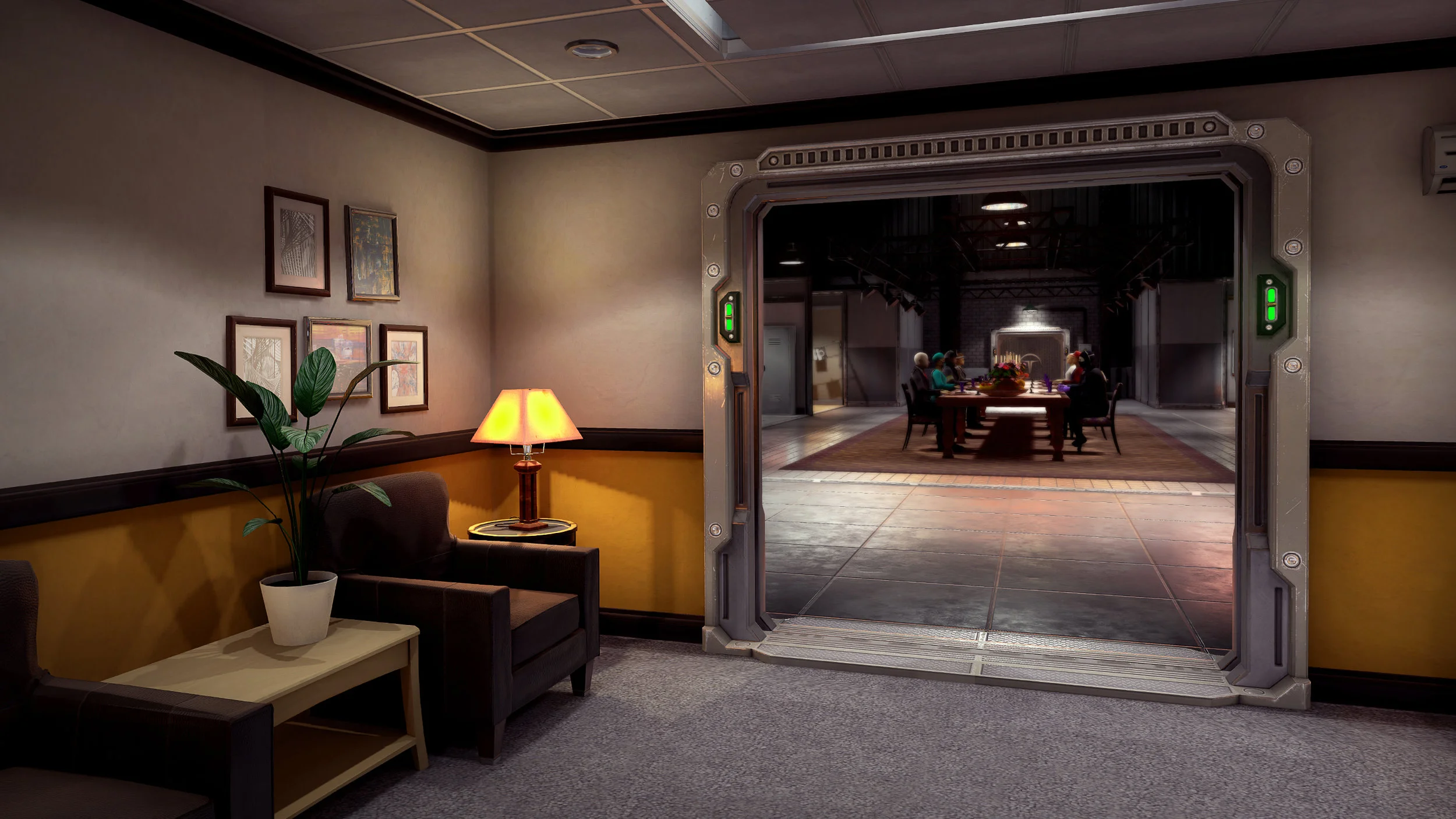
As far as exploring goes, The Assembly has a fairly large world. You make your way through plenty of different areas in this massive laboratory that is partially underground. This prevents the player from getting bored of the same old locations and even though the labs may look the somewhat the same, there are plenty of layouts and different rooms to go into. The variety in the lab and the bouncing back and forth between characters really helps drive the player forward.
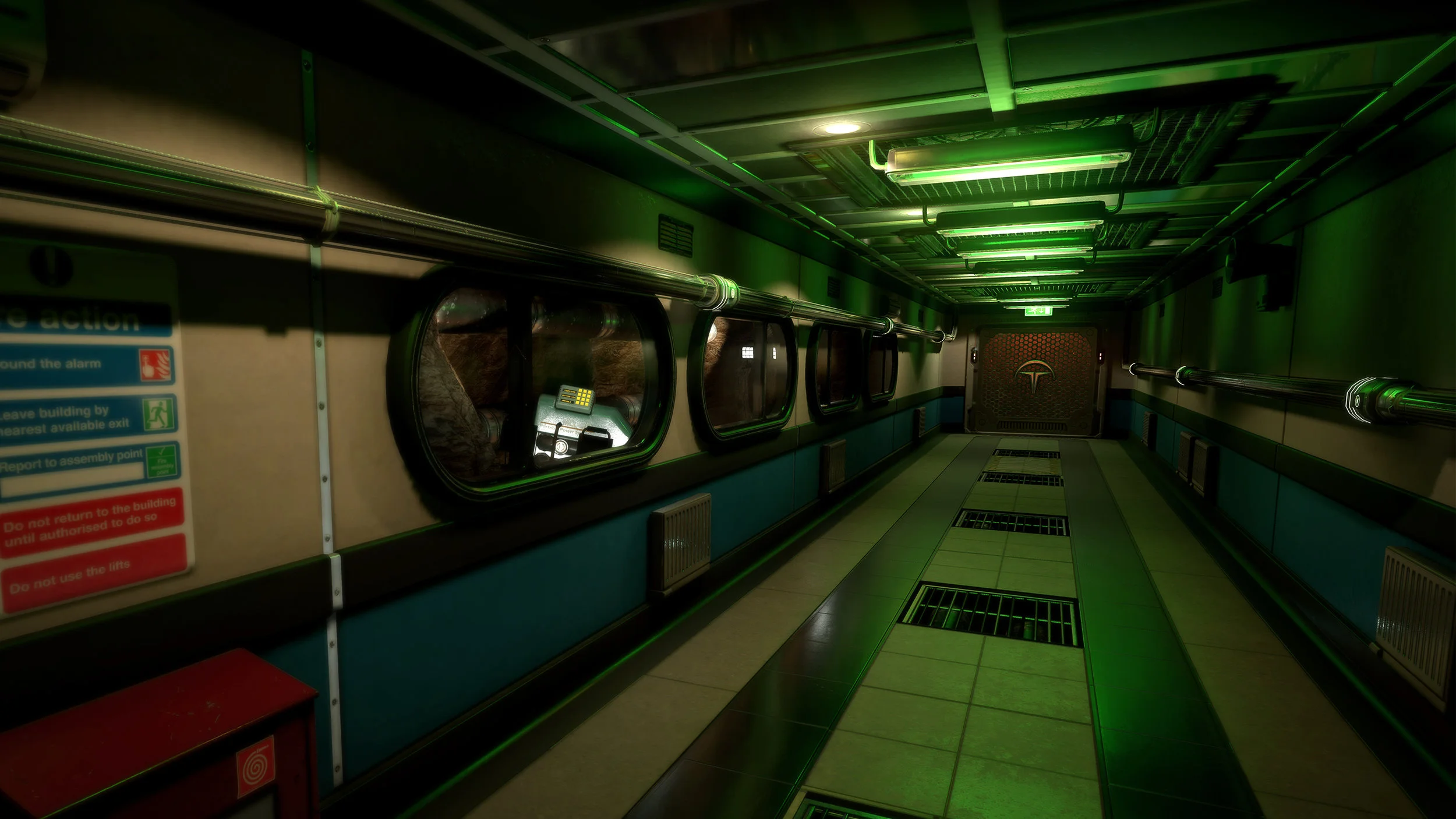
There are a few minor annoyances with The Assembly that could have definitely been improved upon. I've played a few VR games and I have the PlayStation Gold Wireless Headphones which feature the ability to hear 3D audio. The audio in The Assembly doesn't utilize the spatial sound which would create a much more immersive experience. Another issue I had is that there isn't a lot to interact with in the world other than what's related to the story or things like drawers and cabinets that you can open that may or may not have something important in them. There are a decent amount of voicemails that you can listen to on phones, and computers you can log into to read people's emails, but it would benefit the world if the player was able to just pick up an object and toss it. This doesn't necessarily affect the gameplay, but it does help the immersive experience.
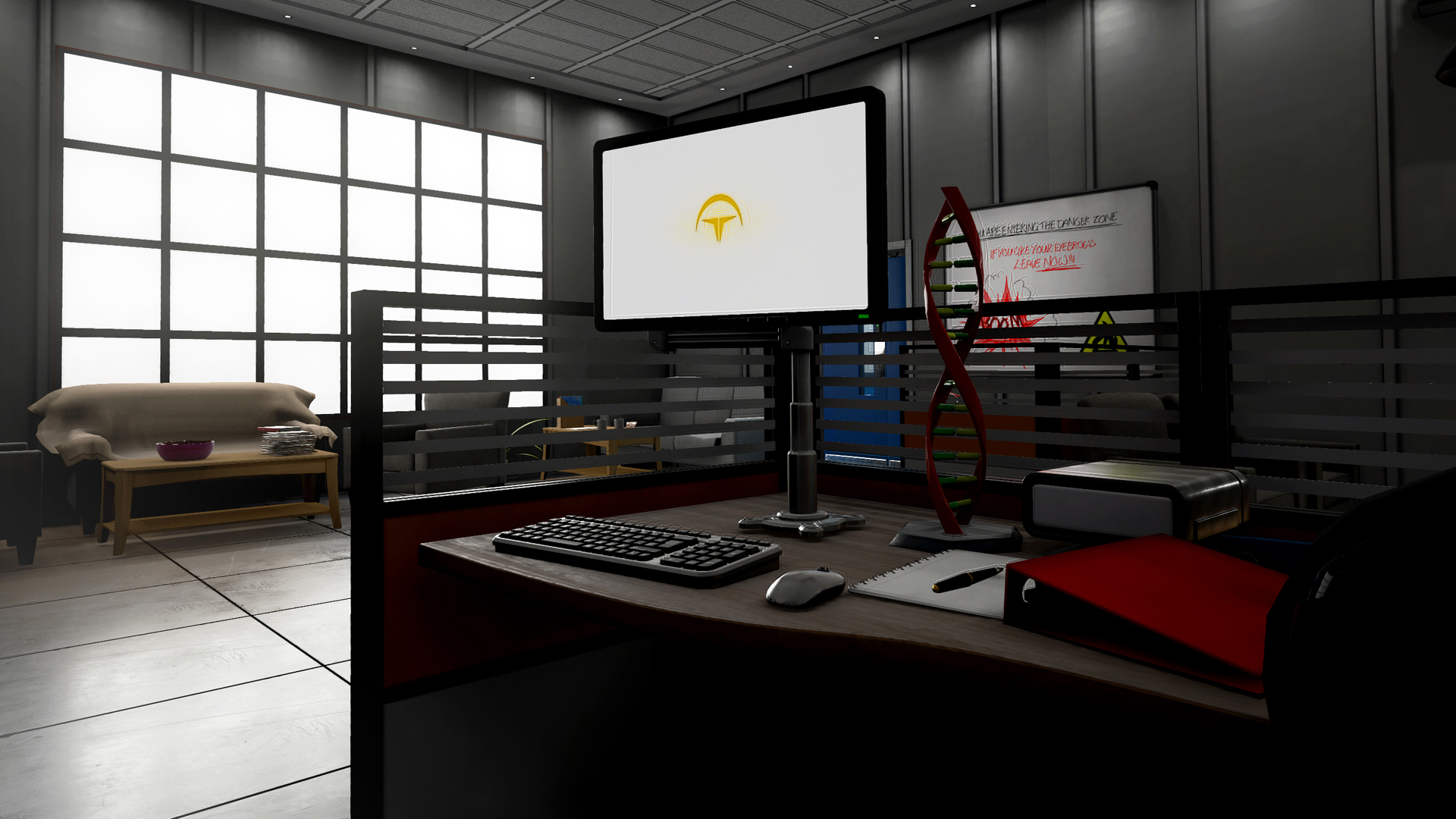
I finished the 12 chapters of The Assembly in just over 4 hours. I, unfortunately, had to stop twice because of motion sickness, but if that didn't happen I could have easily finished the game in a single sitting and been fine with it. Right now with the limited number of VR games out for the PlayStation, I would say that the $29.99 price tag is completely fair and that it is an enjoyable experience. If you like narrative driven games then I could comfortably say that The Assembly is one of the better choices for PS VR right now.
4 out of 5 stars
Thank you to nDreams for providing the code.

Loading Human: Chapter 1 Review
Maximum Games' is placing a big bet on their brand new multi-part series Loading Human: Chapter 1. Find out if it's worth your time in this review!

In Loading Human you play as Prometheus, an aspiring scientist who has been summoned by your dying father to retrieve the Quintessence, which reverses the aging process, ultimately saving your father. No pressure, right?

The gameplay of Loading Human is very similar to Heavy Rain, except in VR. You'll find yourself interacting with plenty of items, some useful and some not. You can pick up pretty much anything you could imagine a normal person can pick up. I found myself picking up glasses, plates, bottles of wine, dropping them just to see them break. None of this is probably mind blowing, but what are usually mundane tasks are so immersive that the player finds themselves completely engaged in what's happening. This could be the very nature of VR, but to succeed at this, the world has to be developed and that's exactly what Loading Human achieves.

Loading Human was the first full PlayStation VR game that I've played, so when I first started I felt that the pacing was a little slow. Your character only walks and there is no option to run. I feel that most people who are making their first full dive into VR with Loading Human will feel this way, but after playing a few other games I feel that the pacing is actually perfect. The reason being that motion sickness is very real and in fact, Loading Human handles movement better than the other games that I've played so far. Some other games, such as Batman Arkham VR make you teleport around instead of walking.
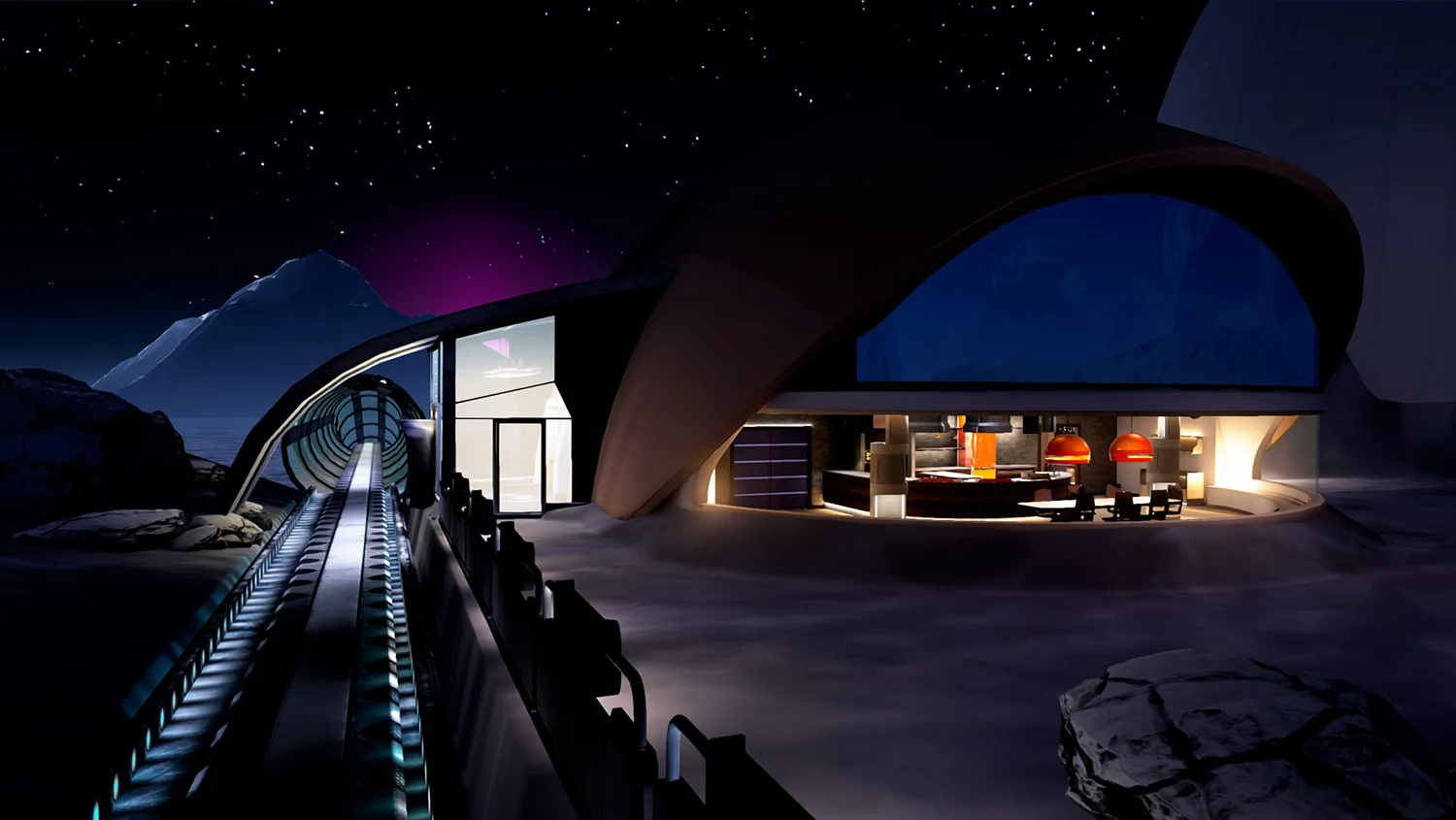
There were a few hitches along the way with Loading Human. One issue that I found was with the hint system. There aren't any breadcrumbs or item tags that show you your next objective, which is totally fine, but the hint system that is in the game can be very vague or just flat out wrong. There was one time where I had to restart the game a few times to understand what I was missing. This can, of course, be very frustrating when you're trying to progress through a game which relies on its narrative to keep the user engaged. The other issue is that the base that you are in is fairly small and you'll find yourself exploring the same areas quite a bit. There are a few space simulations that are fun, but they are only "exercises" that you don't actually use. Then the final major problem without spoilers is that once you finally get to the point to where feel like the game is going to completely open up, it ends. If the developers would have just given the user 30 minutes to an hour of gameplay that used the space simulations again it would have broken up some of the mundane tasks.
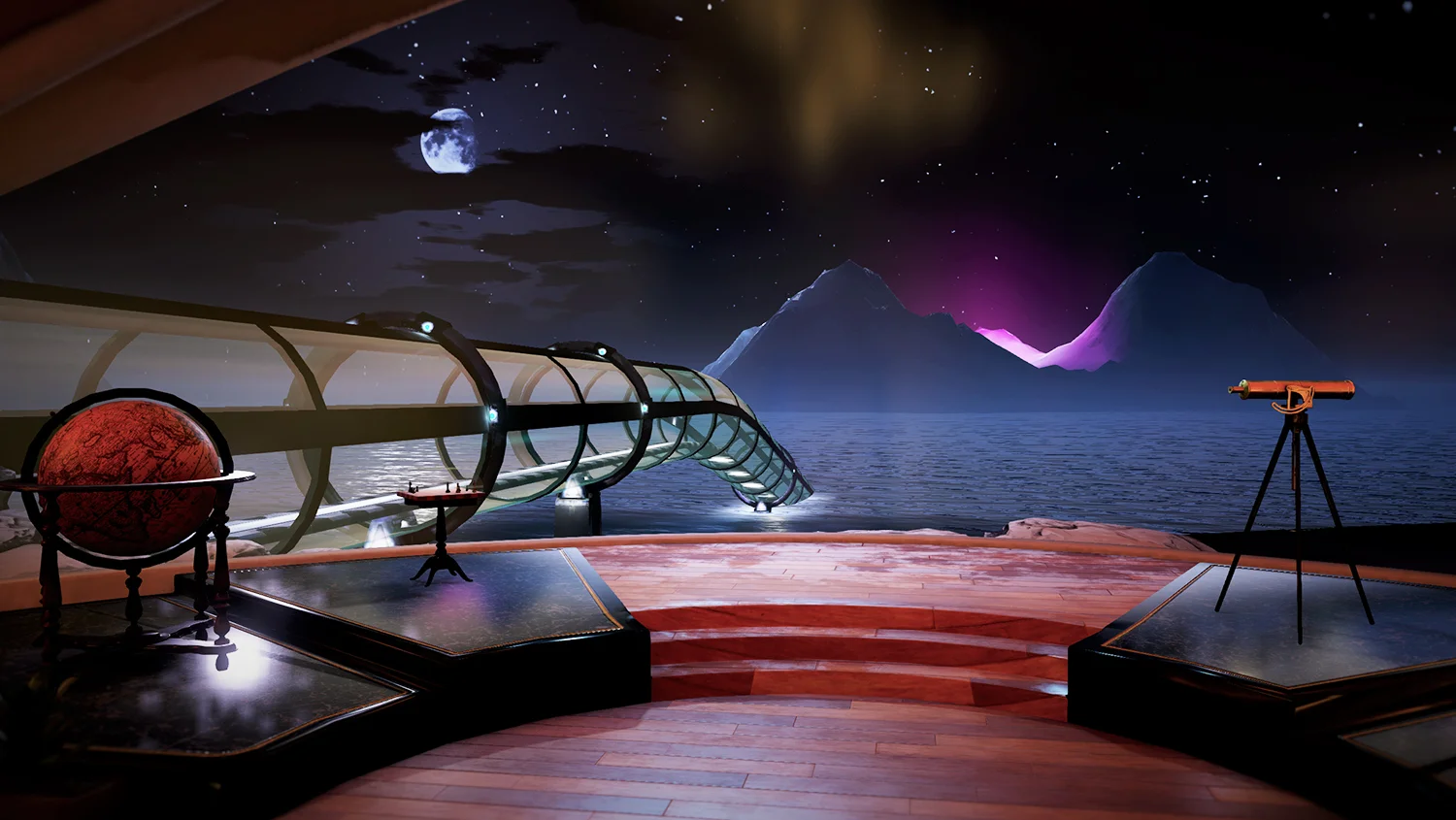
Even with all the issues that I felt, I have to say that I am definitely looking forward to Loading Human: Chapter 2. From what I've heard there are supposed to be four chapters total which is a hefty investment if they plan on making every game $40. What would be nice is that the first installment is $40 and the rest that follow can be downloaded for $20 each.

If you like narrative driven games and are looking for something to play on your PlayStation VR, then I feel comfortable recommending Loading Human: Chapter 1, but if you are looking for something that has a lot more action then you may want to try something else. With that being said, I definitely think that as the story evolves that Loading Human should be a series you keep on your radar.
3.5 stars out of 5.
Thank you to Maximum Games for providing the code.

Slain: Back From Hell! Review
The successfully Kickstarted game Slain makes its console debut on the PlayStation 4. Find out if this 80s / 90s inspired gothic hack and slash is worth your time in this review.
Slain follows the adventure of a Bathoryn, a doomed hero, who wishes nothing more than to sleep. Unfortunately for Bathoryn, duty calls and he must wake up from what seemed to be like a very long nap to cleanse six different lands from demons, monsters, and the living dead.
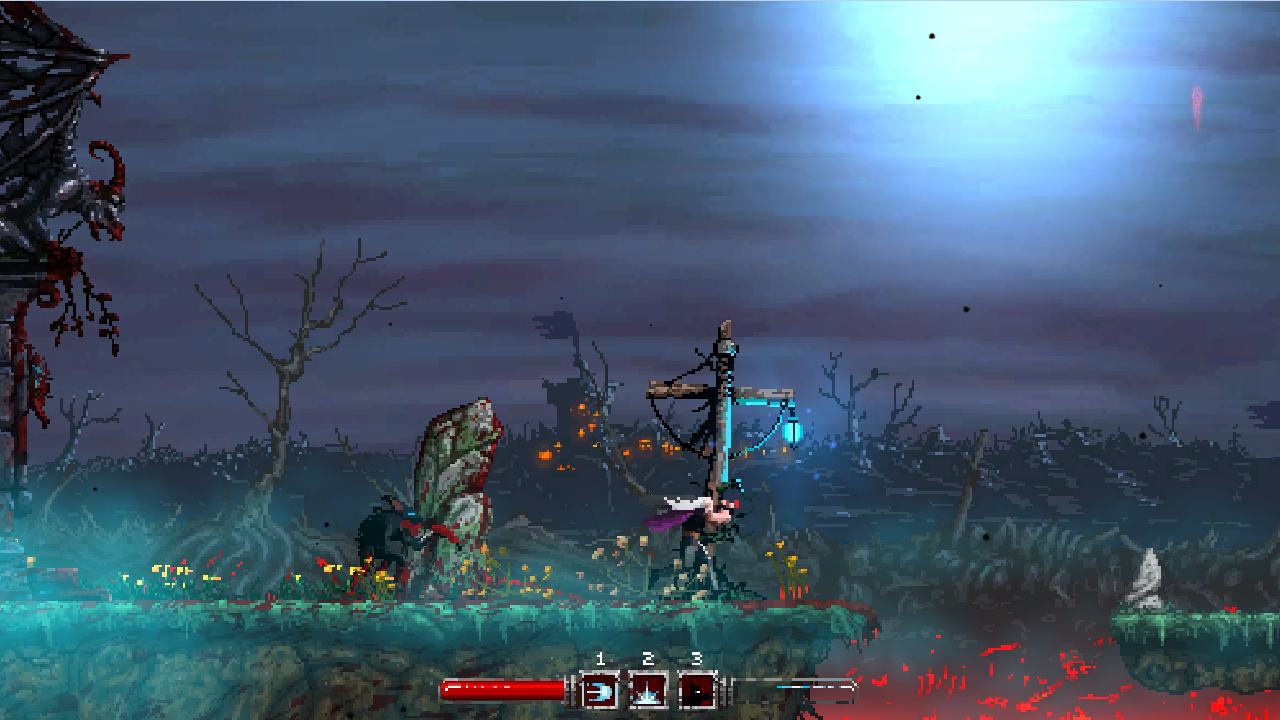
Within the first few minutes of Slain, I died, and then I died again, and then I died again. If Slain’s objective was to die over and over, I would be the grand master of Slain. Luckily, the checkpoints are so frequent that you never get stuck anywhere for too long. There were plenty of times where I had killed all of the enemies, only to be killed by a trap, causing me to completely redo the part that I had just finished. I really only have myself to blame for constantly underestimating the world of Slain. There is never a moment that just lets you breathe. Whether it’s a group of enemies or a boss fight, you’re going to experience your fair share of deaths.

Most of my early deaths could have been prevented if I would have taken a step back from trying to murder everything and embrace the complexities of the combat. One of the main features of Slain is the ability to reflect almost every projectile - and there are a ton of enemies who shoot different types of projectiles. There is also a parry system that allows you to time your blocks and then land critical hits. Parrying enemies is the best way to get through difficult encounters.

Overall, there is a decent variety of enemies. There are a few reskins, but their difficulty has been increased. I never got to the point I felt that I saw the same enemy too much. Because Slain has such a wide variety of enemies I always felt that I had to stay on top of my combat game. The game even introduces new enemies right before the final the boss fight.

The boss fights in Slain are all intense. They use every aspect of the game’s combat mechanics which makes it critical that you never let up. One constant throughout the game is that once the boss starts to lose health they start to speed up their attacks making you have to work even harder. There were plenty of times that I felt that I was about to execute the boss only to get them down to a quarter of their health and die.

Slain's biggest issue is that there is a lack of any sort of upgrades. The health and mana you start with are the same that you end with. Eventually, you're able to switch your regular weapon to fire or ice, but it doesn't feel like much of an upgrade. I find myself torn if this is a major issue or if it's just something that I'm not used to. Traditionally, games will have an upgrade system, so when you run into one that doesn't have one it's kind of odd. In the end, this was okay for me, but other gamers may find this to be an issue.

I had a great time playing through Slain: Back From Hell. It took me roughly about 7 hours to finish which is a great length. If you like difficult games, heavy metal, and tons of gore, then this game is right up your alley!
4.25 out of 5 stars
Thank you to Wolf Brew Games for providing the code.

Headlander Review
Is Double Fine's first Metroidvania style game worth your time? Find out in this review of Headlander!
When I first played Headlander at the 2015 PlayStation Experience I got the impression that it was a puzzle game, but within the first 30 minutes, I realized that I was wrong. Headlander has rich environments, a lot of useful upgrades, and a good amount of reasons to want to explore.
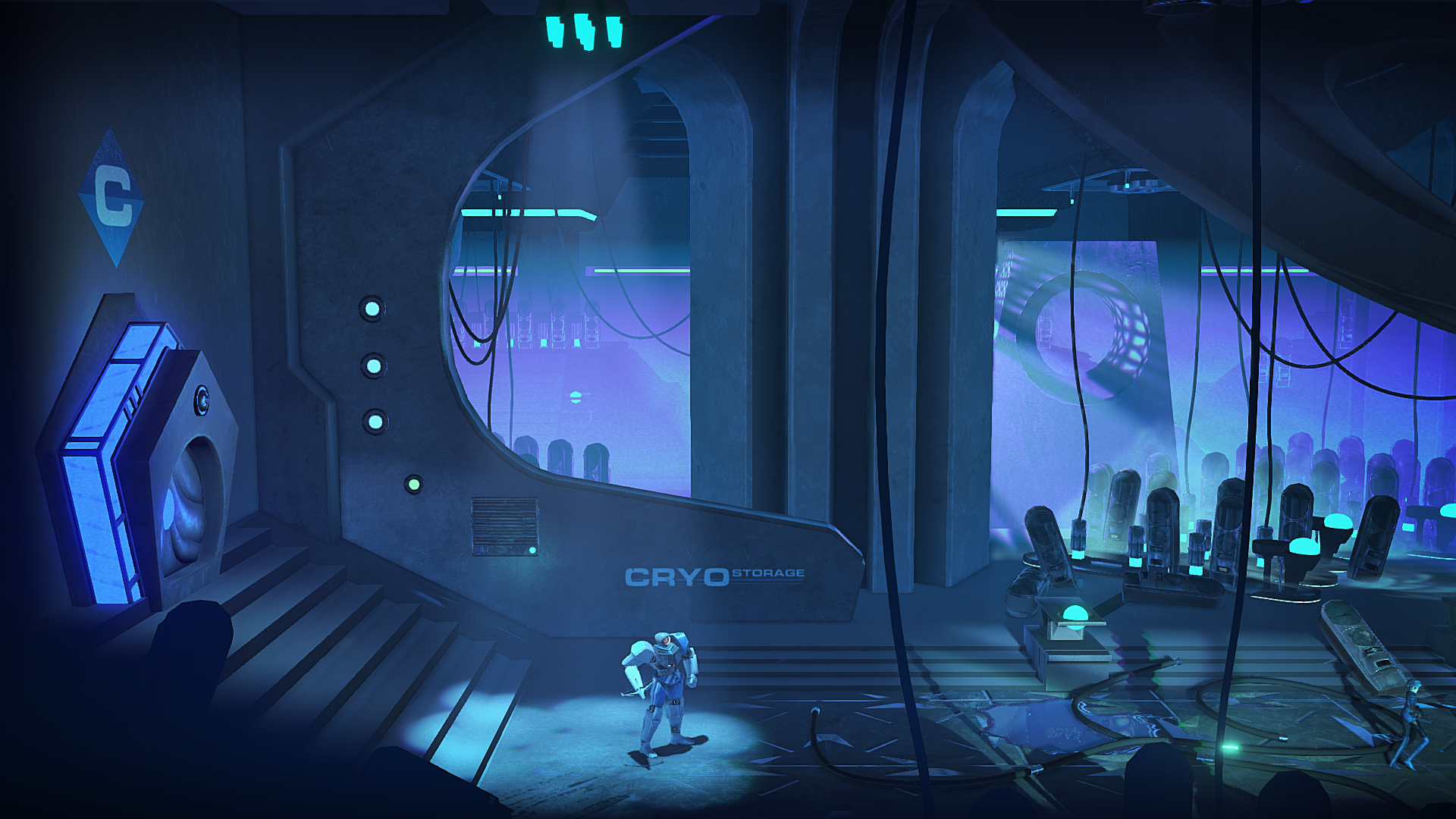
The first thing you’ll notice is the 1970s sci-fi aesthetic – and of course, the fact that you are just a floating head. Your primary ability is being able to tear the heads off bodies and then taking over the body. As the game progresses, you’ll encounter different colored enemies. These different colored bodies grant you access to different areas of the map. For the most part, the correct enemies that you need to progress are pretty close or will spawn within a few seconds allowing you to continue on your adventure without much effort. In fact, I found that even though Headlander touts itself as a Metroidvania style game, most of the time I was going forward and completing objectives without really having to backtrack. This sort of contradicts what I typically think of Metroidvania games, which is slightly unfortunate because I wouldn’t mind spending a little more time in the world of Headlander.
You can upgrade both your body and your head abilities by finding orbs, secret rooms, and completing side missions. By upgrading, you can increase your ability to suck enemy heads off, speed up your regeneration, increase your thrust and health and plenty more. Even if you just tried to blast through Headlander you would still find a decent amount of upgrades, which is great because some of the abilities that you earn are absolutely essential to making sure that you succeed on your adventure.
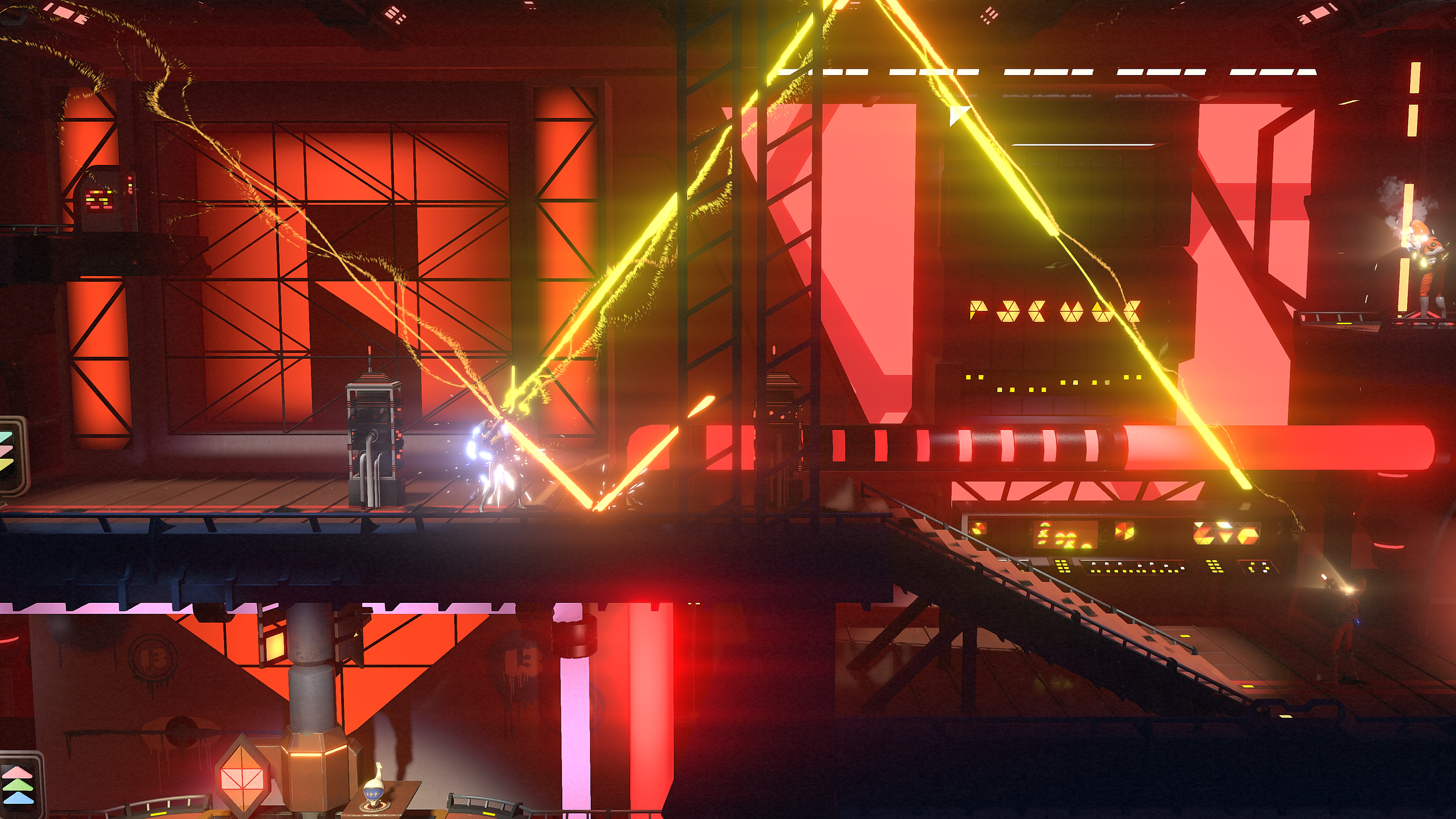
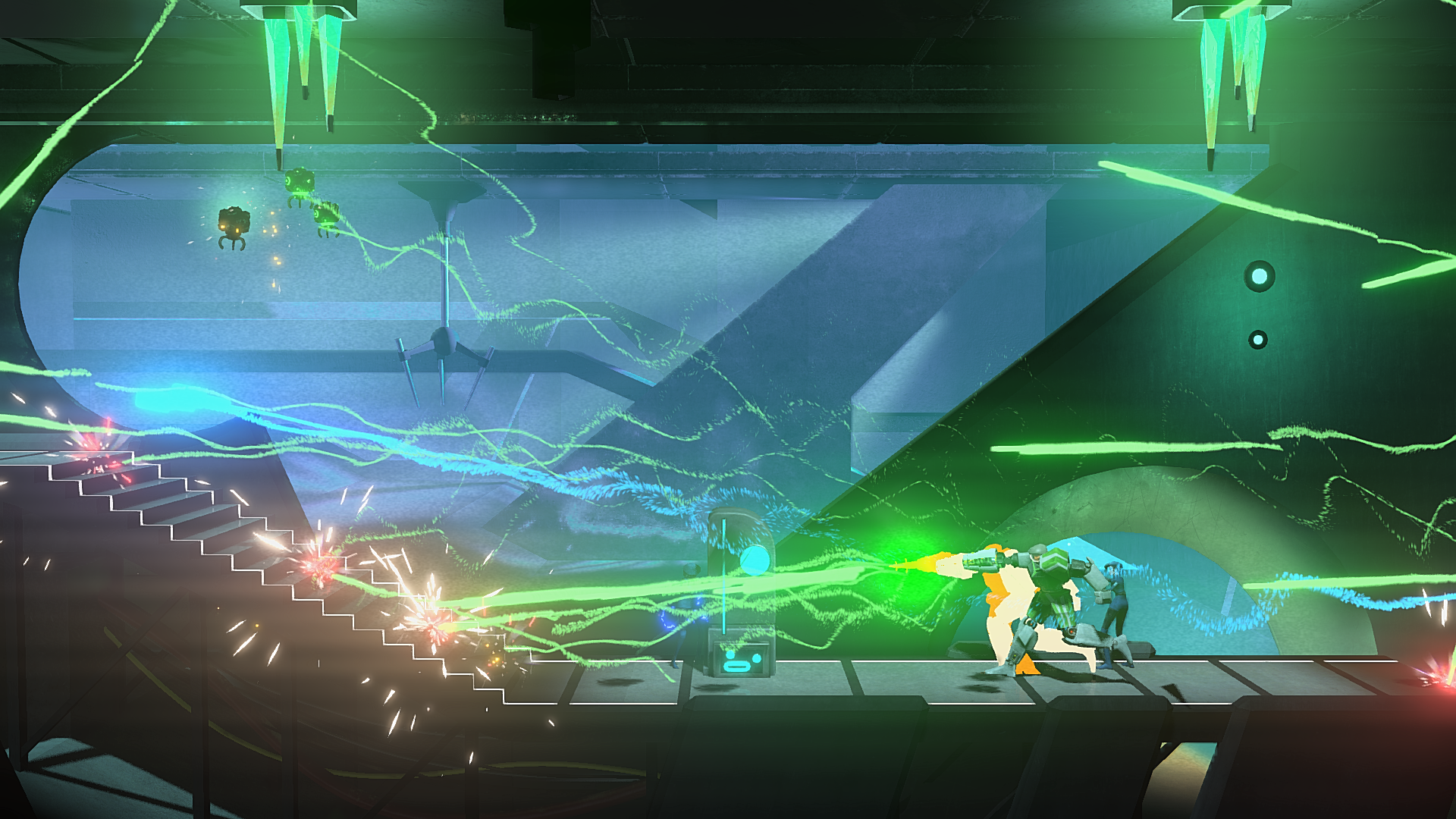
The combat in Headlander gets progressively more intense. The early bodies that you get have a pretty simple shooting mechanic that will slightly bounce off of the walls, but as you continue your laser shots will start to bounce a lot more. The bad news is that the enemies also get these upgrades. So what starts off as a cool little mechanic eventually makes you feel like you are playing a hell-shooter. Luckily, dying doesn’t punish you too much.
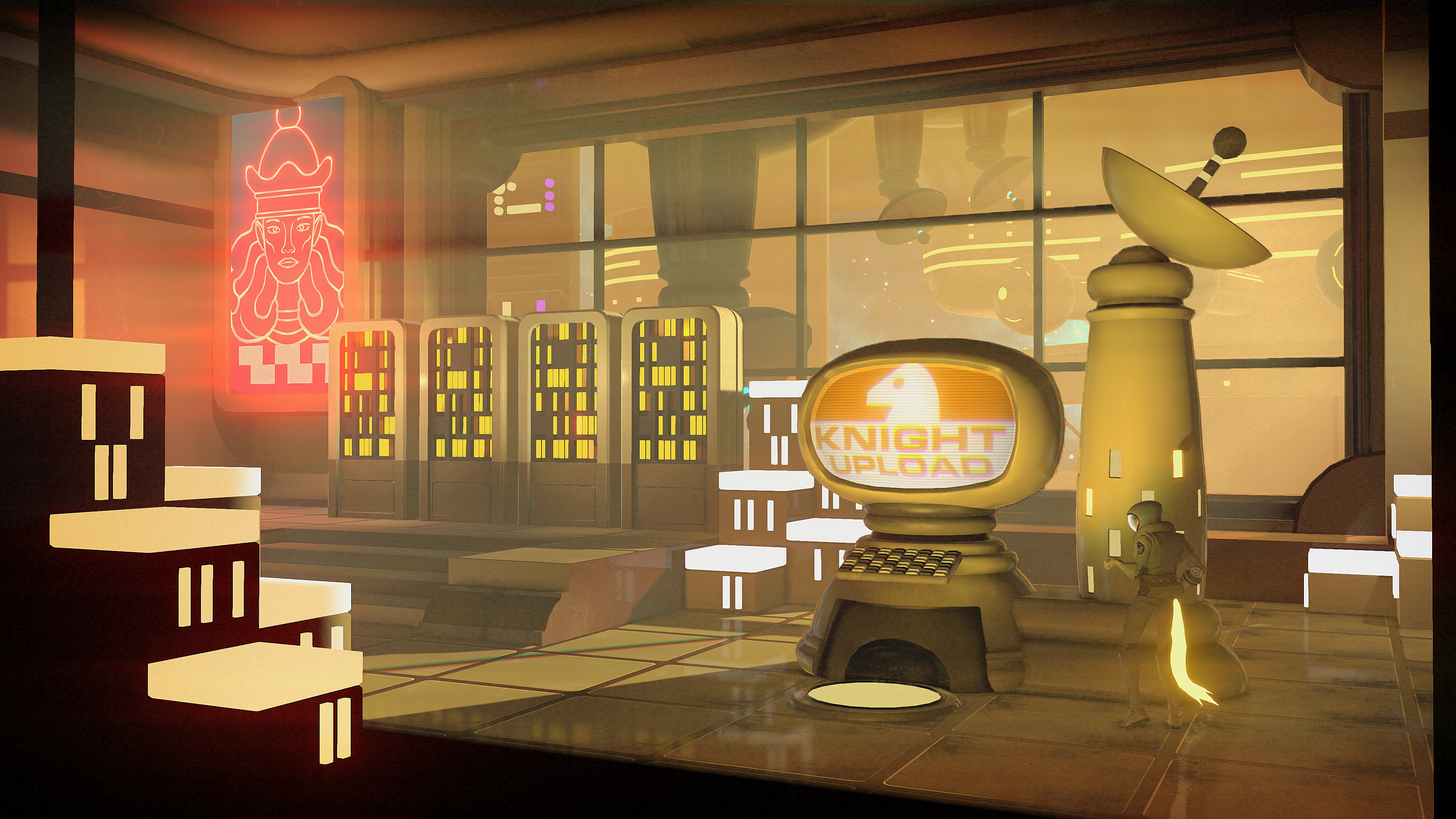
Headlander features a couple awesome bosses, but unfortunately, there were only two. They both require you to use both the head and body mechanics to destroy them, which I really enjoyed. The game could have easily just made you use your shooting abilities and completely ignored the power of your head. Although Headlander is not a very long game there should have definitely been at least one more boss – especially since the ones that are in the game are a lot of fun.
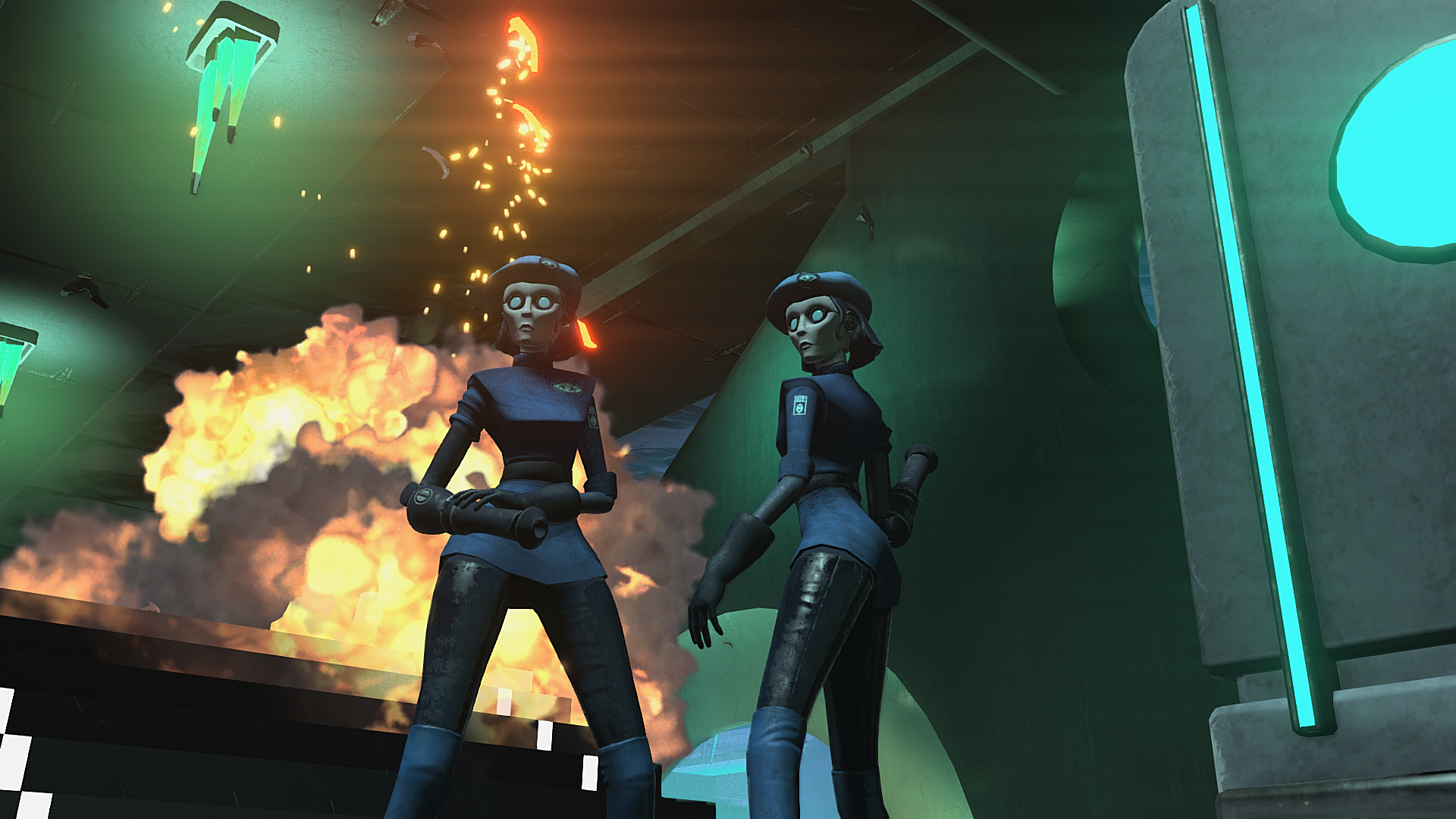
Now being a Double Fine game, Headlander features a quirky story and a ton of humor as you might expect. This specific game was created from Double Fine’s Art Director, Lee Petty, who was the project lead of the hilarious and brilliant, Stacking. I bring this up because if you played Stacking and enjoyed it, then Headlander is definitely a must play and if you haven’t played Stacking, I couldn’t recommend it enough.
The overall experience took me a little over five hours to complete. Because I was constantly making progress, I felt that I didn’t get to enjoy the world as much as I’d like. Also, Headlander could definitely benefit from adding one or two more boss fights.
4 out 5 stars
Thank you very much to Double Fine for providing the code.

Mark McMorris Infinite Air Preview
Have you been waiting for a realistic snowboarding experience? Check out this preview of Mark McMorris Infinite Air from Maximum Games!
Do you spend your days dreaming about cruising down a mountain on a brand new snowboard? Mark McMorris Infinite Air aims to deliver the most authentic snowboarding game to date and it absolutely succeeds.

The first thing you’ll notice when you get dropped into the massive mountain range is that you can go anywhere – and I mean anywhere. By simply summoning a helicopter you are able to search for the perfect place to start your next run. What happens if you can’t find a place to shred that sweet, sweet powder? You can use the incredibly in-depth world editor to remove objects, increase or decrease the elevation, and smooth out the ground. You can then set up rails, ramps, jibs, pipes, buildings, and more. Once your epic run is complete, you can publish it to share it with other members of the Infinite Air community.

Most snowboarding games are all about impossible tricks and getting millions of points. Sure that’s fun, but Infinite Air reinvents the snowboarding genre by delivering realistic physics. The entire game uses the thumbsticks and triggers to perform tricks, but that doesn’t mean that you’re going master Infinite Air in just a few minutes. Once you finally get a solid grasp on the controls, every trick feels like an accomplishment. These mechanics may seem familiar and I think it’s easy to say that Infinite Air is the Skate of snowboarding games.

One of the most impressive aspects of Infinite Air is the amount of tricks. Even though you only use the triggers and thumbsticks, there is a ton of variety. I found myself getting comfortable with a few tricks before moving on to something more difficult. After a while I had a nice collection of tricks memorized that I would use on runs. When it comes to Infinite Air, practice definitely makes perfect.

Infinite Air is the snowboarding game we’ve been waiting for. The possibilities for runs are literally endless. You can spend all day designing mountains, checking out player generated runs, or relaxing in a newly discovered slice of the snowy paradise. There’s no doubt that Infinite Air is the real deal.
Infinite Air will be out on October 25th for PC, Xbox One and PlayStation 4.
Thank you to Maximum Games for providing the code.

Criminal Girls 2: Party Favors Review
What's it like to go to Hell with 7 beautiful women who are trying to get a second chance at life? Find out in this review of Criminal Girls 2: Party Favors!
When you think of Hell you probably think of fires raging, demons ripping people to shreds, and an incredible amount of suffering, right? That’s not the case with Criminal Girls 2: Party Favors. In this journey, you play as a Program Instructor, who is tasked with helping seven beautiful girls get a second chance at life through “reformation.” This is, of course, met with many different challenges from an antagonizing pest that is constantly slowing down your progress by making you go through trials and tribulations in attempt to keep you in Hell forever.

From the beginning of the game you have access to five of the seven characters, but can only use four during battle. The battles start off pretty simplistic due to the lack of skills, but eventually get much more involved with combo attacks, skill attacks, group heals, and support skills. You earn these skills by “motivating” the girls using bondage style mini-games such as “Scrubby Scrub", "Spanking X" and "Pinch the Balls” which I will get to later.

Once you have a few skills under your belt and you start fighting stronger enemies, the game really begins. During fights each girl has an attack, heal, or support option. These options are mostly situational, so if you have a lot of magic power or MP, you’ll most likely be forced to attack using a skill. Also, if your characters are low on health, your healer or healers will get a healing prompt. The game definitely knows what situation you are in, which makes the battle system a lot of fun. There are a few ways that you can re-randomize the skills as well, just in case you don’t like the hand you were dealt. It’s always nice when a game attempts to change up the turn-based fighting, but it’s even better when the game nails a unique design.

As I mentioned before, you use mini-games unlock new skills. Each mini-game has four levels and after each completed level you get to choose one of two skills. These mini-games use the in-game currency, CM, so you can’t just play them whenever you want, but as long as you’re doing well you can get a new skill every 2-3 attempts. Now I’ve played a few games with fan service and I feel that there is no reason to make a big deal about them, but the one mini-game that I felt was a little odd was "Shocking Bondage." The other mini-games aren’t really meant to inflict pain, although I really have no idea what is actually happening in “Pinch the Balls", but this one does and I don’t know why. You may have heard about the western version’s censorship, but after watching a few videos and doing some research, I would say that the censorship is being blown way out of proportion. There are only a few things that changed and the most noticeable one is the sounds that the girls make while actively playing one of the mini-games. There is also supposed to be a reduction in restraints, but when you think “censorship” you imagine something that is much more explicit and that’s not really the case here. So if you’re in the mood to protest the game because we aren’t getting the “real” version or something along those lines, I’d have to say that the fight you’re putting up is a lot of effort for something that really doesn’t change your experience. With all of that being said, I do have an issue with how the mini-games and the story are somewhat disconnected.

Criminal Girls 2 is all about facing your demons and getting a second chance at life. The girls start off timid, nervous, and reluctant, but as the story progresses they become powerful and confident. So my issue lies in the fact that you have the development of strong girls only to shock, pinch, and scrub them. There is even one scene when one of the girls appears to have a tear on her cheek. I’m not even saying that the motivational games are a problem, but there is definitely a better way to work them into the story. Maybe next time the motivational tactics can unleash some sort of direct ability from them that makes a bit more sense. I’m not a game designer by any means, and I trust NIS, but there has to be a way to incorporate these activities in a more seamless way. Are you ready to get back to the gameplay? Me too!
As you traverse through Hell you find quite a lot of landscapes. There’s Bloody Hell, which features big stuffed animals (or real animals) with severed heads and blood everywhere, Sunken Memories which is dark and has school / home feel to it, Maze Hell which has butterflies and flowers everywhere and a few more. The changes in scenery make it a lot easier to traverse through, compared to a game which is just fire and demons over and over. I really enjoyed the different levels and always looked forward to see what the next one held.

There are also plenty of enemies in the game and the only time you really feel like you’re seeing the same enemy over and over is when you’re grinding. This is a nice touch, because there are a lot of games with fan service that rely on the sexuality of characters to propel them through the story. There are also many interactions between the characters that show fantastic character development. You really feel like you’re learning a lot about the girls and you begin rooting for them.

Overall Criminal Girls 2: Party Favors is a JRPG that with many upsides. I do wish that the mini-games were more connected to the story and who knows, maybe we will see that in Criminal Girls 3. If you’re looking for a new JRPG to play then Criminal Girls 2: Party Favors should definitely be on your radar. I mean, there’s no doubt that this is the sexiest journey through Hell you’ll ever take!
4 out of 5 stars
Thank you to NIS for providing the code!

MeiQ: Labyrinth of Death Review
The planet’s rotation has stopped and it’s your job to get the world spinning again! Find out if you’ll want to take the time to save humanity in this review of MeiQ: Labyrinth of Death!
Have you been itching to save the world? How would you like to do it with a massive robot who uses one of five elements? Well, you’ve come to the right place! The planet’s rotation has stopped and to get the world back to normal you’re going to have to take Estra, her faithful Guardian, and a few friend’s through a 25-30+ hour journey to resume order!

When you first dive into MeiQ: Labyrinth of Death you’ll feel that it’s a traditional turn-based JRPG that you may have played in the past, but a few twists develop this game into a much more strategic affair. One of the major mechanics is the use of elements. Using fire, wood, ice, earth, and you’ll be able to expose enemies weaknesses, but enemies can also be resistant to these elements, so you’ll need to adjust your strategy as you go. There are a few ways to change your strategy. As you progress in the game, you’ll unlock new Guardians, body parts, and gems that all have different elements or bonuses. Finding the right combination can get a bit tricky, but MeiQ doesn’t really penalize you for dying, so anything you do is low risk.

Once you figure out your elements and you’re ready to kick some butt, the fun begins. Eventually you’ll have a six party team; 3 Guardians and 3 heroes. You’ll primarily use your Guardians in battle, but the heroes have some awesome abilities to help you get through the fight. Each hero has a different set of skills such as group attacks and party buffs that increase attack, defense, etc, and heals. These abilities are limited, so you really have to think about when you want to use them, especially when you first start playing. As you level up, the limits will increase and you can use them more freely. You can replenish these abilities by visiting a spring, setting up a portable camp, or returning to the inn to rest. This isn’t a very complicated system and anyone who’s experienced in RPGs should pick it up fairly easily.

There are four main towers that you must conquer with a few additional ones that appear later in the game. You’ll find yourself trekking back and forth between them to complete main and side quests. Most of the side quests I completed just by playing the main story and grinding so you don’t have to pay too much attention to the requirements. I don’t feel like this is a bad thing, but it doesn’t really add much to the experience ether. In most dungeon crawlers when you walk along a path, the tile you step on is uncovered - MeiQ does some slightly different and a whole lot better. As you progress, you’ll see a few of the surrounding tiles lit up as well, which is nice because to uncover the entire map you don’t need to step on every single tile. The only issue with this is that at times you’ll think you’ve been somewhere, but you actually haven’t. I have to say that even though there were times I had to backtrack because I had missed something, I still prefer the way MeiQ uncovers their tiles than say Etrian Odyssey.

As you make your way through the four towers you’ll start to notice that the difficulty level, as well as experience can be all over the place - this is one major issue that I had with MeiQ. In one battle you may be able to kill a group of enemies that yield you less than 100 xp (which is significantly low) only to encounter another group of enemies that will give you thousands after defeat. The biggest discrepancy that I found was an area that had enemies that gave you 600 xp only to be followed by enemies that have 4xp. I’m not sure why there is such an imbalance between battles, but this made finding a good place to level extremely difficult.

Overall MeiQ: Labirynth of Death is a JRPG players RPG. For those who are experienced with turn-based battles, but I wouldn’t consider it an easily accessible game for new comers. One question that I know people have is if there is a new game and I’m happy to say that there is. The bottom line is if you’re looking for a solid JRPG for the PlayStation Vita then this is definitely worth the time and money, just be ready for some head-scratching balance issues.
Thank you so much to Idea Factory for providing the code.
3.75 out of 5 Stars

Hands On With Dropzone
Dropzone is a new Moba that will be dropping it's hat in the already crowed Moba ring. Will is be worth your time? Check out Shawn's hand's on preview.
The RTS genre can be a little intimidating for inexperienced gamers, but Dropzone by Sparkypants is definitely a game that anyone can pick up and play. The premise is simple - at the end of a 15 minute match have more points than your opponent and you win. This is, of course, easier said than done, but nonetheless after a few matches most people will get the hang of it.

The first step in Dropzone is drafting your squad. You can select three pilots from five different classes. You can even pick three of the same class if you'd like, but the only restriction is that you can't pick the same pilot twice. During my demo the Gunner, Tank, and Mechanic were unlocked. The Gunner is quick and offensive, the Tank is strong and can take a beating, and the Mechanic can heal your party. These classes don't stray too far from what gamers would expect in any game, which makes it easily accessible for everyone.

There are multiple ways to score in Dropzone. The first and most common way to score is by destroying hives of enemies which drop cores and upload those cores back at the center of the map. The other way to score is by completing map objectives, which are randomly selected before every match.

One of the more surprising elements of Dropzone is that killing your opponent does very little to benefit you and really the only time you would want to kill them is when they are destroying a hive or uploading a core. Your primary focus should be on scoring and leveling up, which you can both do by killing enemies. The XP you gain is shared among your team, but you can only level one pilot at a time. When you level them, you receive extra abilities and new gear.

As I mentioned before, Dropzone is easily accessible for most gamers and will have casual style gameplay to prepare players for the intense battle they will eventually experience. For those who have experience with RTS's or MOBA's they will feel right at home with traditional controls.

Dropzone is a great game that allows you to get a quick gaming fix right before dinner or when you are pressed for time. Dropzone's open beta will be out by the end of the year and when the game launches it will have 2-3 maps with a new map every two months.

Fenix Furia Review
The critically acclaimed Fenix Rage comes to consoles under the new name! Find out if Fenix Furia is worth your time in this review!
Jump, dash, die, repeat. That's pretty much what you're going to be doing over the 4-6 hours of Fenix Furia and you wouldn't want it any other way.
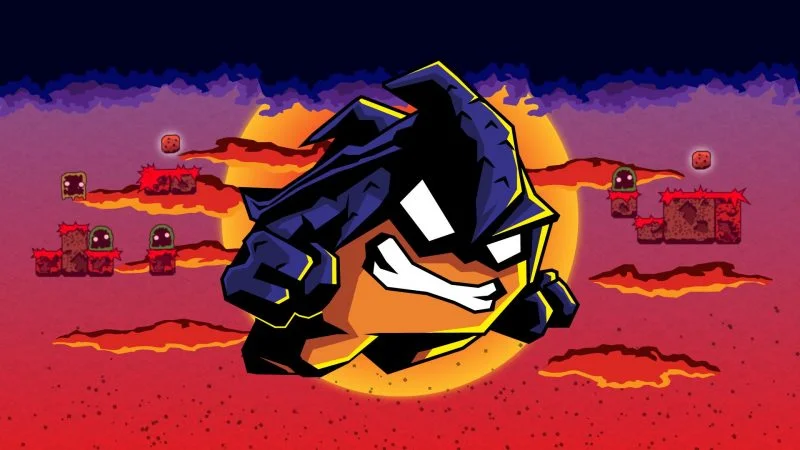
Fenix Furia is one of the most frustrating and addicting games I've ever played. As with most games, the beginning is fairly easy, but this doesn't last long. There are 10 worlds in Fenix Furia, each with 20 levels, as well as an Arcade where you can unlock extra games. Your objective is to use your unlimited jump and dash abilities to weave in and out of enemies who are moving up and down and all around. I would say once I reached the later levels I would die around 10-15 times guaranteed with a high of being 48 deaths on one level.

There are five modes when you select a level: Easy, Rage, Two, Challenge, and God. Easy mode gives you an extra hit and there is no time goal. Rage mode has one-hit kills as well as a time goal to beat. Two, which is the multiplayer, puts two people in a race to finish the level. Challenge restricts the amount of jumps and dashes you can use. God mode makes you invincible and you have to kill all the enemies on the map before time runs out. When you successfully complete these different modes, you are rewarded with stars. You can use these stars to unlock mini-games that are actually fun.

Along your journey you will also find cookies - that's right, cookies. Collecting all of these cookies will unlock 10 Fenxi Furia themed recipes. Just let that sink in for a moment. Besides earning trophies you can get a delicious recipe. How cool is that?

The only real issue I had with Fenix Furia is that the levels in each world don't progressively get harder. You may come across a level that feels like it's impossible and the next level you breeze right through. I don't feel like this is something to knock points off the games total score for, but at times the difficulty does feel inconsistent.

Fenix Furia is an absolute blast. My stats show that I died over 2500 times and I have no issue with that. The game is challenging and rewarding and that's exactly what you want from a game. I'm holding out hope that one day Fenix Furia makes it way on to the PlayStation Vita because I think it would be the perfect console for it. Do yourself a favor and buy this game!
5 out of 5 stars
Thank you to Green Lava Studios for providing the code.

Hands On With Loot Rascals
Blast off to space with this hands on of the turn-based rogulike Loot Rascals! Check out Shawn's hands on preview.
The first thing you'll notice about Loot Rascals is the colorful classic cartoon look, but once you get over the pleasing aesthetics, you find a rich, turn-based, roguelike game. Your character moves around a procedurally generated world on hexagonal tiles. Your goal is to find the exit on each level before exceeding the amount of moves on the turn counter. If you do exceed the move limit, stronger enemies will start to appear around the map. If you want to hang out and explore, you can, but this is not advised.

Loot Rascals has a day / night cycle that affects if you or the enemy will hit first in battle. You always want to try to get the first hit, but if you're feeling pretty good about your situation, it's not too big of a deal to let them hit first. The time of day changes every five moves, so you definitely want to be aware of this as you're moving around the map, especially when you're desperate to attack.

One of the biggest parts of Loot Rascals is the card system. You can have a mix of ten offensive and defensive cards equipped with six in your inventory. Certain cards have bonuses that affect other cards, but are required to be in certain slots, positions, or rows. Loot cards drop all of the time so you are always switching them out. Once you find yourself with too many cards, you can decompile them for currency.

There are also cards that you can place on other cards that give you extra long distance attacks or self heals. To use these attacks/ heals you simply select them from a pin wheel and drop a cursor on an enemy or yourself. You get so many cards that I don't think it's absolutely necessary to save your attacks for when you see a tough enemy, but you should definitely keep a few attacks handy for when you're near death.

One of my favorite aspects of Loot Rascals is when you die the enemies will steal your card, which drops it on the server and will show up in someone else’s game. That person can then choose to send it back or keep it. If you find someone else’s card during your game you can choose to keep it or send it back. If you choose to keep the card then the person who lost the card can send an enemy to fight you. When you first start playing the game, the other player’s cards will be from strangers, but once you have a few that you’ve found, you’ll most likely be matched with the same select players. Hopefully if everyone is nice to each other you’ll receive the cards that you lost, but if you lose a good card you better cross your fingers.
Loot Rascals will be coming to PC and the PlayStation 4 Q1 of 2017.

Hands On With The Golf Club 2
The Golf Club 2 looks to expand on the success of the franchise by adding a ton of new features. Find out what's new in this hands on!
I think it’s safe to say that golf games are designed for golf enthusiasts. The Tiger Woods series definitely opened up the genre to a wider audience, but without a big star’s name on the cover, most people probably wouldn’t give a golf game the attention it deserves. While these games may not be at the top of everyone’s priority list, Golf Club 2 has a good chance to be the golf game that returns everyone to the genre.

Usually when a golf game comes out, you can expect it to have licensed courses, but being a small developer HB Studios has decided to go a different route by creating an incredible course editor. In the first Golf Club, users created over 108,000 courses. This allows HB Studios to rely on an obviously healthy community and invest money in improving gameplay, as well as updating their course editor. One major improvement to the course editor is that users will be able to import their maps from the original Golf Club and add new features like waterfalls to their course.

The gameplay is fairly straight forward, but by no means easy. You use the right analog to pull back on the club and then push forward to drive the ball. The key to success is timing your swing and making sure the ball goes straight. After playing the game for about 30 minutes, I felt comfortable getting to the green, but putting is a whole different beast.

Putting uses the same mechanics, but trying to figure out how far you should pull back and how fast you should push forward can really become a challenge. The best I could do out of all the courses I played, was getting a birdie on a par 5, which means 4 shots total.

Having an easily accessible golf game with one of the best course creators I’ve ever seen in any game makes my Golf Club 2 experience a hole in one! Yes, I did go there.

Hands On With Warhammer 40k Inquisitor: Martyr
Just how much blood and destruction is in Warhammer 40k Inquisitor: Martyr? Find out in this hands on preview!
The Warhammer series is back with another installment! Warhammer 40k Inquisitor: Martyr is an open-world sandbox action-RPG sent in the universe of 40k. You play as different Inquisitors who travel around a massive star map completing missions.

There are 3 Inquisitor classes that have different skill sets that alter the play. Each class has different skills and skill trees. For example, the Assassin has a sniper rifle that is exclusive to her. Warhammer 40k Inquisitor: Martyr may seem like a traditional action-RPG but the open world star map has randomly generated maps. This is completed by having pre-generated puzzle pieces that the game puts together when starting a map.

Staying true to the 40k universe, there is a cover system, destructible environments, and tons of gore. All of this means that Inquisitor is a very tactical action-RPG, rather than one that you can just run into waves of groups of enemies and take them down like Diablo. You’ll find that the AI displays a great deal of strategy. You can expect to be met by smaller groups who will try to outwit you.

Inquisitors also have secret fortresses that you can customize and use as a safe haven. You’ll also have groups of followers and defensive systems. This introduces the an indirect PVP since Inquisitors can not attack each other.

Warhammer 40k Inquisitor: Martyr will be out sometime in 2017; first on PC and PS4 and then Xbox One later.

Interview with Alexandre Sabourin Red Barrels Senior Technical Artist for Outlast II
I had a wonderful opportunity to talk with Alexandre Sabourin, Red Barrels Senior Technical Artist about Outlast II!
The Gamers Lounge: How does the environment play into the horror genre?
Alexandre: You have to give emotion to the player with so many aspects using lighting. Players are ready to be scared. Jump scares are not always cheap; they have to be setup by using lighting and sound with sound being one of the biggest things you have to have working in the game.
The Gamers Lounge: Do you find inspiration from other horror games and movies or do you try to go off on your own?
Alexandre: Our cofounders are big fans of horror games; there will always be certain aspects of horror games that are the same. We, of course, find inspiration from other games, but there are many ways to attack the horror experience. You have to change it sometimes to avoid players feeling a repetitive pattern. That’s why we watch these movies and play the games as well.
The Gamers Lounge: How do you see the horror genre overall?
Alexandre: The community for horror games is pretty small. The inspiration for the first one was Amensia: Dark Descent. They did a great job creating a very scary game.
The Gamers Lounge: How is it having one of the top games in the horror genre?
Alexandre: Considering the competition, it’s nice to hear that people consider us a top game. We’ve come a long way. The first Outlast only had 9 people, which is not a lot of people at all. We take pride in what we do, and being a small company, we all take part in everything. We work hard and we’re desperate to scare you.
The Gamers Lounge: How big is this compared to the first Outlast?
Alexandre: The story line is much more deep and complex as far as details. The environment has changed with indoors and outdoors, which isn’t as easy as it sounds. Indoors, you have a constant feeling of claustrophobia while walking through corridors, so when the player goes outside we need to make the player feel like they have no options while they’re out there. The game is also going to be longer. There are also going to a lot more crazy things than the first Outlast.
The Gamers Lounge: Is a VR horror game something that you’d like to do?
Alexandre: We have taken a look into it. It’s definitely not something that is going to be in Outlast 2, but we’ve talked about it and we have to try it. It’s a tough medium because of motion sickness.
The Gamers Lounge: With a smaller team how much involvement does each person have?
Alexandre: As much as they want to get involved. We listen to everyone’s idea. A good idea is a good idea no matter who's it’s coming from. Not everyone is involved in the storyline, some people who do art just want to do art. Sometimes people have wild ideas and those are the ones that pay off at the end of the day.
The Gamers Lounge: I’ve noticed that there seems to be more things happening in the environment than the first Outlast. Could you speak on that a little bit?
Alexandre: You’ll notice that there are black blobs that are moving around. That’s actually a simple idea I had one night. You know when you see something that moves and it gives you the chills? I thought I don’t like that and I want that in our game. We made sure that when something like that happens it fits logically in our storyline. It happens where it has to happen.
The Gamers Lounge: How long has Outlast II been in development?
Alexandre: It’s been in development for about 2 1/2 years and is due fall of 2016.

Hands On With The Guild 3
The Guild 3 is easily one of the most in depth games I've ever played. Find out why you should put this game on your radar in this hands on preview!
The Guild 3 takes place in the late middle ages, between the middle ages and the renaissance during the era of the free citizens. At first, I thought Guild 3 was going to be similar to an economy sim like the Anno or Port Royale series, but it’s very different.
Guild 3 you play a character instead of building your own city. Your goal is to build a dynasty. You can get married and have children. Produce torches, sell them, get XP and money. Start climbing the social ladder and hope to one day become mayor of the city and eventually sovereign of the entire country. The best way to describe it is that you are a part of the world, you don’t manage the world.

The Guild 3 is a mix of the best features of the first two games in the Guild series. One of the key aspects is that the developers has really worked with fans to create a game that will be loved by their dedicated fan base. While this may sound like it’s designed for a small niche group, Guild 3 is definitely accessible for seasoned gamers.
To build your dynasty, you need to take care of your character or at least have a family. Characters can die of old age, be poisoned, get killed, and even get executed for committing crimes. By mixing roleplaying aspects with life and economy simulation, Guild 3 creates a wonderfully rich experience.

In the previous Guild games, you were pretty much forced to go specific ways to increase your wealth. Guild 3 gives the user the freedom to focus on what they’d like to work on. If you want to build your economy while not focusing on a family you can. After a long hard day of work, you may want to stop by the tavern, play dice, and have a beer. If there’s someone that you don’t like and you feel like bombing their home, have a blast!
There are a ton of professions that you can choose from. You can be a blacksmith, tailor, carpenter, medical, alchemist, apothecary and so on. One awesome feature is that the alchemist is more of an evil guy who creates poisons while the apothecary creates helpful things like potions.

Once you reach the level of mayor, you can start to control parts of the city. In one part of the city there may be a thieves guild. You can choose to ignore this part of the city and receive a lot of money from the thieves guild, but the citizens of the city will be upset with you and possibly revolt. You can also decide to remove someone from the council and bring in your own family members.
Guild 3 has complete simulation of weather and season effects. At any point of the year, there can be plagues, but it will most often occur in the winter. Winter also means that the farmers have no crops, so some of them may die of starvation. There are also storms that can occur that will affect your town. If lightening strikes your building, then your house will be on fire. If there is a home next to yours, then that home can also catch on fire.

The developers have made sure that the game has been thoroughly researched. The cities are more realistic than in other games. The citizens make the world feel really alive. At any point you will see people who could be drunk, starting revolutions, talking, and hanging out.
Guild 3 is easily one of the most in-depth games I’ve ever seen and I seriously can’t wait for it get released. Guild 3 will release this year with 12 scenario maps that are concentrated in central and northern Europe.

Hands On With Maximum Games Road Rage
Come take a ride on the wild side with this hands on of Maximum Games, Road Rage!
Remember how much fun it was to cruise around the streets and bash people with chains, bats, and billy clubs in Road Rash? Motorcycle combat games have basically disappeared, but Road Rage plans on bringing them back in a big way with a large open world, four player online, and (possibly) four player split screen.

When you first drop into the fictional world of Road Rage you’ll find yourself wanting to explore this massive city. I cruised around the downtown area known as Subtroit bashing pedestrians with my bat before I even thought about starting a mission. The feeling that I had been missing since the days of sitting around playing Road Rash had returned.

Once I returned from my childhood memories and came back to reality it was time to play a mission. Road Rage features checkpoint based races, circuit races, escort missions, races across the city and assassination missions where you have to attack a specific rider. I started up a checkpoint point expecting to bash and crash my way to victory! Except that didn’t happen. The AI is definitely out to get you. This isn’t a game that puts the power into your hands and the AI will just let you crack them in the back with a baseball bat. You always have to be aware of your surroundings.

Road Rage also features tons of performance and non-performance upgrades that you can do to your bikes. Each bike has separate upgrades as well, so leveling up all of your bikes is going to take a fairly long time. I couldn’t get a solid number of characters, but was told that there will be more than 10 and less than 20. Each character has different attributes and you have to unlock them. There isn’t a character customization, but we can always hope for that in Road Rage 2.

I was so desperate for a motorcycle combat game that I even pre-ordered and played through Ride to Hell: Retribution. If you don’t know what Ride to Hell is all about, go watch a few YouTube videos - it’s not pretty. Road Rage seems like the game that will finally deliver the experience we’ve been waiting for and will be released in the fall of 2016.

Hands On With Maximum Games Mark McMorris: Infinite Air
Mark McMorris: Infinite Air is the snowboarding game that we've been waiting for! Find out why with this hands on preview!
Maximum Games seems to be filling all the missing gaps in the video game industry with Golf Club 2, Road Rage, and Mark McMorris Infinite Air. What you’ll first notice is that Infinite Air is a physics based snowboarding game that plays a lot like Skate.

To say that Infinite Air’s world is open doesn’t do it justice. You’ll find yourself cruising down 100 square miles of fresh powder on a procedurally generated mountain. If you don’t like your mountain, you can always customize and generate a new one. Want to see what’s on the complete other side of the mountain? All you have to do is press a button and you’ll be cruising high in the sky in a helicopter.
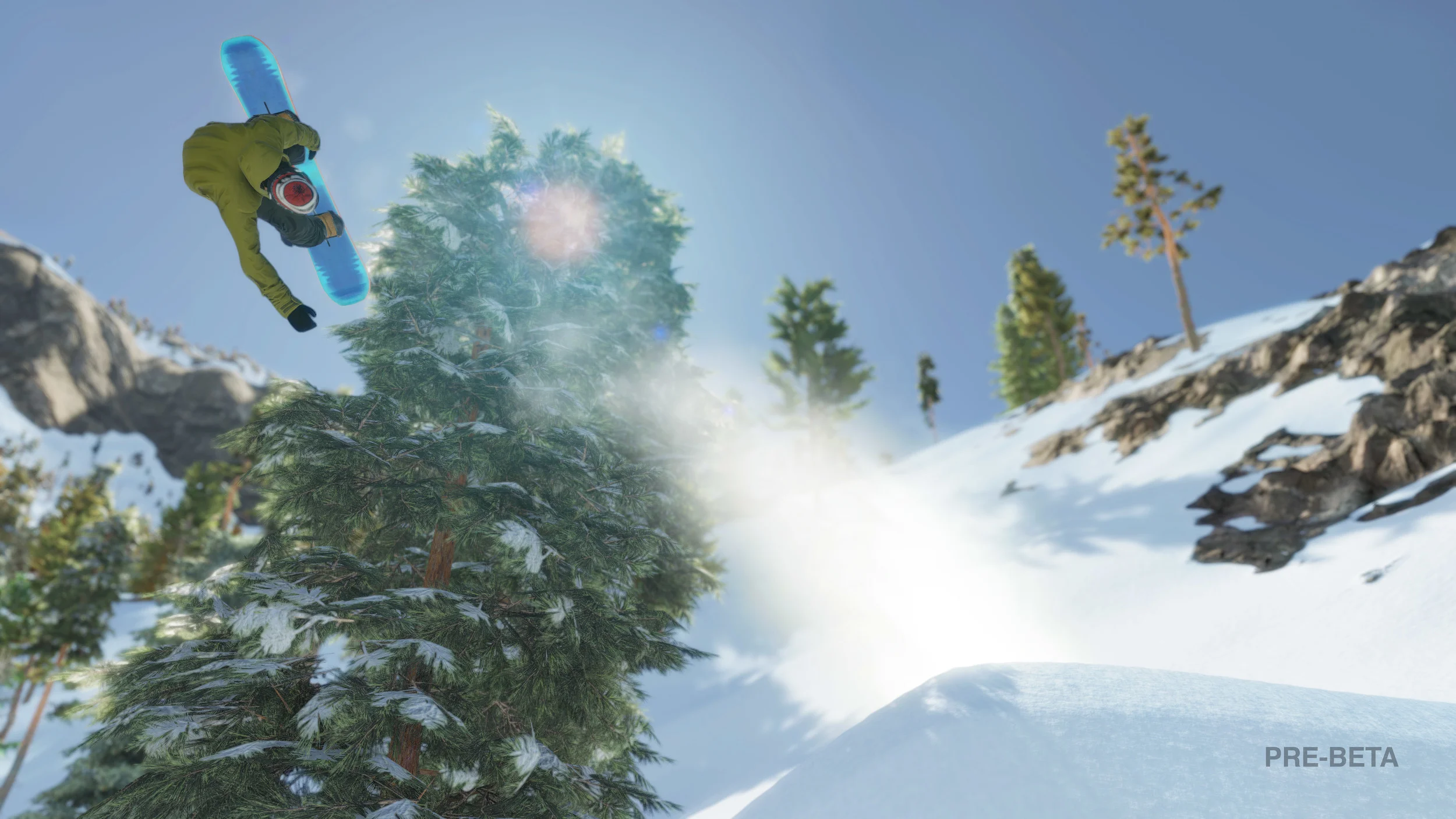
Most snowboarding games feature insane tricks that are humanly impossible, but Infinite Air focuses on making a more realistic experience. Completing your first trick is no easy task. It probably took me about 10 minutes to start to get a feel for the game and after about 30 minutes I was fully comfortable in the world. Being fully comfortable doesn’t mean I was an expert though. There was still a lot to learn, but with patience, Infinite Air can give gamers an experience unlike anything that they’ve played.

One major highlight of Infinite Air is the map creator. You can create courses filled with ramps, rails, pipes, logs, and groomed snow for flat surfaces. You can share your courses with other players, as well as play user created maps.

Infinite Air is definitely an ambitious game that has the potential to change the snowboarding genre. Mark McMorris and pals will be debut this fall on PS4, Xbox One, and PC.

Hands On With Compulsion Games We Happy Few
We Happy Few takes crazy to a whole different level! Here are my impressions from my Hands on with We Happy Few!
At the Microsoft press conference, I was taken back by a strange looking game called 'We Happy Few.’ Described as a 1960s dystopian urban survival game, you play as the only person who’s not high on a drug called Joy. Not taking your happy pills classifies you as a “Downer." Your goal is to escape a city that is on an island, by traveling through different biomes and areas of the city.

The first thing you’ll notice are the visuals. There is a slight Bioshock feel, but the true inspiration for We Happy Few came from movies from the 1960s. Compulsion Games’ art director has a very unique style that you may recognize from the PlayStation 4 launch title Contrast.
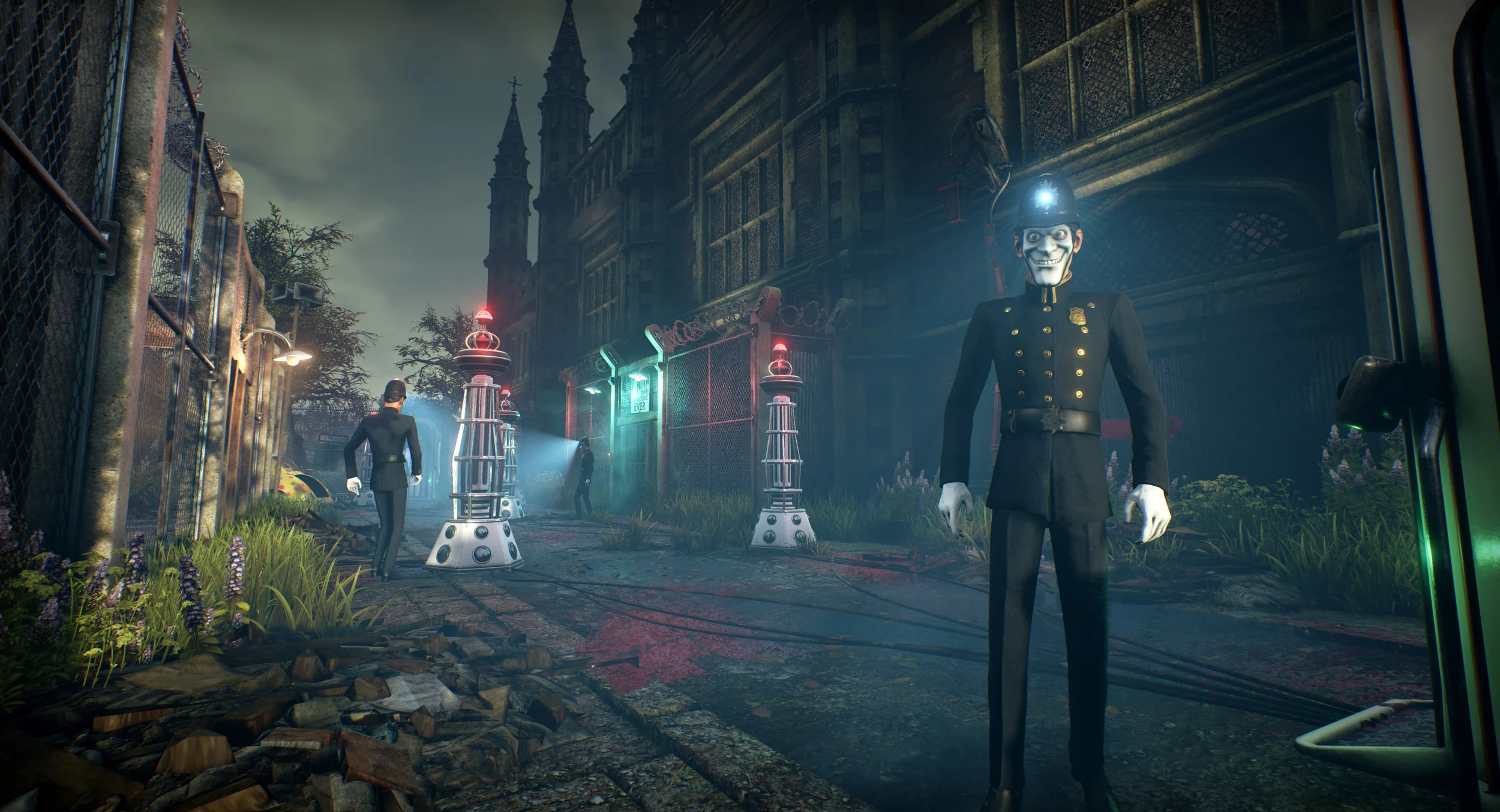
Crafting seems to be a major part of We Happy Few. The nature of it being a roguelike survival game means that permadeath is a very real possibility. They have easier settings that will prevent this, but the truth is that this isn’t just a game that you can run through, die, hit a checkpoint, and continue on. You really need to think about your approach and take it slow.

I only played as a one Downer, but there are three total that have interweaving stories. I definitely wish I could have had a little more hands-on with We Happy Few, but with the early access coming July 26th it won’t be long before I can jump right back into this paranoid, drugged out English city.

The full version of We Happy Few will coming out on the Xbox One and Steam early next year.

Kick and Fennick Review
The underrated PlayStation Vita game, Kick and Fennick, makes it console debut! Find out if a game about a boy, a friendly robot, and a psychotic mech is worth your time in this review!
Kick and Fennick originally made its debut February 3rd, 2015 on the PlayStation Vita. It launched as a free PlayStation Plus game, but was overshadowed by the critically acclaimed Transistor and Rogue Legacy, which were also free that month. The fact that it was developed by a small studio without a long history, published by a company not a lot of people know, and put it on a console that doesn’t get much attention, you find a recipe for a game that is bound to go unnoticed. Now with Kick and Fennick coming to Xbox One, PlayStation 4, and Wii U it’s getting another chance to find a place in the hearts of gamers.
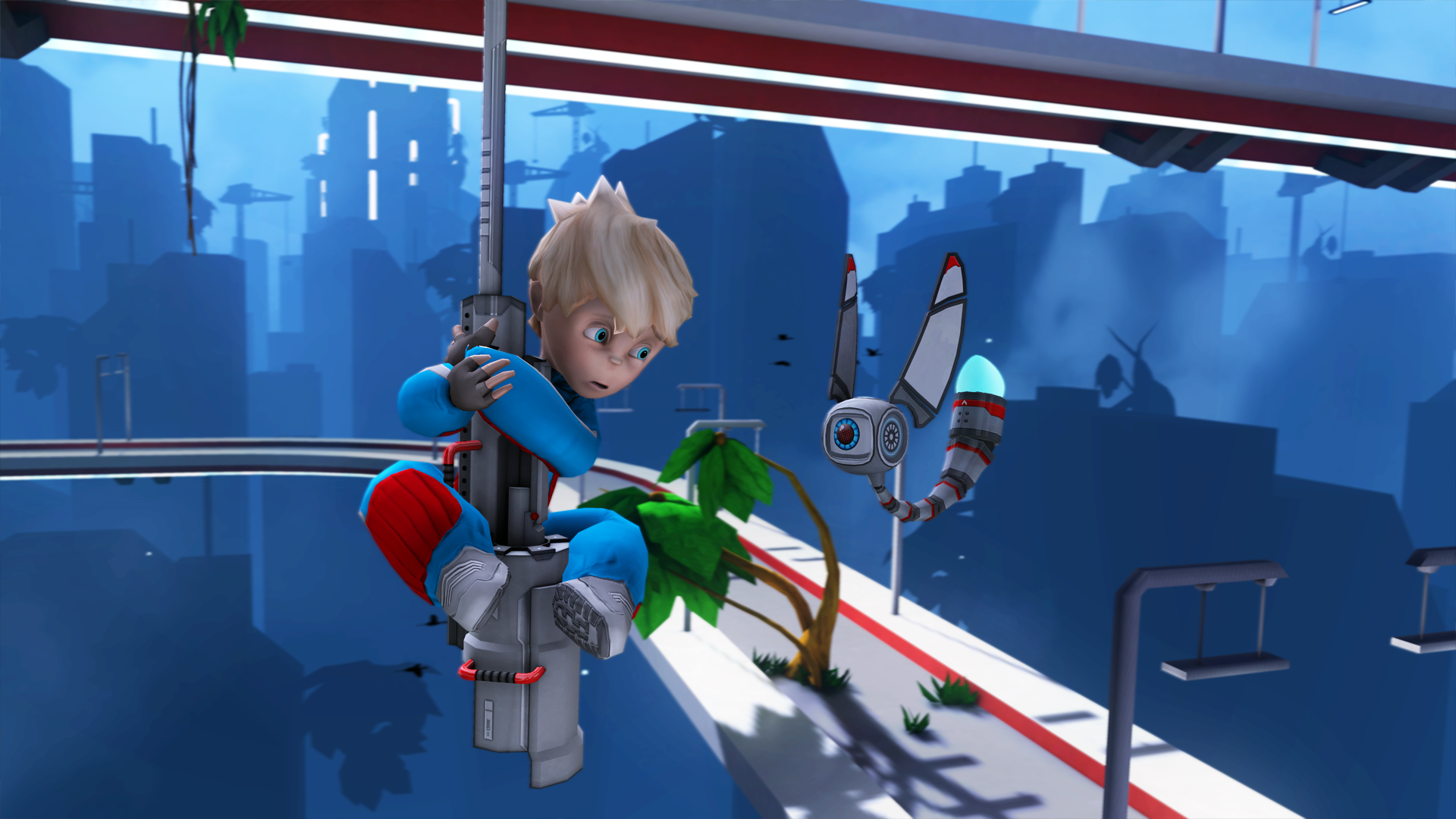
After waking up in a mysterious place, Kick meets the flying robot, Fennick. After Fennick saves Kick from a large robot that is set on destroying everything that it comes into contact with, the pair realizes that Fennick’s battery is broken and they must find a replacement. You basically get an introduction to a story and then it’s never developed into something bigger. It’s easy to overlook this while playing on the Vita, but console gamers may not be so forgiving.
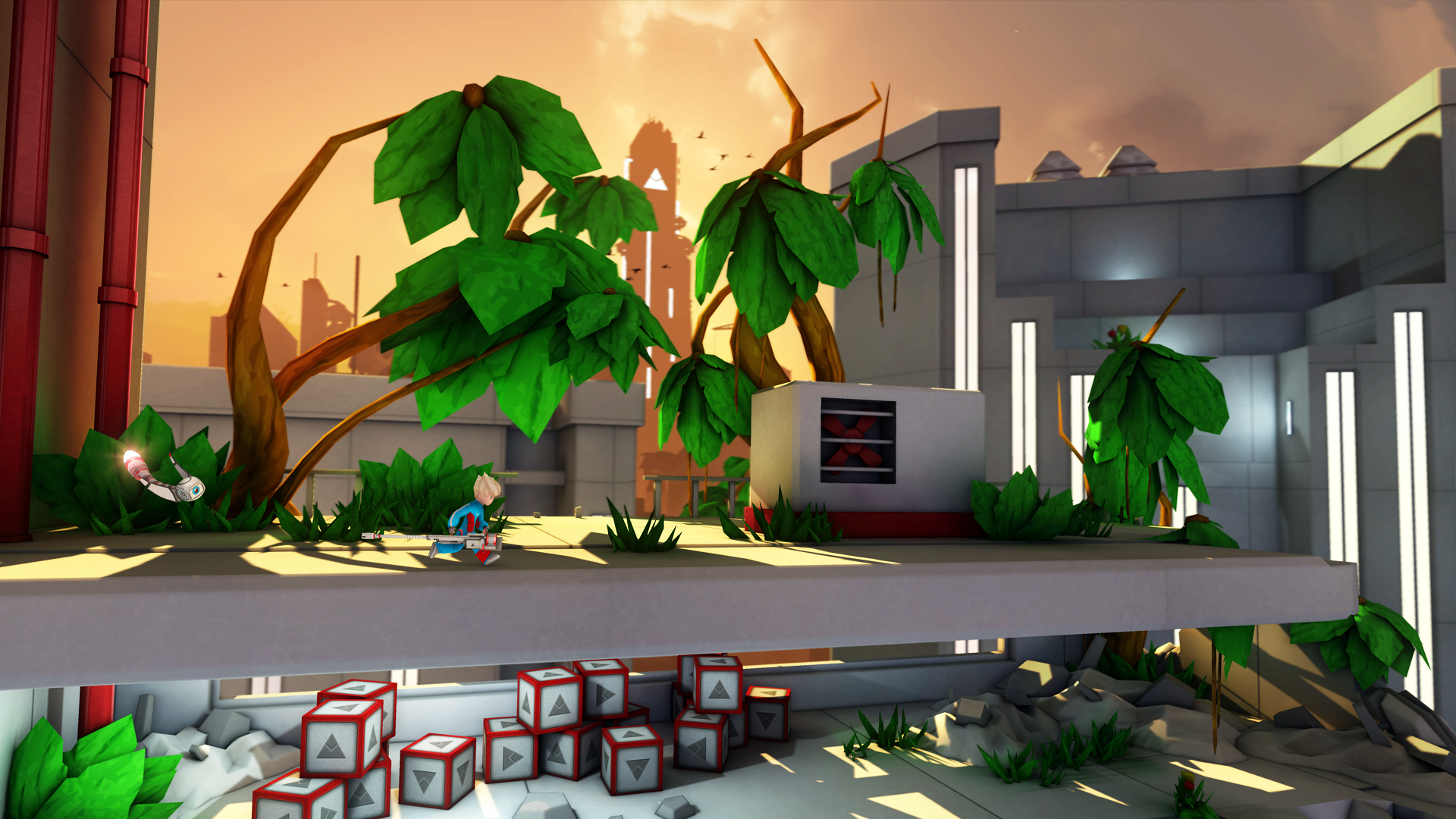
The game spans over 5 worlds and 45 levels. Your main tool is a gun that both propels you through obstacles and shoots enemies. Precision is the key to Kick and Fennick. There are times when you’ll need to launch yourself through lighting rods, bounce on moving platforms, and slide along rails that move you at a high rate of speed. Whenever you miss your target and fall to your death you are respawned at the nearest platform, but if you die too many times you have to restart the level.
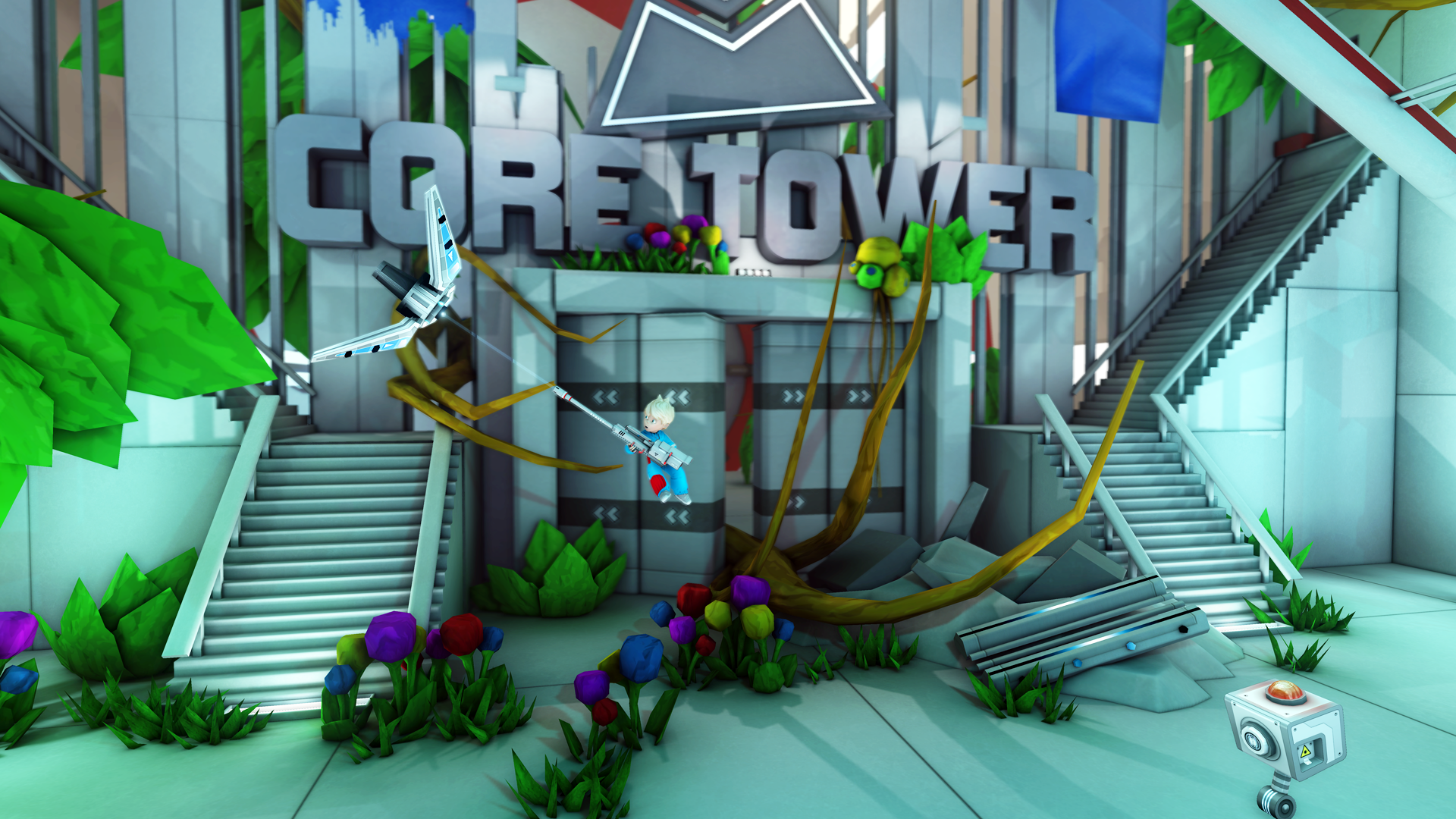
At the end of each world, you are confronted by the mech that is set on annihilation. Luckily, Kick and Fennick can get creative and use their wits to outsmart the silly, psychotic robot. For the most part, the boss fights use the skills that you develop over the course of your adventure, but the final boss fight throws something completely brand new in and it’s really confusing. I’m not going to spoil anything, but this didn’t set well with me. By the time I reached the final boss I was roughly 5 hours into my journey. I had played Kick and Fennick before on the PlayStation Vita, so I knew what to do this time around, but without any indicators that something new is required will leave some gamers confused as what to do. Also, the jump mechanic gets really extreme at the end of the game and it’s hard to get your bearings for a little bit.
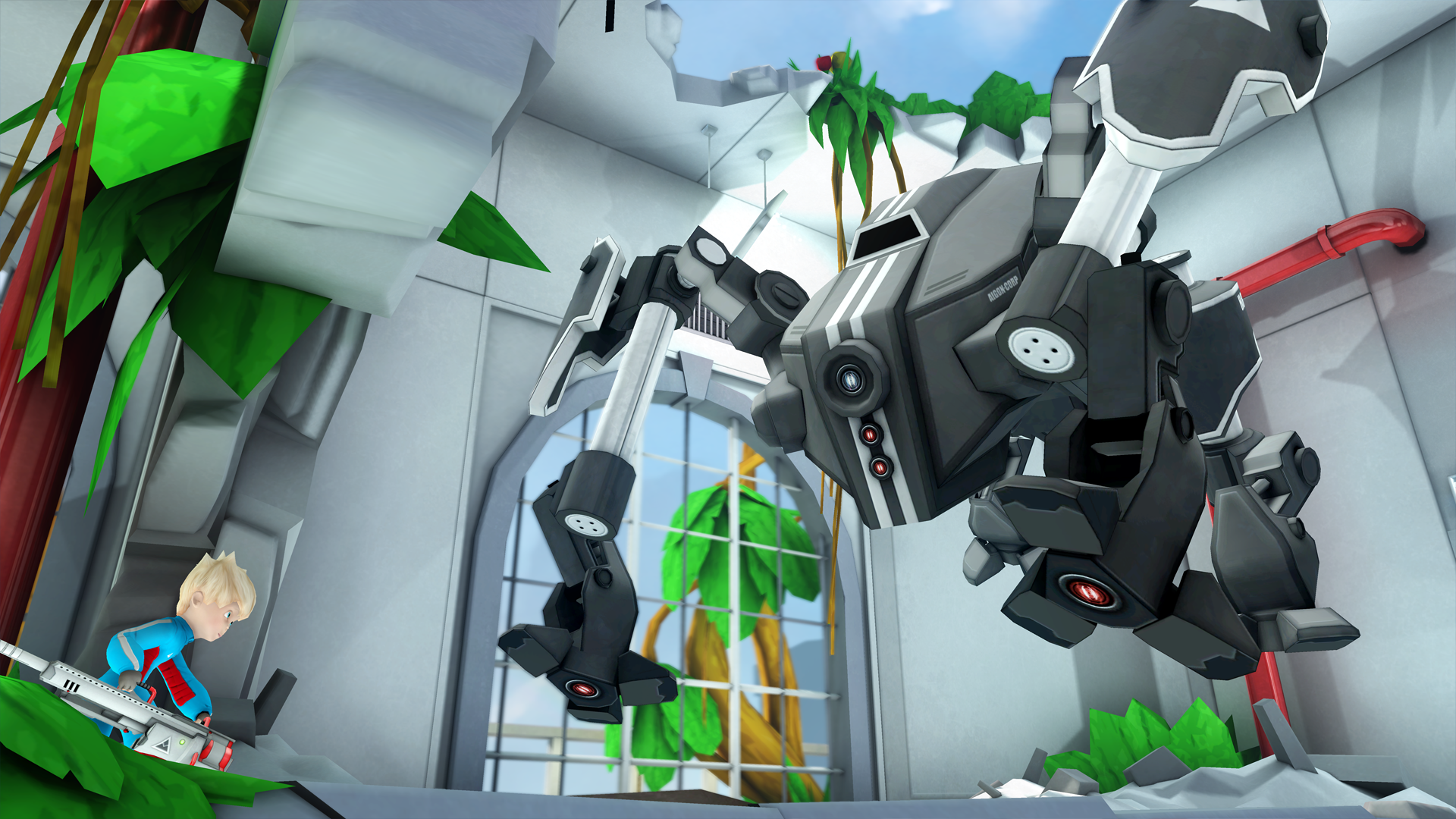
Overall, Kick and Fennick is a fun adventure that will take you around 5-7 hours. The lack of an engaging story is biggest shortcoming of Kick and Fennick, but even without that I do think that this is a game a lot of people would enjoy.
3.75 out of 5 stars
Thank you to Abstraction Games for providing the code.

Trillion: God of Destruction Review
Trillion: God of Destruction is a strategy / tactical JRPG that introduces a whole new style of gameplay. Find out if it’s worth your time in this review!
Lately, RPGs have been taking chances and coming up with some really creative ideas. We’ve seen Persona go into full-on dance mode, we have the side-scrolling multiplayer strategy RPG Grand Kingdom coming out soon, and we have Trillion: God of Destruction, a JRPG unlike anything that I’ve seen before.

When the game starts off you learn that the the six layers of hell are under attack by a monstrous god who devours everything it it’s path. As the hero, it’s your job to prevent the destruction of your world, but that is definitely easier said than done. Trillion: God of Destruction doesn’t operate like a standard RPG.

The first thing you have to be aware of is that the game works on a day / week cycle. Each event, (which I will get to later) takes one game day and adds a certain level of fatigue. If you reach maximum fatigue, it’s game over. At the end of the first few weeks, you train against a giant wooden dummy who mimics Trillion’s attacks. This way you are fully prepared for what’s in store for when you have to fight Trillion.

While preparing to fight Trillion, you only control one character. Your character levels up by completing training missions (which is a simple quicktime event), participating in the "Valley of Spears" (which is a dungeon that you can fight in once you collect 5 tokens from each training mission you attempt), and by building relationships with other people in the kingdom. Everything you participate in gives you some sort of experience points that you can allocate to six different stats.

Once you reach Trillion the fun really begins. The floor is covered with a grid. Each move or attack that you do causes Trillion to either call enemies, prepare an attack, or attack. You’ll know when Trillion is about to do something because the ground will be highlighted in white. You have a limited amount of moves / attacks before the grids turn red and Trillion unleashes a devastating attack on you. Because Trillion has 1,000,000,000,000 health, you won’t be able to kill him in your first attempt. This means that you have to do as much damage as possible without dying, because if you die it’s permadeath for your character. This means that you have to know when to escape the battle. How much damage you do to Trillion depends on how much destruction he’ll cause on your world. After each fight, he’ll start to devour parts of towns. The better you do, the less he’ll destroy. This is a good way to prevent the player from exiting a fight prematurely. One quick side note, when your character dies, some of their stats will be transferred to the new character.

Trillion: God of Destruction is really involved, but with only one dungeon that you can participate in and everything else controlled from a hub, it does tend to get repetitive. Now that doesn’t mean that you can just press X through the entire game and not pay attention to anything, but really Trillion is a game centered around a single boss fight. Luckily, a play through doesn’t take all that long and it can be completed in about 12 hours if you don’t skip the text.
3.5 out of 5 stars
Thank you to Idea Factory for providing the code.

Strange of Sword City Review
Have you been looking for a great RPG to play on your PlayStation Vita? Strange of Sword City may be the game you've been looking for! Check out what I think in this review!
When was the last time you finished a game and walked away feeling like it was a complete experience? A game that seriously made you have to take a deep breath when it was over and reflect on the time you spent with it? There are plenty of great video games, but there are few classics. For anyone who’s looking for a true RPG experience, Stranger of Sword City may be your new favorite game.

The first thing you’ll do when starting Stranger of Sword City is character creation. You pick the look of your character from over 60 pre-designed pictures of humans, elves, dwarfs and other various looks. Once you’re done picking your look, you must choose your character’s age. This is actually really important, because whatever age you select affects how many Life Points and bonus experience points you receive. Life Points equal how many times a character can die during your play through. Younger characters can have three, middle aged characters two, and elderly characters one. Once your character loses all of their Life Points they can no longer be recovered. Life Points can be recovered by resting your characters for long periods of time or by paying insane amounts of money; however if you have a character with one Life Point, there is no way to revive them. So why would you want to create an old character if they can only die once? The trade is that the older the character the more bonus experience points they receive.

After you select the age of your character, you get the option of “rolling” for bonus experience points, which just means press a button to randomize some numbers. If you have a young character, there’s a good chance that you’ll start off with three bonus xp, but you have the chance to get anything from three to nine. You can press the “roll” button as many times as you’d like, but you’ll soon realize that it will almost always be three or four so when you see a six pop up, you have to really think if you want to risk losing that because it could be a long time to get it again. I usually spent a few minutes rolling to see if I could get something higher and the majority of the time I settled for something in the middle of the minimum and maximum.

Once you’ve created your character, the story begins. You find yourself in a strange place and don’t know where you are. There are people who excited that you’ve appeared and would like you to help them. It’s not a mind blowing story by any means, but it does have some pretty awesome elements. As time goes on, you are introduced to three different kingdoms. Each one asks for you to give them Blood Crystals that you find after defeating “Lineage” enemies. When you give them these Blood Crystals, you’re able to select a power and it advances the game’s story.

Each battle in Stranger of Sword City feels like life or death. This isn’t the type of game that you can just queue up attacks while you’re watching Netflix. You have to strategically plan out your magic attacks, heals, and what type of attacks you’re going to do in each and every fight. Because death is permanent and there is no revive spell, you may find yourself in a lot of stressful situations. The best recommendation I can give is to always know where the nearest exit is, because once you head back to town, your health and mana are refilled. The downside to leaving an area is that the enemies on the level will reset and you’ll have to battle a few mandatory fights again. This is really a small price to pay to ensure that your most experienced warriors don’t die. If they do die though, it is not the end of the world, but it will make you have to spend some time grinding to get your newly registered companion up to snuff. I’ll talk about companions in depth a little later, but first I have to talk about Morale Points.

Morale Points are a unique system that give your character the ability to call certain spells without using any mana. Examples of these spells are health regeneration, stronger attacks, higher defense, and group attacks. Certain skills can even be stacked so they can have a more beneficial effect. As you progress through the story you’ll start to get more Morale Points and you can use more skills in battle. To gain Morale Points all you have to do is attack enemies. It’s not a complicated system, but it is very valuable and should be used generously. You also use Morale Points to ambush enemies to receive better loot, but that will be covered later.

To get new companions all you have to do is register them at the Strangers Guild. The nice thing is that you can register a ton of companions so you can try to out different classes. A nice feature in Stranger of Sword City is that whenever you register a new companion their experience will be based off of the amount off of your main character, however they still start at level one. This makes it a smoother transition than to just have a level 1 character that needs to spend hours leveling up to 10+. You simply take them into battle and as long as they don’t die you’ll see them level from 1 to about 6 after one fight.

The Stranger’s Guild also allows you to switch party members whenever you like. Whichever party members are not active are being “trained” which means that they are gaining experience. This experience though won’t actually level them, so if you have a level 12 fighter they won’t go from 12 to 13, but rather gain experience that will only require them to fight one or two times to get from level 12 to 13. Every time you check on your resting companions you will receive money that they found on their adventures. I’d recommend that if you have a lot of people sitting out that you check on them whenever you head back to the Strangers Guild so you can collect money and check on their progress.

Stranger of Sword City has a unique way of getting better gear for your group. There are locations around the world where you can “ambush” enemies. During the ambush you have a certain amount of turns to kill the leader of the group before they escape. If they escape you just receive experience and some money, but if you successfully kill them you get some type of gear. These ambushes cost Morale Points and the costs increase over time. This prevents you from repeatedly ambushing and getting all the phat loots in one sitting. One nice feature is that you will know what type of gear you’ll be getting beforehand and you can choose to pass if it’s something you don’t want. This is essential to your party’s success, so I recommend you start getting used to ambushing early in the game.
As you progress in the game, you’ll find that the maps are fairly large and most of them have an area that is blocked until you progress in the game. Within each level there are stones that you can discover to teleport yourself to and from town. This makes getting in and out of levels so much easier than having to use the main entrance and exit every time. Without these, Stranger of Sword City would be a much longer and much more difficult game.
Overall it’s really hard to explain enough about the incredible details of Stranger of Sword City that will really do them justice. For anyone who is looking for a real adventure that will test you time and time again, this is definitely a game you want to pick up. I’ve had my PlayStation Vita since launch and I can say honestly that in the last four years that Stranger of Sword City is the game I’ve been looking for.
Final Score: 4.5/5
Thank you to NIS America for providing the code.