

Everything Review
Everything promises that players can anything in the world, but does it deliver? Find out in this review!
David OReilly is probably best known for making unique animations, but recently he has begun developing video games. In 2014 he released his first game "Mountain", where you simply observe a mountain without controlling anything. This may sound a bit odd, but Mountain received critical acclaim and laid the foundation of "Everything."

As soon as I heard that Everything promised to let the player control anything from the smallest atom to the largest galaxy, I instantly put up my guard. There have been way too many times where developers promise gamers the ability to do something you've never done before only to leave them disappointed. Fortunately for us, where other developers have failed, Everything delivers.

You first start off by entering a name. You are then put on a random planet controlling a random object. For me, I started on an ice planet controlling a polar bear. The very first thing I noticed (which is also the same that other people noticed in the official trailers) is that a lot of the animal's movements resemble stiff somersaults. At this point, I'm thinking what is going on? But I pushed through and began exploring my surroundings. After discovering a few different types of trees and a few standard animals, I started to get that feeling of dread that I may have been lied to again, but that quickly went away when I learned how to ascend and descend into different levels. These levels range from microscopic to being out in the middle of the universe surrounded by different types of galaxies. Only once I realized the true scale of Everything did I really start to appreciate what was happening.

Now even though you can get as small as the smallest atom, Everything never becomes overwhelming. While there doesn't seem to be true objectives, you will find yourself collecting objects from certain classifications (animals, trees, viruses, spacecraft, etc) to try to complete a collection. Whenever you go to a new area the map appears to be as far as the eye can see, but when you move around you'll start to actually see that you're really in a confined space. This limits the number of objects that you'll find and encourages you to move to another area. The awesome thing about this is that if you visit the same type of area twice in a row (ice continent, city continent, grass continent, etc. ) there will always be something new, as long as you haven't completed your collection.

A major aspect of Everything are the readings of philosopher Alan Watts. As you progress there will be opportunities to listen to different audio clips that talk about the different ways the world is connected. These readings support the underlying theme of the entire game and have a nice calm presence that makes for an enjoyable experience.

Everything took me about 2.5 - 3 hours to complete. Once you finish, you can keep collecting objects in your game or start a new game plus. Everything relies heavily on experience, which isn't a bad thing, as long as you know what you're getting into. If you've enjoyed games like Journey, flOw, Flower, or even the Katamari series, then Everything is definitely worth your time.
4.5 out of 5
Thank you to Double Fine and David OReilly for providing the code.

DYING: Reborn PSVR Review
DYING: Reborn's abridged version comes to the PSVR. Find out if this "escape the room" style game is worth your time in this review!
Publisher Oasis Games has been consistently releasing games on the PSVR since launch and after playing all of their PSVR titles I can say that DYING: Reborn is their best game yet. The main character, Mathew went out to search for his sister only to find himself locked in a room full of cockroaches, metal bars, and puzzles.

There are a total of three rooms that you have to escape from in the PSVR version compared to the six in the PS4 and PS Vita version. Because you are buying an abridged version, the price comes down to $9.99 instead of $19.99 making DYING: Reborn one of the cheapest PSVR games and not a bad deal.
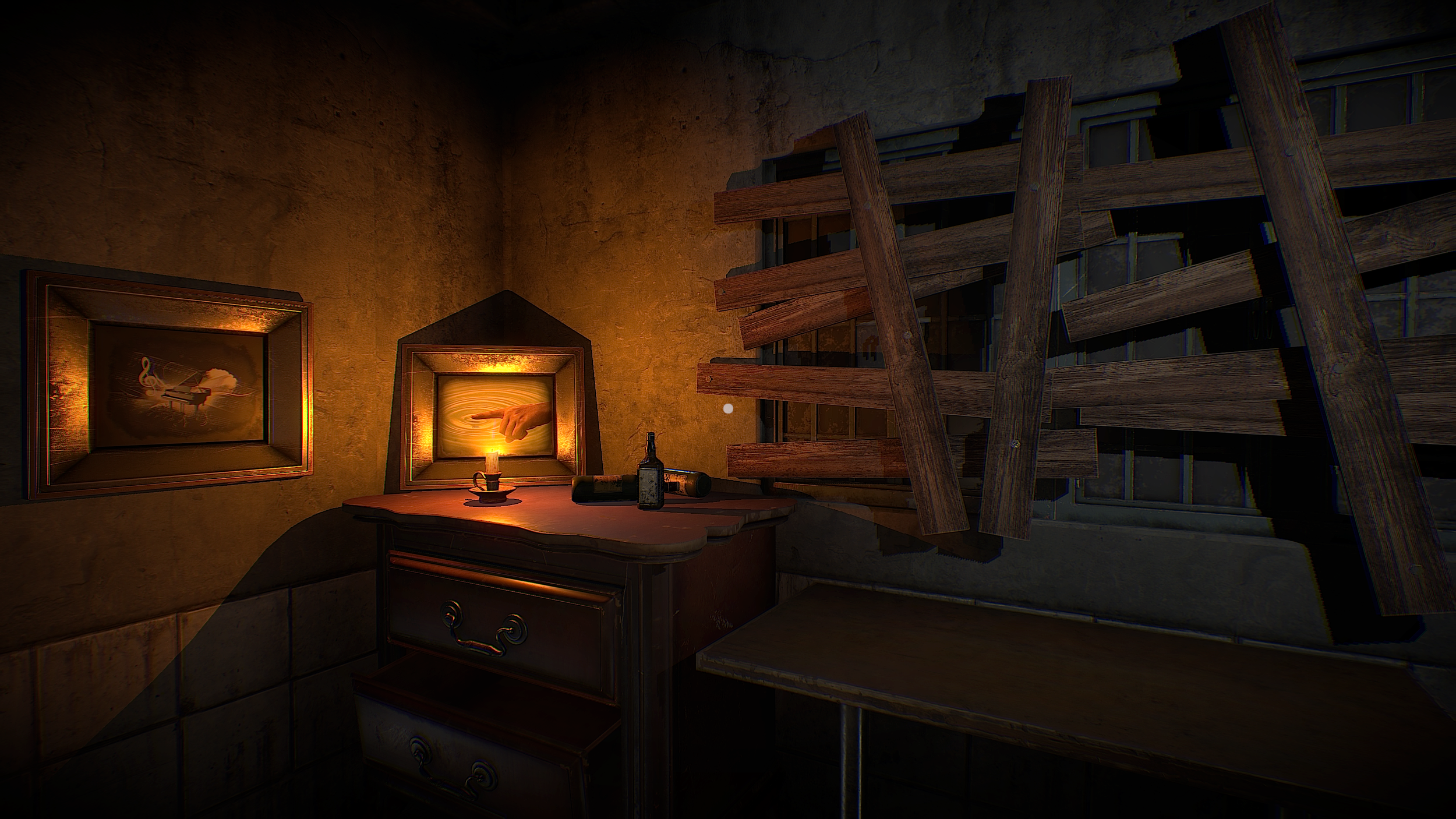
Usually, when I play puzzle games I find myself overthinking and getting stuck. With DYING: Reborn overthinking is your friend. You have to examine everything in the room because the solution is rarely obvious. The best approach would be to play the game like a point-and-click adventure game where you find an item and interact with every object to see if they work. I did find myself getting stuck one time because of the graphics quality of the game. There's a part when you have to play a melody on a piano and for the longest time I couldn't figure out the hint. There's also a puzzle in final room that I was stuck on for easily over an hour because of no other reason than it was hard to figure out. It's tough for me to criticize the game because the solution was available, I just wasn't prepared for there to be such a difficult objective.

One thing that felt odd was that the game ended abruptly. I'm not sure if it's because it's the abridged version, but you don't really get closure. This, unfortunately, does make the experience feel rather incomplete. The entire game took me about three and half hours to finish and I did enjoy my time with it despite the conclusion and getting stuck on one puzzle for over an hour.

Overall, if you're looking for a PSVR game to play and you want to be challenged, then $9.99 is a low risk. While trophies never determine how I feel about a game, it is nice to know that completing DYING: Reborn PSVR will get you 100% of the trophies in one playthrough.
3.75 out of 5 stars
Thanks to Oasis Games for providing us with the code

Psychonauts in the Rhombus of Ruin Review
Double Fine latest game brings psychic abilities to the PlayStation VR. Find out if Psychonauts in the Rhombus of Ruin is worth your time in this review!
The PlayStation VR was easily one of the more anticipated pieces of technology last year. There were plenty of reasons to get excited about it, but since the launch, there haven't been too many must-have games. Fortunately, Double Fine has stepped up to the plate and hit a homerun with Psychonauts In The Rhombus of Ruin.

The story takes place after the events of the original Psychonauts where we find out that the Grand Head of the Psychonauts Truman Zanotto, has been kidnapped. The main character, Raz, and the rest of the crew discover that Truman is being held in underwater at the Rhombus of Ruin, a former Psychonauts lab. On their way, their ship crashes and the crew is separated. Raz has to use his psychic abilities to gather his powers and save Truman Zanotto.

Right from the beginning, you can tell that a lot of time and effort went into creating the world. There are an impressive amount of fine details that most other VR games seem to neglect. At one point I picked up a record and flipped it around to find an actual tracklisting for this fake album. These little inclusions make feel like you're a part of the world rather than a spectator. I feel that I have a lot of experience in VR and there were even times where I almost reached out to grab something that was in front of me.
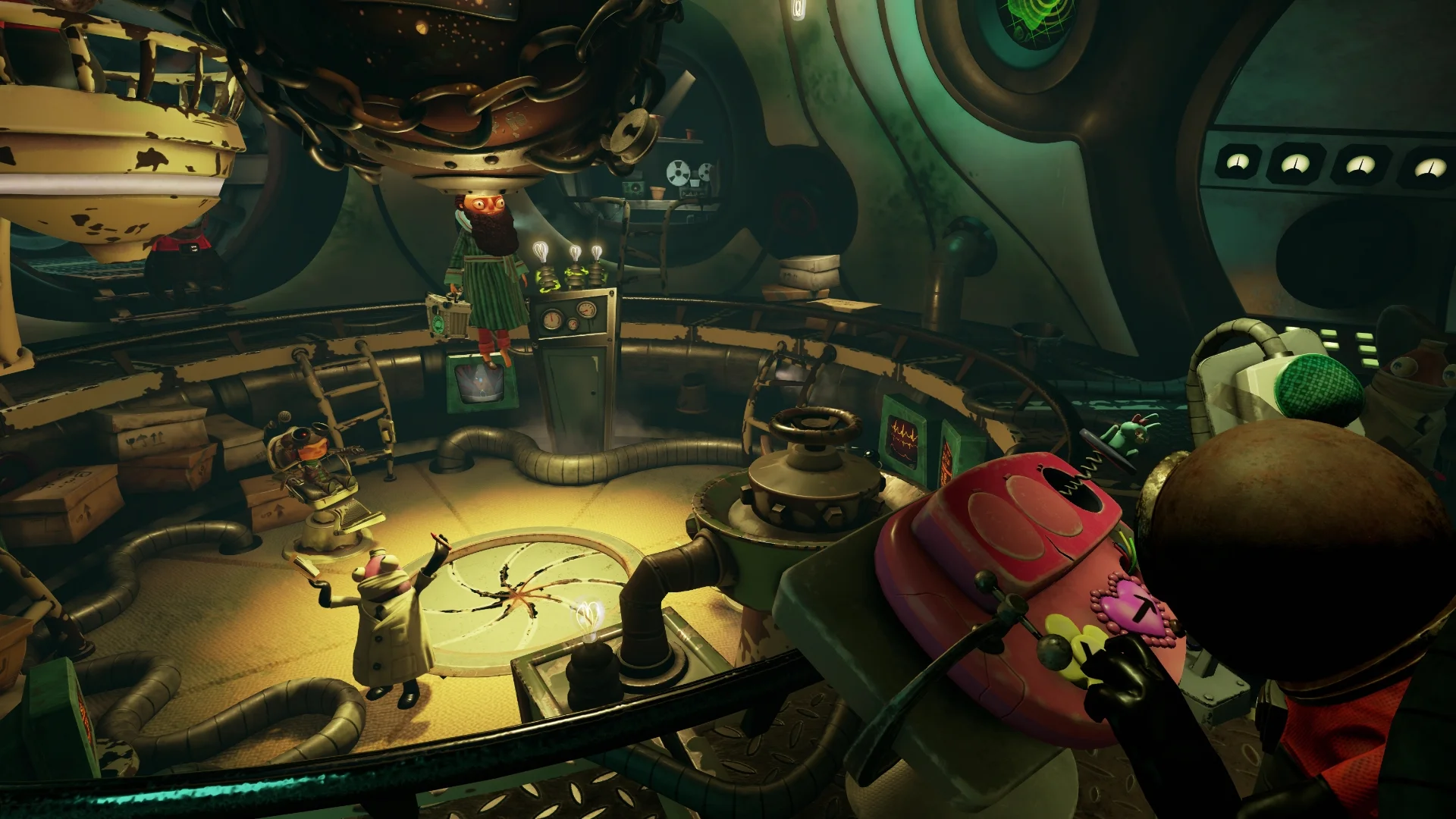
The gameplay is a lot different than the previous Psychonauts. Instead of being a 3D platformer you use Raz's clairvoyance ability to jump into and out of the minds of the surrounding people or creatures. In fact, you don't walk around at all, and to interact with objects or to jump in the mind of something you simply look at them press a button. The game essentially plays like a point-and-click adventure, where you have to solve puzzles moving objects or combining certain objects. None of the puzzles are overly difficult and with a little bit of trial and error you'll figure them out in no time.

As I mentioned before, to interact with things you have to look at them and press a button on the controller. This generally works fine, but there were a few times where I really felt like I had to stretch my neck and turn my head quite a bit to discover where I had to go to next. This was really the only issue that I had over the three and a half hours that it took me to complete Rhombus of Ruin.

Overall, if you're looking for a new PlayStation VR game, I couldn't recommend Psychonauts in the Rhombus of Ruin enough. The world that Double Fine created is amazing and the characters are as lovable as they've always been. Do yourself a favor and pick this game up!
4.75 out of 5 stars
Thank you very much to Double Fine for providing us with the code.

Sylvio Review
Love horror games? The award winning Sylvio makes its console debut. Find out if the scares are worth it in this review!
Most horror games give you a heart-pounding experience filled with jump scares, terrifying encounters, and ambient music that keeps you on the edge of your seat. Sylvio breaks away from these standards and provides a much creepier experience that constantly makes you feel uneasy.
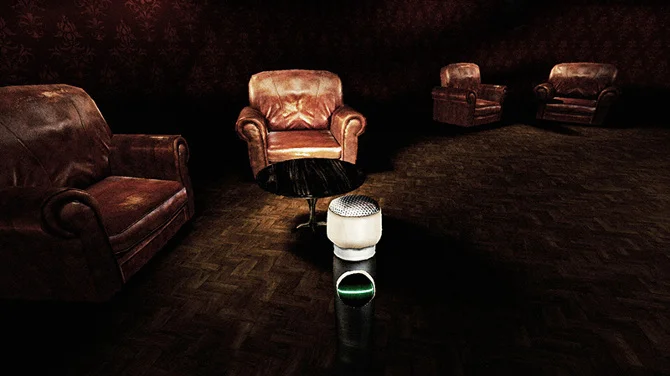
You play as a Juliette Waters, an audio recordist who specializes in EVP which is just a fancy way of saying she's a ghost recorder. Your goal is to unlock the mysteries of what happened to a family by recording audio from ghosts that uncover clues and items. Once you find what you need, you are able to progress to the next task, but this isn't always easy.

Sylvio has very little direction. When I first started, I didn't really know what to do and early frustration set in. Once I started figuring out what to do, I was having a lot of fun. For the most part, you are walking around an open world trying to piece together how certain items go together while occasionally fighting ghosts, which are large black clouds, with a potato gun. That's right. A potato gun. The fights aren't that difficult, but sometimes they can come out of nowhere. If you are touched by a ghost you are transported back to the beginning of the level, but you don't lose anything. It's a minor inconvenience that doesn't really matter. Once you defeat a ghost, you record the audio they left behind and a new destination will appear on your screen. When you arrive at the destination you'll find either an item or a puzzle of some sort that you have to complete. Before I move on to the puzzles I should mention that the potato gun does shoot more than potatoes. It shoots rocks, bolts, nails, and other miscellaneous items.
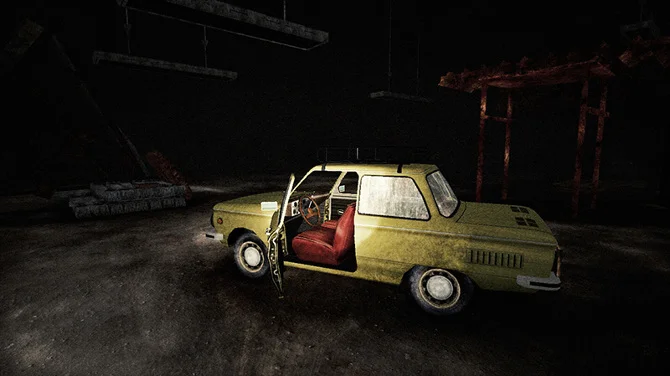
The puzzles are actually quite similar to something you would find in a point and click adventure game. You have to have the right item that connects to another item and then you have to interact with it to move forward. Many of Sylvio's puzzles require you to think past just the first step. You can't just connect a sign to a windmill and expect it to generate electricity - you have to find the proper way to interact with it. This layered approach shows that a lot of thought went into the design of the objectives, making the experience more rewarding when you accomplish your task. The issue that's here though is that sometimes certain puzzles don't make sense. There are times where you are walking around aimlessly with a newly discovered item trying everything you can to make it work only to find out that you need something else or that you haven't reached the point where you can actually use it.
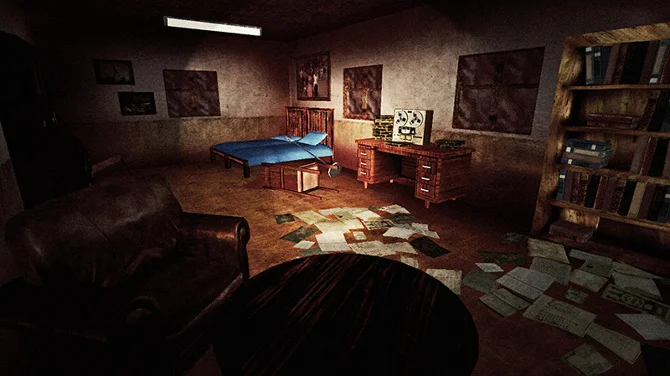
One of the greatest parts of Sylvio is deciphering what the ghosts say. After you record the audio, you are brought to a reel to reel machine that has six settings; play forward, play backward, slow forward, slow backward, fast forward, fast backward. This aspect of the game is always creepy. There were times where I had to turn down the TV because it would make me uncomfortable listening to the voices. It's also a good thing that this never gets old because you do this a lot. If you're really hustling and making good progress, you'll feel that you're stopping every couple of minutes to try to figure out what these ghosts are saying.
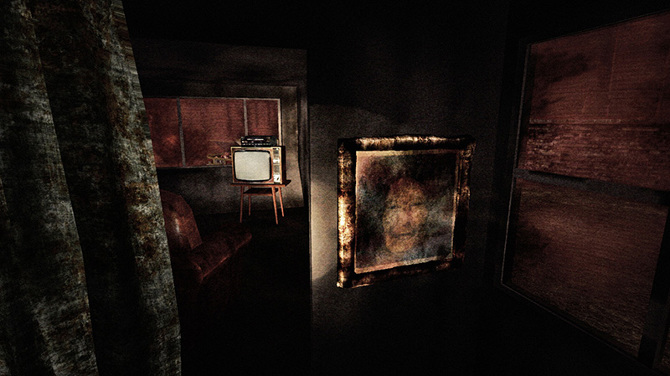
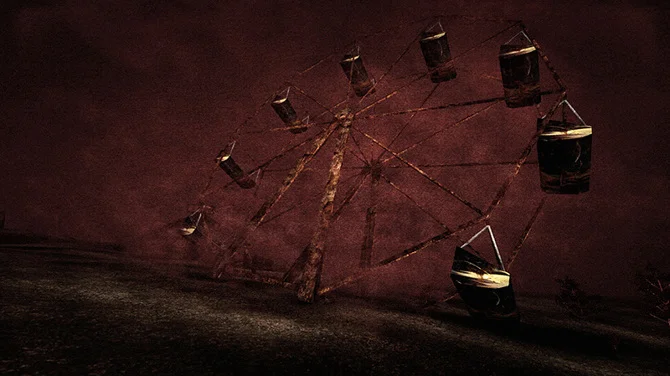
Graphically Sylvio is nothing to write home about. The entire game has a red fog that basically hangs over everything and makes it hard to see in the distance. The other textures in the game definitely aren't up to next-gen standards and even though the developer Stroboskop is a small studio I would have liked to have seen a little more graphics quality. Graphics definitely don't make a game fun, but can we all agree that to an extent they do help?
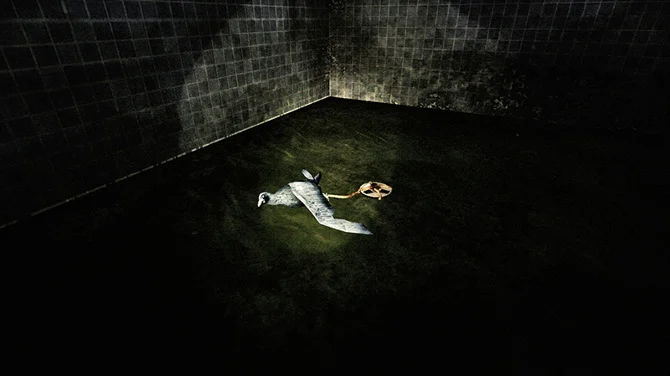
One of the biggest downfalls of Sylvio is the last level of the game. I was so confused and frustrated with what I was doing that it actually crossed my mind to put the game down and just move on. Giving up isn't my style, so I stuck with it. A good example of this frustration came when I flipped a large switch and had no clue what it did. I had to walk around this large complex only to find a small space that had opened extremely far away from where I was at. I've probably gotten soft as a gamer with all the breadcrumbs and directions that we get these days, but this was absurd. I completed the game in about 8 hours, which is much longer than I thought it was going to take.
Overall, if you're a horror fan and you want to try something different, then Sylvio is a game that you may want to check out. If you're looking for the next big horror series or you're just starting out with horror games, then I would recommend going with a different title.
2.5 out of 5 stars
Thank you to Stroboskop for providing us with the code.

Weeping Doll Review
Weeping Doll is a creepy game about family secrets. Find out if this family has a history you want to explore in this review!
It's been awhile since I've played a game where the narrative has really shocked me. I've been surprised and tricked, but actual shock in what I'm hearing and seeing. Weeping Doll from Oasis Games creates a wild story that is so dark and twisted that it's almost unbelievable.

The story follows a housekeeper through a creepy mansion that looks like it's been ransacked. You know something has gone wrong and it's your job to put together the pieces. As you progress through the story you start to uncover layers of unnerving subjects such as child abuse and neglect. While other games may use metaphors to dance around sensitive subjects, Weeping Doll jumps right into them.
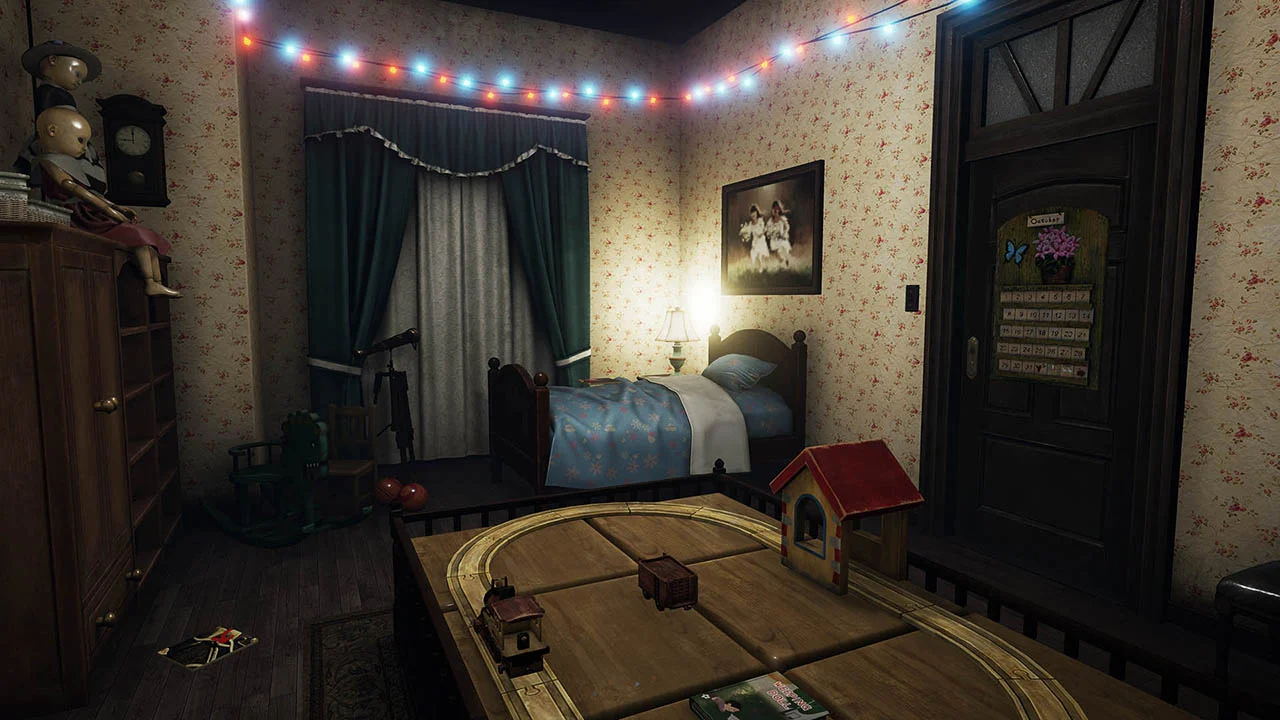
Weeping Doll, at its core, is a puzzle game. You enter a room and have to either figure out a way to get out or find an essential item that will help you advance. The premise is awesome, but the execution falls flat because the puzzles don't require much thinking. At one point, the game gives you a tutorial on how to combine items to solve a puzzle, but you only use it that one time. There's no option of failing either, which means that there isn't really a challenge.
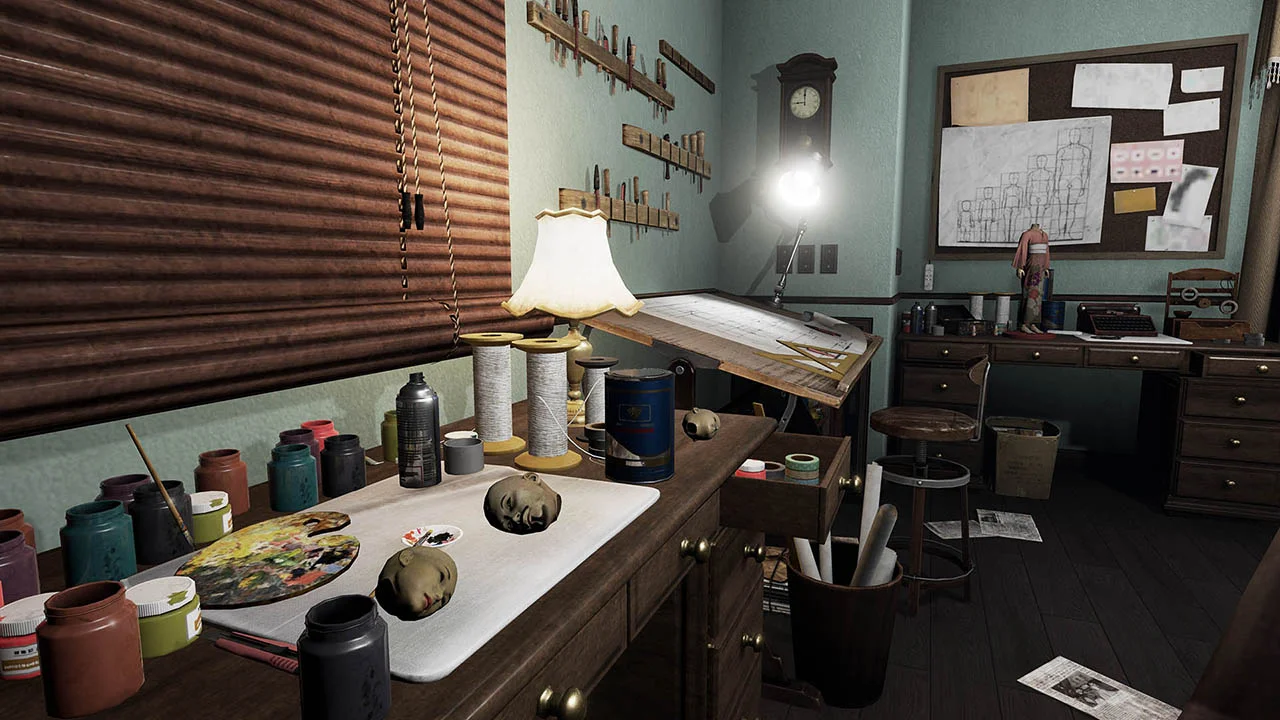
I also ran into quite a few major bugs in Weeping Doll, which is always unfortunate. At one point I accidentally dropped a key and it went either through the floor or under a dresser, which forced me to reload the checkpoint. After reloading the checkpoint, I had to complete the first part of the room's puzzle again, which is fine, but the piece that I needed was nowhere to be found. This meant that I had to start a whole brand new game. Luckily, I was less than 10 minutes into the game so it wasn't too much of a pain to start over.

Once I got through the beginning, I was making real progress. The atmosphere of Weeping Doll is pretty terrifying and you constantly feel like something is about to happen. Unfortunately, there are only about three real scares in the entire game. I will say this, as odd as it may sound, Weeping Doll succeeds as a great "psychological narrative." The game really got in my head and convinced me that at any moment something scary was about to happen.

The entire game is only about an hour long so you can easily finish it in one sitting, however, there is something odd about the way the game ends. Once you finish the game, you'll hear the trophy chime, but the game keeps going. You are able to walk around the house and you may think that there is more to do, but there isn't. This is sort of a byproduct of the PSVR not showing you trophies when you have it on, but there aren't any credits to inform you either. I probably spent an additional 10 minutes walking around trying to figure out what to do next, only to find out that I had finished the game once I looked at my trophy list.

Overall Weeping Doll is a short and strange game. It's currently only $9.99 on the PlayStation store so it's low-risk. An added bonus is that the trophies are incredibly easy so this may entice trophy hunters, but outside of that, there isn't much there. I do feel like it some real potential and I hope that the relatively new studio, Oasis Games continues to build and develop their games further because they definitely have a knack for crazy stories.
2.25 out of 5 Stars
Thank you to Oasis Games for providing us with the code.

Slain: Back From Hell! Review
The successfully Kickstarted game Slain makes its console debut on the PlayStation 4. Find out if this 80s / 90s inspired gothic hack and slash is worth your time in this review.
Slain follows the adventure of a Bathoryn, a doomed hero, who wishes nothing more than to sleep. Unfortunately for Bathoryn, duty calls and he must wake up from what seemed to be like a very long nap to cleanse six different lands from demons, monsters, and the living dead.
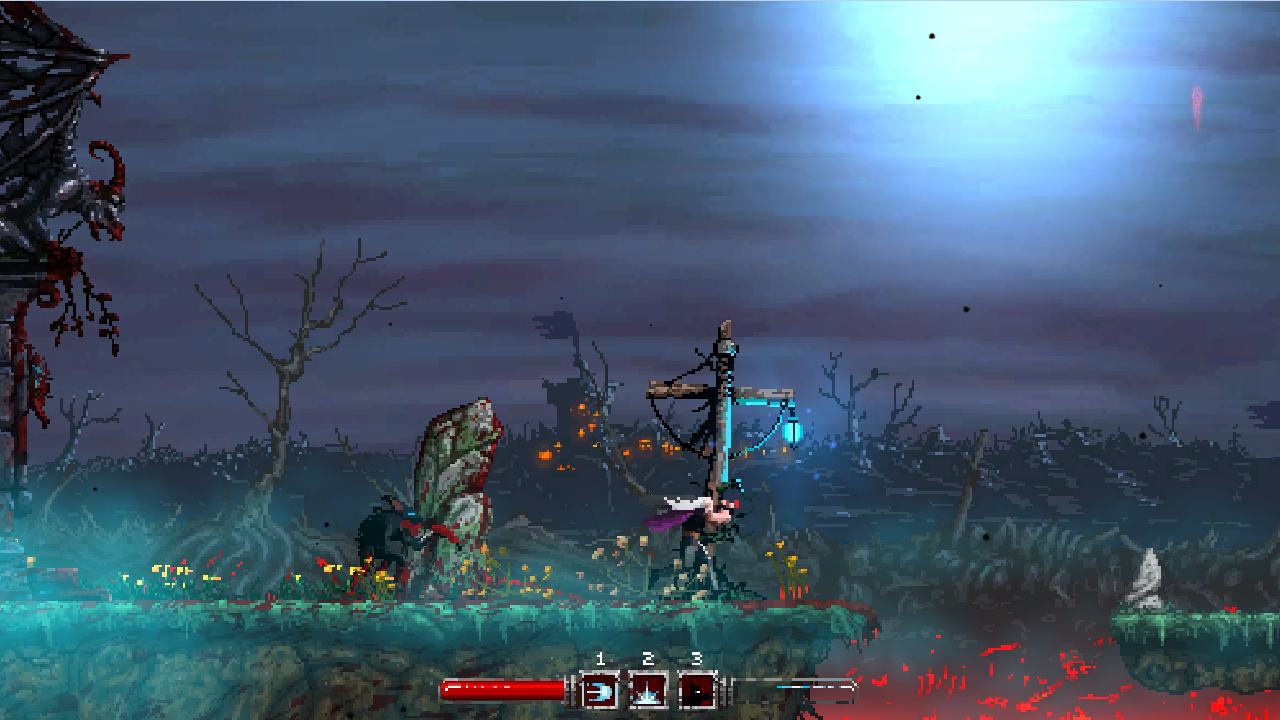
Within the first few minutes of Slain, I died, and then I died again, and then I died again. If Slain’s objective was to die over and over, I would be the grand master of Slain. Luckily, the checkpoints are so frequent that you never get stuck anywhere for too long. There were plenty of times where I had killed all of the enemies, only to be killed by a trap, causing me to completely redo the part that I had just finished. I really only have myself to blame for constantly underestimating the world of Slain. There is never a moment that just lets you breathe. Whether it’s a group of enemies or a boss fight, you’re going to experience your fair share of deaths.

Most of my early deaths could have been prevented if I would have taken a step back from trying to murder everything and embrace the complexities of the combat. One of the main features of Slain is the ability to reflect almost every projectile - and there are a ton of enemies who shoot different types of projectiles. There is also a parry system that allows you to time your blocks and then land critical hits. Parrying enemies is the best way to get through difficult encounters.

Overall, there is a decent variety of enemies. There are a few reskins, but their difficulty has been increased. I never got to the point I felt that I saw the same enemy too much. Because Slain has such a wide variety of enemies I always felt that I had to stay on top of my combat game. The game even introduces new enemies right before the final the boss fight.

The boss fights in Slain are all intense. They use every aspect of the game’s combat mechanics which makes it critical that you never let up. One constant throughout the game is that once the boss starts to lose health they start to speed up their attacks making you have to work even harder. There were plenty of times that I felt that I was about to execute the boss only to get them down to a quarter of their health and die.

Slain's biggest issue is that there is a lack of any sort of upgrades. The health and mana you start with are the same that you end with. Eventually, you're able to switch your regular weapon to fire or ice, but it doesn't feel like much of an upgrade. I find myself torn if this is a major issue or if it's just something that I'm not used to. Traditionally, games will have an upgrade system, so when you run into one that doesn't have one it's kind of odd. In the end, this was okay for me, but other gamers may find this to be an issue.

I had a great time playing through Slain: Back From Hell. It took me roughly about 7 hours to finish which is a great length. If you like difficult games, heavy metal, and tons of gore, then this game is right up your alley!
4.25 out of 5 stars
Thank you to Wolf Brew Games for providing the code.

Catlateral Damage Review
Catlateral Damage is a game about making your dreams of becoming a cat true! The question is will you regret getting those extra nine lives or will it be everything you’ve ever wished for? Find out in this review of Catlateral Damage.
Have you ever wondered why your cat knocks everything off your shelves? You could try it out by setting something on your counter and give it a good hard swipe, but in the end you’re going to be cleaning it up. So what can you do? Thankfully, Fire Hose Games has developed the cel-shaded adventure, Catlateral Damage!
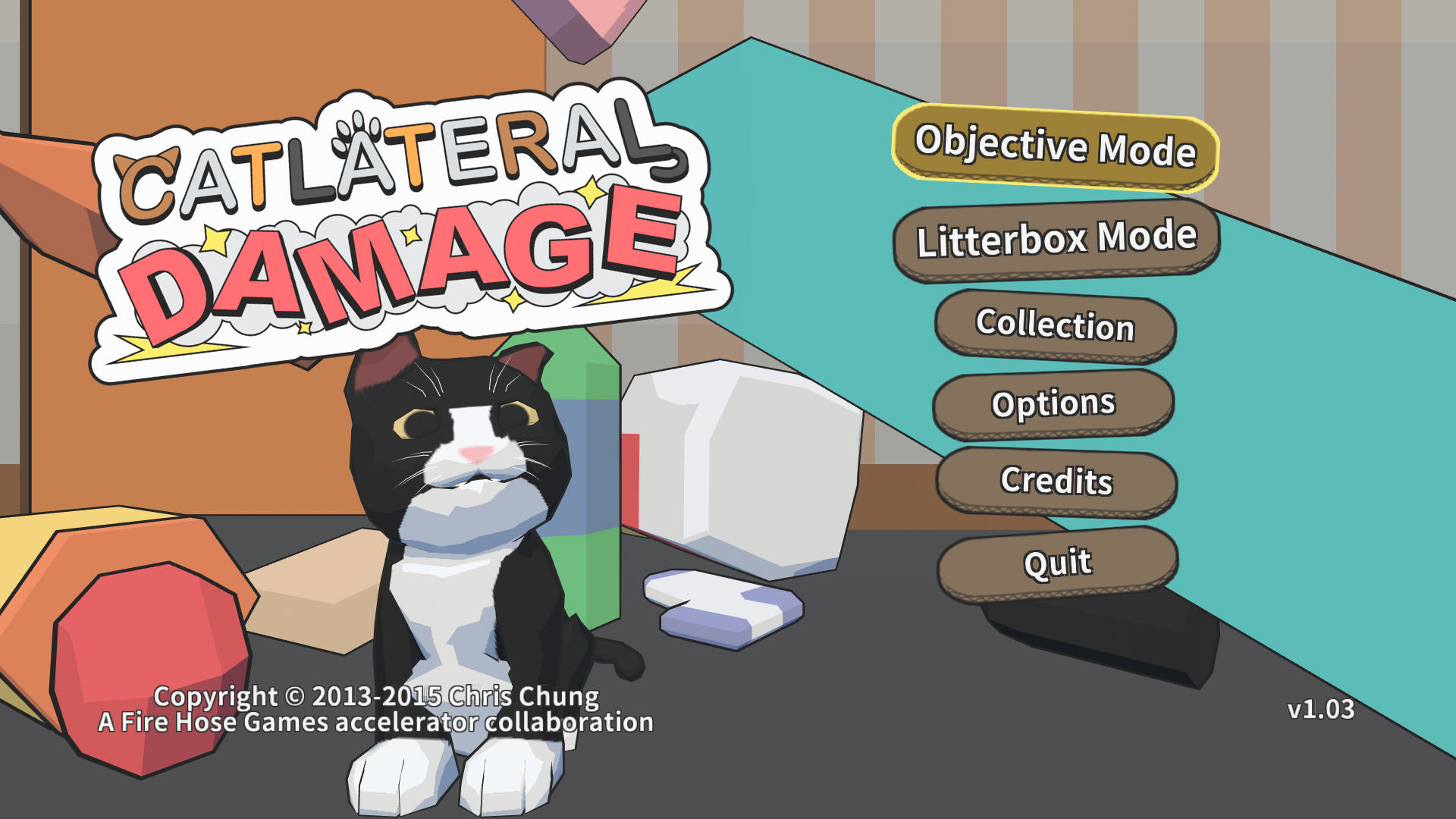
In Catlateral Damage’s Objective mode you play as a disgruntled cat who is upset with their human. Your goal is to knock over a certain amount of objects before your owner gets home. This means climbing on dressers, opening the refrigerator and swiping out all the contents, jumping on bookshelves and sending those classics to floor. There are multiple ways to accomplish your goal. You can pick items up with your mouth, ram things with your head, hold one of your legs straight out and runinto things, or swipe left and right with your paws. The absurd nature of the game, along with the cel-shaded graphics may remind some gamers of the Katamari series and that is never a bad thing!

When you first start a level your cat is slow and weak, but as time goes on you pick up a ton of upgrades that increase your speed, jump, and swipe ability. If you focus on finding upgrades you’ll be in great shape to dominate your owner's home. Some of the ways you find these upgrades is by interacting with objects such as the litter box, unraveling a roll of toilet paper, and interacting with cat toys that are around the procedurally generated levels. By the final levels your cat will be able to jump halfway across almost any room.

There are a guarantee of five levels per play through, but if you find a hidden object you can actually increase this amount. I personally was only able to find two extra levels during my play through, although I think there are more. To finish all of the levels will probably take you around 45 minutes to an hour. If you’re a trophy collector, you can pretty much guarantee that you’ll need about 5-6 hours to get all of them. Besides levels, you can also unlock different cats to play as by knocking over pictures of cats or by completing specific objectives that are related to trophies

Catlateral Damage also has a Litterbox mode where you can choose around 10 levels to play in without a time limit. This gives you the opportunity to play without the stress of a constant countdown. There are a few trophies tied to Litterbox mode, but other than that there’s not much to do.

The questions with all reviews is if the game is fun and worth a purchase. The simple answer is yes, however this does depend on what you’re looking for. If you’ve ever dreamed of playing as a cat whose main goal is to cause the destruction of a home then this is the game for you. It’s also a great game for anyone who is new to gaming or someone who likes games, but isn’t too hardcore. I honestly believe that a grandparent who has had limited exposure to video games could pick up Catlateral Damage and have an absolute blast. If you’re a casual gamer or have someone in your life who is, then 100%, no question Catlateral Damage is for you, but if you consider yourself somewhat above casual you may be a little disappointed.
Final Score: 3.75/5
Thank you to Fire Hose Games for providing the review code!