

The Silver Case Review
Suda 51's very first game is back with HD graphics! Find out if The Silver Case remastered is worth your time in this review!

Release Date: April 11th, 2017
Developer: Grasshopper Manufacture
Platforms: PS4 and PC
Price: (PC) $19.99 / (PS4) $29.99
Visual novels are just gaining steam here in North America, but they've been a staple in Japanese gaming. The Silver Case, which was originally developed by Grasshopper Manufacture in 1999 for the PlayStation, adds a little extra flair to the genre by including first-person point-and-click adventure style gameplay.
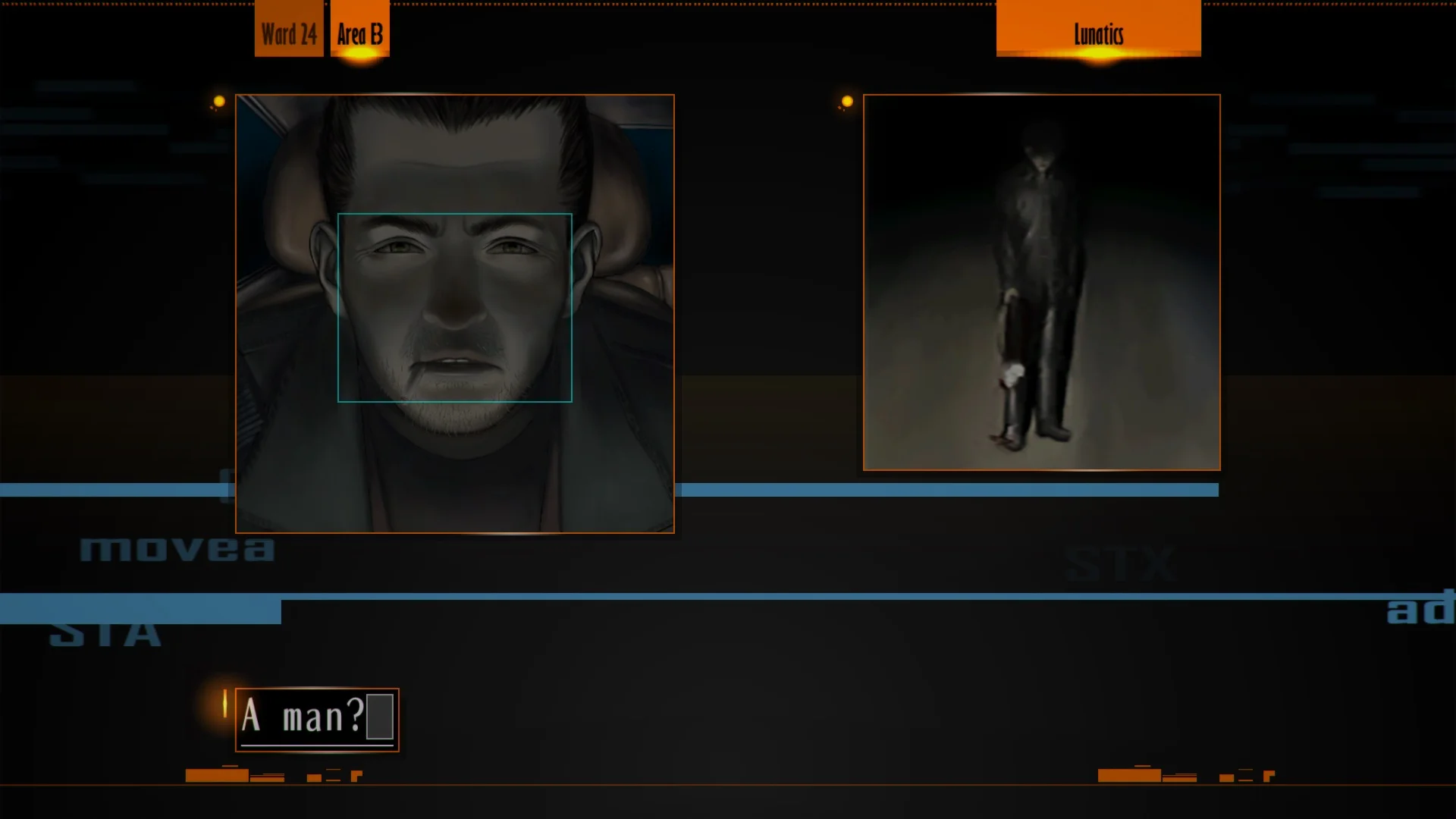
The game takes place over the course of five different cases all which are somehow related to the legendary serial killer, Kamui Uehara. The game is divided into two different scenarios: Transmitter and Placebo. Transmitter follows a rookie cop who joins the 24 Districts Police Department while Placebo follows reporters who are piecing together details to write about the Transmitter events. At first, I thought that the Placebo portion was just a small little side thing, but it actually helps expand on the events of the main story and definitely deserves to be played.

One of the interesting things about The Silver Case is the fact that it's an HD remaster of a PS1 game. When playing, it almost feels like you're playing a new game that's trying to be retro. With PS2 or PS3 remasters they can easily be modified to look like a modern game, but PS1 games were all blocky and weird looking. With that being said, this adds to the charm of The Silver Case and makes for a unique experience.

The controls in The Silver Case definitely took some getting used to. You have to press triangle to bring up a menu and select an action. This is something that you have to do whenever you want to move, interact with something in your inventory, or look at something. This is one of the drawbacks that could potentially happen when you remaster an old game.

While the majority of the game does a good job moving you along, there are a few parts that define the word tedious. There is a part particularly towards the end, where you have to thoroughly investigate 10 towers. All the towers have the same layout, but it's very easy to miss something. Furthermore, every time you enter a tower you have to pull up your menu, select move and then move forward. Ideally "move" would just always be the default setting, but that is not the case.

Another thing that might turn people off is that The Silver Case is pretty vulgar. We keep The Gamers Lounge family friendly so I won't write any of the words here, but it will be interesting to see how people feel about the language when they play it. There are even a few sexist parts, which I personally feel is actually about the characters and their behavior, than a reflection on the developers. The main reason I am bringing all of this up is because it shows how different games were in 1999 and even how different games are Japan. This is refreshing though, because it's nice to know that the developers kept the game in its original form.
Overall Grasshopper Manufacture's remastered version of their first game will take you about 15 hours to complete. For anyone who is a fan of Suda 51 and company, or if you're looking for a game that gives a unique experience, The Silver Case is definitely worth a playthrough.

Pros:
- Interesting Story
- Unique experience
- Rich characters
Cons:
- Can be tedious
- Controls are outdated
The Silver Case was reviewed on the PlayStation 4. Thank you to NIS for providing us with the code.

Loot Rascals Review
Loot Rascals features an amazing classic cartoon art style, but is that all it features? Find out if Loot Rascals is worth your time in this review!
For as many games as I've played I've never actually played a true "roguelike." I really didn't know what this meant until I played Loot Rascals. What appears to be a simple game with procedurally generated levels where you loot cards and strategically move one space at a time in an attempt to gain an advantage over an enemy, is surprisingly difficult due to the all too real threat of permadeath, but also incredibly satisfying.

At the start of every level, you have 250 turns to find the exit portal, which will take you to the next world. Each time you walk, loot a card, use an ability, or get into combat counts as a turn. Once you run out of the first 250 turns, extra enemies spawn after the next 50 turns until a monster spawns that pretty much causes instant death if he catches you. It's not too hard to find the portal once you have a firm grasp on Loot Rascals.

Loot Rascals feature 7 different types of cards; attack, defense, passive, ability, unique, burst, and mysterious artifacts. Attack and defense cards increase your damage and determine how much damage you can withstand respectively. These cards can also come with bonuses that will increase the strength of themselves or the cards around them. Passive cards don't need to be equipped to enjoy their benefits but do require tokens which are received from "decompiling" extra cards. Ability cards feature different spells such as healing, fire and lightning attacks, teleportation, freezing enemies, and decoys that will distract enemies. Unique cards have to be equipped but can give you extra health, additional points to your attack and defense cards, and other things that affect the actual gameplay of the game such as taking away your "turns" and replacing it with a time limit. Burst cards (which may not be there official name) will combine all of the equipped attack or defense cards into one super strong card, however you will lose any bonus those cards have. I finished the game and I'm still not sure what the mysterious artifacts do, but I can tell you this, don't decompile them.

Loot Rascals features a day/night cycle which changes every 5 turns and determines if you'll have an advantage or disadvantage over your enemies. The advantage that you want is the ability to attack first. Attacking first will not only damage the enemy first but it will also increase your chance of blocking. There are times where you find that no matter what you do you are in a situation where you're going to be attacked first, so in those instances just hope that you have a good amount of defense.

One of my favorite parts of Loot Rascals is the community aspect. During your adventure you'll find cards that once belonged to other real life player's characters who have died. You can choose to send the card back and be rewarded with the chance of finding a helpful hologram who will fight and take damage on your behalf or you can choose to keep it, which will result in the chance that an angry hologram will show up and try to kill you. I found myself only keeping the cards that either came with an ability and had a really good bonus. When you die (which you will a lot) people can choose to send the card back to you where you can find them back at your base. If people are nice enough you can easily start a round with a pretty decent inventory.

Loot Rascals also features one quest per level. Each quest is to kill a powerful named enemy and return the card to your base. If you do complete the quests you can receive additional health, a card that will reveal the entire map, 30 tokens, or 2 extra spaces for your inventory. Depending on how strong the enemy is and what your current attack/defense situation is you may find yourself passing on quests, but if you have the turns to spare and feel good about your situation, these quests are totally worth completing.

Because Loot Rascals is procedurally generated, you may be dead on arrival. There were times where I started up a new round only to find an enemy that meant certain death. There are also other situations that you'll find yourself surrounded by enemies where your only option is to die. Some of these may be at the fault of the player, but other times they aren't. Luckily, if you die, you can quickly start a new round and try again.

One of the other things that was frustrating for me was that Loot Rascals crashed on me way too many times. I understand that no game is free of bugs, but at one point I had found myself moments away from killing the final boss only for the game to crash. I had been playing the game for almost a week and had only reached the final boss about six times, only to have it taken away from me. This was probably an isolated event, but nonetheless, crashes are never a good thing.

In all honesty, I absolutely love Loot Rascals. It's definitely a challenging game that takes a lot of patience, but in the end, it's totally worth your time. I'd love to give it a 4.75/5 but due to the crashes the highest score I feel that I can give it as a 4/5. There's no doubt in my mind you won't regret purchasing Loot Rascals.
4 out of 5 stars.
Thank you to Hollow Ponds for providing us with the code.

Mervils: A VR Adventure Review
Have you been itching to play a new VR game? Find out if Mervils: A VR Adventure is the game you've been looking for in this review!
As time goes on, PlayStation VR games are starting to become longer and more in-depth. Mervils: A VR Adventure is an action-adventure platformer with RPG elements. You take control of an adventurer who is sent out to find the pages and bind the Great Mervil Book so you can defeat the dark sorcerer "Balazar the Evil."

The first thing you do is create your character. You might expect to have this option in a game that has RPG elements, but in fact, this is the first PS VR game that I've played that included it. Once you're done with your creation the fun really begins.

Each world is wildly different from each other. There's a fantasy kingdom, the wild west, an arctic level, a pirate level that includes an underwater portion and a final boss level. Within each level, you'll find a bunch of quests to complete, hidden areas, treasure chests, a final boss fight and of course, pages of the Great Mervil Book. The interesting thing is that you don't actually have to find all of the pages of the book to continue to the next level, however, if you don't find all of them, it makes upgrading your equipment incredibly difficult.

One of the most difficult things for VR games appears to be addressing the camera/movement. Mervils uses a technique that keeps the camera in place as you run around the world until you reach a certain distance and then it resets. You can also press L2 to reset the camera and bring it closer to you. The majority of the time Mervils' camera works fine, but there are times when the camera positioning can cause you to die, because you are unable to see what's hitting you. This setting can be changed to always make the camera follow you, but this has it's own issues. I'd recommend playing around with the different settings so you can find out which is the best for you.

Normally I don't get too hung up on voice acting, but this is probably the biggest flaw in Mervils. There are a ton of different voice actors, which isn't bad, but the accents are all over the place. You'll talk to one person who has an english accent, only to talk to someone who has a southern accent who is standing nearby. If the accents were consistent to each level it wouldn't be nearly as bad.

One of the my favorite aspects of Mervils is that almost each world includes a level that switches from platforming to something else. For example, the wild west world has a level that is just riding on a mine cart and collecting coins while jumping over broken pieces of track and avoiding objects. The arctic level includes a sleigh ride and the pirate level includes a pretty awesome ship battle scenario. Mervils could easily have been a pure platformer, but the fact they included different types of gameplay shows that the developers really wanted to make a memorable experience.
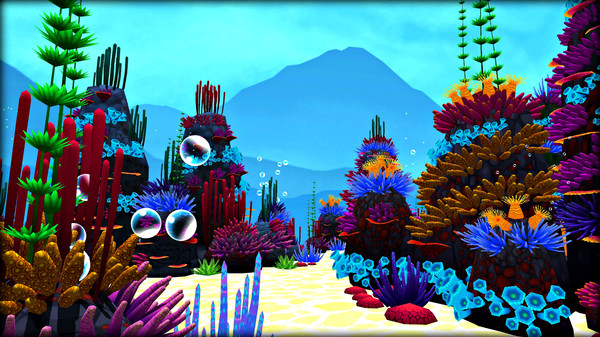
Mervils also features a good amount of puzzles that you have to complete if you want to find all of the pages. Some of these puzzles took some serious time and trial and error for me to complete. For the most it's easy to understand the objective of the puzzles, but just because you understand what you have to do doesn't make it easy. I have to give the developers credit for creating tough puzzles, because it seems that lately puzzles are typically not that hard.

Overall I really had a good time with Mervils: A VR Adventure. Sure, the camera and voice acting could be better, but ultimately this is a solid action-adventure, platforming, RPG that is definitely worth playing through. Finally, I want to say that the virtual reality comfort level was great. I spent about 10-12 hours in one day completing the game 100% and I never had any motion sickness.
4 out of 5 stars.
Thank you to VitruviusVR for providing the code.

Tales of Berseria Review
Are you ready to hit the seas with a daemon seeking revenge? Find out if you should set sail with Velvet and her companions or if this game should stay docked in this review of Tales of Berseria!
The Tales series is back with another installment, but things are a lot darker than they've ever been before. The story features a young woman named Velvet who is raising her little brother, Laphicet. One day when Velvet is away from her home the town is struck by a daemonblight that turns all of the citizens into "daemons" (prounced demons.) Amongst the chaos, Laphicet goes missing. Velvet tracks him down to only find that her brother-in-law Artorius is sacrificing Laphicet as a part of a ritual. Artorius attempts to sacrifice Velvet, but she is able to fight him off. Unfortunately for Velvet, she was somewhat affected by the daemonblight and is partially turned into a daemon. Velvet then sets out to avenge her brother and kill Artorius.

One of the highlights of the Tales series has always been the combat system. While a lot of JRPGs use a variation of turn-based combat, Tales of Berseria uses a live-action system that is much more frantic than other RPGs. You also have four people total that are fighting with three of them working completely independently. You can adjust their behavior with a simple button command, but this never felt necessary. Additionally, Berseria doesn't use mana for special abilities, but rather a Soul Gauge that depletes as an ability is used and regenerates as you either stun an enemy, kill an enemy, or just over time. This unique system is great when you're kicking butt, but can be a pain when fighting a stronger enemy. I appreciate it when any developer attempts to freshen up old mechanics, but I wouldn't miss this system it if it didn't show up in the next game. Your companions also use this.

One of the big drawbacks that I felt with Berseria is that the fights, for the most part, are incredibly easy on the normal difficulty. Unlike other JRPGs you can see the enemies in the field and can choose to either fight them or ignore them. It's logical to think that you should fight every enemy so you can level up, but the fact is that you can do a minimal amount of encounters and be fine. There were times where I was working my way through a dungeon and discovered that I was absolutely dominating every enemy. After a while, I became bored with encounters and just wanted to advance the story. I'd recommend that after about 10 hours if you find Berseria to be too easy, that you should either increase the difficulty or switch to any character other than Velvet. You can always switch back later.

Speaking of the other characters, you eventually have six people to choose from. One thing I really enjoyed about this is that the majority of your characters are in your party within about 12 hours of starting the game. This doesn't cause any inconvenience later on down the road of someone joining your party at say 30 hours, meaning that you have to buy all new gear for them or start leveling up their skills. Each character has a set of "Artes" and the more they use specific Artes, the better they become. This is also true for equipment. There's actually a lot to level up in Berseria, but most of it just happens naturally without needing to pay attention to what you're doing so you don't need to focus on it.

As I mentioned before, the dungeons are pretty massive. There are tons of corridors, breakable walls, and puzzles that you have to run through. Now, when I say "dungeons" you get the image of some dark, dank scary place, but in Berseria most of the dungeons are actually outside. Aesthetically this is a nice change of pace because it's more fun to run around a beautiful forest than a dingy cave, right? One issue is that one of the puzzles is repeated a few times and it's kind of a pain. There are color coded floating objects that you have to touch to deactivate colored doors. The issue is that when you change one color you activate another, so this may mean that you need to run back to another part of the dungeon to deactivate another color. This wouldn't be bad if it was just one dungeon that did this, but there are at least three where this happens. No one likes doing the same puzzle mechanics over and over and I am not an exception.
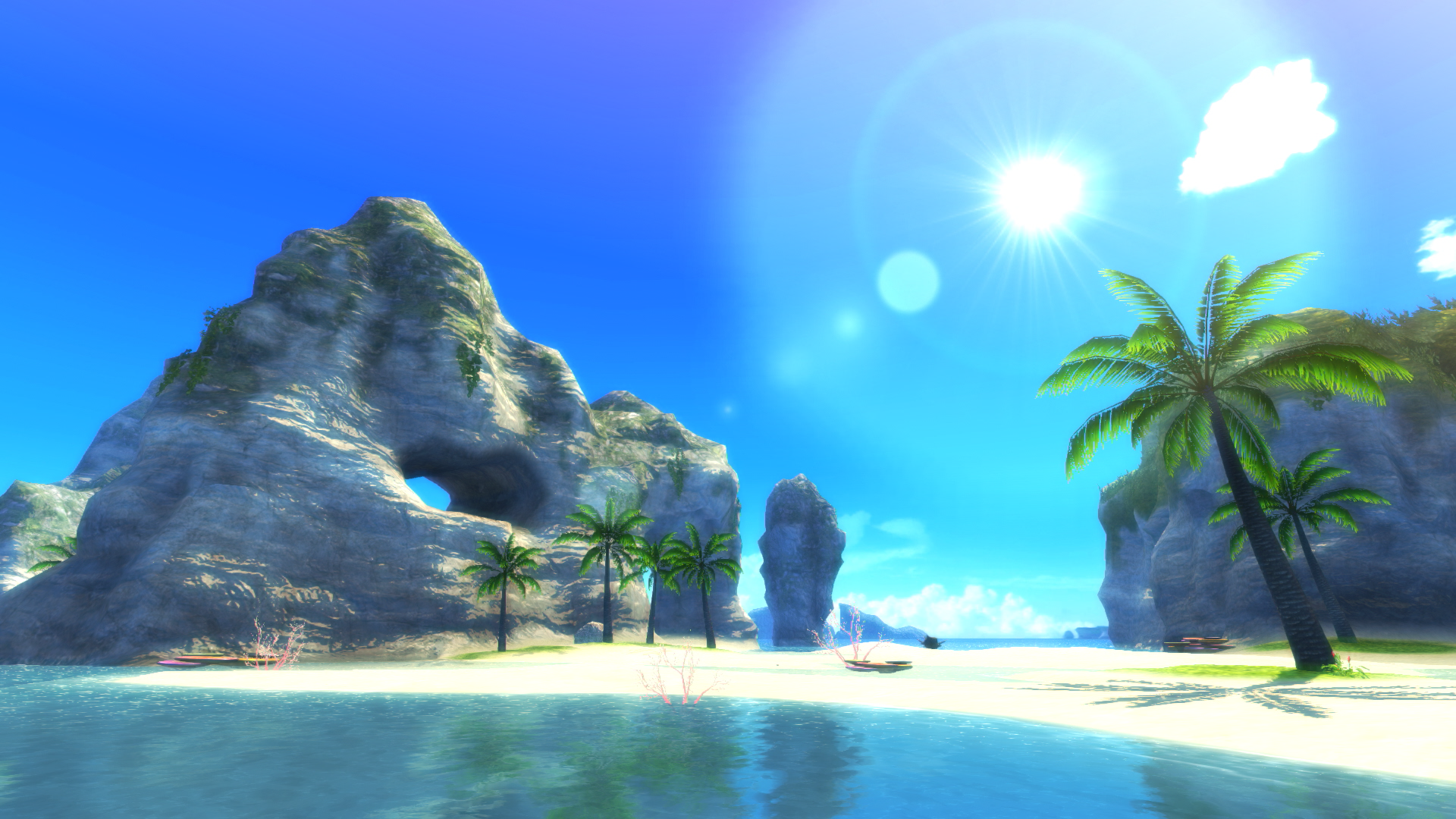
The story itself will take you around 50 hours to complete, but there are plenty of things to do outside of the story. There are mini-games, side quests and an awesome real-time ship simulator where you can find ingredients to cook with. Cooking is actually a pretty awesome feature that allows you to get extra perks, as well as automatically heal yourself during combat, as long as you reach certain perimeters. I definitely recommend partaking in the extras because the benefits are absolutely worth it. The story also features an amazing amount of hand drawn anime cutscenes that are always fun to watch.

Overall, Tales of Berseria is a good game for people who are both experienced and inexperienced with JRPGs. The fact that the storyline is much darker than any of the previous installments will excite people who are looking for something that breaks away from the usual "good guy" story.
3.5 out of 5 stars.
Thank you to Bandi-Namco for providing the code.

Geki Yaba Runner Review
QubicGames' brings their gnome runner to the PlayStation Vita. Find out Geki Yaba Runner is worth your time or will have you running for the hills in this review!
Most runners are built on the premise that you run as far as you can until you die and then you start over. Geki Yaba Runner for the PlayStation Vita does away with the run until you die concept and incorporates a story that takes place over the course of 136 levels.

As the player, you control a gnome who has the task of rescuing a princess. The majority of levels have a minimum amount of socks that you have to collect to progress because well, you're a gnome and that's what you do. This is, of course, easier said than done. Geki Yaba Runner actually touts itself as 'one of the hardest runners out there' and I can't disagree with that. The reason for this is because not only do you have to be extremely precise, you have to remember to use all of your gnomes abilities.

The abilities consist of jumping, floating, falling fast, increased speed, and plowing through objects. If you touch a spike, you die. If you hit a wall, any wall, you die. If you run into a tree, you die. Pretty much everything will kill you, so you need to do everything perfectly and at times you're required to use two abilities or more to get through one tiny section of the game. This requires patience and muscle memory, but thank goodness respawns are instant.

I personally play a lot of runners and I can say that this one is definitely difficult, but thanks to the frequent checkpoints, it's not impossible. Regardless of the frequency, you will most likely die over 1,000 times. It wasn't unusual for me to die around 40 times on one level and in one case I died 133 times. Of course, this sounds like it would be frustrating, right? This actually drove me to play even more because I was determined to advance. There were so many times that I would say "one more level" or "one more attempt" only to find myself playing three to four more levels.

As I mentioned earlier, Geki Yaba Runner features a story, but it's pretty shallow. The story elements only feature a few still images that require you to piece together what's happening. I respect the decision to include a story in a runner, however, because it doesn't add much to the overall game, it wouldn't be missed if it wasn't there. Maybe if there's a Geki Yaba Runner 2, the story will be more developed.

Geki Yaba Runner took me about 3 1/2 to 4 hours to complete. The difficulty progresses nicely and while at times you'll get stuck, the game is addicting enough that you'll want to complete the entire adventure.
4 out of 5 stars
Thank you to QubicGames for providing the code.

Robinson: The Journey Review
Crytek has created a gorgeous world that is unlike anything you've seen in virtual reality. Find out if this is a place you want to explore or ignore in this review of Robinson: The Journey.
Crytek is known for making visually stunning games, so I was pretty excited when I found out they making a game for the PlayStation VR. Robinson: The Journey is an exploration puzzle game that takes place on a distant planet that's covered with dinosaurs. You, your floating AI HIGS unit, and your pet Tyrannosaurus, Laika will work together to try to discover what happened to your ship, as well as sending out emergency signals out into the universe.
Graphically, Robinson: The Journey looks as good as a game possibly can on the PS VR, but unfortunately the hardware restricts Robinson: The Journey from really shining. With that being said, Crytek has done a wonderful job creating a rich prehistoric world. One of the things that you can do is collect information on a variety of different creatures using an item that looks sort of like a move wand. In most games, this might be a drag because it feels like a pointless collectible, but in Robinson, it feels like it would be a necessity for actual survival.
The world isn't that large, but the variety in scenery makes up for a lack of areas to explore. When you are inside the area you will get hints from your HIGS unit, but outside of that, you are pretty much on your own. There are no breadcrumbs or mission indicators that hold your hand to your next objective - you are truly living in this world and must figure out what to do next. This can be both frustrating and rewarding. The sooner that you're on your own the more you will start to enjoy Robinson: The Journey.
The puzzles in the game are pretty straight forward. You'll either use the HIGS unit to distribute power to different items, use Laika to scare dinosaurs into moving where you want them to go or dropping items, or use the item that looks like a move want to pick up objects and move them. You might also be able to say that there are puzzles that have to do with the actual act of exploring. When you are climbing trees or scaling mountains you'll find that there are multiple paths. Some of these will lead you to your goal and others will lead you to a dead end. This is a nice touch because it makes Robinson a lot less linear.
The entire experience can take anywhere between 3-5 hours depending on how much exploring you do. If you take your time and collect all the data on the animals it will take you over 5 hours. Anywhere between 3 and 5 hours is the perfect amount of time for any VR game, but what makes Robinson: The Journey tough to recommend at the current digital price of $59.99, but GameStop and Amazon both sell the physical version for $39.99 and I think that is the perfect price.
Overall score 3.75 out of 5.
Thanks to Crytek for providing the code.

Loading Human: Chapter 1 Review
Maximum Games' is placing a big bet on their brand new multi-part series Loading Human: Chapter 1. Find out if it's worth your time in this review!

In Loading Human you play as Prometheus, an aspiring scientist who has been summoned by your dying father to retrieve the Quintessence, which reverses the aging process, ultimately saving your father. No pressure, right?

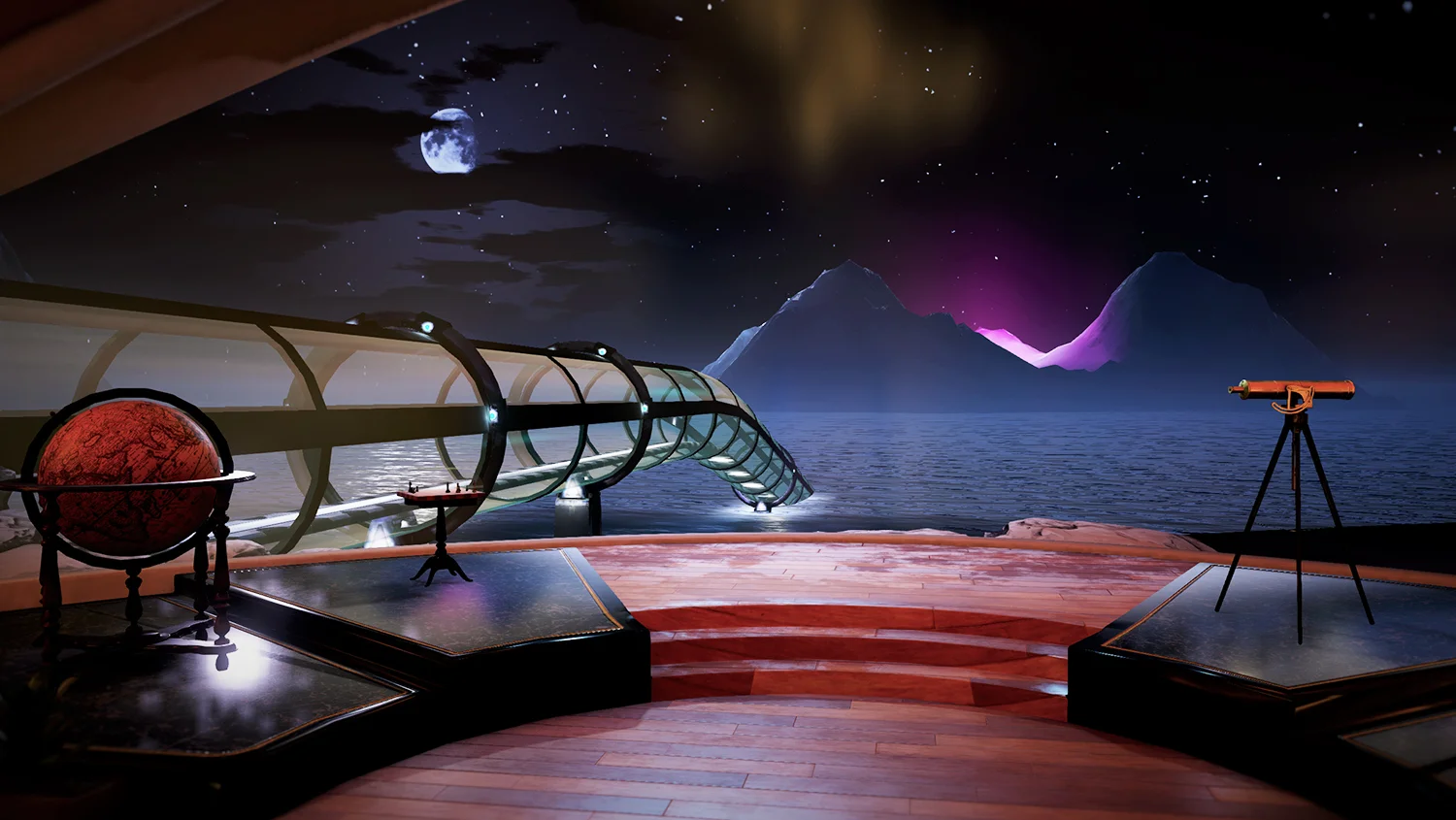
The gameplay of Loading Human is very similar to Heavy Rain, except in VR. You'll find yourself interacting with plenty of items, some useful and some not. You can pick up pretty much anything you could imagine a normal person can pick up. I found myself picking up glasses, plates, bottles of wine, dropping them just to see them break. None of this is probably mind blowing, but what are usually mundane tasks are so immersive that the player finds themselves completely engaged in what's happening. This could be the very nature of VR, but to succeed at this, the world has to be developed and that's exactly what Loading Human achieves.

Loading Human was the first full PlayStation VR game that I've played, so when I first started I felt that the pacing was a little slow. Your character only walks and there is no option to run. I feel that most people who are making their first full dive into VR with Loading Human will feel this way, but after playing a few other games I feel that the pacing is actually perfect. The reason being that motion sickness is very real and in fact, Loading Human handles movement better than the other games that I've played so far. Some other games, such as Batman Arkham VR make you teleport around instead of walking.
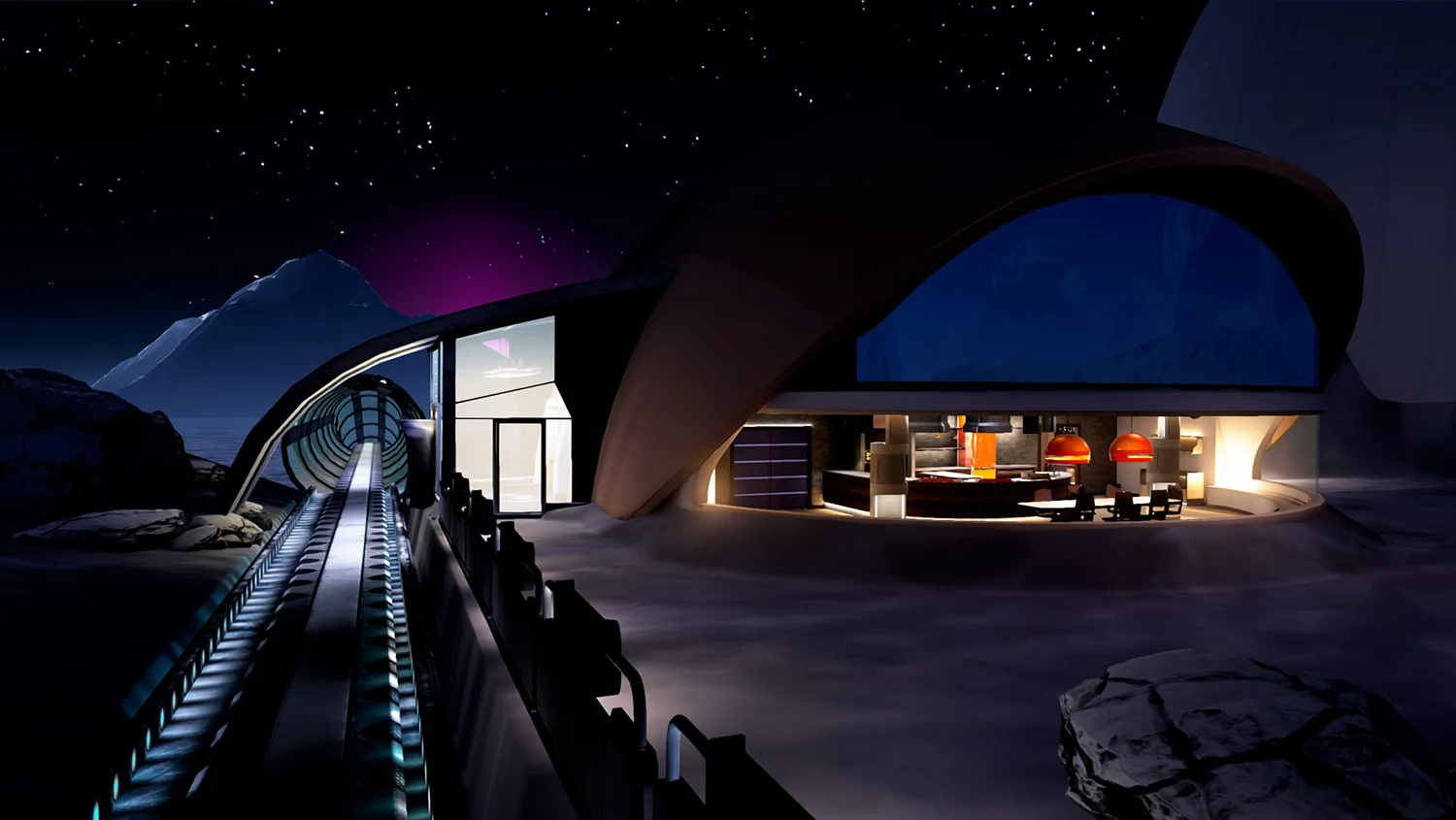
There were a few hitches along the way with Loading Human. One issue that I found was with the hint system. There aren't any breadcrumbs or item tags that show you your next objective, which is totally fine, but the hint system that is in the game can be very vague or just flat out wrong. There was one time where I had to restart the game a few times to understand what I was missing. This can, of course, be very frustrating when you're trying to progress through a game which relies on its narrative to keep the user engaged. The other issue is that the base that you are in is fairly small and you'll find yourself exploring the same areas quite a bit. There are a few space simulations that are fun, but they are only "exercises" that you don't actually use. Then the final major problem without spoilers is that once you finally get to the point to where feel like the game is going to completely open up, it ends. If the developers would have just given the user 30 minutes to an hour of gameplay that used the space simulations again it would have broken up some of the mundane tasks.
Even with all the issues that I felt, I have to say that I am definitely looking forward to Loading Human: Chapter 2. From what I've heard there are supposed to be four chapters total which is a hefty investment if they plan on making every game $40. What would be nice is that the first installment is $40 and the rest that follow can be downloaded for $20 each.

If you like narrative driven games and are looking for something to play on your PlayStation VR, then I feel comfortable recommending Loading Human: Chapter 1, but if you are looking for something that has a lot more action then you may want to try something else. With that being said, I definitely think that as the story evolves that Loading Human should be a series you keep on your radar.
3.5 stars out of 5.
Thank you to Maximum Games for providing the code.

MeiQ: Labyrinth of Death Review
The planet’s rotation has stopped and it’s your job to get the world spinning again! Find out if you’ll want to take the time to save humanity in this review of MeiQ: Labyrinth of Death!
Have you been itching to save the world? How would you like to do it with a massive robot who uses one of five elements? Well, you’ve come to the right place! The planet’s rotation has stopped and to get the world back to normal you’re going to have to take Estra, her faithful Guardian, and a few friend’s through a 25-30+ hour journey to resume order!

When you first dive into MeiQ: Labyrinth of Death you’ll feel that it’s a traditional turn-based JRPG that you may have played in the past, but a few twists develop this game into a much more strategic affair. One of the major mechanics is the use of elements. Using fire, wood, ice, earth, and you’ll be able to expose enemies weaknesses, but enemies can also be resistant to these elements, so you’ll need to adjust your strategy as you go. There are a few ways to change your strategy. As you progress in the game, you’ll unlock new Guardians, body parts, and gems that all have different elements or bonuses. Finding the right combination can get a bit tricky, but MeiQ doesn’t really penalize you for dying, so anything you do is low risk.

Once you figure out your elements and you’re ready to kick some butt, the fun begins. Eventually you’ll have a six party team; 3 Guardians and 3 heroes. You’ll primarily use your Guardians in battle, but the heroes have some awesome abilities to help you get through the fight. Each hero has a different set of skills such as group attacks and party buffs that increase attack, defense, etc, and heals. These abilities are limited, so you really have to think about when you want to use them, especially when you first start playing. As you level up, the limits will increase and you can use them more freely. You can replenish these abilities by visiting a spring, setting up a portable camp, or returning to the inn to rest. This isn’t a very complicated system and anyone who’s experienced in RPGs should pick it up fairly easily.

There are four main towers that you must conquer with a few additional ones that appear later in the game. You’ll find yourself trekking back and forth between them to complete main and side quests. Most of the side quests I completed just by playing the main story and grinding so you don’t have to pay too much attention to the requirements. I don’t feel like this is a bad thing, but it doesn’t really add much to the experience ether. In most dungeon crawlers when you walk along a path, the tile you step on is uncovered - MeiQ does some slightly different and a whole lot better. As you progress, you’ll see a few of the surrounding tiles lit up as well, which is nice because to uncover the entire map you don’t need to step on every single tile. The only issue with this is that at times you’ll think you’ve been somewhere, but you actually haven’t. I have to say that even though there were times I had to backtrack because I had missed something, I still prefer the way MeiQ uncovers their tiles than say Etrian Odyssey.

As you make your way through the four towers you’ll start to notice that the difficulty level, as well as experience can be all over the place - this is one major issue that I had with MeiQ. In one battle you may be able to kill a group of enemies that yield you less than 100 xp (which is significantly low) only to encounter another group of enemies that will give you thousands after defeat. The biggest discrepancy that I found was an area that had enemies that gave you 600 xp only to be followed by enemies that have 4xp. I’m not sure why there is such an imbalance between battles, but this made finding a good place to level extremely difficult.

Overall MeiQ: Labirynth of Death is a JRPG players RPG. For those who are experienced with turn-based battles, but I wouldn’t consider it an easily accessible game for new comers. One question that I know people have is if there is a new game and I’m happy to say that there is. The bottom line is if you’re looking for a solid JRPG for the PlayStation Vita then this is definitely worth the time and money, just be ready for some head-scratching balance issues.
Thank you so much to Idea Factory for providing the code.
3.75 out of 5 Stars

Kick and Fennick Review
The underrated PlayStation Vita game, Kick and Fennick, makes it console debut! Find out if a game about a boy, a friendly robot, and a psychotic mech is worth your time in this review!
Kick and Fennick originally made its debut February 3rd, 2015 on the PlayStation Vita. It launched as a free PlayStation Plus game, but was overshadowed by the critically acclaimed Transistor and Rogue Legacy, which were also free that month. The fact that it was developed by a small studio without a long history, published by a company not a lot of people know, and put it on a console that doesn’t get much attention, you find a recipe for a game that is bound to go unnoticed. Now with Kick and Fennick coming to Xbox One, PlayStation 4, and Wii U it’s getting another chance to find a place in the hearts of gamers.
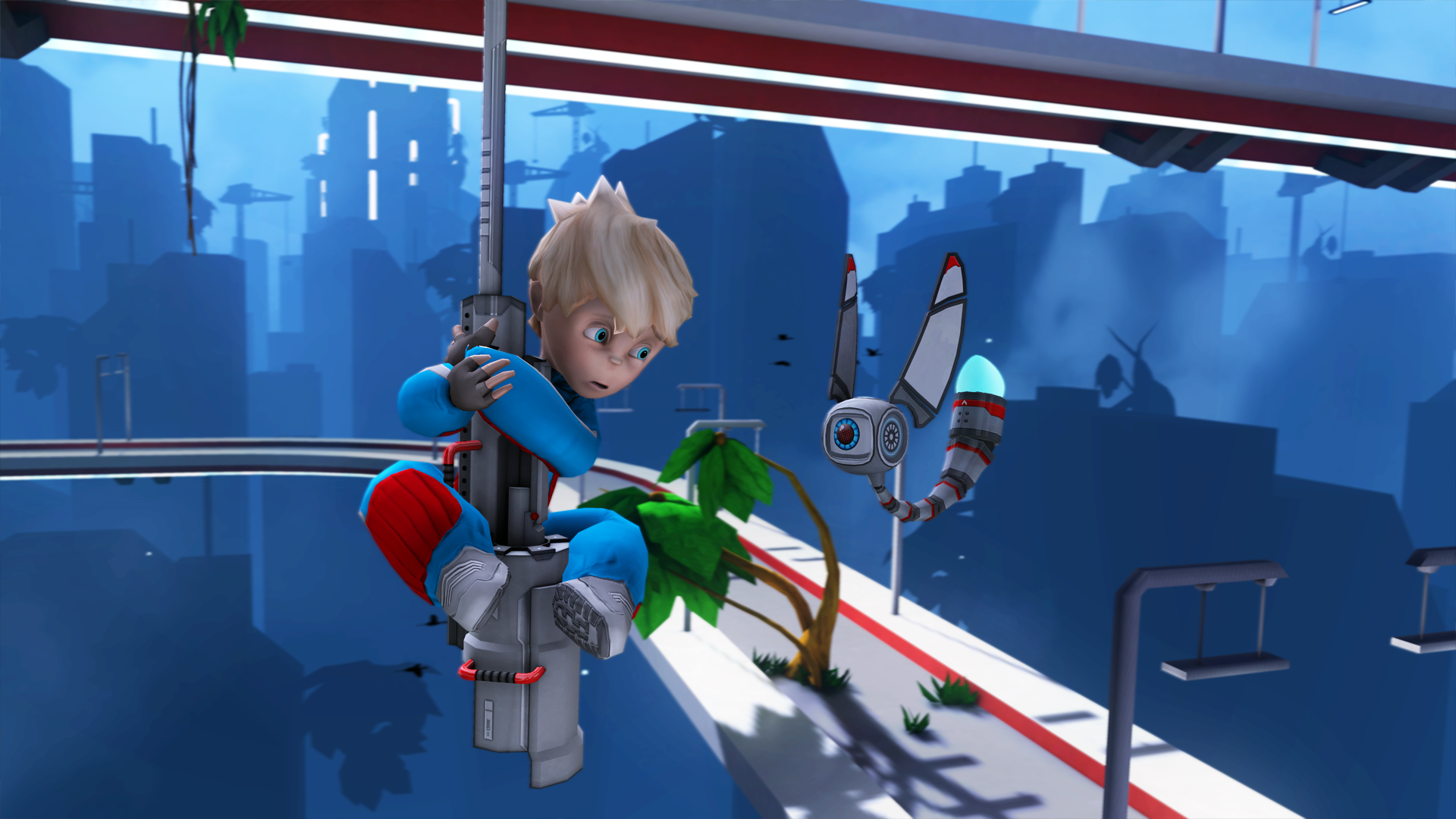
After waking up in a mysterious place, Kick meets the flying robot, Fennick. After Fennick saves Kick from a large robot that is set on destroying everything that it comes into contact with, the pair realizes that Fennick’s battery is broken and they must find a replacement. You basically get an introduction to a story and then it’s never developed into something bigger. It’s easy to overlook this while playing on the Vita, but console gamers may not be so forgiving.
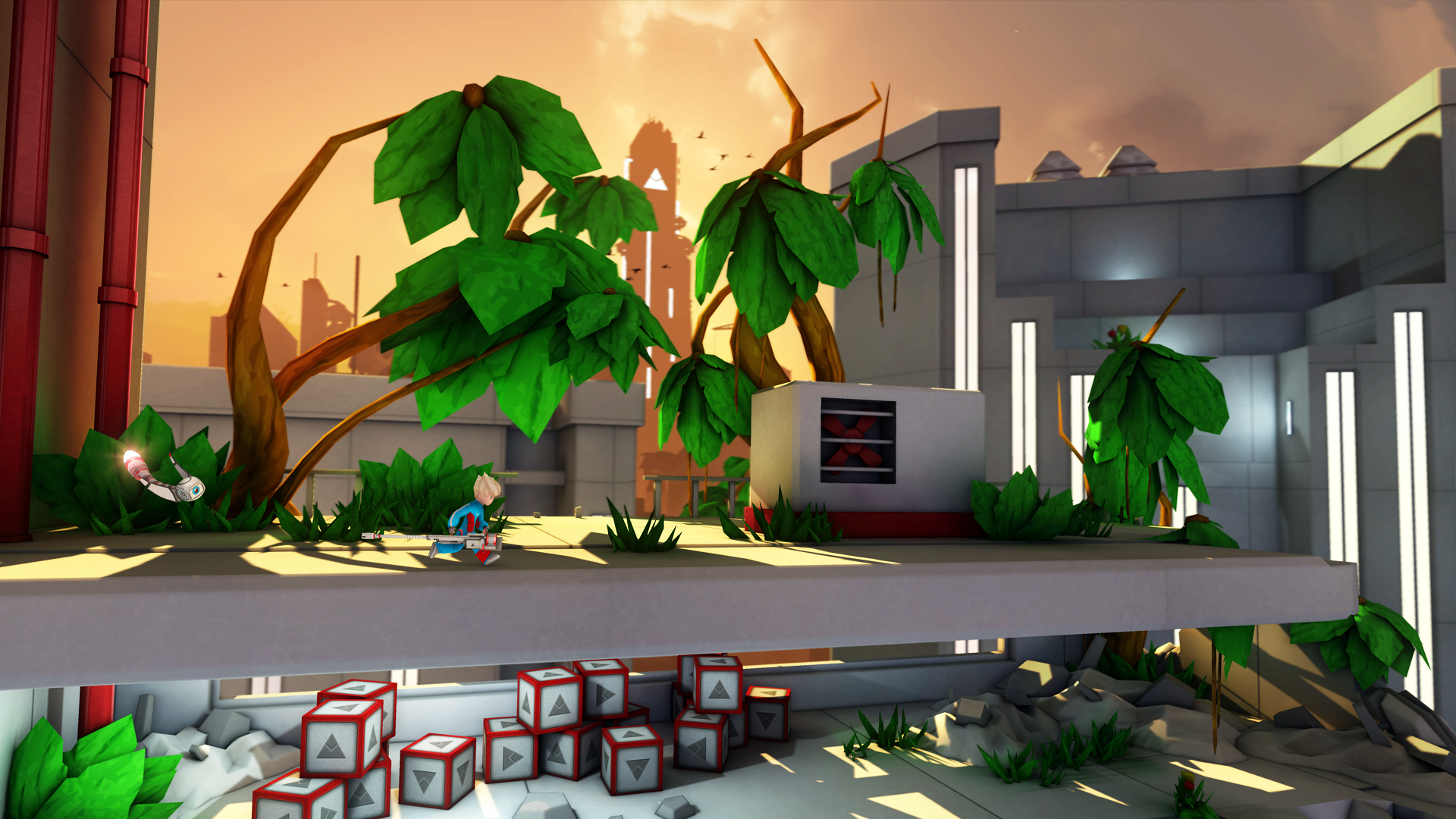
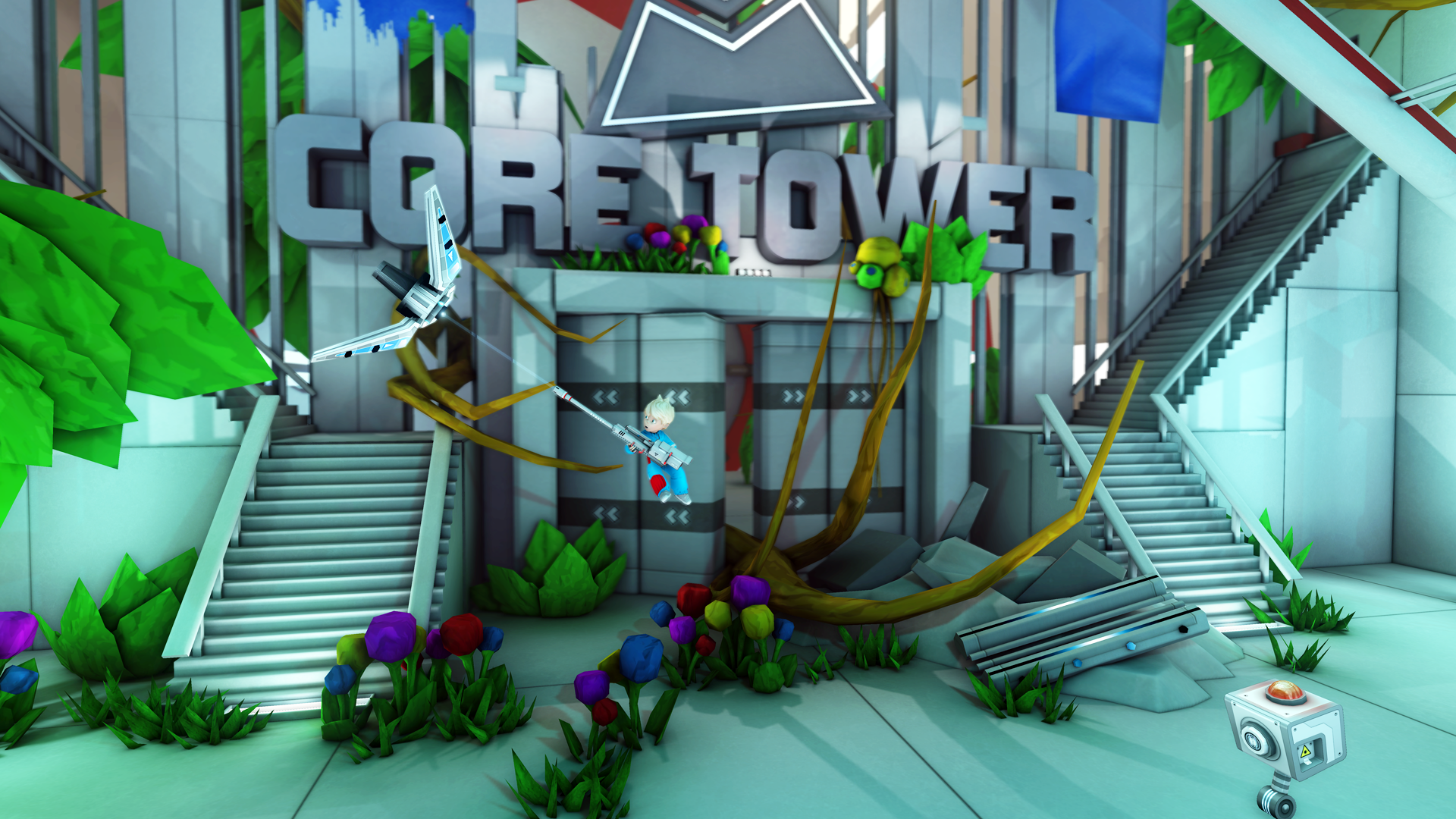
The game spans over 5 worlds and 45 levels. Your main tool is a gun that both propels you through obstacles and shoots enemies. Precision is the key to Kick and Fennick. There are times when you’ll need to launch yourself through lighting rods, bounce on moving platforms, and slide along rails that move you at a high rate of speed. Whenever you miss your target and fall to your death you are respawned at the nearest platform, but if you die too many times you have to restart the level.
At the end of each world, you are confronted by the mech that is set on annihilation. Luckily, Kick and Fennick can get creative and use their wits to outsmart the silly, psychotic robot. For the most part, the boss fights use the skills that you develop over the course of your adventure, but the final boss fight throws something completely brand new in and it’s really confusing. I’m not going to spoil anything, but this didn’t set well with me. By the time I reached the final boss I was roughly 5 hours into my journey. I had played Kick and Fennick before on the PlayStation Vita, so I knew what to do this time around, but without any indicators that something new is required will leave some gamers confused as what to do. Also, the jump mechanic gets really extreme at the end of the game and it’s hard to get your bearings for a little bit.
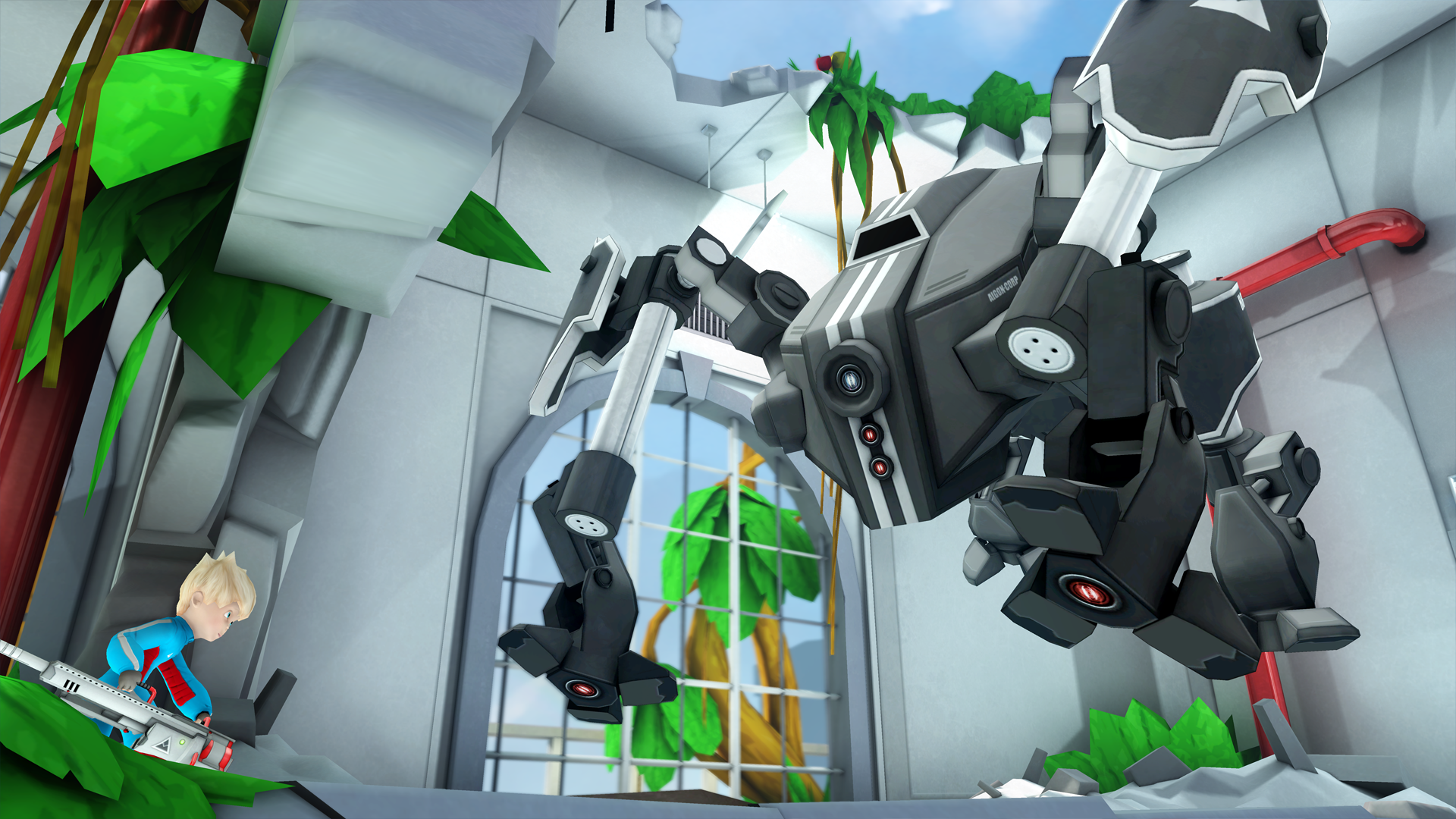
Overall, Kick and Fennick is a fun adventure that will take you around 5-7 hours. The lack of an engaging story is biggest shortcoming of Kick and Fennick, but even without that I do think that this is a game a lot of people would enjoy.
3.75 out of 5 stars
Thank you to Abstraction Games for providing the code.

Return to PopoloCrois: A Story of Seasons Fairytale Review
The PopoloCrois series returns to the United States with Return to PopoloCrois: A STORY OF SEASONS Fairytale. Find out if the traditional JRPG combined with a farming simulator was worth the 10 year wait in this review!
When you think of turn based RPGS, you usually imagine 3 or 4 characters taking turns attacking groups of enemies. In Return to PopoloCrois this is true, but with one added element. Before the characters can attack, they have to get in range of their enemy by moving a limited amount of spaces in the battle area. This tweaked approach to standard turn based combat adds enough flavor to make the experience feel new without creating a large learning curve. This allows people who may not be JRPG experts the ability to pick the game up and get the hang of it quickly. If this wasn’t enough to make users feel comfortable, there are encounter rate and difficulty sliders that can be adjusted at any point.

The story revolves around Pietro who is the prince of PopoloCrois. The kingdom is getting ready for a celebration for Pietro’s 13th birthday. The party is short lived, because mysterious creatures start showing up and start corrupting the soil of PopoloCrois. Once Pietro finds out that a faraway place, Galariland, may be where the monsters are coming from, he convinces the king to let him help. This transportation doesn’t go as smooth as everyone in PopoloCrois would have liked and Pietro is sent away with no way of getting back to his homeland, thus setting up our adventure.

Instead of Pietro dwelling on the fact that he is away from his family without having any way of contacting them, he puts himself to work. After a short amount of time, you receive your first farm where you able to grow vegetables and raise livestock. The farming system is fairly simple and doesn’t require too much of the player’s attention. One of the benefits from keeping your farm active is that you can ship off your vegetables for some extra cash. I never ran into much need for extra cash, but that’s because I will generally grind areas for long periods of time and focus mostly on side quests. For someone who may just want to progress through the story without doing much side work, the farming system would be a good source of income. Another great way to make money on the farm is by capturing butterflies with a net. There is a guy who lives at your farm who will pay top dollar and you also receive gifts for hitting milestones on a stamp card.

Besides Pietro there are 6 playable characters and the story determines which three other characters you will have in your party of four. This means that you don’t keep extra characters with you at all times. Some character combos even have major team attacks. These attacks cost a lot of mana, but it only takes the mana from the person summoning the attack.

As you make your way through the adventure, you’ll start to notice that there is a great amount of voice acting in the game. There are even two Japanese settings, as well as one English setting. One issue that I had with the Return to PopoloCrois is that it’s not fully voice acted. I understand that it takes money and increases the download size, but there were times when I was fully engaged in the audible conversation only to have it go to strictly text. The dialogue in the game can be weird, but it’s absolutely hilarious, so it’s a shame that the player doesn’t receive a full experience.

The biggest downside to Return to PopoloCrois is that the main story objectives can be repetitive. The player will arrive at a town that has corrupted soil issues that need to be solved. Pietro will of course oblige and help defeat the monsters that are corrupting the land. The objective in itself isn’t bad in any way, but the player does it so often that it just doesn’t give enough variety. The upside is that there are a lot of side quests in the game that you can do when you need a break from the main objective.
In total, there are seven chapters and an epilogue that will take around 25 hours to complete. Once you finish the main story, you unlock new quests and you are still able to use your farms.
Overall Return to PopoloCrois is a fun game that is very accessible to all level of gamers. If you’re looking for a JRPG to play, you definitely should check out Return to PopoloCrois.
3.75 out of 5 Stars
Thank you to Xseed for providing the review code.
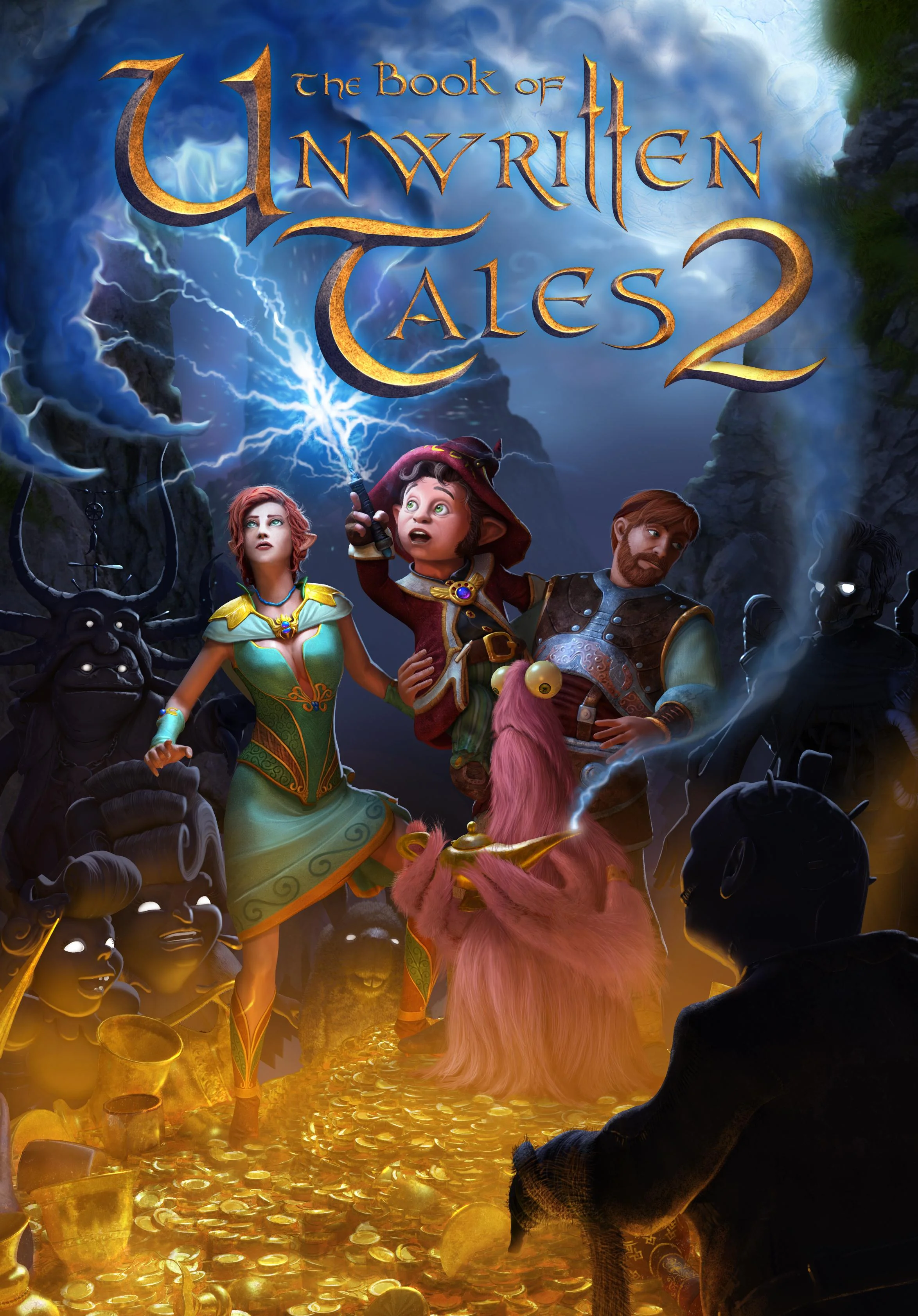
The Book of Unwritten Tales 2 Review
King Art Games attempts to revive the point and click adventure games on consoles with their latest release, The Book of Unwritten Tales 2. Does this 20-hour adventure have what it takes to keep you clicking? Find out in this review!

Back before first-person shooters ruled the gaming world, point and click adventure games were king. They were full of humor, difficult challenges, and incredible stories. The Book of Unwritten Tales 2, developed by King Art Games, attempts to bring back all of those qualities to long time gamers, as well as new gamers.

The Book of Unwritten Tales 2 is the second installment in the critically acclaimed Book of Unwritten Tales series. When you first start up the game, you are controlling a Nate, who is falling through the sky. This brief introduction to the game not only introduces you to the controls, but also the light-hearted and hilarious tone of the game. As I mentioned before, the Book of Unwritten Tales is about 20 hours, so having a bit of comedy throughout it can really help the player get through any parts where they may be frustrated. I’d also like to mention frustration doesn’t happen often, but the nature of a point and click adventure game is that it may take a lot of trial and error to complete tasks.
One of the biggest concerns about console point and click adventure games is that they don’t translate well from PC. This is however not an issue. There wasn’t one time when I thought that I would rather have a keyboard and mouse to play the game. By making solid controls, King Art Games really opened up the accessibility to console gamers.
Players who have played the first game will recognize the four main characters: Nate, Ivo, Wilbur, and Critter. The characters have been updated and do look a bit better than their previous models. This doesn’t make or break the game, but it is nice that the characters have had some work done. Besides the characters being updated, King Art Games did a great job with the scenery. You may notice that all of the scenes are pretty much static, but that each part has a tremendous amount of detail. You will also travel to so many different locations that it’s really hard to ever feel bored with your surroundings, which is important because even though there are a lot of different locations, you do frequently visit them.
The worst part about the Book of Unwritten Tales 2 isn’t anything related to gameplay, graphics, voice acting, or anything else related to the actual game. In fact, the game is a solid experience. The worst thing is the odds weighing against it. In 2015, if you don’t have a point and click adventure game with the name Telltale on it, it’s going to be a tough sell. Pair this with the fact that it’s digital only and you may have two strikes against you in the eyes of gamers, but I’m here to tell you to give this game a chance. Not only will you be supporting a developer who seems to have a bright a future, but you will also get a true fantasy experience that you will not forget.
There are plenty of games out there that are worth your time and Book of Unwritten Tales 2 is one of them. I’m so lucky that I got to review this game, because I don’t know when I would have ever gotten around to playing it otherwise and that’s a shame. Do yourself a favor and put the Book of Unwritten Tales series and King Art Games on your radar, because I believe they are here to stay.
4.5 out of 5 stars
Thank you to Nordic Games for supplying the review code.

Persona 4: Dancing All Night Review
Your favorite Persona 4 characters take their battle to the dance floor as they try to solve the mysterious situations surrounding the Love Meets Bond festival. Does this game have enough moves to keep you engaged? Find out in this review of Persona 4: Dancing All Night!
Persona 4: Dancing All Night has two distinct modes: Story mode and Free mode. Being a Persona game, the story mode is very interesting, a tad bit weird, and heavy on the dialogue. From the beginning of the game there is a very eerie tone. This isn’t what you may expect from a rhythm game, because dancing games generally have an overall positive feeling, but that's okay. The dark tone of Persona 4: Dancing All Night is balanced by the uplifting soundtrack that is really enjoyable.

The game’s major events are all surrounding the upcoming “Love Meets Bond” music festival. The two main acts of the festival are Rise Kujikawa, a former idol making her return after she has taken a brief hiatus and the Kanamin Kitchen Girls, a very popular group of idols. Rise asks the familiar faces of Persona 4, Yu, Kanji, Teddy, Naoto, and a few more to be her back up dancers. Shortly after Rise introduces the supporting act of the Kanamin Kitchen Girls to the rest of the gang, the Kanamin Kitchen girls get sucked into a mysterious world known as the Midnight Stage. The Persona 4 team decides that they should enter the Midnight Stage world and rescue the Kanamin Kitchen Girls and thus the adventure begins.

Now that we’ve gone through the introduction, we know the premise, and exactly what are our goal is. This means that we get to dance, but why dancing? Inside the Midnight Stage, you are unable to get hurt or inflict pain. There are shadow-like monsters that reside in the Midnight Stage that can only be dispersed by showing off your best dance moves. As long as you can keep the shadow monsters happy by getting high combos with a low amount of misses, the monsters will be forced to leave and you will live to dance another day.

At first the dancing mechanic feels a little confusing, because the game uses controls rather than the touch screen. This feels like a missed opportunity, but it quickly becomes a welcome feature. Persona 4: Dancing All Night doing away with the touch screen means that you use the up, left, and down arrows as well as the triangle, circle and cross buttons to connect with beats. You also frequently use the left and right stick to add optional bonuses to your combo score and Fever meter, which gives you a score boost. Don’t worry if you miss these score boosts though, because there is no negative impact on your overall combo or score if you do miss. For me, using the controls for Persona 4: Dancing All Night rather than the touchscreen was better because it never felt like I was blocking what I was doing on screen.This is an issue that I've run into with touch screen games in the past. There were even times where it was hard to see my character was dancing, but I was successfully completing the objective. Luckily, there is a handy replay mode that allows you to watch your performance after you finish the dance.

While the gameplay is fun and there are a lot of songs to play, Persona 4: Dancing All Night does have a downside. The actual dancing is great and you can’t wait for the next song, but you're going to have to get used to waiting around for a long time. The game is so dialogue heavy that the time between dances can feel like an eternity. After the first few hours of the game the dances become more frequent, but then comes another problem. There are four Kanamin Kitchen Girls that you have to rescue individually. This wouldn't be a big deal, but with a limited amount of variety between scenes it causes a lot of repetition. This repetition can quite honestly feel like a chore a times, because you are conflicted. You don't want to skip the story, but you really want to get to the next song. I think it’s commendable for any rhythm game to have a story mode, but maybe there is a reason why the majority don’t.

I found myself very tempted to use the quick skip option to get through the text, but I never used it. Persona 4: Dancing All Night is considered canon, so it is important to the story arch of the Persona series. As a true fan of Persona, you definitely want to keep track of what’s happening, but even at times the most hardcore Persona fans may find themselves eyeing that skip text button. The good thing is, once you get toward the last few hours of the game it really starts to pick up. You find yourself dancing more and the story becomes much more engaging.

The other aspect of the game is Free Mode. This is exactly what it sounds like, a mode where you are free to dance as much as you’d like! This is where Persona 4: Dancing All Night really shines. You start off with a select amount of songs and as you progress you unlock more songs. On completion of songs, you also receive a certain amount of money based off the difficulty you select: easy, normal, hard and eventually the unlockable difficulty All Night. The higher the difficulty and the better you do, the more money you earn. The money you earn is used to buy costumes, accessories, and items. While costumes and accessories are purely aesthetic, items can make dancing easier or harder. If you decide to select something that makes your dance routine easier, you will receive a negative bonus on your score and it will lower the amount of money you earn. If you choose to make your difficulty harder, you get a positive bonus that increases your points and the money you earn. Despite having a rough time making it through the story mode, I still find myself making playing the free mode, even after I completed everything 100%.

The verdict on Persona 4: Dancing All Night is that the Story Mode can drag on for what feels like too long at times, but whenever you need a break from the story you can always get your dance on in free mode. When I first played through the game, I focused solely on the Story Mode. I don’t know if this was the right way to go, because I really wanted to get to the next dance. I recommend mixing it up whenever you feel like you just want to engage in some gameplay and then head back to the story to discover all the hidden secrets of the Midnight Stage.
3.75 out of 5.
Thanks to Atlus for supplying a code for review.
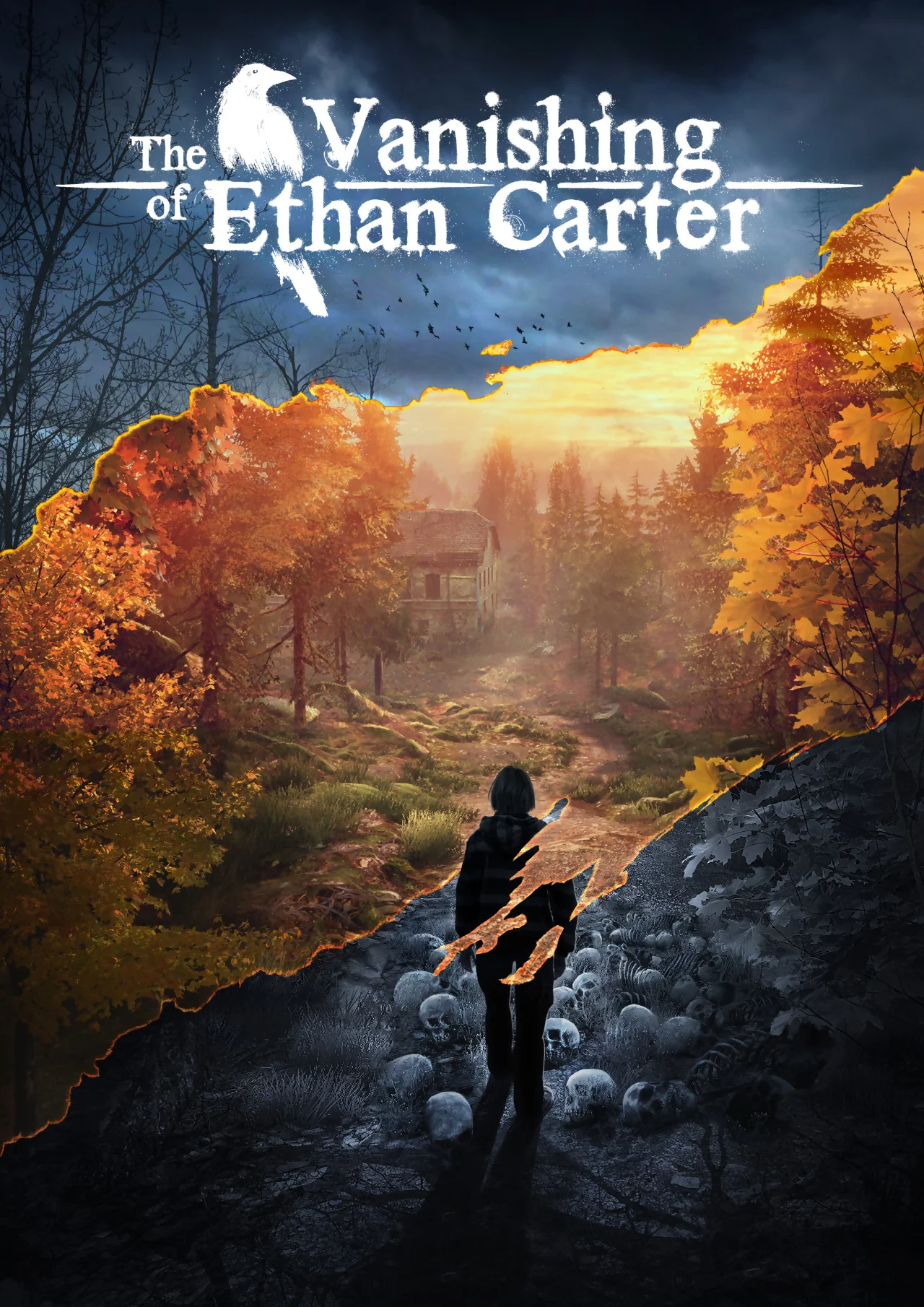
The Vanishing of Ethan Carter Review
The Vanishing of Ethan Carter was a critically acclaimed PC game released in Sept 2014. It is a first-person mystery game focused on exploration and discovery that now makes it console debut on the PlayStation 4. Does the PS4 version hold up to the highly rated PC version? Read on to find out!
After I finished The Vanishing of Ethan Carter, I had to take a step back and really think about everything that had happened.
You play as Paul Prospero, a detective that is working his last case. Right before you start your journey, you are prompted with the message, “This game is a narrative experience and does not hold your hand.” I think giving the gamer this message prevents a lot of frustration, as at times you will find yourself wandering around with no idea of what to do next.
As you start to make your way around the starting area, it’s almost impossible not to be instantly amazed with the scenery. This made me want to explore and really see every trail and every little hidden path. Pair this with the sounds of running water, wind, and the subtle, yet creepy music and you have a wonderfully engaging experience.

Just a little bit of the stunning scenery in The Vanishing of Ethan Carter.
Paul Prospero, being the outstanding detective that he is, shows off his abilities as you solve puzzles. When he sees something (or someone) on the ground, a bunch of floating text questions will appear that act like running thoughts to give you insight to what is happening. Once you put together all the clues in the area, you will see memory fragments that fly to different locations. Then, you have to put these memory fragments in chronological order to wrap up the puzzle to see what had occurred. Early in the game this can be difficult, but once you get to the end you have a pretty good idea of what is required to complete the game’s task.
Making your way through the world, you will start to slowly see that things are strange. There are many supernatural references that are introduced gradually, but eventually they come together to shape a very bizarre world. As weird as the world is, you never feel like it’s too much or that you are overwhelmed.
Now for the bad part. Once the game was done, I can say that I had a lot of fun, but there were some technical issues that made the game slightly frustrating.
With a game that is so heavy on exploring, I decided to trek around and just see what the world was like. I started to notice that some of the textures on the floor were very dark and that there was a large field that lacked rocks, trees, and any other plant life. At one point, I saw that a huge boulder had missing textures and I could see straight through it. This didn’t bother me at first, because I figured that I just needed to restart the game. Unfortunately, this didn’t fix the issues. I started to ignore this, because they weren’t really hurting my progress, but unfortunately that changed.
At one point in the game, you have to cross a very long bridge...this would have been nice, but the bridge was invisible. Luckily, the game had been out for awhile on PC so I was able to look up a walkthrough of what to do. Once I found the entrance to the unintentionally invisible bridge I was able to walk across. It was both funny and unsettling to have my character floating about 100 feet above a waterfall. I got across to the other side no problem, but the graphic issues didn’t stop there.

This is where the bridge should be.
There was a house I was supposed to enter that had the next puzzle. The house is supposed to be abandoned with a fully textured outside, but the house that was in front of me looked like it had been burned down and had pieces floating in the air. Once again I restarted the game, but this didn’t solve the problem. Unfortunately, I had to use a walkthrough a few times because of this and it was frustrating that I was brought out of a game that I was really enjoying.

What I saw What I was supposed to see
After I passed the puzzle, the game performed flawlessly for the rest of the story. One of the nice things is once you complete the game, you are able to fast travel to any of the puzzles that you may have missed. This is completely possible considering the game is so open and doesn’t require you to complete everything to get to the end.
I should also mention that I have watched videos of people playing on The Vanishing of Ethan Carter on the Playstation 4 and there doesn’t seem to be any issues. I hope what I encountered were isolated incidents or at least extremely rare occurrences, because I think the developers did a wonderful job developing a truly remarkable story.
Despite the issues I had with the game, I do think it is worth your time. This is even more true if you have enjoyed games that are heavy on story, such as Heavy Rain, Beyond: Two Souls, and Murdered: Soul Suspect.
3.5 out of 5
Thanks to The Astronauts for supplying a code for review.
A side note that has no bearing on my overall feeling on the game is that it is really easy to get 100% of the trophies.