

Tales of Berseria Review
Are you ready to hit the seas with a daemon seeking revenge? Find out if you should set sail with Velvet and her companions or if this game should stay docked in this review of Tales of Berseria!
The Tales series is back with another installment, but things are a lot darker than they've ever been before. The story features a young woman named Velvet who is raising her little brother, Laphicet. One day when Velvet is away from her home the town is struck by a daemonblight that turns all of the citizens into "daemons" (prounced demons.) Amongst the chaos, Laphicet goes missing. Velvet tracks him down to only find that her brother-in-law Artorius is sacrificing Laphicet as a part of a ritual. Artorius attempts to sacrifice Velvet, but she is able to fight him off. Unfortunately for Velvet, she was somewhat affected by the daemonblight and is partially turned into a daemon. Velvet then sets out to avenge her brother and kill Artorius.

One of the highlights of the Tales series has always been the combat system. While a lot of JRPGs use a variation of turn-based combat, Tales of Berseria uses a live-action system that is much more frantic than other RPGs. You also have four people total that are fighting with three of them working completely independently. You can adjust their behavior with a simple button command, but this never felt necessary. Additionally, Berseria doesn't use mana for special abilities, but rather a Soul Gauge that depletes as an ability is used and regenerates as you either stun an enemy, kill an enemy, or just over time. This unique system is great when you're kicking butt, but can be a pain when fighting a stronger enemy. I appreciate it when any developer attempts to freshen up old mechanics, but I wouldn't miss this system it if it didn't show up in the next game. Your companions also use this.

One of the big drawbacks that I felt with Berseria is that the fights, for the most part, are incredibly easy on the normal difficulty. Unlike other JRPGs you can see the enemies in the field and can choose to either fight them or ignore them. It's logical to think that you should fight every enemy so you can level up, but the fact is that you can do a minimal amount of encounters and be fine. There were times where I was working my way through a dungeon and discovered that I was absolutely dominating every enemy. After a while, I became bored with encounters and just wanted to advance the story. I'd recommend that after about 10 hours if you find Berseria to be too easy, that you should either increase the difficulty or switch to any character other than Velvet. You can always switch back later.

Speaking of the other characters, you eventually have six people to choose from. One thing I really enjoyed about this is that the majority of your characters are in your party within about 12 hours of starting the game. This doesn't cause any inconvenience later on down the road of someone joining your party at say 30 hours, meaning that you have to buy all new gear for them or start leveling up their skills. Each character has a set of "Artes" and the more they use specific Artes, the better they become. This is also true for equipment. There's actually a lot to level up in Berseria, but most of it just happens naturally without needing to pay attention to what you're doing so you don't need to focus on it.

As I mentioned before, the dungeons are pretty massive. There are tons of corridors, breakable walls, and puzzles that you have to run through. Now, when I say "dungeons" you get the image of some dark, dank scary place, but in Berseria most of the dungeons are actually outside. Aesthetically this is a nice change of pace because it's more fun to run around a beautiful forest than a dingy cave, right? One issue is that one of the puzzles is repeated a few times and it's kind of a pain. There are color coded floating objects that you have to touch to deactivate colored doors. The issue is that when you change one color you activate another, so this may mean that you need to run back to another part of the dungeon to deactivate another color. This wouldn't be bad if it was just one dungeon that did this, but there are at least three where this happens. No one likes doing the same puzzle mechanics over and over and I am not an exception.
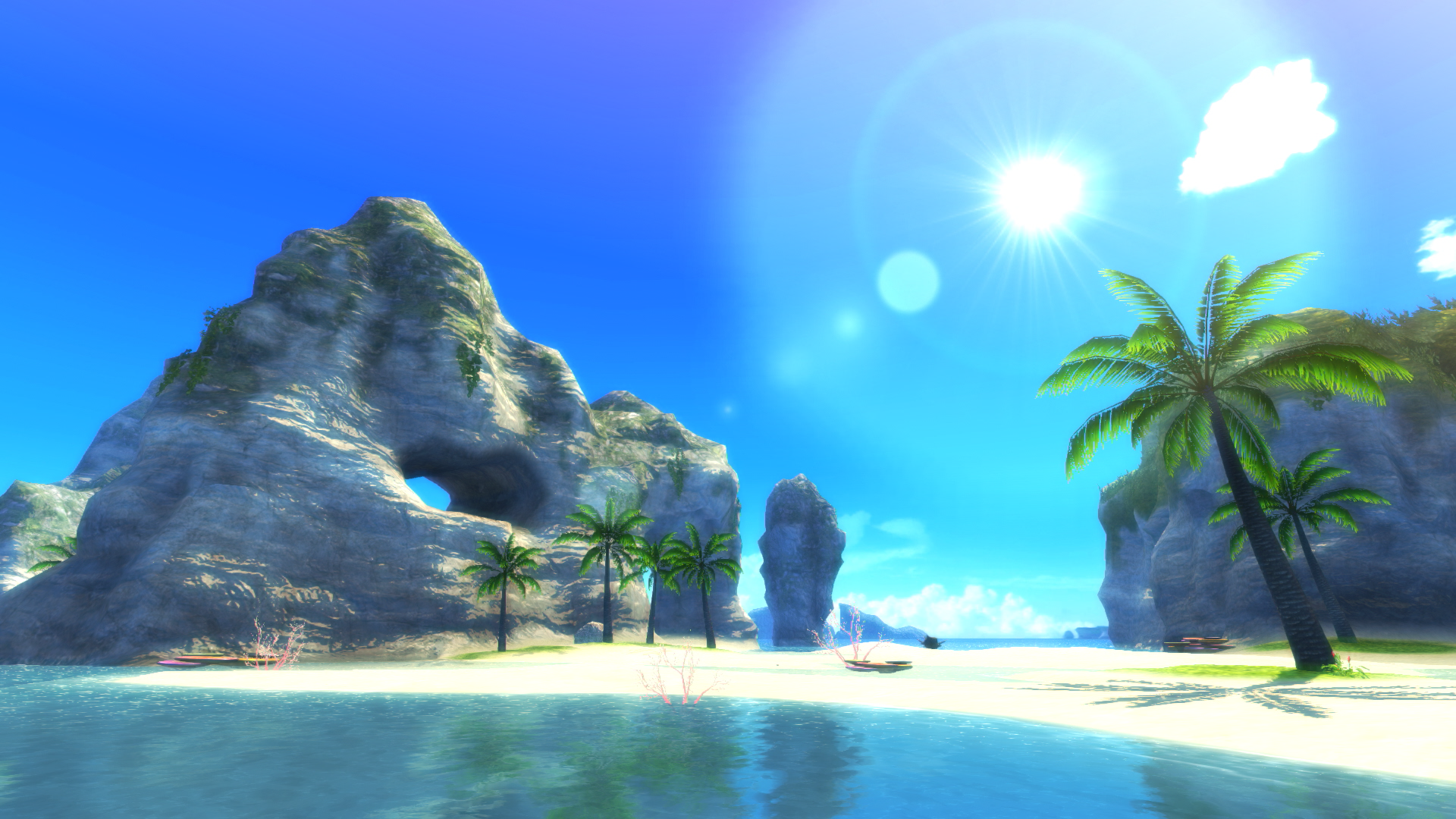
The story itself will take you around 50 hours to complete, but there are plenty of things to do outside of the story. There are mini-games, side quests and an awesome real-time ship simulator where you can find ingredients to cook with. Cooking is actually a pretty awesome feature that allows you to get extra perks, as well as automatically heal yourself during combat, as long as you reach certain perimeters. I definitely recommend partaking in the extras because the benefits are absolutely worth it. The story also features an amazing amount of hand drawn anime cutscenes that are always fun to watch.

Overall, Tales of Berseria is a good game for people who are both experienced and inexperienced with JRPGs. The fact that the storyline is much darker than any of the previous installments will excite people who are looking for something that breaks away from the usual "good guy" story.
3.5 out of 5 stars.
Thank you to Bandi-Namco for providing the code.

Criminal Girls 2: Party Favors Review
What's it like to go to Hell with 7 beautiful women who are trying to get a second chance at life? Find out in this review of Criminal Girls 2: Party Favors!
When you think of Hell you probably think of fires raging, demons ripping people to shreds, and an incredible amount of suffering, right? That’s not the case with Criminal Girls 2: Party Favors. In this journey, you play as a Program Instructor, who is tasked with helping seven beautiful girls get a second chance at life through “reformation.” This is, of course, met with many different challenges from an antagonizing pest that is constantly slowing down your progress by making you go through trials and tribulations in attempt to keep you in Hell forever.

From the beginning of the game you have access to five of the seven characters, but can only use four during battle. The battles start off pretty simplistic due to the lack of skills, but eventually get much more involved with combo attacks, skill attacks, group heals, and support skills. You earn these skills by “motivating” the girls using bondage style mini-games such as “Scrubby Scrub", "Spanking X" and "Pinch the Balls” which I will get to later.

Once you have a few skills under your belt and you start fighting stronger enemies, the game really begins. During fights each girl has an attack, heal, or support option. These options are mostly situational, so if you have a lot of magic power or MP, you’ll most likely be forced to attack using a skill. Also, if your characters are low on health, your healer or healers will get a healing prompt. The game definitely knows what situation you are in, which makes the battle system a lot of fun. There are a few ways that you can re-randomize the skills as well, just in case you don’t like the hand you were dealt. It’s always nice when a game attempts to change up the turn-based fighting, but it’s even better when the game nails a unique design.

As I mentioned before, you use mini-games unlock new skills. Each mini-game has four levels and after each completed level you get to choose one of two skills. These mini-games use the in-game currency, CM, so you can’t just play them whenever you want, but as long as you’re doing well you can get a new skill every 2-3 attempts. Now I’ve played a few games with fan service and I feel that there is no reason to make a big deal about them, but the one mini-game that I felt was a little odd was "Shocking Bondage." The other mini-games aren’t really meant to inflict pain, although I really have no idea what is actually happening in “Pinch the Balls", but this one does and I don’t know why. You may have heard about the western version’s censorship, but after watching a few videos and doing some research, I would say that the censorship is being blown way out of proportion. There are only a few things that changed and the most noticeable one is the sounds that the girls make while actively playing one of the mini-games. There is also supposed to be a reduction in restraints, but when you think “censorship” you imagine something that is much more explicit and that’s not really the case here. So if you’re in the mood to protest the game because we aren’t getting the “real” version or something along those lines, I’d have to say that the fight you’re putting up is a lot of effort for something that really doesn’t change your experience. With all of that being said, I do have an issue with how the mini-games and the story are somewhat disconnected.

Criminal Girls 2 is all about facing your demons and getting a second chance at life. The girls start off timid, nervous, and reluctant, but as the story progresses they become powerful and confident. So my issue lies in the fact that you have the development of strong girls only to shock, pinch, and scrub them. There is even one scene when one of the girls appears to have a tear on her cheek. I’m not even saying that the motivational games are a problem, but there is definitely a better way to work them into the story. Maybe next time the motivational tactics can unleash some sort of direct ability from them that makes a bit more sense. I’m not a game designer by any means, and I trust NIS, but there has to be a way to incorporate these activities in a more seamless way. Are you ready to get back to the gameplay? Me too!
As you traverse through Hell you find quite a lot of landscapes. There’s Bloody Hell, which features big stuffed animals (or real animals) with severed heads and blood everywhere, Sunken Memories which is dark and has school / home feel to it, Maze Hell which has butterflies and flowers everywhere and a few more. The changes in scenery make it a lot easier to traverse through, compared to a game which is just fire and demons over and over. I really enjoyed the different levels and always looked forward to see what the next one held.

There are also plenty of enemies in the game and the only time you really feel like you’re seeing the same enemy over and over is when you’re grinding. This is a nice touch, because there are a lot of games with fan service that rely on the sexuality of characters to propel them through the story. There are also many interactions between the characters that show fantastic character development. You really feel like you’re learning a lot about the girls and you begin rooting for them.

Overall Criminal Girls 2: Party Favors is a JRPG that with many upsides. I do wish that the mini-games were more connected to the story and who knows, maybe we will see that in Criminal Girls 3. If you’re looking for a new JRPG to play then Criminal Girls 2: Party Favors should definitely be on your radar. I mean, there’s no doubt that this is the sexiest journey through Hell you’ll ever take!
4 out of 5 stars
Thank you to NIS for providing the code!

MeiQ: Labyrinth of Death Review
The planet’s rotation has stopped and it’s your job to get the world spinning again! Find out if you’ll want to take the time to save humanity in this review of MeiQ: Labyrinth of Death!
Have you been itching to save the world? How would you like to do it with a massive robot who uses one of five elements? Well, you’ve come to the right place! The planet’s rotation has stopped and to get the world back to normal you’re going to have to take Estra, her faithful Guardian, and a few friend’s through a 25-30+ hour journey to resume order!

When you first dive into MeiQ: Labyrinth of Death you’ll feel that it’s a traditional turn-based JRPG that you may have played in the past, but a few twists develop this game into a much more strategic affair. One of the major mechanics is the use of elements. Using fire, wood, ice, earth, and you’ll be able to expose enemies weaknesses, but enemies can also be resistant to these elements, so you’ll need to adjust your strategy as you go. There are a few ways to change your strategy. As you progress in the game, you’ll unlock new Guardians, body parts, and gems that all have different elements or bonuses. Finding the right combination can get a bit tricky, but MeiQ doesn’t really penalize you for dying, so anything you do is low risk.

Once you figure out your elements and you’re ready to kick some butt, the fun begins. Eventually you’ll have a six party team; 3 Guardians and 3 heroes. You’ll primarily use your Guardians in battle, but the heroes have some awesome abilities to help you get through the fight. Each hero has a different set of skills such as group attacks and party buffs that increase attack, defense, etc, and heals. These abilities are limited, so you really have to think about when you want to use them, especially when you first start playing. As you level up, the limits will increase and you can use them more freely. You can replenish these abilities by visiting a spring, setting up a portable camp, or returning to the inn to rest. This isn’t a very complicated system and anyone who’s experienced in RPGs should pick it up fairly easily.

There are four main towers that you must conquer with a few additional ones that appear later in the game. You’ll find yourself trekking back and forth between them to complete main and side quests. Most of the side quests I completed just by playing the main story and grinding so you don’t have to pay too much attention to the requirements. I don’t feel like this is a bad thing, but it doesn’t really add much to the experience ether. In most dungeon crawlers when you walk along a path, the tile you step on is uncovered - MeiQ does some slightly different and a whole lot better. As you progress, you’ll see a few of the surrounding tiles lit up as well, which is nice because to uncover the entire map you don’t need to step on every single tile. The only issue with this is that at times you’ll think you’ve been somewhere, but you actually haven’t. I have to say that even though there were times I had to backtrack because I had missed something, I still prefer the way MeiQ uncovers their tiles than say Etrian Odyssey.

As you make your way through the four towers you’ll start to notice that the difficulty level, as well as experience can be all over the place - this is one major issue that I had with MeiQ. In one battle you may be able to kill a group of enemies that yield you less than 100 xp (which is significantly low) only to encounter another group of enemies that will give you thousands after defeat. The biggest discrepancy that I found was an area that had enemies that gave you 600 xp only to be followed by enemies that have 4xp. I’m not sure why there is such an imbalance between battles, but this made finding a good place to level extremely difficult.

Overall MeiQ: Labirynth of Death is a JRPG players RPG. For those who are experienced with turn-based battles, but I wouldn’t consider it an easily accessible game for new comers. One question that I know people have is if there is a new game and I’m happy to say that there is. The bottom line is if you’re looking for a solid JRPG for the PlayStation Vita then this is definitely worth the time and money, just be ready for some head-scratching balance issues.
Thank you so much to Idea Factory for providing the code.
3.75 out of 5 Stars

Trillion: God of Destruction Review
Trillion: God of Destruction is a strategy / tactical JRPG that introduces a whole new style of gameplay. Find out if it’s worth your time in this review!
Lately, RPGs have been taking chances and coming up with some really creative ideas. We’ve seen Persona go into full-on dance mode, we have the side-scrolling multiplayer strategy RPG Grand Kingdom coming out soon, and we have Trillion: God of Destruction, a JRPG unlike anything that I’ve seen before.

When the game starts off you learn that the the six layers of hell are under attack by a monstrous god who devours everything it it’s path. As the hero, it’s your job to prevent the destruction of your world, but that is definitely easier said than done. Trillion: God of Destruction doesn’t operate like a standard RPG.

The first thing you have to be aware of is that the game works on a day / week cycle. Each event, (which I will get to later) takes one game day and adds a certain level of fatigue. If you reach maximum fatigue, it’s game over. At the end of the first few weeks, you train against a giant wooden dummy who mimics Trillion’s attacks. This way you are fully prepared for what’s in store for when you have to fight Trillion.

While preparing to fight Trillion, you only control one character. Your character levels up by completing training missions (which is a simple quicktime event), participating in the "Valley of Spears" (which is a dungeon that you can fight in once you collect 5 tokens from each training mission you attempt), and by building relationships with other people in the kingdom. Everything you participate in gives you some sort of experience points that you can allocate to six different stats.

Once you reach Trillion the fun really begins. The floor is covered with a grid. Each move or attack that you do causes Trillion to either call enemies, prepare an attack, or attack. You’ll know when Trillion is about to do something because the ground will be highlighted in white. You have a limited amount of moves / attacks before the grids turn red and Trillion unleashes a devastating attack on you. Because Trillion has 1,000,000,000,000 health, you won’t be able to kill him in your first attempt. This means that you have to do as much damage as possible without dying, because if you die it’s permadeath for your character. This means that you have to know when to escape the battle. How much damage you do to Trillion depends on how much destruction he’ll cause on your world. After each fight, he’ll start to devour parts of towns. The better you do, the less he’ll destroy. This is a good way to prevent the player from exiting a fight prematurely. One quick side note, when your character dies, some of their stats will be transferred to the new character.

Trillion: God of Destruction is really involved, but with only one dungeon that you can participate in and everything else controlled from a hub, it does tend to get repetitive. Now that doesn’t mean that you can just press X through the entire game and not pay attention to anything, but really Trillion is a game centered around a single boss fight. Luckily, a play through doesn’t take all that long and it can be completed in about 12 hours if you don’t skip the text.
3.5 out of 5 stars
Thank you to Idea Factory for providing the code.

Return to PopoloCrois: A Story of Seasons Fairytale Review
The PopoloCrois series returns to the United States with Return to PopoloCrois: A STORY OF SEASONS Fairytale. Find out if the traditional JRPG combined with a farming simulator was worth the 10 year wait in this review!
When you think of turn based RPGS, you usually imagine 3 or 4 characters taking turns attacking groups of enemies. In Return to PopoloCrois this is true, but with one added element. Before the characters can attack, they have to get in range of their enemy by moving a limited amount of spaces in the battle area. This tweaked approach to standard turn based combat adds enough flavor to make the experience feel new without creating a large learning curve. This allows people who may not be JRPG experts the ability to pick the game up and get the hang of it quickly. If this wasn’t enough to make users feel comfortable, there are encounter rate and difficulty sliders that can be adjusted at any point.

The story revolves around Pietro who is the prince of PopoloCrois. The kingdom is getting ready for a celebration for Pietro’s 13th birthday. The party is short lived, because mysterious creatures start showing up and start corrupting the soil of PopoloCrois. Once Pietro finds out that a faraway place, Galariland, may be where the monsters are coming from, he convinces the king to let him help. This transportation doesn’t go as smooth as everyone in PopoloCrois would have liked and Pietro is sent away with no way of getting back to his homeland, thus setting up our adventure.

Instead of Pietro dwelling on the fact that he is away from his family without having any way of contacting them, he puts himself to work. After a short amount of time, you receive your first farm where you able to grow vegetables and raise livestock. The farming system is fairly simple and doesn’t require too much of the player’s attention. One of the benefits from keeping your farm active is that you can ship off your vegetables for some extra cash. I never ran into much need for extra cash, but that’s because I will generally grind areas for long periods of time and focus mostly on side quests. For someone who may just want to progress through the story without doing much side work, the farming system would be a good source of income. Another great way to make money on the farm is by capturing butterflies with a net. There is a guy who lives at your farm who will pay top dollar and you also receive gifts for hitting milestones on a stamp card.

Besides Pietro there are 6 playable characters and the story determines which three other characters you will have in your party of four. This means that you don’t keep extra characters with you at all times. Some character combos even have major team attacks. These attacks cost a lot of mana, but it only takes the mana from the person summoning the attack.

As you make your way through the adventure, you’ll start to notice that there is a great amount of voice acting in the game. There are even two Japanese settings, as well as one English setting. One issue that I had with the Return to PopoloCrois is that it’s not fully voice acted. I understand that it takes money and increases the download size, but there were times when I was fully engaged in the audible conversation only to have it go to strictly text. The dialogue in the game can be weird, but it’s absolutely hilarious, so it’s a shame that the player doesn’t receive a full experience.

The biggest downside to Return to PopoloCrois is that the main story objectives can be repetitive. The player will arrive at a town that has corrupted soil issues that need to be solved. Pietro will of course oblige and help defeat the monsters that are corrupting the land. The objective in itself isn’t bad in any way, but the player does it so often that it just doesn’t give enough variety. The upside is that there are a lot of side quests in the game that you can do when you need a break from the main objective.
In total, there are seven chapters and an epilogue that will take around 25 hours to complete. Once you finish the main story, you unlock new quests and you are still able to use your farms.
Overall Return to PopoloCrois is a fun game that is very accessible to all level of gamers. If you’re looking for a JRPG to play, you definitely should check out Return to PopoloCrois.
3.75 out of 5 Stars
Thank you to Xseed for providing the review code.

Hyperdimension Neptunia U: Action Unleashed Review
Hyperdimension Neptunia U: Action Unleashed takes characters from it’s JRPG series and drops them into their first action-RPG! Does this spin-off have what it takes to keep old fans happy while engaging new fans? Find out in this review!

Since Hyperdimension Neptunia’s debuted in North America there have been 10 total games in the series, but Hyperdimension Neptunia U: Action Unleashed is the first action-RPG set in the world of Gamindustry. The player will use 10 different characters to hack and slash their way through over 40 missions and 3 game modes.
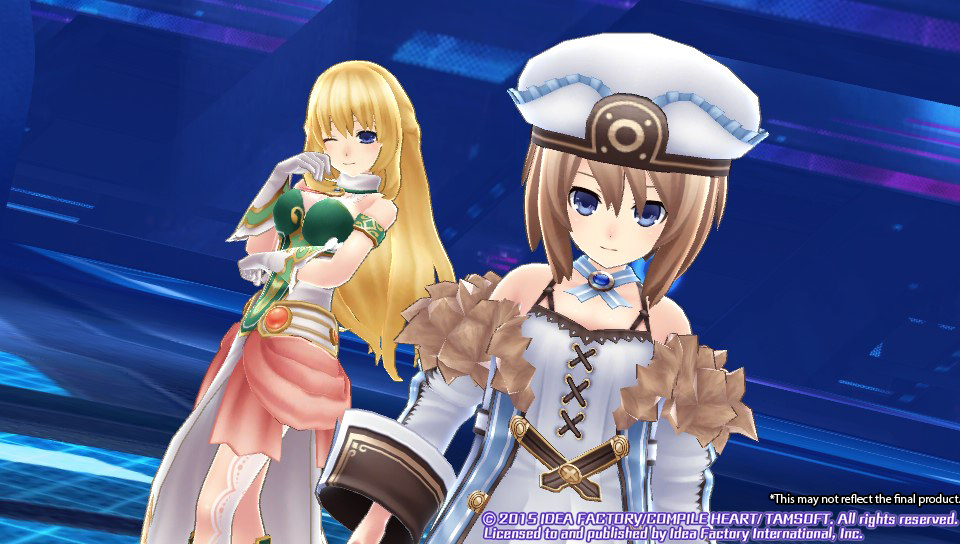
Each character comes equipped with a different weapon that changes the way character plays. Some of the character weapons you should expect are swords, staves, hammers, guns, and even a lobster-like blunt object. These weapons dramatically change the way one character plays from another. The sword wielding characters will fill more natural to anyone who has played an action-rpg, but there are a few weapons that feel a little stiffer and out of place. Out of all the character weapons, Uni’s gun was the only that I didn’t really enjoy playing. At times it felt too stiff and it lacked a proper way to aim. This being said, I am impressed overall that out of 10 characters there was only one that I thought could use improvement.
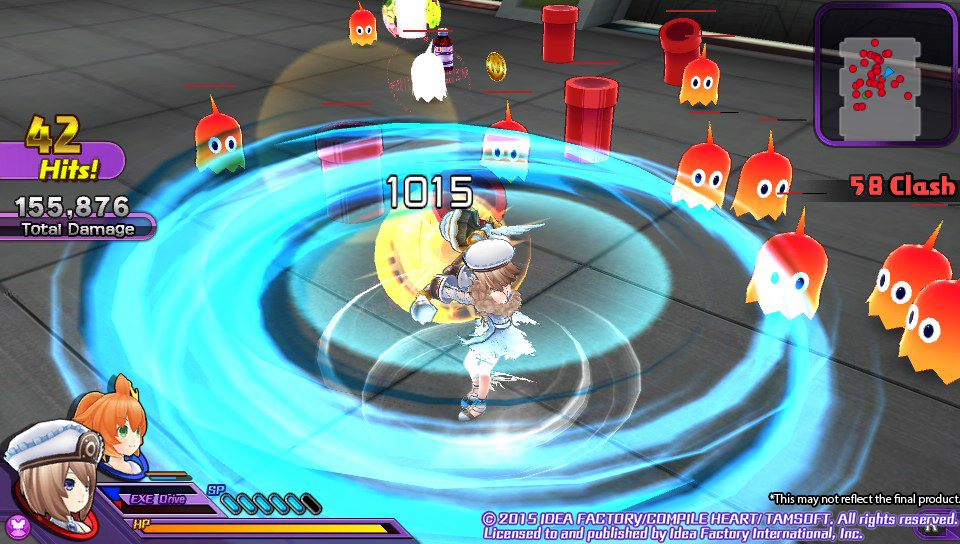
As you start playing through the quests in Hyperdimension Neptunia U: Action Unleashed you’ll start to notice that a lot of the objectives are pretty similar. Most of the objectives revolve around killing bosses or killing X amount of enemies. I figured that after 8-10 hours this would start to become tiresome, but it never did. There is enough character interaction and story moments to keep the player engaged with the game. Let’s be honest, killing waves and waves of enemies can get boring, but Action Unleashed does a masterful job creating an experience that players will want to continue to enjoy.

One of my favorite aspects of Hyperdimension Neptunia U: Action Unleashed was medal collecting. Whenever you kill an enemy they have the chance to drop medals. Once you collect enough medals you can then use them to purchase accessories, better weapons, and global stat upgrades for all of your characters. Collecting medals is probably the most grindy thing you’ll run into during your experience, but it doesn’t take too long to collect them all.

The Hyperdimension series is no stranger to fan service. In Action Unleashed you’ll find yourself battling groups of enemies when all of sudden your clothes get ripped off! One feature that may please gamers is that you eventually can get clothes that rip easier or clothes that don’t rip at all. So regardless of how you feel about fan service, Action Unleashed gives the option to enjoy the game as you’d like.
Overall Hyperdimension Neptunia U: Action Unleashed is a game that I feel that anyone who enjoys the Hyperdimension and/or Dynasty Warriors series would have fun playing. It’s also a great game for people who want an introduction to the Gamindustri, but aren’t the biggest JRPG fan.
4.75 out of 5 stars
Thank you to Idea Factory for supplying the review code.

The Gamers Lounge Goes Hands On At The 2016 NIS Press Event
The 2016 NIS Press Event was recently held in San Francisco and I was fortunate enough to attend as a representative of The Gamers Lounge. During the event I was able to go hands on with the upcoming NIS titles Stranger of Sword City, Grand Kingdom, Touhou Genso Rondo, Criminal Girls PC, and Yomawari: Night Alone. Here are my impressions!

NIS' 2016 lineup is going to be incredibly strong. Here's my impressions of the games that I was able to get my hands on.
Stranger of Sword City
Stranger of Sword City is a first-person dungeon crawler where survival is the name of the game. You control a party of six characters, but don’t think that having more characters gives you an advantage. I consider myself a pretty seasoned JRPG player, so I figured each battle would be fairly straight forward; however I was wrong. Stranger of Sword City isn’t the type of game where you can press X, kill stuff, and move on. Each battle really makes the player work and this is perfect for those who love a game with a challenge. When I asked about the length of the game, I received a rough estimate of 20-30 hours, but was told that there are multiple endings which add a lot of replay.
One of the things that was mentioned by the NISA team was that the Stranger of Sword City took a more western approach to the artwork to make it look less like an anime. As a result of this, you get a JRPG with art that is sort of similar to Dragons Crown and that’s not a bad thing at all.
Stranger of Sword City will be released March 22nd for the Xbox One and April 26th for the PlayStation Vita.
Grand Kingdom
Out of all the games at the NIS Press Event, the one that I heard the most discussion about was Grand Kingdom. This 2D tactical RPG features an awesome battle system where you really have to plan out your attack. Your party of four, as well as the enemies, are spread out on a plain where you must strategically move around and attack. Sounds easy enough, right? Well, where the real challenge comes is that your movement and attacks are limited to the amount of stamina you have. If this wasn’t enough of a challenge, you can also hurt your fellow companions with friendly fire and accidentally heal enemies if they are too close to your allies when you cast a spell / use an item. If you’re a fan of the Valkyria Chronicles series, you will definitely want to check out Grand Kingdom.
One of the greatest features of Grand Kingdom is that you can take your created team online to battle against other players.
Grand Kingdom will be released on the PlayStation 4 and PlayStation Vita June 21st. One quick side note, I was able to play Grand Kingdom on both platforms and can honestly say no matter what system you choose, you won’t regret it.
Touhou Genso Rondo
Love bullet hell games? Then you need to see Touhou Genso Rondo! This game features all the intensity that you would expect when you are being bombarded with thousands of bullets, but with a huge twist. Touhou Genso Rondo is actually a competitive shoot ‘em up (or shmup) that was compared a few times to Street Fighter. Having played very few shmups in my day, I was confused on how it could be compared to a fighting game until I got my hands on it. At the beginning of the game, you select a character that you want to play. You then go into a mode that would be similar to arcade mode in any other fighting game where you take on enemies one on one.
This mix of genres was fascinating, if nothing else. I was pretty confused at how to effectively attack at first, and I ended up getting destroyed in my first attempt. Once I switched characters, I was able to get a better grasp on what I was doing and began defeating opponents. I hope that bullet hell fighters catch on, because I believe that there is a lot of potential and NIS deserves praise for not only introducing this genre to the west, but for taking a chance on a game that you wouldn’t normally see in the states.
Touhou Genso Rondo will be out on the PlayStation 4 this summer.
Criminal Girls: Invite Only PC
I love my PlayStation Vita, so it’s no surprise that I’m always on the look out for the next game to play on my commute to and from work. One of the games that I keep seeing pop up on Amazon, GameStop or Best Buy is Criminal Girls: Invite Only, but I have been reluctant to pick it up because of my crazy backlog. So when I saw Criminal Girls: Invite Only on display, I figured it would be a good chance to try it out. What I didn’t expect was to get as hooked as I quick as I did. The battle system is fairly unique in which four options appear on the screen and you have to select one. Some of the options can be solo attacks, group attacks, or heals. I should mention that there could possibly be more attacks, but these are just the ones that I saw during my hands on.
Criminal Girls: Invite Only for PC will be released in April of 2016. Now I just have to decide if I want to wait to get it for my PC or if I should just pull the trigger now and get it for the Vita. Also, at the end of the of the announcements, there was a hint in the picture below that Criminal Girls 2 will be coming to the West.

Yomawari: Night Alone
Now for the darkest game at the NIS press event, Yomawari: Night Alone. What seems to start off as an innocent game about a girl and her dog, almost instantly takes a surprisingly dark turn. Unfortunately, the game was still in Japanese when I was playing it, so I couldn’t really advance that far in the story, but what I did gather was that there are ghosts all around that you can reveal by shining your flashlight on them. If you get spotted by a ghost, you must run and hide until the coast is clear. I’d talk more about the story, but I’m going to choose to leave out any details because I believe that it could spoil the game. What I will say though is that if you like games like Limbo, Murasaki’s Baby, and Dokuro then Yomawari: Night Alone will definitely be a game you will want to pick up.
Yomawari: Night Alone will be coming out in North America in late 2016.
There you have it! Overall the 2016 NIS press event was a success in my opinion. They have a great lineup of upcoming games, and the fact that they are making a strong push to PC and are continuing to support the PlayStation Vita, shows that NIS is dedicated to all gamers, no matter what console they prefer. Thanks for reading!


