
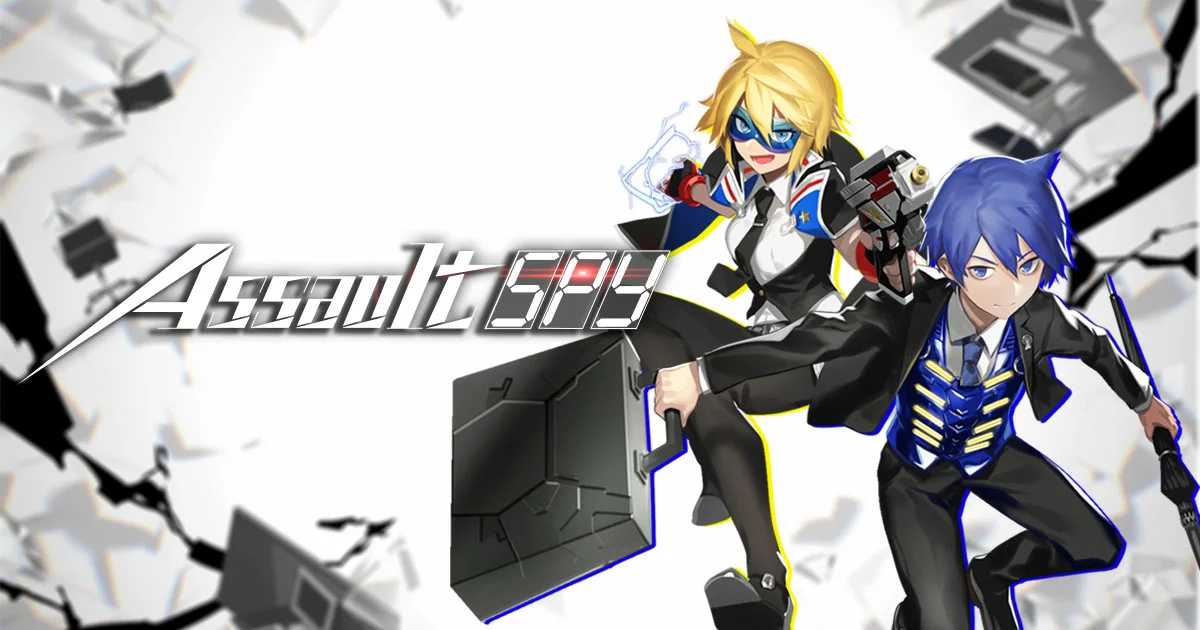
Assault Spy Review
Wazen’s Assault Spy is a game where the player controls a man with a briefcase who is tormented by his junior co-worker, and spends his time being rated on a A to D system for his work. On paper it sounds like the monotonous every day of a office workers life, with a side helping of high school. In reality, it’s anything but.
Release Date: May 8, 2018 (Early Access)
Platform: PC
Developer: Wazen
Price: $24.99
Wazen’s Assault Spy is a game where the player controls a man with a briefcase who is tormented by his junior co-worker, and spends his time being rated on an A to D system for his work. On paper it sounds like the monotonous every day of a office workers life, with a side helping of high school. In reality, it’s anything but.

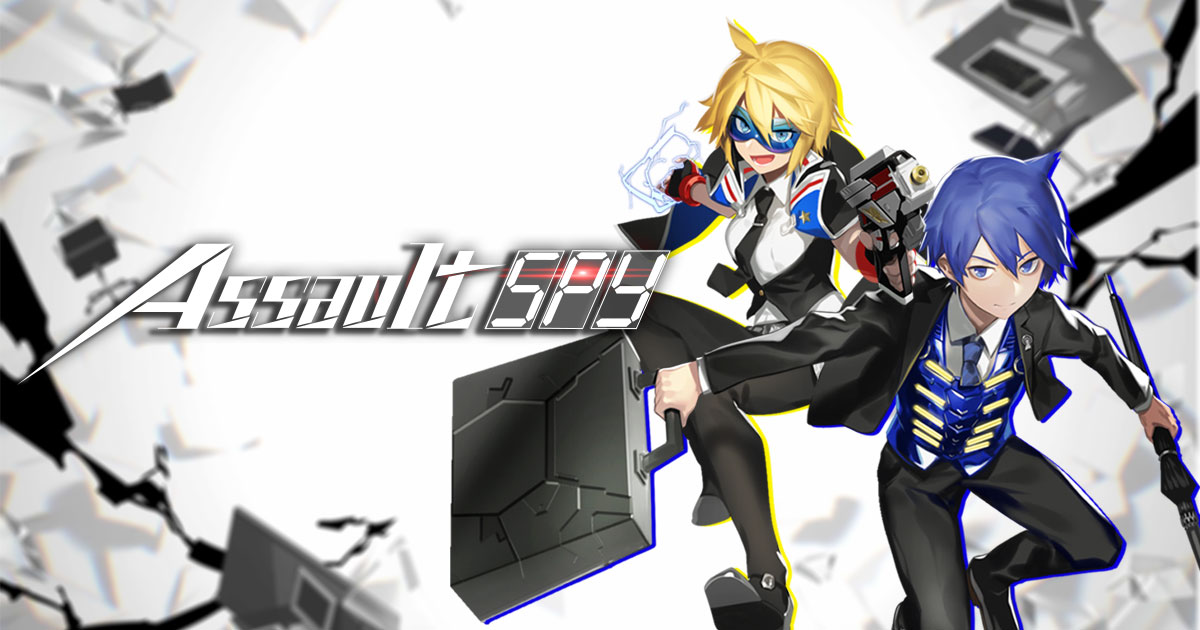
Assault Spy is actually a fast-paced beat ‘em up where you play as Asaru, a corporate spy who spends his time fighting robots with a metallic briefcase and shuriken-style business cards (secondary protagonist, Amelia is yet to be added in story mode at the time of writing). Early in the game Asaru and his sugar-pop, childlike partner, Kanoko, are sent to investigate a robotics company and the craziness only ramps up from there. One of my favourite fights in the game involves fighting rhumbas wielding chainsaws.
Although the story is fun, the strongest part of Assault Spy is definitely its combat, which was somewhat surprising for me as when it first arrived in early access the combat felt glitchy and unresponsive. Not anymore. The combat is now some of the finest I’ve had the chance to play this year. It feels great to zip around the battlefield and use various combos to smash robots in different ways. It’s forgiving of button-mashing, but also offers a level of difficulty to master with different grades and experience points awarded for the player’s finesse in fights.

Unfortunately, there are still some problems with Assault Spy, one of which made it very difficult to continue through the story missions. The graphics run much better than when the game was initially released, but the style of them is still quite odd and not particularly visually appealing. I wouldn’t really recommend this game for those wanting to beat their way through beautiful landscapes. There are also a few new glitches in the game, which have appeared since the games release into early access, the worst of which is an occasional inability to interact with objects, which can be very frustrating as they are often needed to further the story. In my experience, this will often go away after a few minutes but it has occasionally needed me to reload the level which is quite annoying.

Despite these annoyances, Assault Spy has been continuing to improve at such a pace that it’s unlikely any glitches will stay in the game for too long, with the team at Wazen still frequently updating it. Overall, it’s a game with so much potential that it is well worth a buy in its current state, and will likely become a must-buy for fans of indie beat ‘em ups upon its full release. Like Asaru’s hyper sidekick, Assault Spy is simply having too much fun to be ignored.

Pros
Fun, responsive and fast combat
Whimsical and silly story
Cons
Still contains a couple of quite bad glitches (at the time of writing)
Not very visually appealing

Light Fall Review
Light Fall certainly has a lot going for it. It features quite beautiful graphics as its fantastical setting of Numbra is realised in black and blue silhouettes. The orchestral score by French Canadian composer Jean-Philippe Tessier is absolutely exquisite, definitely one of the best game soundtracks I’ve heard this year. The gameplay is fun too. One of the best parts is mucking around with the main character’s ability to summon a cube of darkness which can be used in a variety of different helpful ways. All these things add up to a good game, but not the great platformer I’d been hoping for.

Release Date: April 26 2018
Platform(s): PC (reviewed), Switch
Developer: Bishop Games
Price: $14.99
I have to admit, I’m not very good at platformers, but when the planets align and the stars are right, I do enjoy playing them. A couple have even found their way on to my list of favourite games. I particularly love ones that tell a story; platformers that have breathtaking graphics, heartbreaking music and fascinating characters. These games transport the player through challenges that, while tough, are worth pushing through to see what’s on the other side. I was hoping to find another of these games in Bishop Games’ Light Fall, and with a pun for a name and an engaging trailer, it was off to a good start.

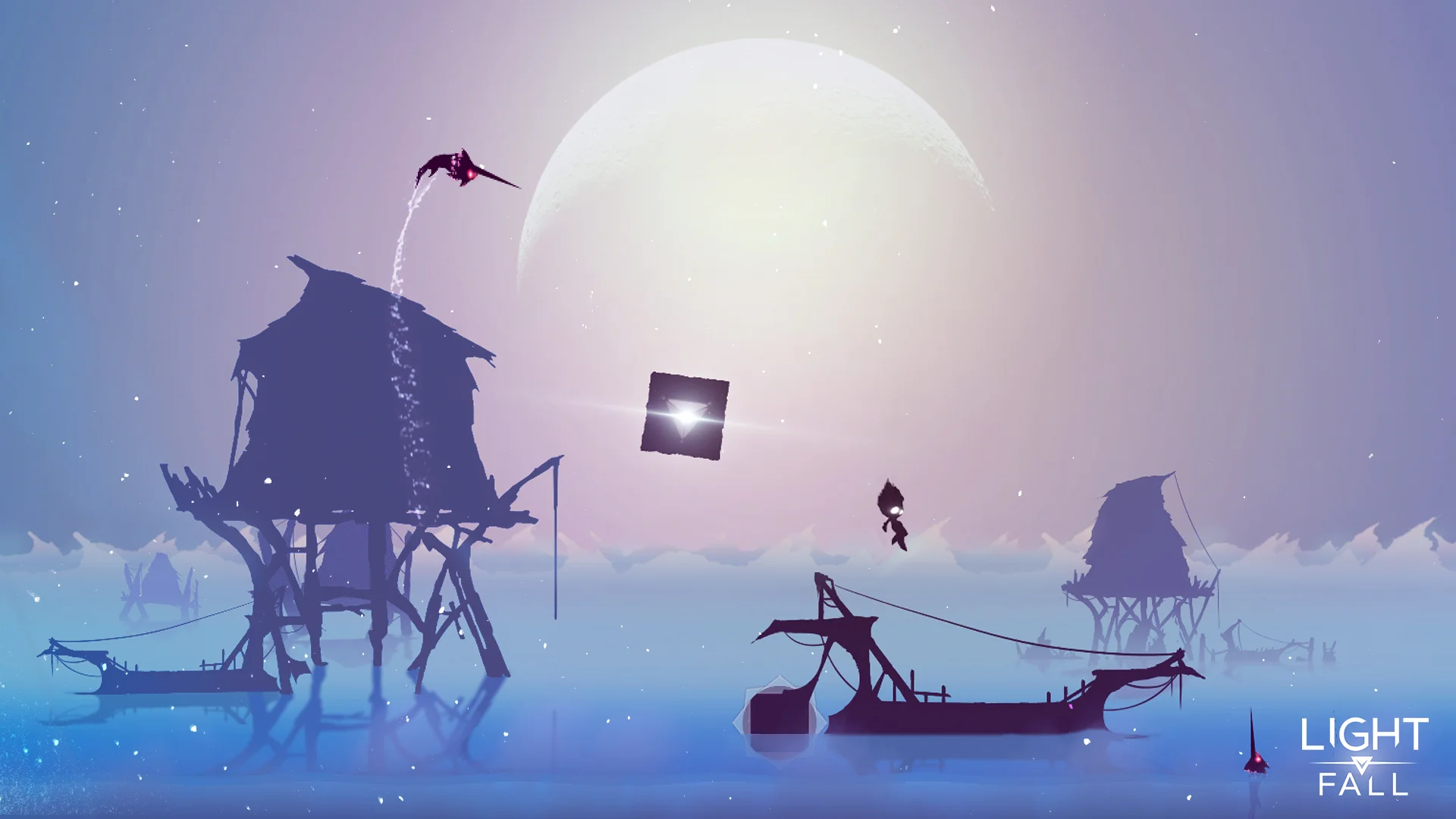
Light Fall certainly has a lot going for it. It features quite beautiful graphics as its fantastical setting of Numbra is realised in black and blue silhouettes. The orchestral score by French Canadian composer Jean-Philippe Tessier is absolutely exquisite, definitely one of the best game soundtracks I’ve heard this year. The gameplay is fun too. One of the best parts is mucking around with the main character’s ability to summon a cube of darkness which can be used in a variety of different helpful ways. All these things add up to a good game, but not the great platformer I’d been hoping for.
There have been many great platformers released over the last ten years, and Light Fall definitely takes quite a bit of inspiration from them. But in taking so much inspiration from these games, Light Fall loses much of its own unique identity. It does certainly feature some fantastic original ideas, many of them feel overshadowed by design and visual references to other games. This was particularly disappointing, as without these references the emphasis on unique ideas such as the shadow core cube would have made for a much better game.
Another major problem in Light Fall was the level design, which I found to be very uneven, both in terms of standard and difficulty. The first few levels have an excellent balance between easy and challenging puzzles and feature a variety of ways to explore your way through them. However, at the end of the third level, the player is faced with a boss battle, which only has one incredibly specific and difficult way through it. I spent longer on this section of the game that I did on the previous three levels combined. This change in style is so dramatic that it felt like I was playing a different game. Perhaps this section and the others like it will give platforming veterans an enjoyable challenge, but I found the sudden and extreme difficulty spike very frustrating.
Ultimately, there are many things to like about Light Fall, but nothing that really seems to stand out and make it special. It does have a beautiful world, a fantastic soundtrack and mostly fun gameplay, but they aren’t enough to make me want to keep coming back to the world of Numbra. I would recommend this game to anyone who really loves platformers as it’s definitely a decent addition to the genre, but I don’t think it’s an engaging enough game to be enjoyed by a casual platformer-aficionado like me.

Pros
Excellent orchestral soundtrack
Interesting and fun gameplay mechanic
Beautiful graphics
Cons
Immersion in the game is often broken by continuous visual references to other platformers
Sudden and extreme difficulty spikes

Cyberdemension Neptunia: Four Goddesses Online Review
Cyberdimension Neptunia: Four Goddesses Online is a spin-off of the Cyberdimension Neptunia series which focuses on the four main goddesses (or CPUs) of the world of Gaminindustri playing the beta of a new MMO. If you haven’t met these characters before, never fear, throughout the game main character Neptune will fourth wall break to introduce you to each character. In addition to Neptune, there’s Vert, the competitive MMO player, Blanc, the caring-but-occasionally-angry healer and Noire, the slightly insecure cosplayer. Neptune also introduces the players to the supporting cast, but unfortunately, a large portion of what she tells you is often about the character's looks, not particularly helpful, given the player can already see them.
Release Date: February 27 2018
Platform(s): PC, Playstation 4
Developer(s): Idea Factory, Tamsoft
Price: $39.99
Before this review begins in earnest, I have a bit of a confession: I have never properly played an MMO. The closest I’ve got was playing half of the tutorial of Star Trek Online before it permanently crashed on my underpowered student laptop. Not only that, I’ve never played a Cyberdimension Neptunia game before, so I walked into this brand new gaming world knowing virtually nothing about the characters, the setting, or even the genre it was basing itself around. This is most definitely one of those reviews where I didn’t know a whole lot about the game going in.
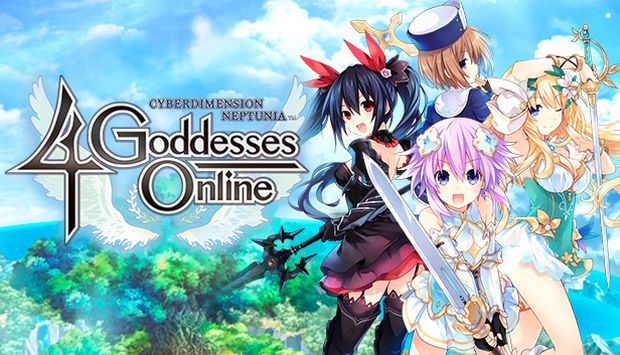
Cyberdimension Neptunia: Four Goddesses Online is a spin-off of the Cyberdimension Neptunia series which focuses on the four main goddesses (or CPUs) of the world of Gaminindustri playing the beta of a new MMO. If you haven’t met these characters before, never fear, throughout the game main character Neptune will fourth wall break to introduce you to each character. In addition to Neptune, there’s Vert, the competitive MMO player, Blanc, the caring-but-occasionally-angry healer and Noire, the slightly insecure cosplayer. Neptune also introduces the players to the supporting cast, but unfortunately, a large portion of what she tells you is often about the character's looks, not particularly helpful, given the player can already see them. It’s nice that the game attempts this introduction for newcomers to the series, but it’s very clumsily done. It ends up still feeling like you are missing a lot of information, and more importantly, reasons to care about the main characters if you haven’t played previous games in the series.

That lack of effective communication with the player continues to be a problem further into the game. The whole first third of the story is based on characters obsessions and actions from previous games, making it very hard to follow. It wasn’t until my fifth hour into Four Goddesses Online that it started to introduce a story that felt original to this game itself. This storyline about cheating and hacking MMOs is quite interesting and tells new players far more about the goddesses and their younger sisters (who are also playing beta) than Neptune’s earlier introductions do. It would have been great to see this story started earlier to make the game more accessible for those playing the series for the first time. Luckily the gameplay is enough fun to keep the player pushing through the opening until the main story begins.
Four Goddesses Online’s gameplay is definitely one of my favourite things about it. It’s pretty simple for the most part, but there are a wide variety of different characters to master in different settings and different roles. I enjoyed playing the DPS characters the most as beating monsters around the level feels hugely satisfying, especially in boss fights. I loved the special abilities of the characters too, which the player can customise based on level and the type of role you’re playing in the fight. It’s also heaps of fun customising your character’s look and weapons before she goes into battle. I have to admit, I particularly love playing with Neptune’s giant popsicle sword and Vert’s ice-cream cone rapier. The visuals are also a large part of what makes the game so entertaining.
A lot of the Cyberdimension Neptunia fans seem to love the visuals of the series the most, and it’s easy to see why. The anime style of the game and fun character designs make the world of Four Goddesses Online incredibly charming. It’s beautiful to play through the different areas, and see the different anime art styles interact. However, quite a few people (including myself) didn’t get to experience the visuals in their full glory, due to a series of glitches.

My copy of Four Goddesses online had a recurring problem that, about twenty-five percent of the time, textures wouldn’t properly load into the game. It’s pretty disappointing for a game that is so much about its visuals. It also took about two hours of work to get game graphics to play in high definition after downloading it. This seems to be because the game consistently recognised the wrong settings on both of the computers in our house, and would update to them regardless of the game being on manual settings or not. Almost every time I booted up the game I would have some version of this issue. There have also been quite a few reports of the game crashing after being played for a couple of hours, although I didn’t experience that myself. It’s pretty unfortunate that the game still has these issues after launch, and hopefully, some of these issues will be fixed in a patch soon.
Four Goddesses Online is a fun game, but it did take me quite a few hours to start enjoying myself. I’m not sure it’s worth pushing through the glitches and in-jokes of the first few hours to get to that point as a newcomer to the series though. In the end, while I did end up enjoying later parts game, I can only really recommend it to big fans of anime games, or fans of the Cyberdimension Neptunia series.

Pros
Fun gameplay
Great anime-style visuals
Cons
Not good for newcomers to the series, as story relies heavily on prior knowledge of the series
PC port has quite a few bugs
Thanks to Idea Factory and Tamsoft for providing us with a review copy.

Where The Water Tastes Like Wine Review
There’s something a little bit magical about Where The Water Tastes Like Wine, and I’m not entirely sure what it is. The game focuses on developing stories based on the main character’s experiences as they drift across a fantastical version of America. Throughout the game your character encounters a range of different people from different places. This gives the game an almost unmatched depth. There are very few times I’ve fallen in love with the world of a game quite so much, it felt almost painful to leave behind such a fascinating place when the game ended.

Release Date: February 28 2018
Platform(s): PC/Mac
Developer(s): Good Shepherd Entertainment, Dim Bulb Games and Serenity Forge
Price: $19.99
There’s something a little bit magical about Where The Water Tastes Like Wine, and I’m not entirely sure what it is. The game focuses on developing stories based on the main character’s experiences as they drift across a fantastical version of America. Throughout the game, your character encounters a range of different people from different places. This gives the game an almost unmatched depth. There are very few times I’ve fallen in love with the world of a game quite so much, it felt almost painful to leave behind such a fascinating place when the game ended.
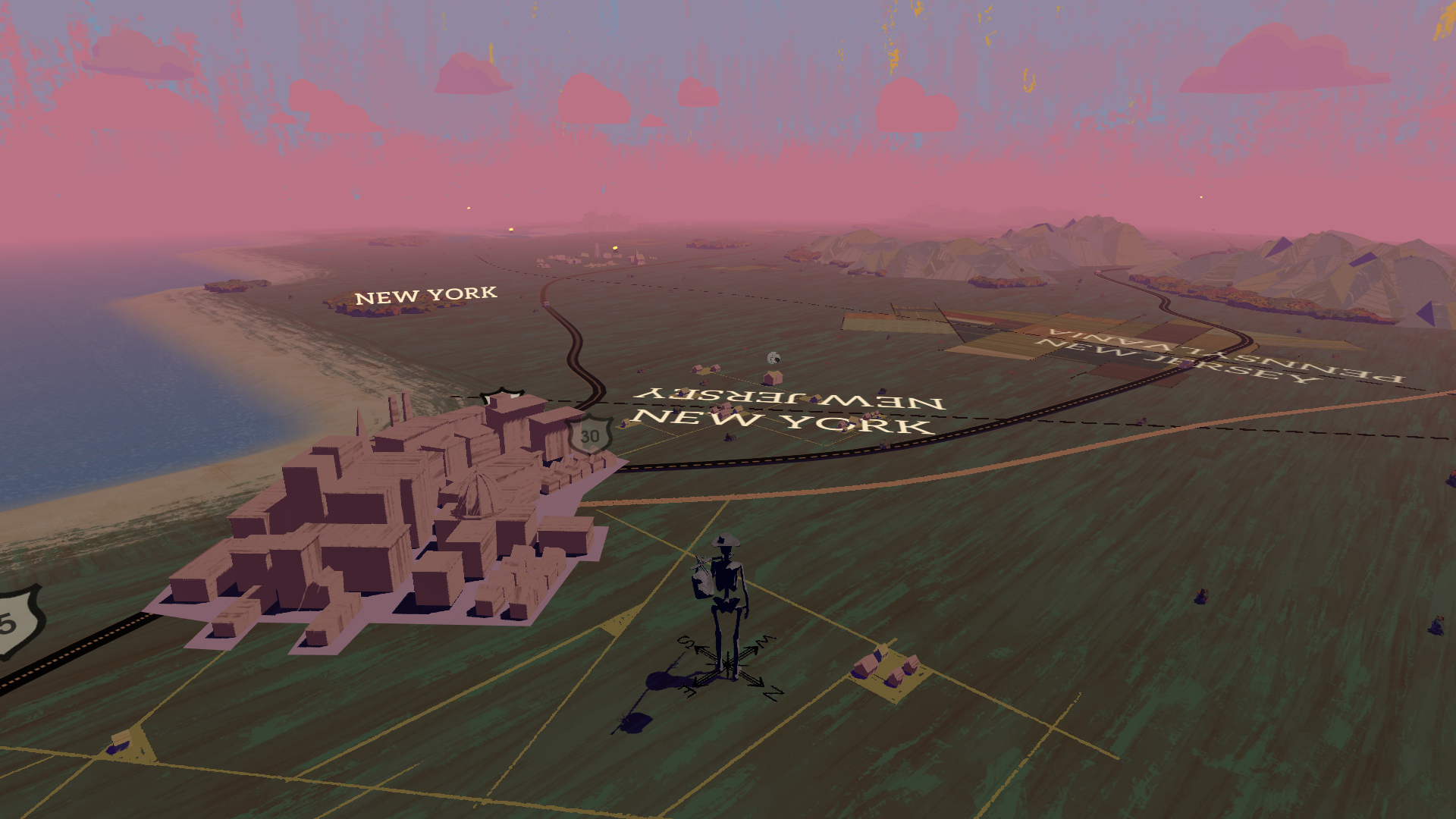
Where The Water Tastes Like Wine is a combined effort from Good Shepherd Entertainment, Dim Bulb Games and Serenity Forge. Each developer contributes their own elements which together create an original and cohesive world. The first thing you notice opening the game is Serenity Forge’s incredible visuals. I couldn’t help but be drawn in the distinctive style of artist Kellan Jett’s illustrations combined with the 3D rendered map which the player journeys across. These visuals are combined with a stunning soundtrack by composer Ryan Ike, which constantly changes to match each regions’ culture and history. One of my favourite parts of the game was travelling across the country and hearing the different version of the main theme play. These elements combined make the simply realised world of Where The Water Tastes Like Wine one of the most immersive in recent memory.
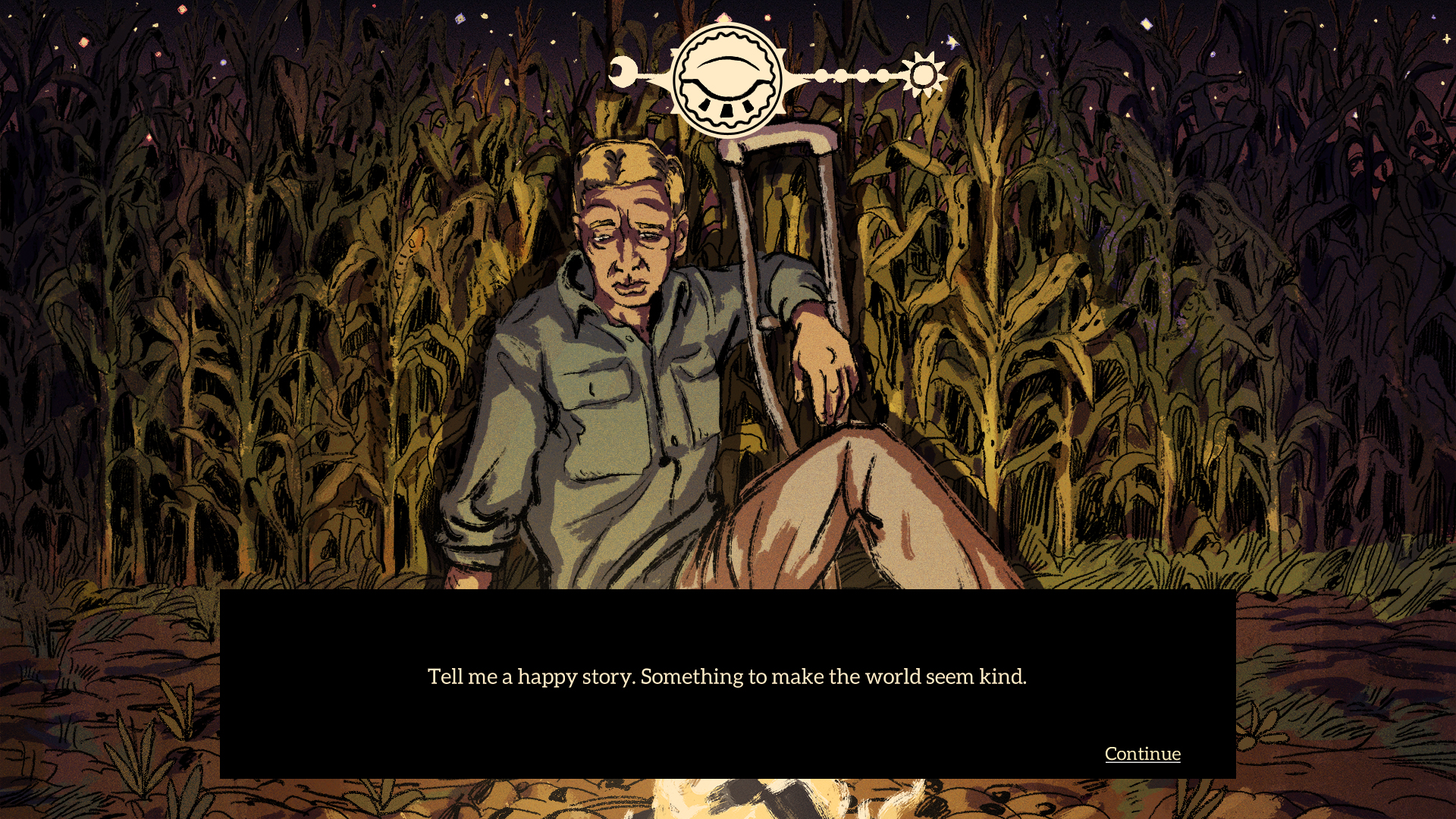
However, the true strength of a game about stories is always going to be the stories it tells. In Where Water Tastes Like Wine, your character is settling a debt by travelling across America to collect different stories, with the most important being the real stories of the people you encounter. From a disillusioned and disowned veteran, to a union miner running from his former employer, to a flirtatious card shark, every character you share your campfire with is absolutely fascinating. Running into a character you’ve previously met and being able to reveal more of their story feels like meeting an old friend after a long time apart. It’s also genuinely satisfying to know that by sharing the stories you’ve experienced you can give them a break from their problems, or enable to see them in a different light.
But Where Water Tastes Like Wine is not without its issues. It doesn’t ever fully explain how to actually play it. While I love the game so much I’ve played it three times already, I’m pretty sure I still haven’t figured out how everything works. The game does make some attempt to explain it to you, but in trying to keep with the poetic tone, the instructions come across as incredibly vague. One of the worst offenders is the whistle mechanic, which has you try to whistle along to the song playing in order to walk faster. Unfortunately it never actually explains how to change the notes, or even how to know what your character is going to whistle next. This is a problem that continues across the rest of the game, with many elements of gameplay having to be worked out by trial and error. I often found myself needing to restart the game because of this. It was confusing and somewhat annoying, but wasn’t enough to break the immersion of the game.
Ultimately Where Water Tastes Like Wine is a brilliantly immersive experience, despite a couple of flaws. I’d highly recommend it for fans of magical realism, urban fantasy or just anyone who loves telling and listening to stories. It’s something I can see myself going back to again and again. In fact, I’m going to head back to another campfire to meet another drifter with another story right now.

Pros:
Beautiful, original visuals
Fascinating, immersive world
Great writing and characters
Fantastic and interesting soundtrack (quite possibly my favourite ever)
Cons:
Controls aren’t explained
Can be slightly confusing
Thank you to Good Shepherd Entertainment, Dim Bulb Games and Serenity Forge for providing us with a review copy.

A Case of Distrust Review
A Case of Distrust is an atmospheric game set in the world of 1920’s San Francisco where you play as a disillusioned private investigator. So far, so much like every film noir movie or game you’ve ever heard of, but there’s one exception. Your character is female. A former policewoman turned PI after the apparent suicide of her uncle, Phyllis Cadence Mallone is one of the more interesting detectives of her genre. The game follows her as she attempts to solve a case brought to her by a former informant of her uncle while navigating the shady world of gangsters and prohibition.

Release Date: February 8th, 2018
Platform(s): PC/Mac
Developer: Wandering Ben/Serenity Forge
Price: Unknown
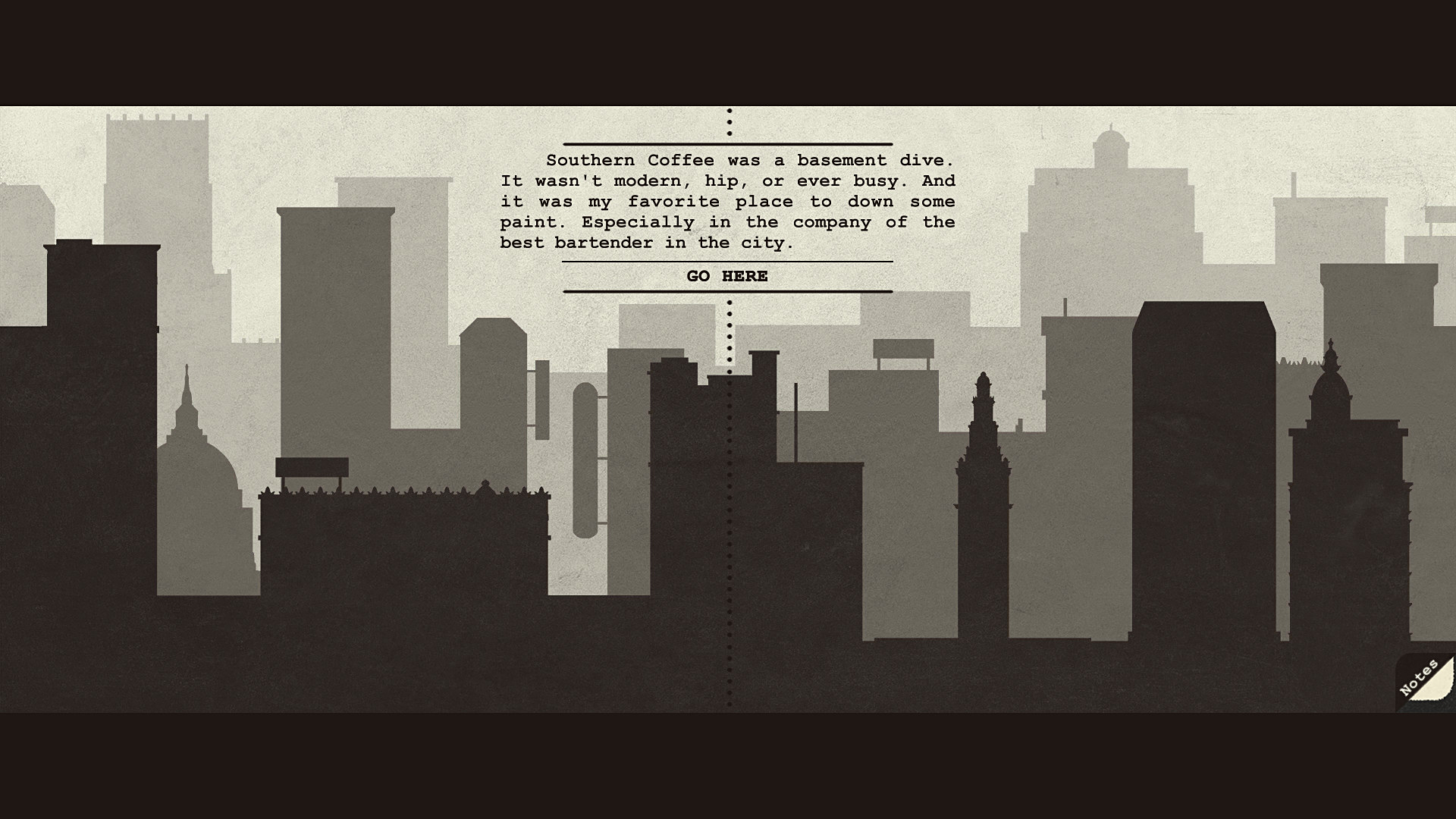
I would walk through fire to play a good story based game so when I was offered the opportunity to review the new text-based adventure from former Bioware employee Ben Wander, I leapt at the chance. A Case of Distrust is an atmospheric game set in the world of 1920’s San Francisco where you play as a disillusioned private investigator. So far, so much like every film noir movie or game you’ve ever heard of, but there’s one exception. Your character is female. A former policewoman turned PI after the apparent suicide of her uncle, Phyllis Cadence Mallone is one of the more interesting detectives of her genre. The game follows her as she attempts to solve a case brought to her by a former informant of her uncle while navigating the shady world of gangsters and prohibition.

One of the best parts of the game is the setting, which is predominantly shown through the description of the buildings the story takes place in and discussions Mallone has with taxi drivers as she makes her way around the city. These conversations make the game incredibly rich, referring to various events from the time and filling in the background of a world filled prejudice and rebellion. The more I talked to the taxi drivers, the more I realised just how difficult it was to be different in Mallone’s world. It’s something that is referred to again and again throughout the game, and which becomes one of the main themes of the story.
The story itself is incredibly well written and it kept me on the edge of my seat almost the entire way through the game. There are quite a few twists and turns and you’re always kept second guessing your progress in the case. The basic mechanic is digging up facts though clues or statements which contradict the statements of others and then using those contradictions to force each witness to give you the truth of their role in the case. While many games with similar mechanics tend to have a lot of bizarre logic and rely on random events to push the case forward, in A Case of Distrust each clue seems to always logically lead to the next. Even though some are harder to find, there’s always something in each scene to point you towards the truth of each witness’ experience. Finding these breaks in your case is a challenge, but an enjoyable one. Unfortunately, the game lets go of this concept in the latter half of the final act, and that’s when things begin to fall apart.

Towards the end of the game, the control is taken away from the player and the final solution is simply handed to them, rather than being built up from the collection of clues Mallone has gathered over the course of the case. It was disappointing to have not actually found any evidence to do with the resolution of the case, and ultimately it ended up feeling like my actions were totally superfluous to the story. In fact, the solution of the case feels contrary to all of the evidence you have gathered and relies totally on a single witness statement that you are never given the opportunity to contradict. It’s very disappointing that a game which so successfully simulated the experience of being a detective up until this point ends this way.
The final scene of A Case of Distrust hints at a future game, and despite the disappointing final act of this game, I would love to be able to return to P. C. Mallone’s world in the near future. I hope that there is a more satisfying end to her next case though as both the detective and those playing her are more than capable of finding out whodunnit by themselves. As far as this game goes, I would recommend it for anyone who loves atmospheric story based games or enjoys playing as a capable female heroine. It may not be a perfect game, but it’s a pretty fun trip to the world of speakeasies, femme fatales and cynical detectives all the same.

Pros:
Intriguing, original story
Atmospheric setting
Logical and engaging investigation
Cons:
Weak, unsatisfying ending
Not enough interaction with the story in the final act
Thank you to Ben Wander and Serenity Forge for providing us with a review copy