DYLAN BAILEY

Dylan's Reviews Dylan Bailey Dylan's Reviews Dylan Bailey

Ball x Pit Review

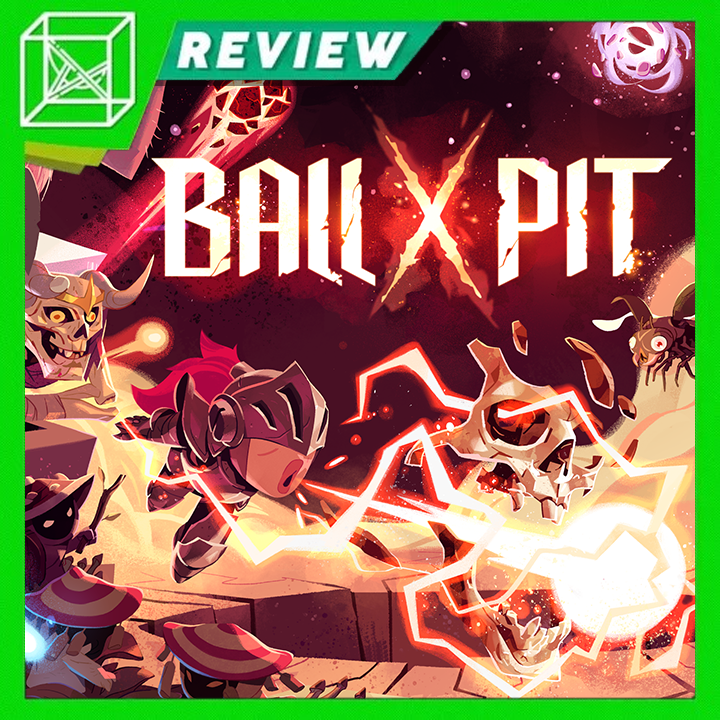
Armed with magical projectiles in the form of bouncing balls, face off against armies of barbaric creatures within a meteoric pit on your way to rebuilding the once great city of Ball-bylon. Fixed Shooter x Survival Rougelite x City Builder, this is the most fun you’ll ever have playing with balls.

Release Date: October 15,2025

Publisher/Developer: Kenny Sun, Devolver Digital

Platform: Steam, Xbox Series X|S, Nintendo Switch, Nintendo Switch 2, PS5 (reviewed)

Price: $14.99


Vampire Survivors meets arcade classic Breakout, this survival rougelite / city builder is the most fun you’ll ever have playing with balls.

Armed with magical projectiles in the form of bouncing balls, face off against armies of barbaric creatures within a meteoric pit on your way to rebuilding the once great city of Ball-bylon.


The Pit

One giant space ball is all it took. After an unexpected cataclysmic meteor shower annihilated the once great city of Ballblyon, the only thing that remains is a giant ominous pit. Within the depths of this pit lies Ballblyon’s lost and scattered riches. Now it is up to you the player, and whichever hero you choose to command, to plummet into darkness in order to find the resources to rebuild the fallen city.

The pit acts as a level hub, as you hop aboard a mechanical platform and descend down to multiple floors. Each of these floors offers a special region to explore with its own unique set of hazards. The biggest hazard being hordes of enemies, cleverly designed as bricks, that continuously come at you in waves. As you venture deeper into the pit, these enemies (and bosses) become increasingly more challenging.


The Balls

Fixed Shooters or “Shoot ‘em Ups” have existed since the time of Galaga and Space Invaders. But none before have combined the classic gameplay style with brick-breaker elements. Swapping traditional projectiles with chaotic bouncing and ricocheting balls adds a layer of strategy that, on its own, feels genre redefining. But Kenny Sun and Devolver Digital did not stop there.

Now take that Fixed Shooter Brick-Breaking structure and throw in everyone’s favorite video game additive, Rougelike Elements (more Rougelite in this case, but more on that later). Each run in “The Pit” sees you stumble upon an assortment of 60 randomized balls, each with their own ability, that can be equipped to better take on enemies. And after leveling balls up they can be fused together to unlock unexpected synergies and overpowered combinations, making each run feel refreshing by encouraging experimentation. The above photo shows a Vertical Laser Ball and Horizontal Laser Ball being fused to create a powerful evolution, Holy Laser, that on a hit deals massive damage to all of the enemies in the same row and column.


New Ballbylon

Similar to previous Devolver title Cult of the Lamb, Ball x Pit adds a City-Builder section that acts as your base of operations. This is also where those aforementioned Rouglite Elements begin to further present themselves further. Throughout each dungeon run you will gather resources such as gold, stone, wheat, and wood. These resources can be used to expand and grow the community of New Ballbylon with over 70 unique buildings.

Each building unlocks new power-ups, passive bonuses to stats, and even new characters to play as. It is through the growth of this tiny city, that progression is most felt. As tiles are filled and buildings are upgraded, Ballbylon rises from the ashes. And in that moment, an unspoken partnership is realized. Through the viewing of the city’s physical growth, your Heroes own innate abilities flourish and prosper, giving a swelling sense of broadening power.


overall

The polyamorous marriage between a Discordian cacophony of gaming genres is a match made in chaos, birthing an overflowing cornucopia of righteously intoxicating… balls.

Cons:

  • Tutorials could break information down better

  • Some menus felt slow and glitchy

  • You won’t accomplish anything other than play this game

Pros:

  • Fantastic Sound Design

  • Marriage of game mechanics that work well together

  • Addictive gameplay loop that doesn’t stale

  • Good design in regard to Accessibility

  • Experimental evolution leading to replayability

Read More
Dylan's Reviews Dylan Bailey Dylan's Reviews Dylan Bailey

Robots at Midnight Review

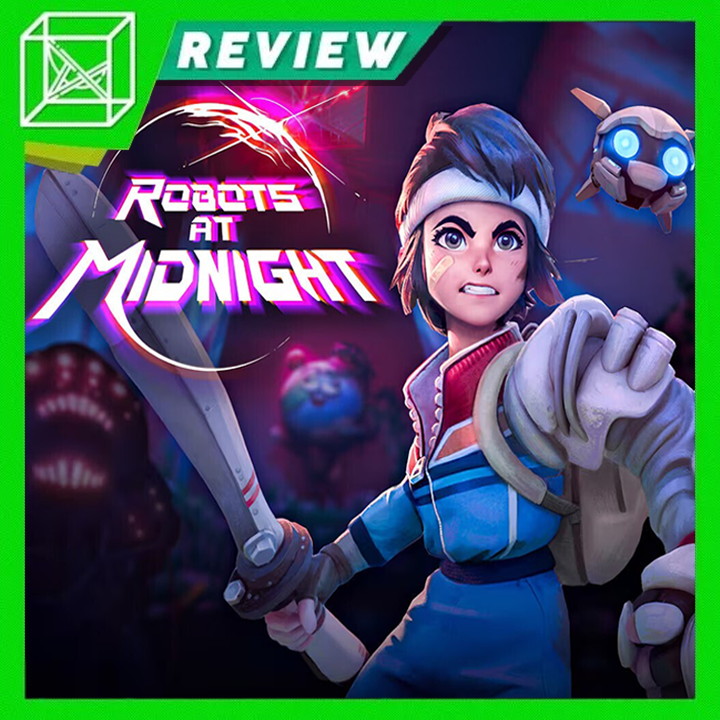
Join the scrappy Zoe, fresh out of a 20-year cryo-freeze, as she attempts to survive the unfamiliar ruined luxury planet of Yob while bashing through the hordes of robots that once served it. Help Zoe discover the mysteries the world holds and rescue her missing father in this retro-futuristic action-RPG.

Release Date: June 19, 2025 (August 28, 2025 on PS5)

Publisher/Developer: Finish Line Games/Snail Games USA

Platform: Xbox Series X|S, Steam, PS5 (reviewed)

Price: $19.99


Imagine if the humans had returned to Earth, but the army of Wall-E robots they left behind had turned evil and formed gangs.

Robots at Midnight sees players thrust into the shoes of the scrappy Zoe, in this retro-futuristic action-RPG, as she searches for answers about her past on the ruined luxury planet of Yob while bashing through the robots that once served it.


Story

After 20 years of cryo-sleep, Zoe has awakened on a strange and unfamiliar world. We learn of an intense cataclysmic event known as “The Blackout”, that once hit the Planet of Yob. This “blackout” had an effect on many of the machines and robots that once helped run things. As you explore the world, relics and scenes of the past can still be seen. Yob was a luxury planet where many valuable resources were mined but also a flourishing tourist destination with popular locations such as its own “arcade”, campgrounds, monorail, and many more. But now, both nature and machine have worked together to claim these areas for their own.

The planet of Yob holds many secrets that can be discovered through pure exploration. And there will be plenty of time to explore, as Zoe quickly gains a personal mission that will draw her further and further into the world. Her missing father is somewhere out there. Just as it felt like the primary goal would be survival, the game sends players into a full-on rescue mission. Just make sure you are indoors before midnight.


Characters

For a lifeless and uninhabited planet, Yob is surprisingly full of life. Truthfully the cold and heartless machines show more emotion than the human protagonist. If done by design, then this genius. Most NPCs, to no surprise, are robots. Some like the mysterious Doug (seen in the picture above), act as central characters that share information on the planet and “The Blackout” while providing helpful upgrades and services.

Phlite, a witty AI companion droid, acts as emotional support. There is a new role appearing in many video games. We see this in the form of small companions given to player characters to make vast open worlds, especially more barren ones, feel less lonely. Phlite succeeds in this role, while also acting as connection to Zoe’s past prior to her cryo-freeze.

The last interesting group of characters to speak on are the enemies. Each level/area sees the player facing off with different groups of machines with their own design and combat style. Throughout the world you can see a cacophony of graffiti and tags marking the scenery that cuts through the sea of greenery, stone, and metal with bursts of color. The enemy bots have formed gangs, each with their own goals in mind as they also fight to survive.


Gameplay

While advertised as an action-RPG, Robots at Midnight plays more like a beginner friendly Soulslike. Each movement and action must be balanced with a draining stamina bar, and “campfires” litter the map acting as healing checkpoints and fast travel locations. There are two difficulties. Hero Mode focuses on story and exploration, making it great for players new to those Soulslike mechanics, while Master Mode presents a true test of strategy and reflexes. Defeating enemies will cause them to drop resources, that can also be found in chests, used to upgrade weapons, armor, and stats at workbenches.

The most unique gameplay element though, is the M.I.T.T. (Mobile. Impulse. Traversal. Technology). This powerful gauntlet is a key mechanic to both traversal and combat. It acts as an all-purpose Swiss army knife. While it is fun to swing around barbaric oversized swords made out of scarps, the M.I.T.T adds layers of flavor. It can be used to produce super-powered punches, pistol-like laser beams, electromagnetic shockwaves, and added propulsion that is great for dodging and reaching out of the way areas.


Overall

Cons:

-Player character shows little emotion

-Felt too short with a rushed ending (beat in 7 hours)

- Obstacles such as ladders were hard to interact with

-Small resources would easily get lost in scenery

- Movement felt robotic and clunky until late game

Pros:

-Story that keeps driving the player forward

- Fantastic detail in world building through dialogue and scenery

- Unique game mechanics that work well together

-Great soundtrack that adds to the atmosphere and art style

Read More
Dylan's Reviews Dylan Bailey Dylan's Reviews Dylan Bailey

ASTRO BOT IN DEPTH REVIEW

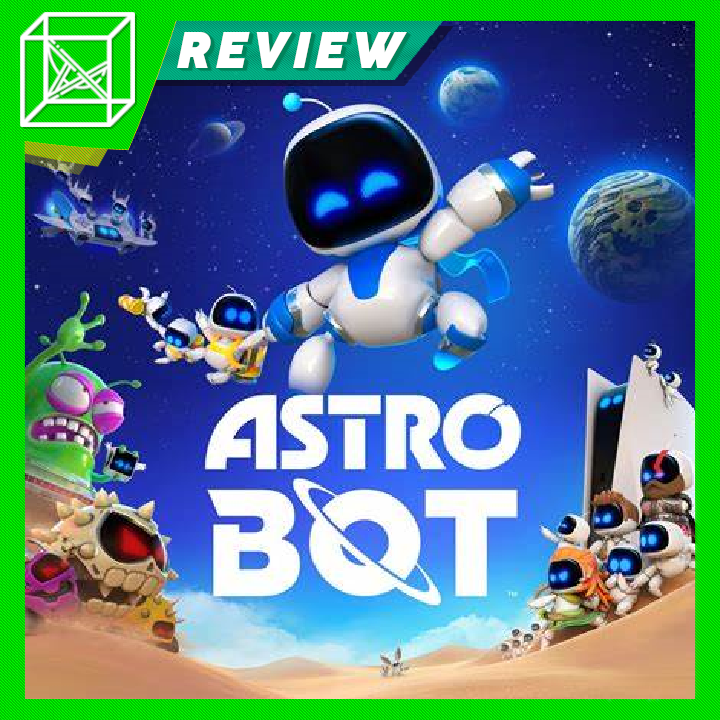
Sony just shook up the hierarchy of best platformers while not only producing an instant game of the year candidate, but also captivated hearts worldwide with its not-so-new protagonist. An innovative yet nostalgic expedition of ASTROnomical delights.

Sony just shook up the hierarchy of best platformers while not only producing an instant game of the year candidate, but also captivated hearts worldwide with its not-so-new protagonist. An innovative yet nostalgic expedition of ASTROnomical delights.
— Dylan Bailey

Astro Bot

Platform: PlayStation 5

Initial Release: September 6, 2024

Developer(s): Team ASOBI, Japan Studios

Price: $59.99


“A journey of a thousand miles begins with a single step”. This proverb rings loud and true for Team ASOBI as they are flung into AAA spotlight. The PlayStation first party studio got its start in 2013 with The Playroom, an augmented reality tech demo coinciding with the release of the PS4. The Playroom was comprised of a collection of mini games intended to demonstrate the PlayStation camera and DualShock 4. This would also be the first introduction to “Astro Bot”. Although at the time, the bot we would one day be gushing over, looked slightly different. There was no Astro, just bots. In the demo, a hoard of intentionally simple-looking designed bots would swarm and interact with the player in a very, “Gru commanding an army of Minions” kind a way.


                In 2016 Team ASOBI provided Sony with another tech demo. This demonstration was called Playroom VR and was meant to show off the features of, as the name states, the PlayStation VR. The virtual reality demo is where our Bot started to catch some traction. A spin-off title of a beloved Robots Rescue mini game within Playroom VR, titled Astro Bot: Rescue Mission, set the stage for our little hero to rise apart from his mechanical brethren. Then in November of 2020, as the world began to come out of lockdown, we all came together for the launch of the PlayStation 5. With the launch of Sony’s newest flagship console, came the tech demo in which majority of this audience were most likely first introduced to Astro. Astro’s Playroom (finally a ‘game’ named after the protagonist) is still regarded as a must-play for players new to the console. Yet, Astro’s biggest adventure was just beyond the horizon.


                If I asked what the best first party Playstation game is, what would you answer? Many folks would turn towards Sony Santa Monica’s, God of War (2018) or Naughty Dog’s, The Last of Us Part 2. If you answer anything other than Astro Bot, on paper, you would be wrong. At the time of writing this, Astro Bot is sitting at a score of 94 on review cite Metacritic and a 95 on Opencritic. Not only is this the highest scoring Playstation game across both sites ever, but it also statistically catapults its way onto the podium for best platformer. In Team ASOBI’s first true opportunity at creating an AAA game, it is safe to say, they knocked it out of the park. The developer’s new title rivals that of Celste, Guacamelee!, Hollow Knight, Sonic Mania, and even Super Mario Odyssey.


                So, what is it that has both critics and players reviewing the game so highly? It starts with one word, pastiche. Merriam-Webster defines pastiche a “ a musical, literary, or artistic composition made up of selections from different works”. Astro Bot may be the greatest piece of pastiche ever conceived. The game borrows design from Super Mario Bros., having Astro visit different ‘worlds’ that each house their own levels. Within each level are power-ups akin to those found in later Mario World and Kirby games, needed for Astro to platform his way to the end. There are three types of collectibles in each level: coins (used as currency), puzzle pieces (used to unlock different shops within the hub world), and other bots.


There are over 300 bots to collect with 173 advertised as special bots, all dressed as characters from the PlayStation family past and present. Finding these bots felt like collecting Waddle Dees in Kirby and the Forgotten Land, but with nostalgic excitement every time a special bot is recognized. Every bot collected throughout the levels gets sent to a hub world called The Crash Site. And while it is fun to go around and interact with the bots here, there is a small chance that you will recognize every single one of them. If I have one complaint about the game it is that the record keeping system that keeps track of the bots collected, does not break down who the special bots are and the game(s) they are from. In a behind-the-scenes video posted on the PlayStation YouTube channel, Studio Director Nicola Doucet states, “One of the hopes we have is that the young generations will come across these special characters, then will be inspired to go to these older games and actually try them for themselves.” This goal would be easier to accomplish if there was an in-game mechanic who told you who they are.


                A PlayStation fiesta of characters and hodgepodge of borrowed game mechanics blend seamlessly. While it may sound as if the game just copies the homework of all the games that came before it, that is simply not the case. Astro Bot takes every lesson these previous works taught, and precisely refines them with both overwhelming charm and genre re-defining innovation. The DualSense controller becomes an extension of the game as its haptic feedback technology allows the player to feel every step and jump Astro takes, with the sensation changing on every surface. The controller’s built-in speaker acts as surround sound to the world. Upbeat audio tracks, audible footsteps, interactive and combative noises all blend into a symphonic atmosphere that pulls you through each level.

                Working in tandem with this are unique abilities specifically designed for each level, keeping each one feeling fresh. One standout being a Mouse power-up in a level titled Downsize Surprise. This ability sees Astro shrinking down to the size of a mouse and growing back to normal size at the command of a button. Not only does Astro’s height change, but the force perspective of the world changes with him. Allowing the tiny hero to parkour up leafy vines, ride floating bubbles, and zip across clotheslines that he would be too large to do at normal size. I found myself having ‘ah-ha’ moments repeatedly when it came to these power-ups. After spending time with one and getting used to it, players will find themselves in a different level using the same ability in a completely different way. For example, in one level Astro needs to turn into a metal ball in order to roll across beds of spikes, while another uses the ball ability to prevent Astro from being crushed by the jaws of a crocodile.

                Pastiche creates an overwhelming sense of nostalgia. Innovation in audio and physics make for an all-around good gaming experience. And when it all collides, you are presented with some of the best moments the game has to offer. Two of these moments stand out to me in particular.


                The first comes near the end of the first galaxy Astro visits. For context, each galaxy has a boss you will face at the end in order to obtain an item used to progress the story. The first galaxy, Gorilla Nebula, has you facing off with a giant mechanical gorilla named Mighty Chewy. It is in the last level before the boss fight, titled Construction Derby, that the player has their first encounter with the beast. The level sees Astro jumping and dashing through a live construction site atop a bunch of cranes and skyscrapers. Then suddenly the camera rotates and stills, transforming the level into a 2D side-scroller with Mighty Chewy chasing Astro with an open hand, ready to crush. I couldn’t help but draw a comparison between this and the original Donkey Kong arcade game. This comparison is further drawn when you actually clash with the behemoth who starts throwing items in the player’s path, to prevent Astro from reaching him. It’s in this moment that if you realized where the inspiration for this fight came from, you will find yourself breathtakingly admiring just how far video games have come.


                The second highlighted moment comes after Mighty Chewy has been vanquished. This is when you learn that there are not only special bots, but each galaxy has a special level completely inspired by a PlayStation game or series. These unique one-off levels also see Astro transmogging his abilities and appearance by borrowing an item from the character who inspired the special level. The attention to detail in these levels left me mesmerized. There were so many surprising elements that I was utterly confused as to how they pulled it off. Somehow, you were no longer playing Astro Bot, but were fully immersed in whatever game the developer wanted you to be in. Yet, the whimsical playfulness and cute charm was still there dancing perfectly in tune with another game without stepping on any toes.


                The first of these levels allows Astro to borrow the Leviathan Axe from God of War’s Kratos. An electric-pop re-mix of a GoW soundtrack sets the mood. You press the R2 button to use your ability and it flies through the sky. Alas, it does not return. Anybody familiar with the game that gave life to this special level instantly understands what to do. The Leviathan Axe is thrown and recalled in the same manner as the aforementioned title. The sneaky green glow of Odin’s ravens can be obliterated. You blow into the mic of the DualSense, replicating the horn being blown to call upon the World Serpent. You smash three bell shaped enemies in a perfect line, as if they were preventing you from opening a chest. The axe is stuck into columns, freezing them in place to platform up. You never want levels like these to end. But when they do, you are driven to continue Astro’s journey in hopes you’ll run across another like it.

                Astro Bot reaches towards perfection as it somehow flies close to the sun, with no fear of melting wings. The game is intended for a younger or family-based audience. It’s the type of game you would typically have no choice but turn to Nintendo for. A welcome to the PlayStation family, that normally pushes out more mature content. But don’t get it twisted; this game is an amazing experience for casual and hardcore gamers alike. Level design walks an invisible tightrope between fun and challenge, accommodating both groups. And for those who would like to face an even higher difficulty, already announced DLCs will be adding more challenge levels and speed trials along with some new special bots.


                While the protagonist may seem plain in design compared to a mustached plumber or chilidog eating hedgehog, Astro is memorable in his own rights. I have said a lot of words, but none truly capture the emotions of curiosity and bliss felt while playing. Gameplay Programmer, Akira Ishii speaks on this better than I ever could. He explains, “This ASTRO BOT is a love letter to our game fans…We created this game with love, and we hope the love letter reaches everyone”. That love and heart that the developers bled into the game, left me with a smile on my face the entire time. And after obtaining the game’s coveted platinum trophy and moving on to something new, I couldn’t help but feel as if I had said goodbye to a dear friend. As I reflect on the memories shared with the bot, I could not view Astro Bot as anything other than a masterpiece. I only hope my friend is ready to collect some well-deserved trophies of his own.


Read More