
Wardrum Review
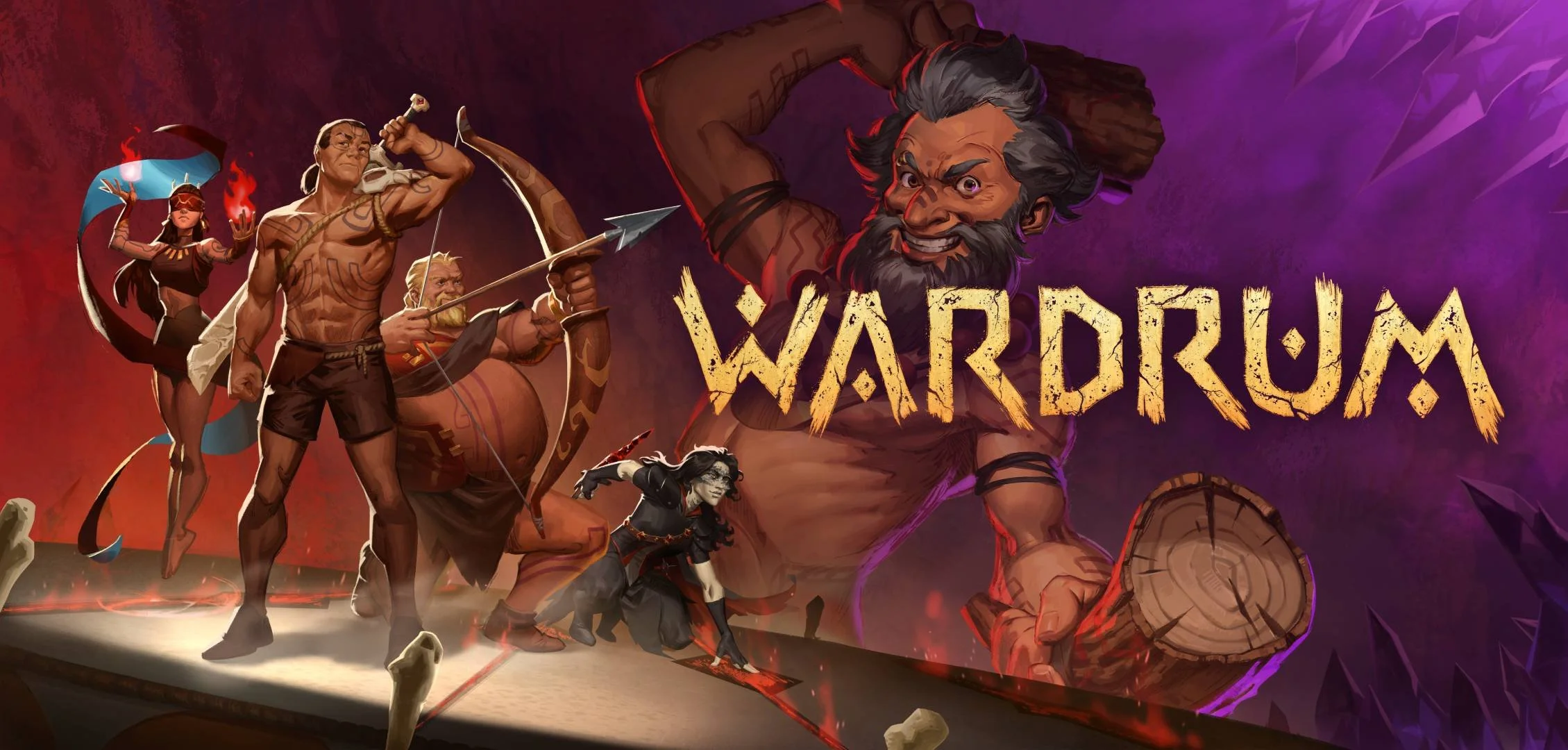
Release Date: May 7, 2026
Publisher/Developer: Team 17, Mopeful Games
Platform: Steam
Price: $19.99
Lead a tribal warband across a harsh fantasy world, face death, and strengthen your warriors until you have the power to destroy the dark sorcery infecting the lands. Time your rhythm magic attacks to the beat of the Wardrum in this tactical turn-based rhythm rougelite.
Story
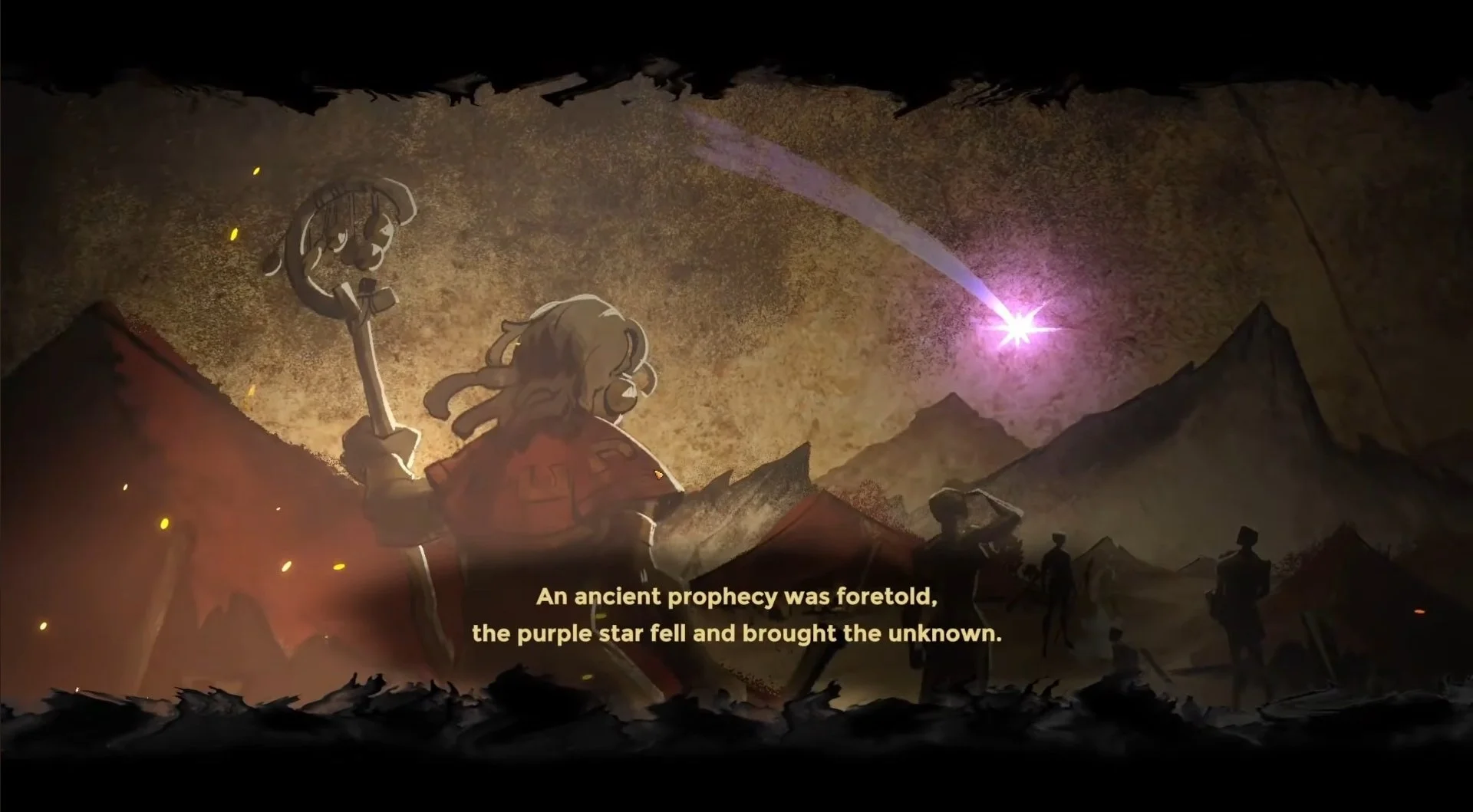
Ancient prophecy tells of an event in which a purple star will fall from the sky bringing with it a corruption that infects the land and weakens the ritual goddess at the core of the core of the world, Rythm Mother. It is this goddess that ensures that the world has a constant ever-pounding heartbeat that mankind, society, and progress can always march forward to. But now weakened by the off-beat magic corrupting the lands, chaos erupts. This is why your Warband, or party of heroes, sets out across the broken world to find a means of stopping the corruption and restoring drumming traditions.
This is the basis set at the beginning of the game. Yet, outside of the initial set building, a comprehensive story seems to fade into the background, only appearing as minimal atmospheric narrative threads in between runs. Even then, storytelling is mostly environmental soundscape and vignette-based rather than heavy on exposition. This sparce approach fits the game’s rhythm-first design, but creates evocative story beats and lore that feel thin as they are more suggestive than substantive, letting players fill in the gaps.
Gameplay
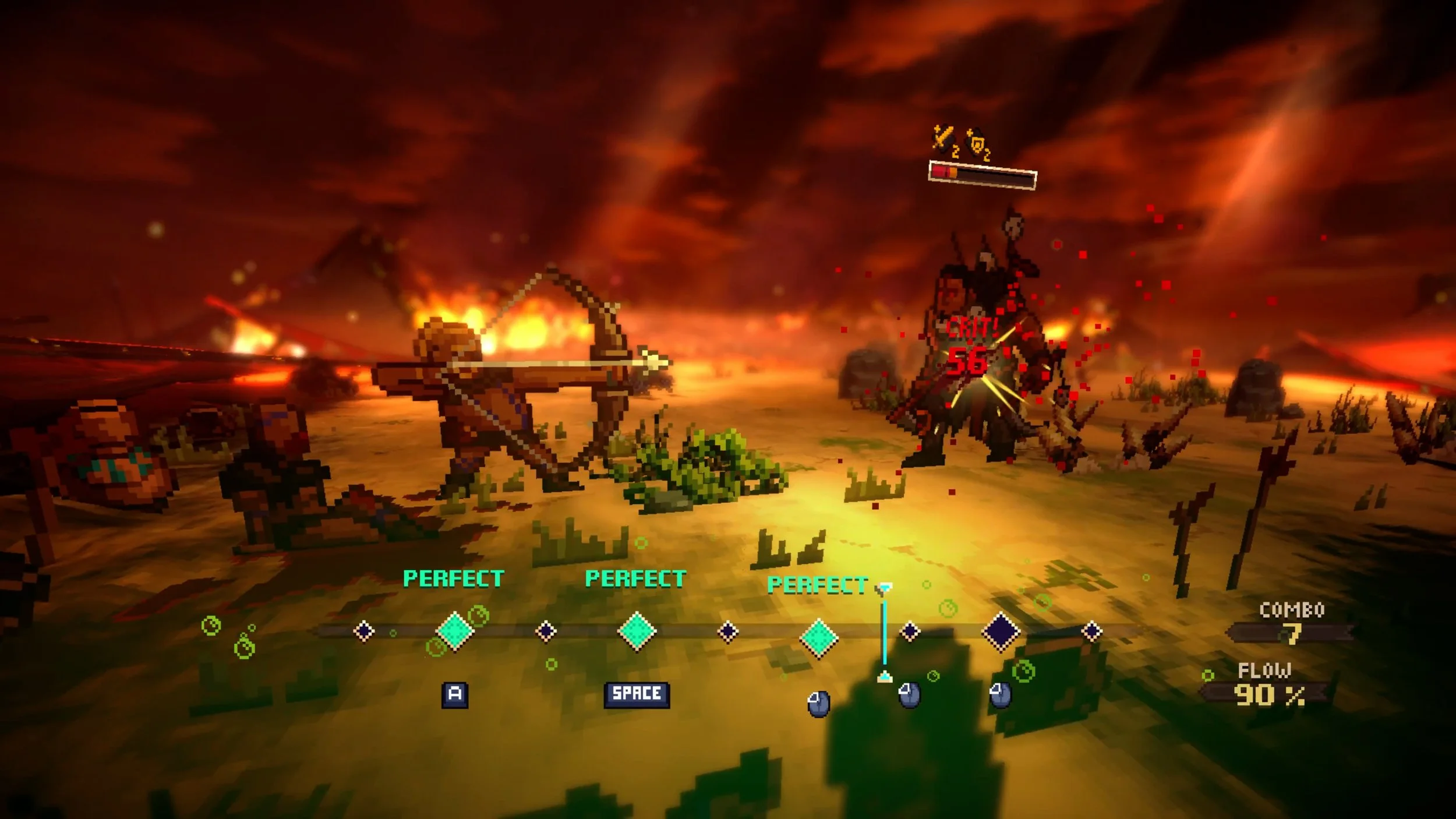
Overall gameplay in Wardrum consists of two primary genres iced under a layer of rougelite repetition, turn-based strategy and rhythm.
A tight and unique combat inspired by games like Guitar Hero, Dance Dance Revolution, and PaRappa the Rapper is presented as a dance of strikes and parries choreographed to a constant drum beat. Hit timing, audio feedback, and bursts of pixelated visual cues combine into a tactile experience creating a flow state when you sync with the music.
On paper, the rhythm-first aspects that Wardrum leans extremely heavy into is the game’s most unique selling point. But the precision timing can be punishing for casual players. There is a steep learning curve to reach consistent fluency. And though there are some accessibility options that make timing less punishing, readability of the UI can sometimes become cluttered with overlapping rhythms or multiple enemies that causes split-second decision making harder than it should be.
For those who have visited the accessibility options and are still having a tough time, the game does offer an Easy difficulty alongside the default Normal. After playing a few hours with both difficulties, I found that while the rhythm-based combat is less punishing in Easy mode, it is also less rewarding and feels more like an added chore.
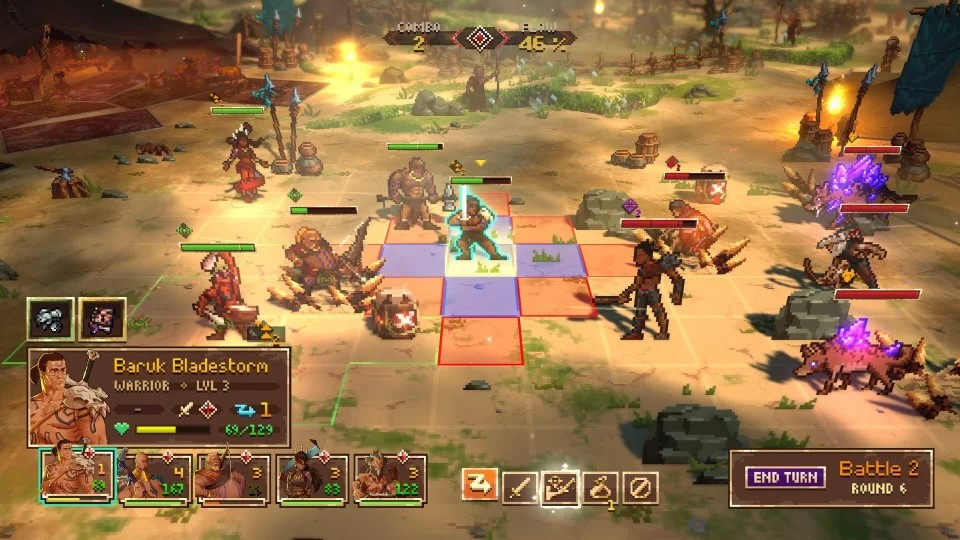
Where Wardrum truly shines is the Fire Emblem like turn-based strategy. Team 17 delivers a deep and deliberate tactical experience that successfully avoids feeling like a gimmick while crafting a layer of strategy that acts as a robust fully realized RPG, rather than just a backdrop for the musical components.
Battles take place on compact grid-based maps featuring interactive environmental hazards and tight chokepoints. Before combat even begins, the map and player positioning on it become key factors as to how things will play out. Positioning dictates lines of sight for ranged units and protection boundaries for support/healer units. Each unit has a unique movement speed that can be used advantageously to truly master positioning on the battlefield.
There are also certain battlefield status effects and conditions that actively alter how the player must interpret the incoming beats during the rhythmic combat sequences. This many times leads to the tactical decision making of avoiding or eliminating these causes before they can add a layer of unpredictability to combat.
Team Building
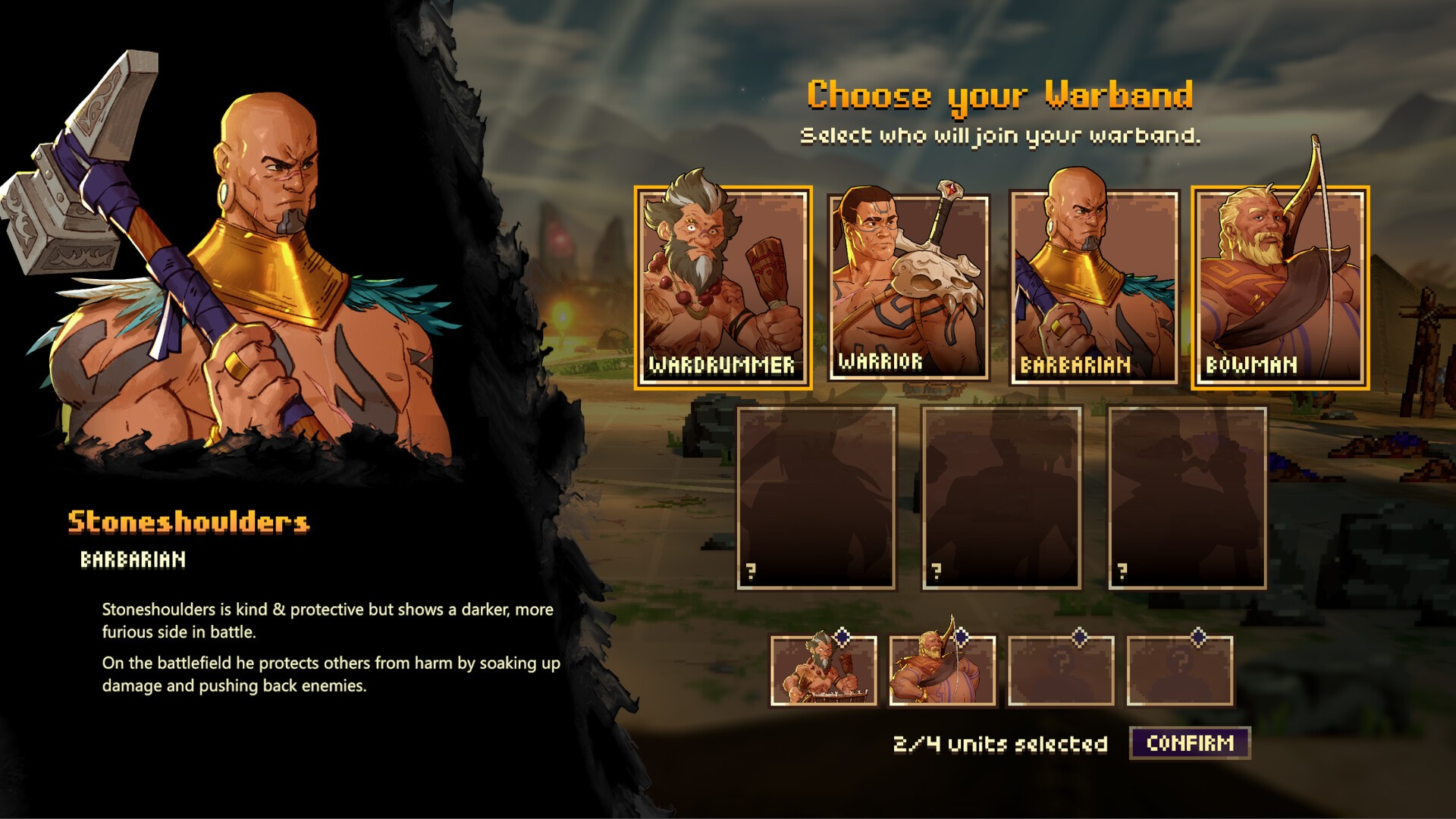
At the core of everything this game has to offer is the party system in which you maintain your Warband. Wardrum has 7 unique heroes who can join the Warband throughout the game. Each play different roles and have their own strengths and weaknesses. The Bowman is a ranged archer who specializes in positioning and eliminting enemies from a distance. The Warrior is an all-around damage dealer that can take offensive and defensive stances. The Barbarian is a tank unit that can absorb tons of damage while dishing it back in large attacks with his two-handed warhammer. The Rhythm Caster is a powerful magic-based unit that uses area-of-effect spells and debuffs, who can give some of her own health to strengthen attacks. The Warlock specializes in debuffing enemies and causing conditions that deal damage-over-time. The Rouge uses stealth to flank enemies and disengage from combat while dealing bursts of damage with higher chances to crit. Then there is the leader of the band, the support/healer The War Drummer.
At first glance, there are tons of options for team composition. And while that rings slightly true, there is an unwritten rule that the game ensures you understand from the beginning. No matter what team you try to build, for thematic reasons, The War Drummer must take up one of the Warbands party slots as it is the crucial beat of his constant drumming that sets the musical tone for the entire game.
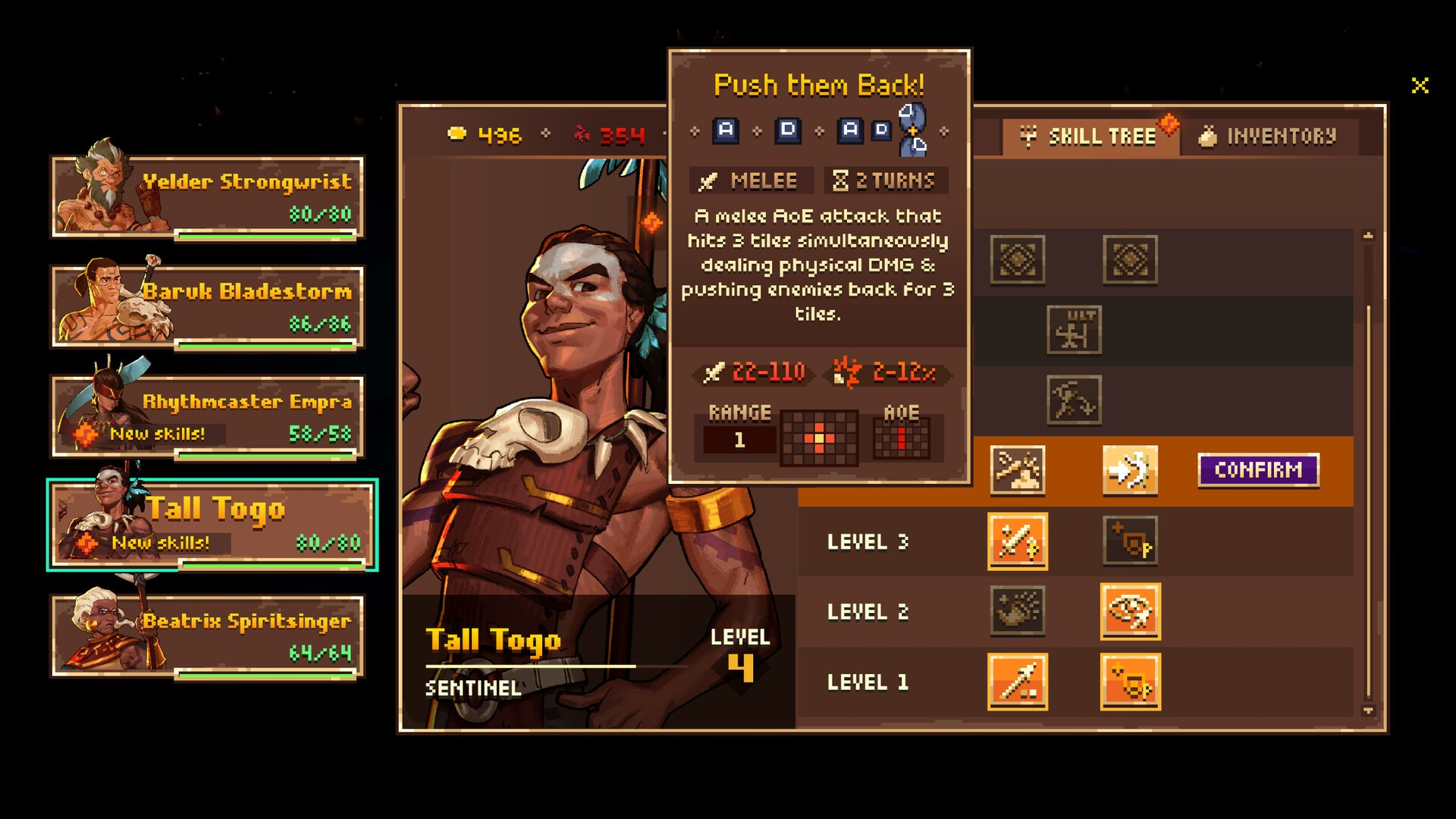
Each unit’s specializations are further expanded by branching skill trees that upgrade current abilities and new ones whenever characters level up with experience points gained from slaying enemies, defeating bosses, and successfully surviving battles.
Rougelite Resurrection and Repetition
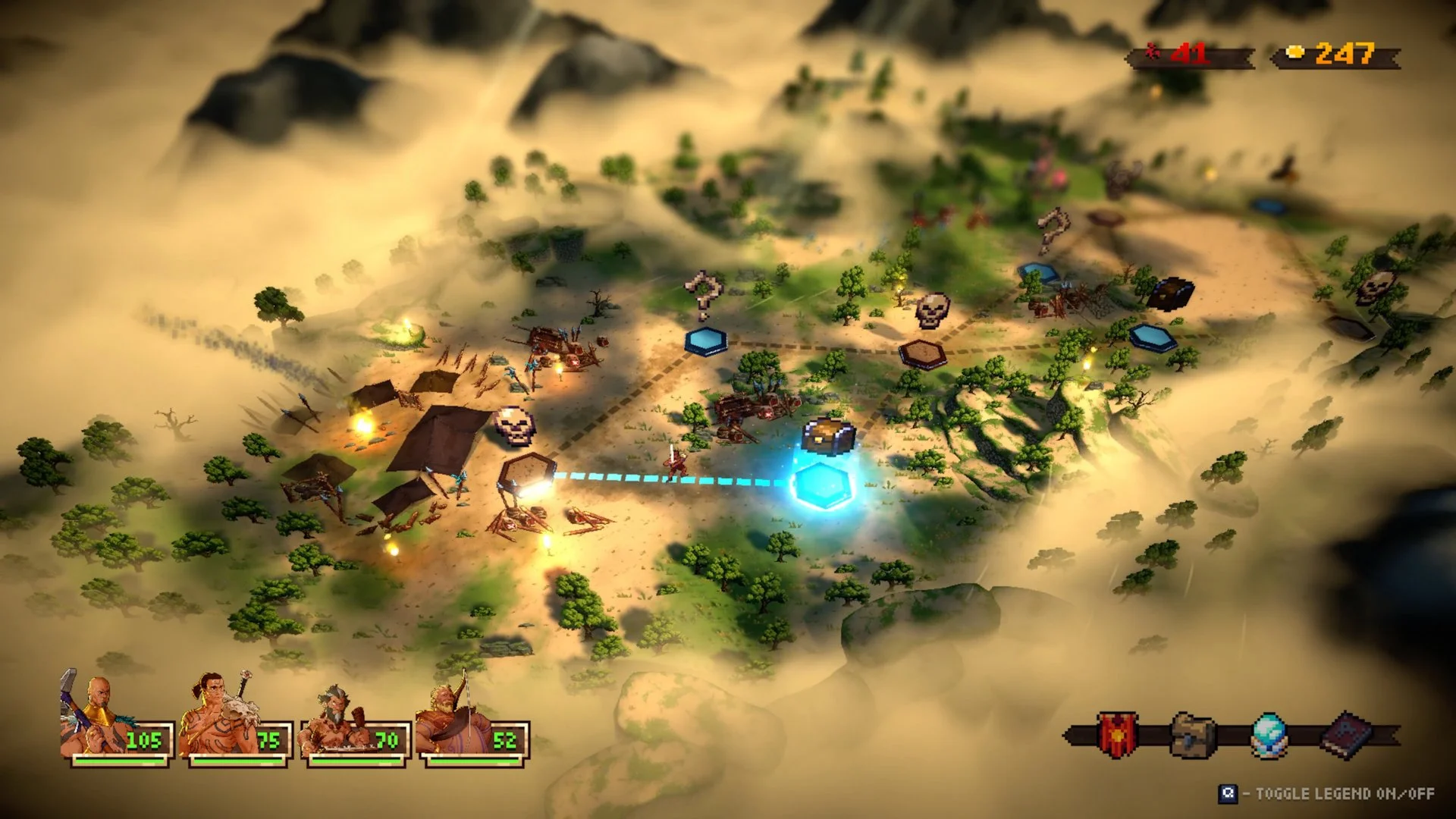
Wardrum does everything the stereotypical rougelite is supposed to do. The short-to-medium runs are always meant to end in death. But “chosen” by Rhythm Mother, your Warband is always resurrected to begin their march anew. But before this resurrection occurs, essence earned by performing well during the rhythmic combat and maintaining a flow can be traded for permanent passive unlocks, new perks/characters, and incremental stat increases.
With that being said, the rougelite repetition also exposes many of the game’s biggest weaknesses. A branching overworld map, akin to that in Slay the Spire, leads each level through procedurally selected groups of maps and enemy types that recur frequently and wear thin over long play sessions. Without substantial narrative or mechanical variety, later runs can feel very grindy. There are frequent times in which RNG with poor drops and unlucky layouts that undermine tactical choices. Roster depth begins to feel uneven and lacks variety late-game with some characters feeling noticeably better than others, funneling players into more dominant meta builds. Over time even the heavy soundtrack at the heart of Wardrum used to pump life into the game, begins to decrescendo and numb into the background.
Overall
An experimental rougelite, that for better or worse, finds a way to stand out in an oversaturated genre. Rhythm based combat at the forefront of what Wardrum is trying to accomplish falls flat, becomes monotone, never crescendos, and even skips a beat while turn-based tactics and RPG elements keep things feeling fresh.
Pros:
Original rhythmic-tactical hybrid concept that stands out
Satisfying audiovisual feedback
strong sense of flow when mastered
good meta-progression between runs
fun interactive environmental combat options
Cons:
Content feels stretched
Narrative stakes feel limited/light story and worldbuilding
meta dominant builds reduce variety
unforgiving for players new to rhythm mechanics
limited accessibility options take away from the overall experience rather than make the game more friendly
Repetition in map and enemy types encountered

A big heartfelt thank you to Mopeful Games and Team 17 for providing a copy of Wardrum for the purposes of this review
