Dreamcore Review – Liminal Spaces and Worn-Out Faces

Release Date: January 23rd, 2025 (Tape 1); May 21st, 2026 (Latest Update)
Developer: Montraluz
Platforms: PC (Reviewed), PlayStation 5, Xbox Series X|S
Price: $17.99
Before really getting into the meat and bones of this review, it’s worth mentioning out of the gate that Dreamcore’s design philosophy should be studied as it confronts you with the architecture of your own uncertainty. It’s a game built on the quiet terror of liminal spaces, the same emotional grammar that made the Backrooms an internet legend: endless hallways, looping rooms, and the creeping suspicion that the world is rearranging itself just out of sight. Dreamcore taps into that same psychological pressure point, turning navigation into a philosophical exercise as much as a mechanical one. It’s one of those games that doesn’t just eerily invite you into its world—it drops you into a surreal maze devoid of logic and standard space geometry, pats you on the back, and whispers “good luck” as it walks away. It’s this uncertainty yet trusting nature of the game to have the player explore at their leisure, for lack of a better word, to see how committed they are to going one-on-one with liminal spaces and attempting to make sense of it. Truthfully, it’s because of this that I loved every second of it, even when it had me questioning my own sense of direction as if I’d suddenly forgotten how hallways work.

Was it a dream?
Since Dreamcore mechanically doesn’t have much outside of simply walking around and looking for an exit, there’s no denying that the visual design is the star here, and it carries the entire experience with confidence thanks to its authentic VHS filters and subtle yet haunting sound design to help amplify the atmosphere and captivate the senses. Its environments glow with soft neon gradients that accentuate the brights and give tone to darks with an uncanny stillness, almost like memories rendered in high fidelity. The graphics are so gorgeous that, truthfully, they almost feel dishonest, using beauty as bait to lure you deeper into a maze that doesn’t care whether you understand it (you won’t). Every corridor feels like a question, every doorway a dare, and every room taunts the player as if it were pulled from the edge of a faint memory, just familiar enough to be comforting, yet strange enough to keep you uneasy.
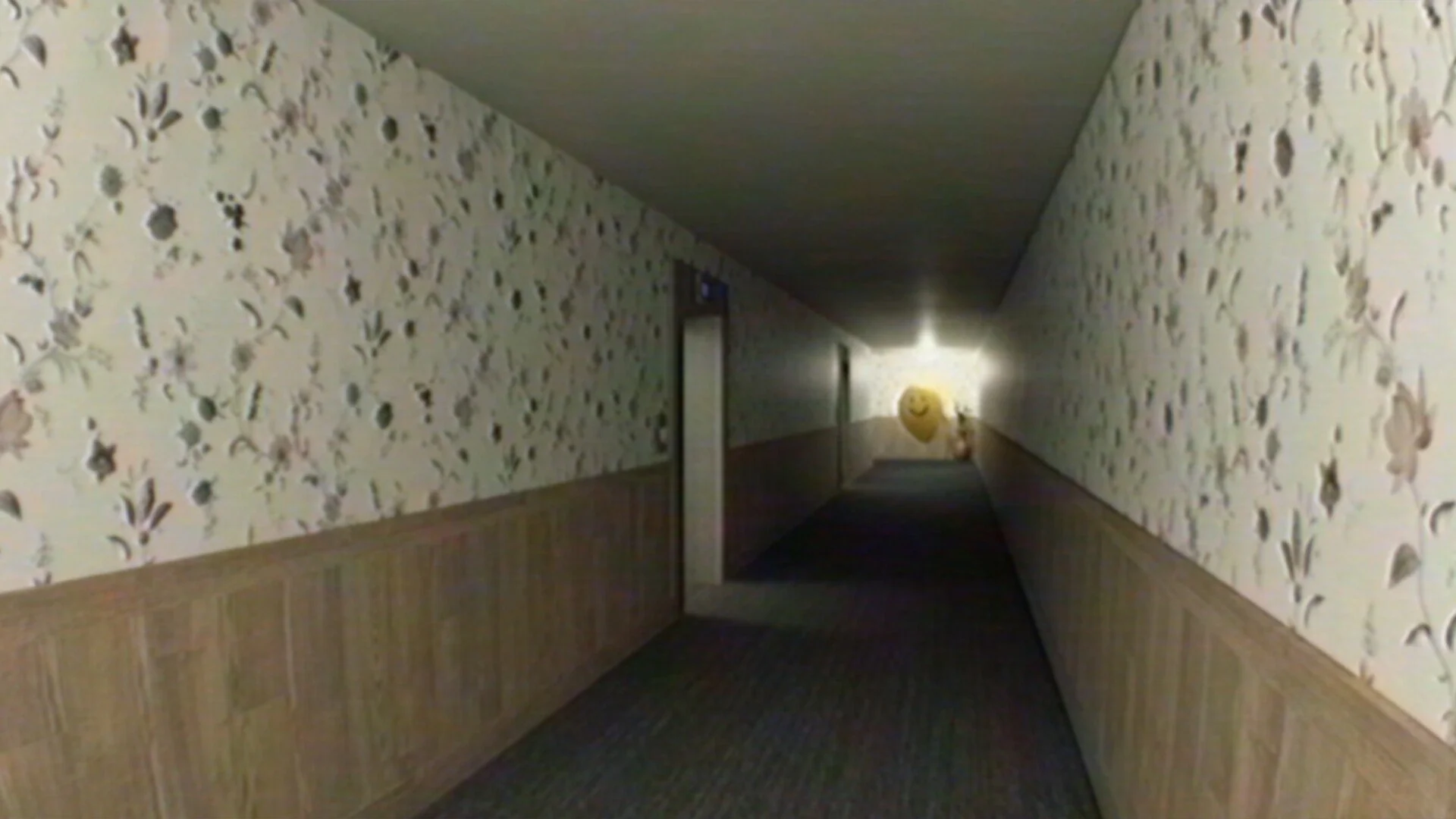
But the real heart of Dreamcore lies in how it manipulates your sense of direction. I usually pride myself on having a solid internal compass, but this game spun me around so many times I felt like I was being personally targeted as some mental experiment. The level design loops, folds, and subtly shifts in ways that feel dream‑accurate: familiar, but wrong in a way you can’t articulate. To be frank, it pissed me off more often than not, but it did so in a similar way a good puzzle does, where the frustration becomes part of the rhythm, part of the meaning, where you know the answer is around the corner and your stubbornness, while detrimental to your health, will ultimately yield results. At what cost? Well, that’ll vary from player to player, because every time I thought I’d cracked the layout, the game smirked and said, “Try again.”

Patience is a virtue
It’s worth mentioning, though, that the exact challenge is admittedly part of the charm of Dreamcore as you go through its multiple tapes and levels, which are comprised of pools, neighborhoods, malls, castles, toyrooms, and apartments. It understands something essential about the Backrooms mythos: the horror isn’t in monsters or jump scares, but in being lost in a place that shouldn’t exist, a place that feels like it was built for someone - or something - else. The game leans into that existential discomfort and asks you to confront the idea that progress isn’t always linear, understanding isn’t guaranteed, and that sometimes the only way forward is to surrender to the strangeness that encapsulates every passing moment and frame of gameplay. Even with all its void-like vacuums, however, when you finally do find your way through, clicking with the environment through what is seemingly impossible geometry that creates a kind of dream‑logic scenario, it’s incredibly satisfying - and not because the game guided you, but because it trusted you to navigate the unknown. It’s a game that absolutely rewards patience, observation, and a willingness to embrace the weird.

Dreamcore is equal parts beautiful, maddening, and quietly profound. It’s a challenge not just to your spatial awareness but to your assumptions about how games should communicate their design to the player without explicitly saying or showing how. If you’re drawn to atmospheric exploration, surreal aesthetics, and the philosophical tension of the Backrooms, this is absolutely a journey worth taking, just don’t expect your inner GPS to survive unscathed.


PROS:
Gorgeous dreamlike visuals with striking liminal design
Philosophical atmosphere that echoes Backrooms‑style existential tension
Rewarding navigation challenges once you embrace the disorientation
Strong thematic identity rooted in surreal exploration
CONS:
High frustration potential for players who dislike getting lost
Sparse guidance may feel punishing early on
Occasional pacing dips when stuck in looping areas
Our deepest and sincerest gratitude to Tlön Industries and Montraluz for sending us a copy of DREAMCORE for the purposes of this review!